Tag Archives: Power Stroke

It is worth talking about GM India because for once, it showed cars at the Auto Expo that people like you and I could feel excited about.  Internationally, riding on the misfortunes of Toyota, GM has claimed back its position as the number one in sales.  The story of General Motors in the last couple of years has been one that is worthy of mention and that is even more true in the case of General Motors India.  After the sub prime housing loan crisis hit the USA and the economy of the country went into a tail spin, it was thought the end of GM was in sight.  But GM was bailed out by the Governments of USA and Canada and it has steadied itself enough to claw its way back to the top.  In this process what helped GM was that it had taken control of the erstwhile Daewoo Motors of Korea which gave it access to cars that are relevant globally and not the ill handling gas guzzlers that GM America was famous for.

In India, GM under the smart leadership of Karl Slym forged strategies that not only facilitated its staying afloat but also thriving when in other parts of the world GM was going through a crisis.  GM India sold half its stake to SAIC (Shanghai Auto and Industrial Corporation) of China and this equity infusion worked for GM India.  SAIC is an old partner of GM and it also has in its portfolio vehicles that are inexpensive but based on the older platforms of Opel which in themselves are pretty good.  This tie up SAIC was consistent with the direction that GM decided to take at the beginning of the new century when it phased out the expensive Opel brand and decided to concentrate on volumes by introducing the Chevrolet brand.  Most Indians were familiar with Chevrolet thanks to the Impala model that was a Bollywood star in its own right.  While the initial introductions under the Chevrolet brand such as the Optra, the Optra Magnum, the Optra SRV, the Aveo and the Aveo U-VA, were all Daewoo cars, Chevrolet later started bringing in their cars from the global platforms.  The Optra range was based on the Daewoo Nubira platform,

Chevrolet Optra Magnum

while the Aveo U-VA was the old Daewoo Kalos.  This car came out of the Italdesign studio and was the handiwork of Giorgetto Giugiaro.

Aveo U VA

The Aveo was a brand new platform and had nothing to do with the U-VA platform and it was something on which Daewoo was working on before being taken over by GM.  Its design came from Pininfarina.

Chevrolet Aveo

All these were competent cars but none of them had the ability to ignite passions.  The Optra SRV came close but was let down by an anemic engine.  It was a case of all show and very little go.  But things started turning around for GM with the launch of the Cruze.
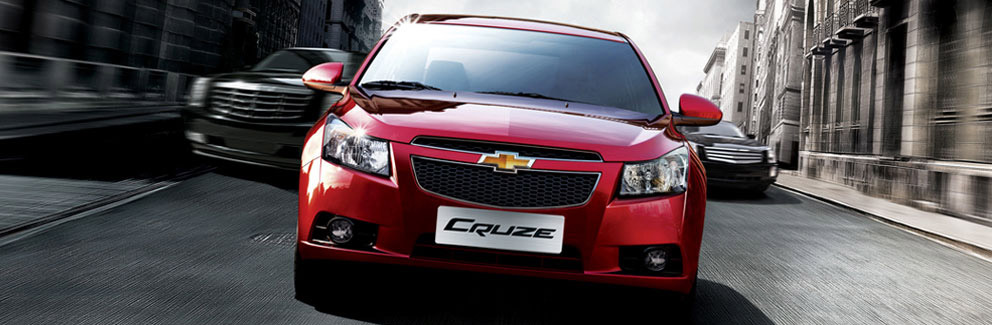
Chevrolet Cruze

The car came with a potent diesel engine, looked like a million dollars and went like stink.  It was by far the most contemporary car that GM introduced in India.  Globally GM fighting to dig itself out of the economic morass that it was in also decided to replace the Spark.  It took the undiluted Beat car that was shown in the movie Transformers and gave it the Spark moniker.  In India, the name Beat was retained since the Spark had just started doing decent numbers for Chevrolet.

Chevrolet Beat

The old Spark, the one that is still sold in India is actually the last and final version of the Daewoo Matiz.  The introduction of a diesel engine into the Beat has done wonders for its sale in India.
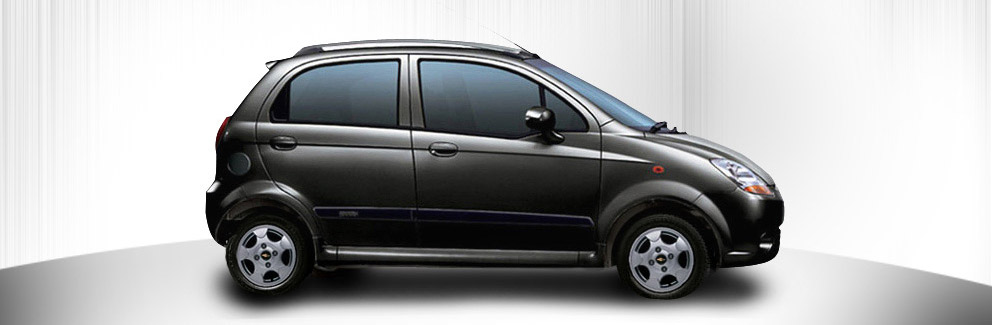
Chevrolet Spark

GM realised that its very competent Aveo U-VA was not selling as was the Aveo.  Now when the time has come to replace them, GM has turned to SAIC.  GM India is now very clear that it wants to compete with Maruti, Hyundai and Tata.  It has decided to go for the volume segment and there it will be introducing new products from the SAIC stable.  The first will be the Sail U-VA (U-VA is GM India speak for Yuva or youth) and this will be followed by the Sail sedan.  General Motors India unveils the Chevrolet Sail hatchback at the AutoExpo 2012


This means that the Aveo name will disappear for good.  Internationally the Aveo has been replaced by the Sonic twins.  The Sonic is actually taking the logic of the Beat forward but since GM India is keen on volumes it does not want to make the expensive Sonic cars, at least not yet. Chevrolet Sonic
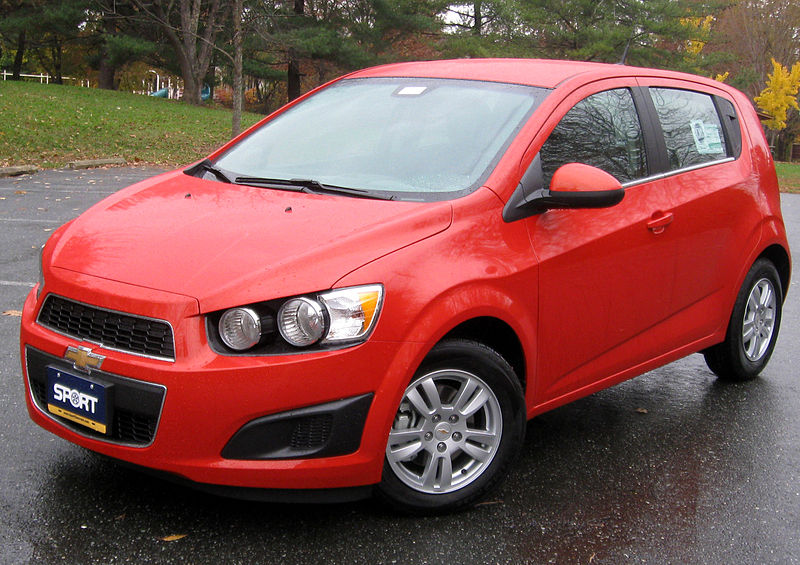
Chevrolet Sonic Sedan Rear


GM has also decided to enter the space of MPVs, joining a horde of manufacturers that are gunning for the Toyota Innova.  At the Expo, GM showed the Sail U-VA hatchback and the SAIC- Wuling based MPV.  Rumour mill has it that GM has decided on calling the MPV, Enjoy and that prices will begin at Rs. 6 lakhs.

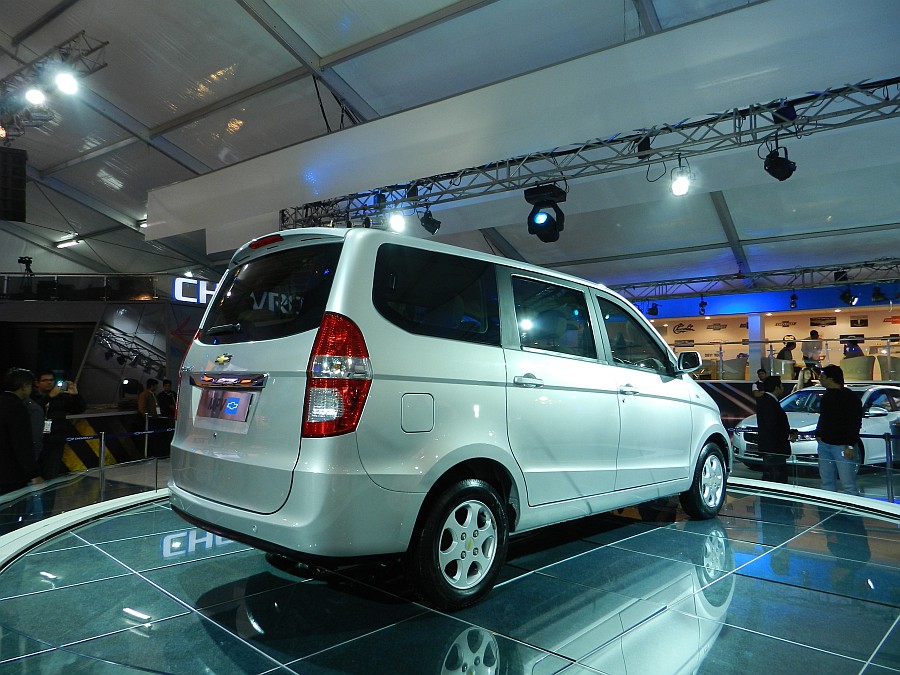
Chevrolet MPV Sail : Front 3/4Chevrolet MPV Sail : Rear 3/4

In addition the Tavera has been resurrected by introducing a 2.0litre Common Rail Diesel Engine from ICML, the makers of the Rhino MUV.  This engine is branded G.One and the Tavera that is now BSIV compliant is called the Tavera Neo3.  It has also been facelifted very mildly.

Chevrolet Tavera Neo3

These are all indications that GM India is getting its act together.  It has never been this exciting before.  One hopes that this enthusiasm that one is seeing in GM will last and that the company will put out products that are relevant to contemporary India.



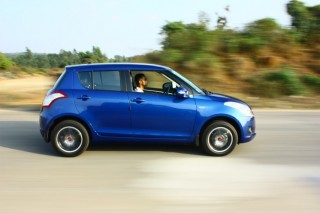
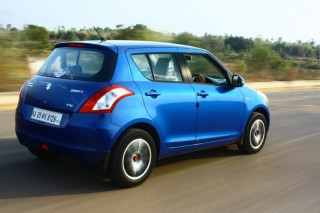
2011 New Maruti Suzuki Swift clothed in Torque Blue

The Suzuki Cultus, which started manufacture in 1983, the sedan version of which is better known in India as the Maruti Suzuki 1000 (for want of,*sigh*, a better name) was the first supermini to sport the name Swift in any market. It had a 1.0 litre carbureted and a 1.0 litre inline fuel injected triple cylinder turbocharged engine and such was the response from the buyers, that GM decided to exploit the alliance which they had formed with Suzuki in 1981, and started to market the Cultus in North America and Canada as the Chevrolet Sprint and the Pontiac Firefly respectively. The Cultus is still manufactured and sold only in Pakistan as of today with the famous G13B engine, putting out a 100 horsepower.

First Generation Suzuki Cultus

In 2000, a good seventeen years after the Cultus was released, the first generation of the Swift, with a 1.3 and a 1.5 litre iterations were released to replace the Cultus. Interestingly, GM had leveraged the alliance here as well to introduce what they then called the Chevrolet Cruze in Japan, a compact SUV which was developed on the original dimensions of the Swift.

The major alterations came along in 2004, with the introduction of the second generation of the Swift being exhibited in the Paris Motor Show in 2004. The car was made available in a 1.3 litre and a 1.5 litre manual transmission, a 1.2 litre automatic transmission and a 1.3 litre MultiJet diesel engine variant sourced from Fiat (the same engine featured in the Fiat Palio 1.3 Stile, and later the Grande Punto 1.3, and still later, as part of a technical collaboration between Tata and Fiat, the Tata Indigo and the Indica, and recently, the Premier Rio MJ D) in the international markets. In India, it was launched with the 1.3 litre manual transmission upto 2008 and from then on, a 1.2 K series all-aluminum engine.

The car was lauded after being driven around by the testers and journalists as being supremely responsive to driver inputs, being extremely friendly, carrying a superb power to weight ratio and having a “sporty” character, (a term much abused now to describe everything from car dynamics to upholstery), but at that time, being used to describe the way the car responded to being thrown around corners at high speeds and the acceleration figures. For six years, the Swift soldiered on, selling in humongous numbers and was a darling with the modifiers because of the space available in the engine bay for possible modification kits to be incorporated. Everything from body kits to piggyback systems to the ubiquitous halogen kits were developed for the Swift specifically, benefitting not just Suzuki, but the accessories manufacturers and resellers as well.

During late 2009 and early 2010, one heard persistent rumors about how the Swift was being given the complete makeover, about how the car was being redesigned ground up and how the new Swift would cater to all the shortcomings of the earlier car. Paris Motor Show 2010 saw the new Swift being launched, and it was just a matter of time before it came into India via Maruti Suzuki. As soon as it was launched in India in August 2011, it received tremendous response from the automotive fraternity, who have gone ga-ga over it’s looks and tremendous handling. So, what exactly is it about the Swift that makes it such a darling to the masses?

Arindam's 2011 New Maruti Suzuki Swift

A friend of ours, Arindam, a fellow petrolhead and a rabid Swift supporter had picked up the electric blue (known as Torque Blue) in February. We got him to lend it to us for a day, and spent a Sunday throwing her around the bends and laughing maniacally while doing so. The verdict? Read on!

Looks

The new Swift retains the basic designing cues from the earlier Swift. The styling is still the double box which features in most of the newer generation hatchbacks. The bonnets look the same, but it appears that the curve from the windshield to the bumpers are slightly lesser curved than what it was with the older generation, making the bonnet slight longer than the earlier ones.

2011 New Maruti Suzuki Swift : Pulled back headlamps for the slit eyed look

The headlights are pulled back even more into the body, making the Swift look, (for lack of a lesser politically correct description, we assure you, we are not racists at all), more slit eyed than the previous version. The taillights have also been pulled into the body, and from a side, if you look at the car, you may become confused as to which is the front and which is the rear, so similar do they look, except for the coloured plastics that the taillights use.

2011 New Maruti Suzuki Swift : Side View2011 New Maruti Suzuki Swift : Rear View

The Swift has always had a problem with having a substantial derriere and the same design concept has been carried forward into this model as well. The only difference being that the skirt is hitched a little higher on this iteration so that only half of the boot door is actually operable. There is no increase in height of the car but the wheelbase has been increased by around 40 mm, which does not create any appreciable difference in the way the car looks.

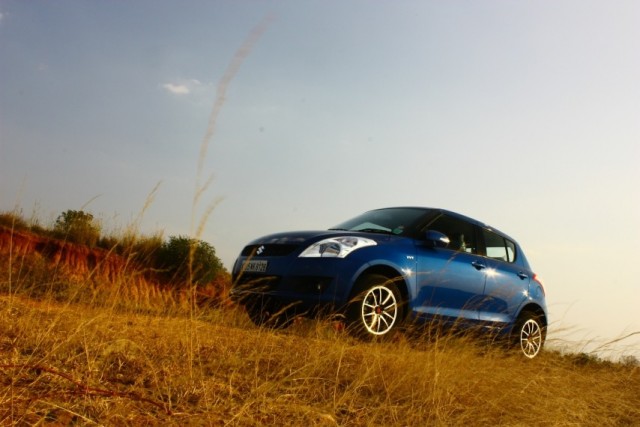
2011 New Maruti Suzuki Swift : Going offroad?

Interiors

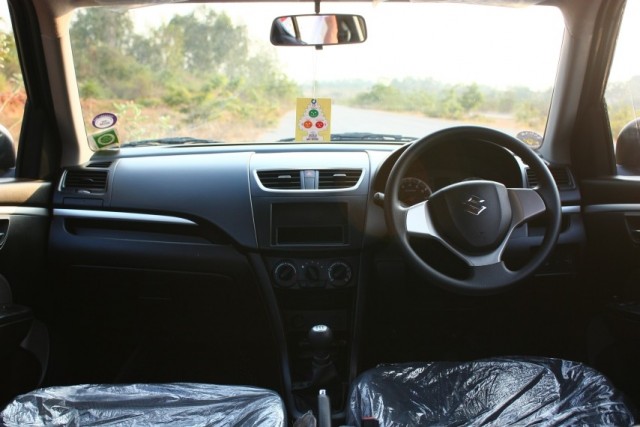
Maruti, show some respect already! We are frustrated with the quality of plastics provided in the earlier iteration of the car, and this version simply carries forward more of the same rubbish.

2011 New Maruti Suzuki Swift : Interiors

There is a hollow thud when you rap the plastics with your knuckles and the stuff actually looks cheap. The compartments which should house the music system/ AV system are poorly fitted and there is enough gaps in the panels for me to throw the kitchen sink through them and I have a hunch that it would pass through untouched. As a saving grace, the dashboard is quite large and is reasonably easy to read the numbers off it, even in sunlight. The seats are quite comfortable and large, though we would have loved a three stage lumbar support on it. For shorter city rides, it does not make much of a difference, but for long distance touring, holding the position would show.

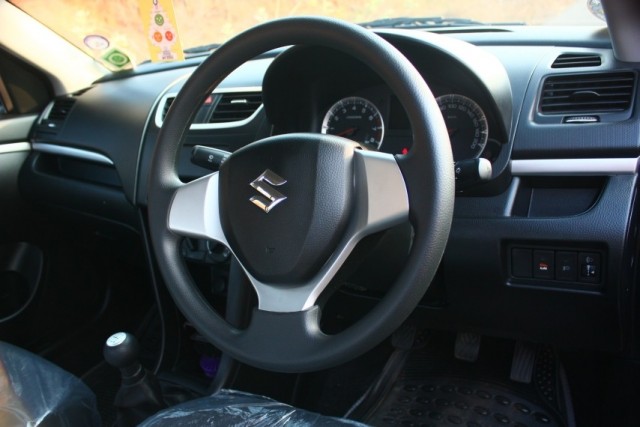
2011 New Maruti Suzuki Swift : Steering Wheel

I am tired of beige and/ or grey interiors. No, seriously, what am I, a WWII veteran who has a chestful of medals and a rapidly diminishing sex drive? I would have definitely preferred a more colourful interior colour combination in keeping with the cheeky nature of the car. Chestnut wood, alongwith hints of amber, some more chrome and warmer colours like dark blue or chocolate would have made life infinitely more interesting. Maruti says that there is a (hold your breath), a Sporty steering wheel, a Sporty chrome accents on the dash and Sporty fabric seats. Much abused, right?

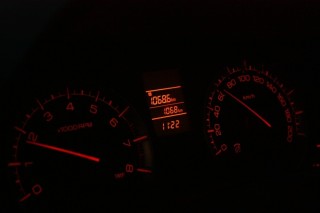
2011 New Maruti Suzuki Swift : Instrument Console2011 New Maruti Suzuki Swift : Instrument Console Aglow

Verdict on the interiors in one word? Blehh, but good job on the dashboard!

Engine and Transmission

The 2011 Swift features the new 1.2 K series engine, albeit featuring Variable Valve Timing (VVT). Before going forward, let me explain why this is important. The power and torque an engine is capable of generating is a function of the duration, lift and timing of the intake and/ or exhaust valves. With set (non variable) values for all of the above, an engine would be capable of generating only the set power and torque within the specific rev range. What VVT does is it alters the maps for the duration, lift and timing mentioned above with the different revolutions at the different ranges. Essentially, if the revs are higher, the duration and lift angles would be higher, enabling more fuel/ air mixture to be pushed into the combustion chamber, which enables bigger bangs, and hence, greater power. Hence, VVT on the already high performance engine allowed it to be a high revving unit producing roughly 87 horsepower, and 114 Nm of torque.

2011 New Maruti Suzuki Swift 012011 New Maruti Suzuki Swift 09

When you drive the Swift, the thing which instantly hits you is the ease with which the car listens to your commands. She is very driver friendly, as with the earlier iteration and taking quick corners and running down straights with her skirts up are very easy and the torque curve is just right, steep enough to be exciting but not scary. With the longer wheelbase, the new Swift feels more planted at the corners, with the suspensions rarely bottoming out, even when you wrench her hard (we did not try out the last part too many times, because she was an absolutely new car, but expect more when we have a long term ownership review later).

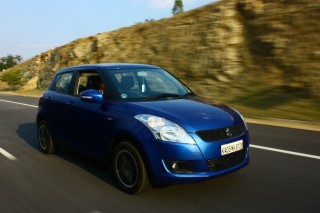
2011 New Maruti Suzuki Swift : Good handling

You get thrown around inside the cabin, but you can literally feel the B column pushing back to keep the position upright even during drifts. She is reasonably quick on the uptake as well, with one hundred coming up in well under ten seconds. The powertrain – chassis – driving dynamics combo works quite well together, and essentially retains most of the characteristics which was there in the older iteration.

2011 New Maruti Suzuki Swift : Tail Lights2011 New Maruti Suzuki Swift : Alloys

All in all, much respect!

Final verdict

2011 New Maruti Suzuki Swift  : To buy or not?

The Swift has always been a fun car to drive. The new iteration makes it even more so, albeit the diesel version, we think, would essentially feel like the older version verbatim. The petrol version, though has made the Swift even, err, Swifter!

So, if you want more comfort and bells and whistles from your ride, and who does not like too much of performance (although there should be enough to brag about it), please buy an i20 instead. But do not try doing doughnuts on her. You will just end up dead.

But if you are one of us, and like the cheeky way the car responds, alongwith the rush which the Japanese power to weight ratios are capable of, and wish to show off your driving skills to that hot chick you have been wanting to pick up without killing yourself, go ahead!

So, would it be worth it to go plonk your money on the new Swift? Absolutely! That is, unless you can get yourself the Mini. In which case, pick up both, and gift the Swift to us.

Photo Credit: Ayan Ray

2011 New Maruti Suzuki Swift 18

2011 New Maruti Suzuki Swift 20

2011 New Maruti Suzuki Swift 13

Some of the older people who are reading this article may remember an ad campaign of Tata Steel.  It showed the community service that Tata was doing in the backward areas of what is now Jharkhand and it said “We also make steel”.  Tata is one of the original business houses of India that was there from the beginning of the 20th Century, even during British Colonialism and post independence it went from strength to strength.  There is probably no one in India whose life has not been touched by a Tata product.  Tata makes  salt, hair oil, at one time radio sets, information technology products and services and of course the subject of interest for us automobiles.  What we know today as Tata Motors started as TELCO or Tata Electric and Locomotive Company.  It made trucks and buses in collaboration with no less a company than Daimler Benz AG, the makers of the Mercedes Benz cars, trucks and buses which sported the three pointed star.

Along with Ashok Leyland, Tata Motors was the behemoth that took care of the transport requirements of cargo and passengers to areas which were not touched by the Indian railways.  With the ascendancy of Ratan Tata within the Tata group, Telco or Tata Motors looked to making passenger cars.  It is well know that Ratan Tata is a car buff and for him to move making cars was a natural progression from what they had been doing till then.  During the 1980s, Tata applied for licence to make the Honda Accord in India, and were promptly refused by the Government of India.  Tata then chose the long and difficult route to making cars, where in it relied on its own expertise in known areas to move into areas that were not very well known to them.  If you want to understand the progression of Tata to making cars then the beginning point will have to be the Tatamobile – a pick up truck.  Under the stewardship of Sumant Mulgaonkar, Tata took the first step towards making passenger cars by launching the 206 Tatamobile, a one tonne pick up.  The intention was not to just remain a pick up truck maker.  The Tatamobile was the platform that would start Tata’s definitive movement towards making passenger cars.

Tatamobile 206

The Tatamobile featured a ladder chassis and a single cab up front which was followed by a load bed.  The lessons learnt with the 206 Tatamobile translated into the 207 Tatamobile which refined things such as driver comfort, steering wheel position, brakes and suspension.  While this was happening Tata also began working on two passenger vehicles the Tata Sierra and the Tata Estate.  The Tata Sierra was essentially a load beta van with a hard top and a seat at the back.  And to avoid unnecessary complications the rear only had a large glass on either side which was fixed like it was on some Ford SUVs in the USA and swinging rear door that also had the spare wheel mounted on it.  The Sierra captured the imagination of the people and can rightfully be considered to be the first SUV to have been launched in the Indian market.  The vehicle was reliable and many journalists travelled in it to difficult parts of India such as Leh, the Rohtang Pass and some areas of the north eastern part of India.  The Sierra built itself the reputation of being rugged and fairly reliable.
Sierra1

The Sierra was followed by the Estate.  This was more of a car than the Sierra.  It had four doors and a hatch that opened like all proper hatches.  The build quality was iffy, there were suspension problems but like the Tatamobile and the Sierra its face bore resemblance to old time partner Mercedes Benz vehicles.  The Estate did not fare as well as the Sierra, though it did sell in decent numbers for a pretty long time.  At one time it was considered to be a status symbol, but the Estate died much before the Sierra.

Tata Estate1 Estate2

Through all this Tata were learning their lessons.  They were investing heavily in R&D and even established a crash testing facility at their factory in Pimpri near Pune.  Tata’s R&D was taken care of by its ERC or Engineering Research Centre, probably the first of its kind in India set up by an Indian manufacturer.  The year 1995 can be considered to be an important year because it was in that year that Tata introduced the Sumo, a vehicle that went on to make history for the company.  The Sumo was reputedly named after the departed Sumant Mulgaonkar, but this story has never been corroborated by anyone in Tata.  Some said it was called Sumo simply because it was heavy, a characteristic of Tata vehicles which also became its bug bear.  Since Tata drew heavily from its truck making experience, its passenger cars used the same methodology of construction and it took a while before Tata could unlearn this aspect of their engineering.

Sumo

The Sumo was also built on the 207 Tatamobile platform but took the Sierra in the direction of making a proper SUV with four doors and a hatch.  It tried to look like the Mercedes Benz G class or the Gelandewagen.  It succeeded in its attempt at looking like the G class and ironically when Mercedes Benz has launched the G class in India recently many thought it looked like the Sumo!! The Sumo satisfied the requirements of the Indian joint family.  It was humongous, swallowed people and luggage but it was not SUV.  It had handling that was so bad, that in the initial years of its launch the sight of Sumo’s turned turtle on highways was very common.  The Sumo was simply top heavy and had a centre of gravity and this in combination with its mushy suspension meant that it could just turn turtle when going around sharp bends at high speeds or if sudden changes in direction are attempted.  However this did not stop the vehicle from selling in large numbers.  It was launched only in five states initially and was overbooked.  Tata was selling the Sumo only in white because that was the easiest colour to paint quickly.  The Sumo still sells around two thousand units a month, mainly because the rural maxicab or taxi market loves it.  It also now comes as the Grande.

Grande1


Safari1 After the Sumo became an MUV Tata worked on the Safari which was launched in 1998.  The Safari was a proper SUV that was designed by the now defunct Mayfair engineering.  The Safari start with an IDI engine but went on to have a Dicor or Direct Injection Common Rail Engine of 3 litre capacity and this was later replaced by the 2.2 litre Dicor engine with a Variable Geometry Turbo (VTT in Tata speak).  The Safari’s replacement the Safari Storme has been shown at the 2012 Expo.  While the body looks similar to the existing Safari it is actually all new with the chassis coming from the Aria.

Tata Motors New Safari Storme : White, Front 3/4

Tata Motors New Safari Storme : White, Rear 3/4

While the Sumo was being produced and improvements were being made, Tata also had dabbled in making a monocoque van which some auto journalists had started calling the Calypso.  In typical Tata style the name was neither denied nor confirmed and the van never made it into production.  But the lessons learnt on the van which was displayed at a couple of Expos were used in the creation of the first proper monocoque car that Tata made, the Indica.  Much before the Indica was made Tata did make public the project that it had taken up and it was from the conceptualizing of the Indica that one actually started seeing Ratan Tata at work.  Even though the Indian economy was liberalized and cars taken off the licence system, Ratan Tata decided that the company had invested enough to warrant making cars on their own.  So he gave his first famous brief to his engineers.  Make a car that had the space of an Ambassador inside, had the size and ride of the Maruti Zen on the outside and the price of the Maruti 800 as its price point.

Sceptics, who were plenty in numbers, pooh poohed the idea.  But Ratan Tata and the team were determined.  The only outside help that was taken for this car was for the external design of the car and this came from IDeA which also designed the Fiat Palio.  The small car was kept under wraps and nobody got to see even a glimpse of what the car looked like. The journalists fraternity gave it the name Indica and again in typical Tata style the name was neither confirmed nor refuted for a very long time.  Internally the car was called the Mint, because the engineers in Tata were so sure of their product that they thought it would mint money for the company.  Finally the covers were taken off in grand style from the car at the Auto Expo of 1998 and it was there that Ratan Tata himself announced that Tata had decided to go with the name Indica since everyone was already calling the car that.

Indica Original1

The Indica debuted into a market that had seen the launch of the Santro, the Daewoo Matiz and already there was the Zen from Maruti.  But when the covers came off the Indica it scared the competition.  It was unlike anything that Tata had done before and it seemed that Tata engineers delivered on the brief given to them.  It scare Maruti sufficiently for them to bring down the price of the Maruti 800.  Patriotic Indians celebrated the launch of the Indica and like the Sumo it was overbooked.  And like the Sumo it had a bugbears relating to quality and handling.  But unlike with the Sumo, Tata were faster to react to feedback and very soon the V2 or version2 of the Indica was launched.  The version two has been around for more than a decade now and that it still sells in good numbers is testimony that Tata had ironed most of the problems.  Problems pertaining to plastics and other small things could not be ironed out because the Indica had to be built to a price.  But its suspension, engine and handling all improved and the car also had a trump card in the form of the diesel engine that no other car had.  This forced Maruti to source the TUD5 diesel engine from Peugeot and plonk it in the Zen.

The Indica also inaugurated the Tata link with Fiat’s thinking and the disconnect with its obsession with Mercedes Benz.  Like the A178 platform of Fiat, the Indica platform was also meant to support other body styles such as a sedan and an estate car.  The sedan became the Indigo (apparently to symbolize the Indian on the go) and the estate the Indigo Marina.  The Indica range also showed another facet of Tata which was till then unseen.  Its marketing savvy.  Tata quickly learnt that marketing was important in a competitive environment.  Tata saw that there was huge market for the Indica from taxi operators.  In order to ensure that Indicas did not end up as taxis and drive away the personal car buyer, they launched a de-specced version called the Indicab which was available only in white.  When the Indian Government came up with the sub four metre rule for cars to qualify for excise relief Tata took advantage to create the Indigo CS or the Compact Sedan.  Tata went from being India’s biggest truck and bus maker to third biggest car maker behind two multinational companies Maruti Suzuki and Hyundai.

Indigo CS

The enormity of Tata’s achievement will be clear when you see that companies that had more experience than itself in the manufacture of cars have struggled to get anywhere near the numbers that Tata sells.  GM, Ford, Fiat, Renault, Nissan et al have mass market products with diesel engines, yet Tata is comfortably ahead of them.

Xenon1

A struggling Fiat was given a life line by Tata when it agreed to distribute, sell and service Fiat cars through its extensive dealer network which can match that of Maruti and Hyundai.  Tata also inked a pact to create a new entity called FIAL or Fiat India Automobiles Limited, a company in which Tata holds half the stake.  This gave Tata access to Fiat engine technology, both petrol and diesel and a few years ago when the time came to create a new Indica which became the Vista, Tata used engines from Fiat.  The sedan which became the Manza also uses Fiat tech and is actually built at the Ranjangaon facility that Fiat owns.  All this has meant that Tata has been honing its technological and manufacturing skills without pushing up prices inordinately.

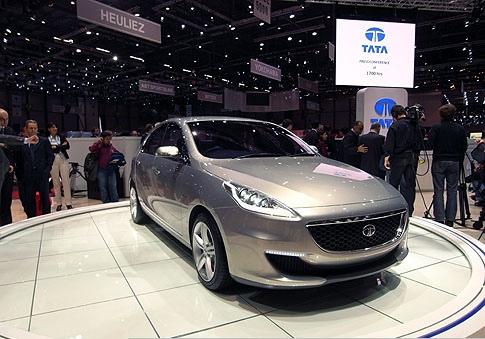
While all this was happening, Tata never lost an opportunity to display new concepts at all Auto Expos and it has also been displaying concepts such as the Indiva or Indivan at international motor shows like the Geneva motor show.  These concepts have been the grounds on which newer vehicles such as the Aria have been built.

Xover1

At one point Tata used the Prima name to show a Pininfarina designed D segment sedan as a concept.  It seems however that the idea of making this concept into reality has been dropped.


Tata_Prima

But the next big idea again came from a radical brief.  The story goes that Ratan Tata was travelling home one day and it was raining.  He saw a family on a motorcycle with an umbrella aloft and saw that it was hazard not just for the family on the motorcycle but for others as well.  So he came up with the idea of the Rs. One Lakh car.  This brief was more difficult than the Indica brief and meant taking on completely new engineering challenges.  Thus the Nano was born.  A brave attempt.

Damson Purple Nano LX at the 11th Auto Expo 2012

When the Nano was announced the Greens cried foul and said it would worsen traffic and atmospheric pollution because it would sell in large numbers.  Tata tried his own version of affirmative action by taking the project to the backward state of Bengal a decision that he will regret for the rest of his life.  Mamata Banerjee made political capital out of this and Tata Motors was forced to go to the other extreme of the country, Sanand in Gujarat.  But the movement from Singur to Sanand consumed time, pushed up the project costs and in general won a bad name for the Nano. Numbers have been bad sales wise and it is only with a concerted push from the marketing side and addition of new features and colours to make the car an icon for the youth that the sales of the Nano have started picking up.  But the Nano is still far from being out of the woods.  Tata needs to use its marketing muscle to push the car which everybody thought did not need pushing.  There is no denying that the Nano is a wonderful car that can seat four oversized adults in complete comfort and chug along at a decent clip.  It also has a cutesy design that is not overly fussy but elegant in the right measure.

Tata Motors Nano CNG

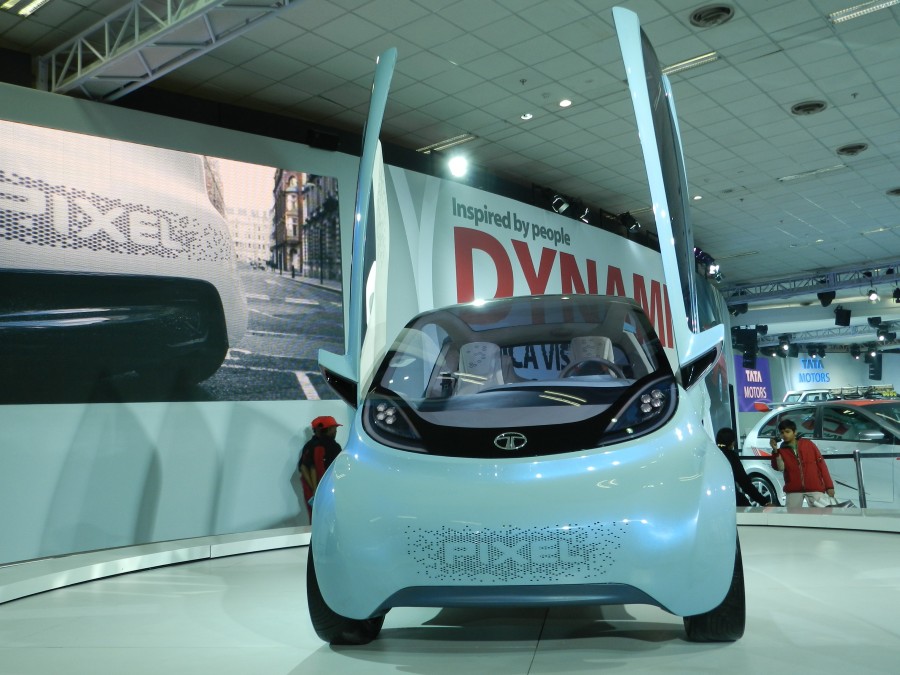
As usual at the Auto Expo 2012, Tata had various concepts.  The most important of these is the hybrid Manza featuring a combination of petrol engine and electric motors.  This could also be how the facelifted Manza would look.  Then there is the Pixel, Tata’s take on the Nano for congested spaces in developed markets such as Europe.  The car features scissor doors that lift upwards and therefore give the ability for the car to be parked in congested spaces.  It also could be how the next generation Nano would look like.

Tata Pixel Concept at the 11th Auto Expo 2012 : Front

Tata Pixel Concept at the 11th Auto Expo 2012

The Nano platform also is the basis for an auto rickshaw replacement the Tata Magic Iris.

Tata Motors Magic IRIS CNG at the 11th Auto Expo 2012

Tata has been doing all this while it has acquired Jaguar/Land Rover from Ford.  When Ford sold the two companies together, Land Rover was the better performing marque while Jaguar was mired in the boon docks.  It is to Tata’s credit that they have managed to make Jaguar/Land Rover profitable and incredibly enough it is Jaguar which is now growing faster.  And the Jaguar/Land Rover range including the new XJ sedan and the Range Rover Evoque were displayed at the Auto Expo.  Despite not having enough dealers in India, Jaguar/Land Rover is growing rapidly and with new dealerships in place the Jaguar range can become legitimate competition to the German trio of Mercedes Benz, BMW and Audi.

Jaguar C-X75 at the 11th Auto Expo 2012 : Front

Jaguar C-X16 at the 11th Auto Expo 2012 : Front 3/4

Jaguar XKR-S at the 11th Auto Expo 2012 : Front


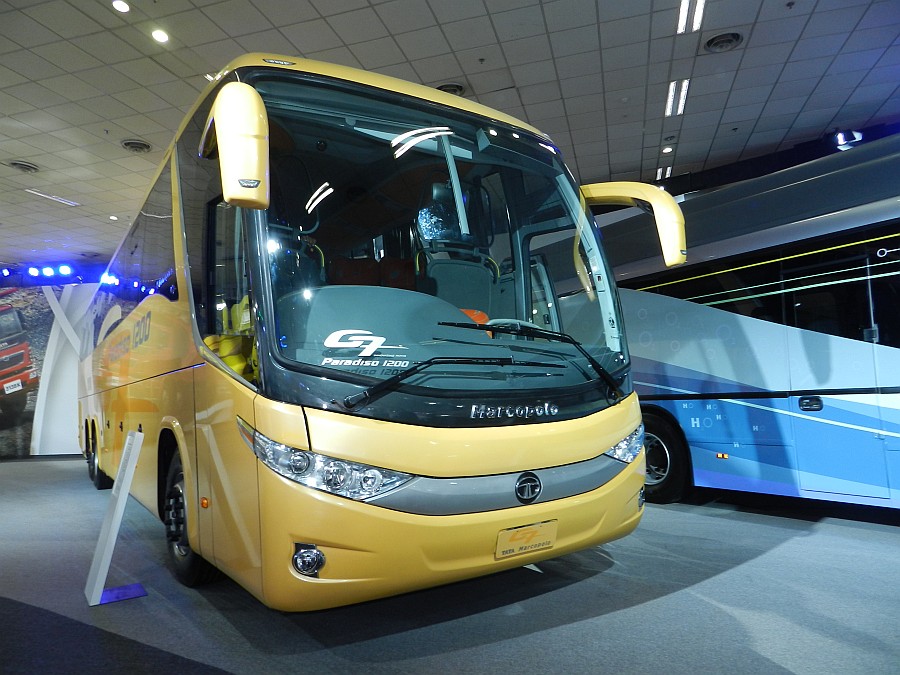
In the commercial vehicle space too Tata has been very mobile.  Internationally it acquired Daewoo Trucks, Hispano Carrocera of Spain and has a collaboration with Brazil’s Marco Polo.  Tata has launched the Prima range of tractor trucks and heavy duty trucks for mining apart from the Divo range of buses to take on Volvo and Mercedes Benz.  Tata also displayed a hybrid bus featuring a fuel cell, no less, at the Expo.

Tata Motors Prima 7548.S Concept


Tata Motors Fuel Cell Starbus

Tata has also tied up/bought over a French firm that is working on air as a propulsion.

Tata Onecat Air Car

Tata has also shown a fully electric version of the Vista and the Nano.

Vista Electric

After seeing all this it is pretty much evident Tata is almost there with the best.  A little more time and continued dedication and innovation is the key to getting there fully.  The acquisition of Jaguar/Land Rover will only strengthen Tata’s engineering skills.

Tata Motors Paradiso-G7-Multiaxle coach

Cyrus Mistry has to fill in a very big void that the retirement of the visionary Ratan Tata will create.  The good thing is that the great man will be there for guidance.  And one hopes that the youth of Cyrus Mistry will take Tata to greater heights and make it a global player of consequence.

Nano Europa1

What is it that comes to mind when you think Hyundai?  India’s second largest car maker. Originally from Korea.  Had a huge hit in the Santro and the Accent.  Failed badly with the Getz,  Elantra, the Sonata Embera, the Terracan and the Tucson.  Tasted moderate success with the previous generation Verna.  Again tasted success with the i10, then with the i20, then with the new Fluidic Verna and now with Fluidic Eon.  Oh, it has also tasted reasonable success with the Santa Fe SUV.  That Hyundai is the second largest car maker in India tells us the story, but it conceals more than it reveals.  Time to look at the revelations and to start revealing all that is concealed behind that innocuous statement that Hyundai is India’s second largest car manufacturer.

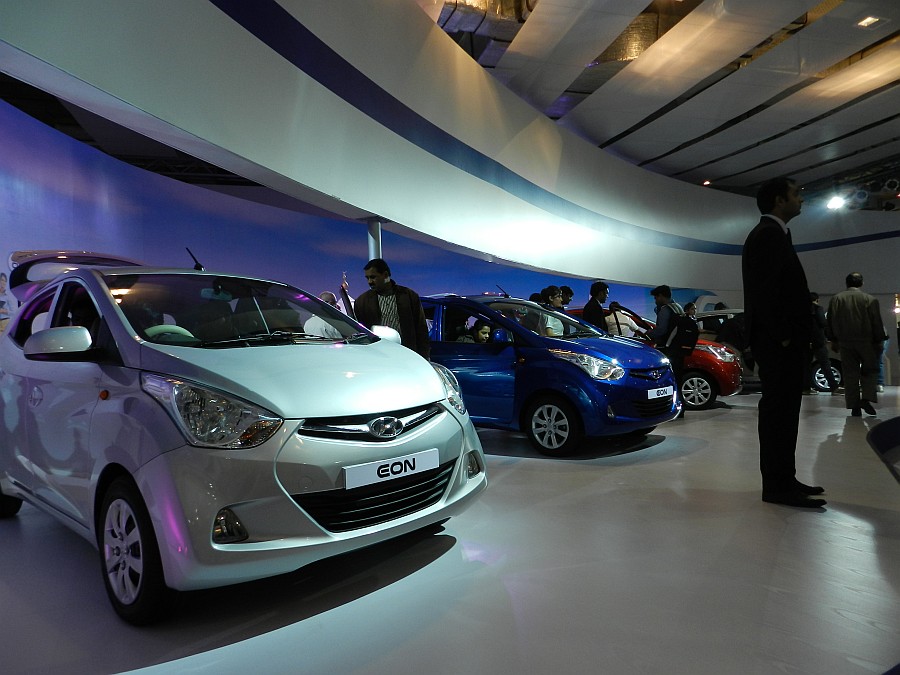
Hyundai Eon at the 11th Auto Expo 2012

To say that India is after South Korea the most important car market for Hyundai is simply stating the obvious.  But this too is a seemingly innocuous statement that does conceals more than it reveals.  As is my habit, I need to rewind a bit before I can get to the present and then fast forward into the future.  Since Hyundai came to India just about fifteen years, its history is easy to map.  But it is slightly more difficult to profile the company.  So let me start with a bold and provocative statement.  Hyundai as a company is doing better than Maruti Suzuki, so what if the latter is number one and the former is number two.  Let me illustrate this point a little clearly for all those who are shocked.  Maruti Suzuki has been around for more than twice the amount of time that Hyundai has been around, yet it is only known for its inexpensive, cheerful and reliable little cars which cost less than Rs. 6 lakh.  The 800 was huge, as was the original Zen, the 1000, erm, okay not bad and the Esteem, yeah, that one was good.  The Esteem was primarily the Maruti 1000 with a 1300cc engine.  But it did well in the absence of competition.  When the competition came from the Daewoo Cielo, the Hyundai Accent, the Opel Corsa it just did not do well anymore.  It was sought to be replaced by the Baleno, a great car that people refused to buy.  The estate version the Baleno Altura must have sold less ten numbers.  Then came the SX4, a competent car but no hot seller.  The biggest selling three box in the times of competition has to be the Swift Dzire.

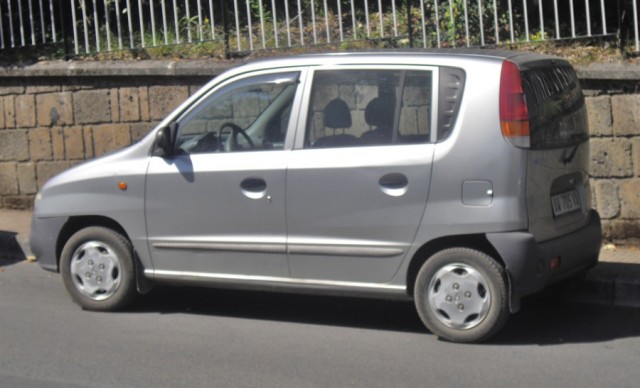
Now look at Hyundai.  This was company that reinvented itself from the word go.  I know that sounds illogical but let me explain.  When Hyundai wanted to come into India like all other international players it scouted around for partners.  Most Indian partners had been taken and the ones that were there were not worth it.  So Hyundai took the bold step of entering the Indian market on its own steam. A different kind of beginning from anything that existed prior to it.  Like all the other international companies who thought that the C segment was where the action would be Hyundai too decided that it would launch a three box car.  That is when one gentleman by the name of B.V. Subbu intervened and changed the face of Hyundai and India’s automobile landscape.  It was Subbu who persuaded Hyundai to take a relook at its strategy.  He convinced them that it made business sense to hit the small hatchback market where most of the volumes lay.  Hyundai heard him and changed strategy.  It rummaged through its portfolio and found that it had a hatchback called the Atoz (there is some controversy about the Atoz, with some saying that it was Atos but those who claim that it was Atoz claim that it was meant to be A to Z.  I will not dwell on this since I have nothing much to add by the way of credibility to it).

1998 Hyundai Atoz


Irrespective of the spelling of the name of the car, the one thing that was very certain was that the Atoz was neither a looker nor was it a big seller.  It was obvious that Hyundai could not just bring a car which was not doing well in the international market.  After extensive research and customer clinics, Hyundai decided to modify the Atoz and make it more palatable to customers.  Thus its first product for India was a made for India car and they named it Santro (please don’t ask what that is supposed to mean, I only know a story that says that it was a name thrown up by a computer which scrambled the letters of the English alphabet; I cannot vouch for the veracity of this story though and if there is anything more to the name, Hyundai made sure that we did not get to know of it sufficiently).  When the Santro was revealed to the auto journalists in India, they all gaped in disgust.  They said it was horrible looking, they called its front grille toothsy and ugly, passed snide remarks about the Korean sense of aesthetics and rounded it all of with a doomsday prediction.  But the Santro confounded the critics.  It sold in good numbers, in fact in great numbers.  In doing so it beat back competition from the Daewoo Matiz which was designed by star designer Georgetto Giugiaro and his company Italdesign.  It helped that Daewoo was dying so it could not really fight back.  But the Santro also beat competition from the Tata Indica, designed by IDeA of Italy who also designed the A 178 platform vehicles from Fiat – the Palio, Siena and the Adventure.  This in addition to severely threatening the established Zen from Maruti which finally caved in.

Santro Rear

So what was it that Hyundai did right with the Santro?  Well it was not one thing but a combination of many.  The Santro was a tall car (B.V. Subbu and Co lost no time in trademarking it as the Tall Boy) and that meant ingress and egress was easy even for the aged and the physically challenged.  For most Indians the rear seat of the Ambassador represented the most comfortable perch on the face of the earth and the rear seat of Santro was/is like a throne.  It had good space, though it too was a mono volume like the better looking Matiz, it had a two box profile.  It came with an engine that came with a three valve head and compared itself to what Mercedes Benz was offering as engine tech on its high end cars.  Then there was the master stroke.  All models came with air conditioning as standard and for Indians who always associated air conditioning with opulence it came as a pleasant surprise that a humble inexpensive little car was offering air conditioning as standard across all variants.  Cleverly Hyundai also refused to put in a sound system in the car.  They said tastes of customers varied and therefore they left it to the individuals purchasing the car to choose their own stereo systems.  This also helped in keeping the price down a little.  And when India decided to introduce pollution norms, Hyundai started the practice of badging its cars “Euro II”.

Accent Santro Xing1

Marketing counts for a lot but not for everything.  The Santro was a sound product and Hyundai wasted no time in expanding its service network, an important variable if it had to succeed.  Perhaps Hyundai again achieved in this space what Maruti achieved in half the time.  Hyundai scrapped the Atoz internationally and replaced it with the Santro and where the Atoz did not sell the Santro did.  One can say without fear of contradiction that Hyundai learnt and perfected the art of making a good small car in India, a fact seldom acknowledged by anyone writing about Hyundai.  Hyundai has learnt invaluable lessons in India that stood it in good stead in getting recognition internationally as well.  The next car that Hyundai introduced in India came pretty quickly after the Santro since the original plan was to start with the Accent anyway.  The Accent was advertised as the $120 million car (referring to its development costs) and its understated yet elegant design made us Indians take to it like fish to water.  It still sells more than a dozen years after its original introduction and with very little changes to the body except the grille.  The Santro too sells in substantial numbers with a couple of facelifts that saw it transform from the Santro the Santro Zip and the Santro Xing.  Engines were suitably altered to meet pollution norms.

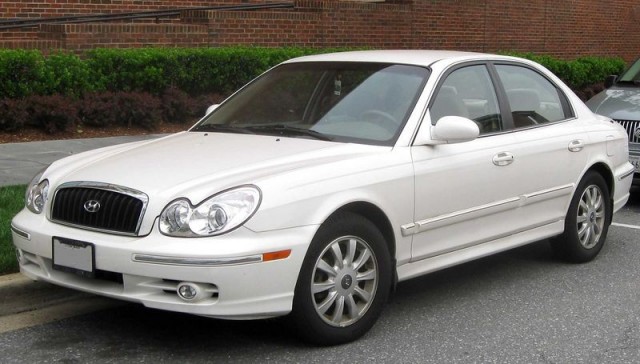
Hyundai Sonata EF

What followed after the Accent was the original EF Sonata, a car that unashamedly borrowed styling cues from the C Class Mercedes Benz (front) and Jaguar cars (back).  It was flashy, but we Indians love flashy things and it sold reasonably well but Hyundai replaced it with the Embera when they decided to bring the Sonata range in line with the international line up.  The car was good but unexciting.  Hyundai also introduced the Elantra and the car did not do too well at the hustings thanks to indifferent styling. There was a big lesson here for Hyundai to learn.  It found that things such as elegance and premium styling do not matter to the humble hatch buyer maybe, but they certainly do when it comes to forking out larger amounts of money.

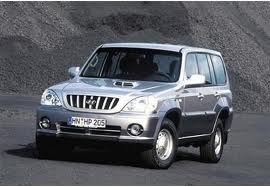
TerracanHyundai Tucson

This Hyundai saw with the SUVs such as Terracan and the smaller Tucson as well.  Even though Hyundai was still working with these model names in its own domestic market and some other markets it made sure that these names stayed away from India.  Hyundai was sure that it did not want to go the Maruti Suzuki way, where people will queue up to by the small cars but not even bother about the bigger ones.  Maruti still cannot sell the Grand Vitara and the Kizashi despite their being good cars.

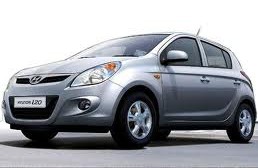
One can safely say that the first decade of the 21st Century was one where Hyundai became a good student and dedicated itself to the study of design and design language.  The first product to emerge from this study was the i10 and Hyundai started using the i followed by a numeral to proclaim that it now understand design better than it did in the past.  The i30 big hatch was technically the first car to carry the i nomenclature but it was the i10 that typified the change in design direction.  Design cues from the i10 went into the replacement of the Getz which began life looking like a VW and ended looking like a Peugeot.  The i20 evolved out of the i10 and it was more fluid and in fact has the face which went on to inaugurate the fluidic architecture on the i45 or the Sonata.  With the Sonata or the i45 Hyundai boldly announced to the world that it was not a wannabe company trying to ape European manufacturers, a trait that even its expensive Genesis sedan had.  Now I do not need to tell the rest of the story.  The Verna (Accent in some markets) incorporated the design language that is now unique to Hyundai and is globally acceptable.  To announce its intentions clearly Hyundai gave the i10 a fluidic face and also launched the Eon with the same design language.

I30 I20

New Hyundai Sonata at the 11th Auto Expo 2012

New Hyundai Sonata at the 11th Auto Expo 2012 : Rear

At the Auto Expo 2012, one found Hyundai strutting with a new confidence.  It showed off the existing range of cars including the very recently launched Eon and the Verna.  More importantly it launched the fluidic Sonata and also showed the new Elantra also sporting a fluidic design.  More importantly Hyundai announced that it will be bringing the new Elantra into India later in the year.  The response of the people at the Auto Expo indicates that this car is likely to be a winner as well.

Hyundai Elantra at the 11th Auto Expo 2012 : Front

Hyundai Elantra at the 11th Auto Expo 2012 : Rear

In all this Hyundai has been helped by the fact that it has a diesel engine at its disposal and that makes the task of selling cars that much more easier in Europe and India where diesel is the preferred fuel but for different reasons.  The Santa Fe will also get fluidic architecture in the near future as will the i20 which is already found testing with its front and rear camouflaged.  But make no mistake it was the original i20 which spawned the fluidic design language.  In its second iteration it will have a face and a derriere which will bring it in line with the rest of the Hyundai range.  Now you can see why Hyundai is better than Maruti Suzuki.  Even Suzuki has not found acceptance internationally as a seller of big cars, something that Hyundai has found.  If the success of the Verna is anything and it should be something since it sells more than the Honda City, the VW Vento, the Skoda Rapid and the Maruti Suzuki SX4, and if the response at the Expo to the Sonata and the Elantra are taken into consideration, then it seems unlikely that Hyundai will be stuck with the label of small car maker.

Hyundai Verna at the 11th Auto Expo 2012 : Front

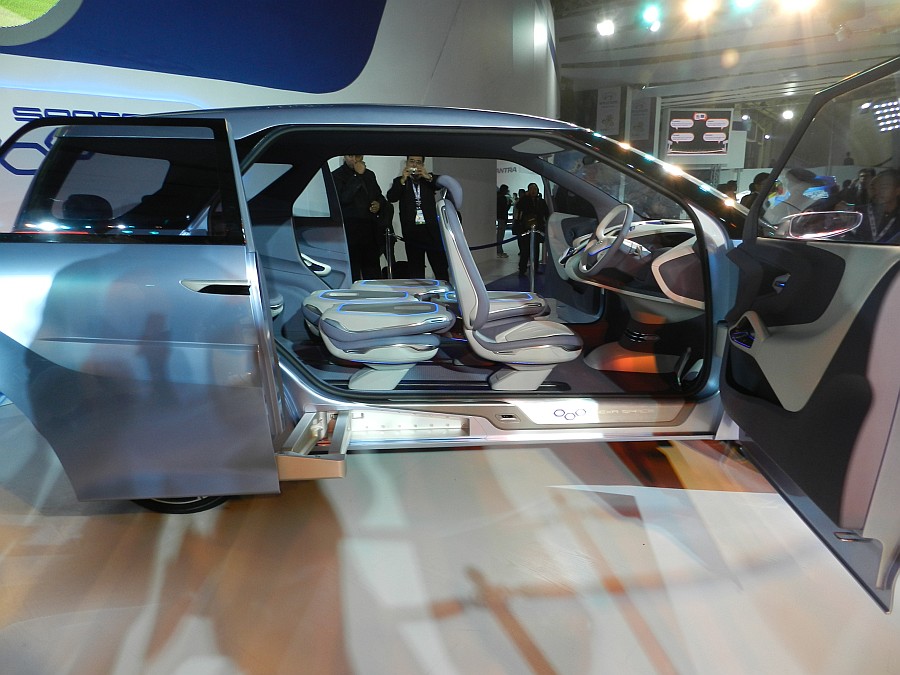
Over the years Hyundai has been working on its engine tech and design language and with the Expo it is now clear that Hyundai is also looking at clever packaging of MPVs to take its case forward.  At the Expo Hyundai had the World Premiere of the HND7 MPV called the Hexaspace.  It is still very much in concept form but it the production cues are there and it is going to hit the market sooner than later.  It has an innovative zig zag seating which makes it possible to seat a large number of people in comfort and it is of a monocoque construction.  Expect it to handle like a car.  It will give the Innova some sleepless nights since it is more “Innova”tive than the Toyota.  Already Toyota has said that the manufacturer that it fears most is Hyundai and it seems as if their fears are likely to come true.

Hyundai Hexa Space Concept at the 11th Auto Expo 2012 : Side Interior

Hyundai Hexa Space Concept at the 11th Auto Expo 2012 : Logo

Hyundai Hexa Space Concept at the 11th Auto Expo 2012 : Side

I suppose you now know why I said statements like “Hyundai is the second largest car maker in India” and “India is an important market for Hyundai” conceal more than they reveal.  From the global launch of the Santro to the global launch of the i10 and Eon in India to the World Premiere of the Hexaspace at the Indian Auto Expo you can easily deduce where Hyundai has become what it has.  It is also of great importance that India is the manufacturing hub of small cars including the i20.  Hyundai’s only other R&D facility outside of Korea is in Hyderabad, India.  Now there is not much left to your imagination right?

Hyundai Hexa Space Concept at the 11th Auto Expo 2012 : Front

Okay here is the history in one short line.  Maruti Udyog Limited, set up in collaboration with Suzuki, renowned for its experience in making small cars,  by the Indira Gandhi headed Government of India, as homage to her son who wanted to make a car for the masses went on to become not only became the company that made the best selling cars but also incorporated best manufacturing and corporate practices and thereby changed the face of car manufacturing and also the car market permanently.  Now that is not a short sentence (and apologies for that, the Americans would call it a loopy sentence) but it is still one sentence only.  What separated Maruti from other Indian four wheeler manufacturers (read that as Hindustan Motors, Premier Automobiles Limited and Mahindra and Mahindra) was that it continued to compete against itself, raised the engineering bar and along with it the reliability of its products and created a service network which is still unprecedented in its length and breadth, even when it has killed of the competition.  Maruti had the vision to look beyond its nose, into the future and was prepared to take on the toughest of competition whenever it came.

Come it did in the middle of the 1990s, with India struggling to find enough foreign exchange and liberalizing its economy and in the process getting rid of the licence Raj.  All car makers from the world were here.  GM, Ford, Peugeot, Fiat, Honda, Mitsubishi, Mercedes Benz, Hyundai, Toyota and Daewoo.  All the names mentioned here with the exception of the Korean Chaebol Hyundai came in with Indian partners. Daewoo tied up with Toyota’s erstwhile partner for manufacturing light commercial vehicles- DCM,  GM tied up with Hindustan Motors and set up its factory at Halol in Gujarat, Ford collaborated with Mahindra and started operations from the Mahindra facility at Nasik, Peugeot and Fiat both collaborated with Premier Automobiles Limited, Honda with SIEL, Mitsubishi with HM, Mercedes Benz with old partner Tata and Toyota with Kirloskar.

Of all these collaborations it is interesting to note that those companies that tied up with Hindustan Motors almost never took off.  GM for instance came in with the Opel brand and struggled to sell those cars.  They first bought out HM and then dropped the Opel brand and brought in the Chevrolet brand and survived.  Ford had to divorce Mahindra and go it alone and shifted base to Tamil Nadu with its factory near Irunguttukottai.  It took them nearly 20 years to find a product that could produce volumes. Peugeot had all sorts of problems with Premier Automobiles Limited and left the country in a hurry.  Fiat was braver than Peugeot, it bought out Premier Automobiles’ Kurla facility and tried to resurrect the Uno car but to no avail.  It is still fighting to come out of the hole despite having a tie up with Tata for sales and service of its vehicles.

An over confident Mercedes Benz introduced the W124 E Class in India when it had been phased out internationally and the Indian customer cocked a snook at the company by not buying its cars.  Soon Tata and Mercedes parted ways in a friendly fashion and Mercedes reorganized its strategy, a lesson that has proved most useful to BMW and Audi.  Honda’s partner Siel’s shareholding came down to 5% and Toyota proved to another slow moving giant taking calculated steps.  Mitsubishi still has ties with HM and is therefore not a company of consequence in India.  Daewoo’s attempt to grow too fast ended in its crashing world wide and only Hyundai proved to be a serious competitor to Maruti-Suzuki apart from home grown major Tata who late in the 1990s decided to go on its own and take the fight to Maruti Suzuki.
In 2012 it is clear that none of the manufacturers with the exception of Hyundai perhaps have the wherewithal to take the competition seriously to Maruti Suzuki.  Maruti has been the true success story for cars as far as Suzuki is concerned.  In no other markets can anyone see the kind of domination that Suzuki cars enjoy in India.  If you look at statistics you will see that the percentage of cars that Maruti sells in the Indian car market has eroded.  At one time it was over 70% but later came down to near 50%.  But the truth is that Maruti was selling more cars in the 50% market than it did in the 70% market because the market had been considerably widened.  Despite experiencing a crippling strike last year, Maruti could not be overhauled from its numero uno status.  All this can be attributed to Maruti Suzuki’s understanding of the Indian market and its uncanny ability to read what the consumer wants and to give him/her an experience of happy motoring.

The Maruti Suzuki display at the Auto Expo only bolsters this perception of the company.  What may seem to be frivolous, incomprehensible or even eccentric to the casual observer is actually a deliberate study.  This year’s Expo saw for instance two Kei Jidosha cars from Japan, the Palette and the MR Wagon.  To most they just seemed two ugly cars that were standing there for some unknown reason.  The truth is that Maruti Suzuki is studying the market for small cars that pack good space and offer affordable market.  The Kei Jidosha cars in Japan sport high tech 660cc turbo charged engines.  Till the advent of the Tata Nano it was believed that less than 800cc engine in a car would not be viable.  Though the numbers are small, it does seem that the Tata Nano is increasingly finding buyers with its 624cc engine. If you see it in this light then the PaletteSW, Solio and MR Wagon will begin to make sense.  Maruti is exploring the possibility of making more small cars and extend its strangle hold over the small car market.

Suzuki MRwagon at the 11th Auto Expo 2012

Suzuki PaletteSW at the 11th Auto Expo 2012

Suzuki Solio at the 11th Auto Expo 2012

Let us look at the other products on display.  There is one car in the Maruti line up which is a matter of great concern.  The A Star.  It is relatively new car and has replaced the Alto in most international car markets where it carries the Alto moniker.  But in India it has come a cropper with monthly sales plummeting below the one thousand mark.  Maruti has tried to generate some buzz around the car by displaying a cabriolet version of the A Star.  Please look at the thinking.  The perception of the A Star has been that the rear of the car is too claustrophobic thanks to the small window.  When you take the roof of the car then it is all airy.  When you see a car like this in a different light then the perception of the actual production car changes.  People tend to wipe out the negative perceptions that they originally had.  It would be very interesting to see if this strategy of Maruti is actually going to work.  Sales numbers will soon speak the truth.

Maruti Suzuki A-Star Cabriolet at the 11th Auto Expo 2012

Then there is the Omni.  Since its launch in 1983 with minimal changes to the front the Omni has been soldiering on and in the process confounding market analysts completely.  It is widely used as a family car, an ambulance, a panel van and a taxi for five or eight people.  Look at what Maruti did with the Omni in this Expo.  It gave new ideas to Omni buyers who are increasingly business people.  Maruti presented the idea of Cafe on Wheels. We Indians are innovative and when the manufacturer supplies us with one idea we will find ten more around it.  Maruti is ensuring that its nearly three decade old vehicle will still throw up new ideas and therefore will ensure that the product will continue to sell.  With dies and everything else depreciating, it makes total sense to sell old vehicles because they bring in larger margins.  In the small car space new cars have to operate on wafer thin profit margins.  But old cars can become cash cows.  The Omni is one of the cash cows in the Maruti farm.

Maruti Suzuki Omni Cafe On Wheels at the 11th Auto Expo 2012

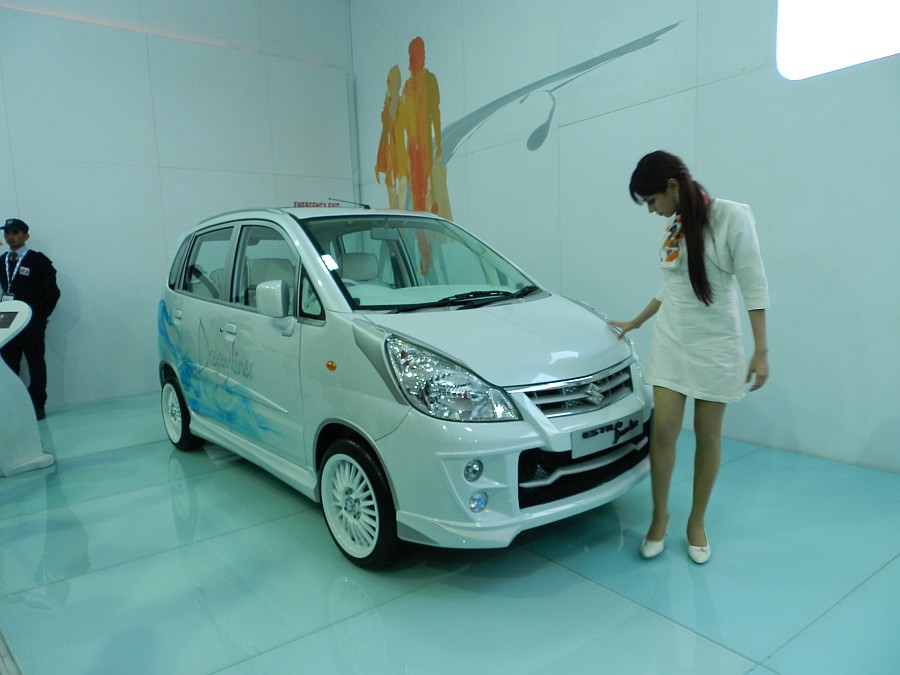
The Blues Lounge concept of the Ritz a car that sells in decent numbers is yet another instance of Maruti bolstering the image of its product by making it funkier.  The Ritz anyway comes with blue interiors and to position it is a lounge with blues referring to a genre of music, Maruti is sending subliminal messages to its Ritz customers.  Configure your car to your tastes.  Make it a comfortable lounge.  That is the message.  Similarly with the Estilo as well.  While the popular perception about the Estilo is that it is a super flop the reality is that it is a moderate success that sells anywhere between 1500 to 2000 units.  GM, Ford, Fiat et al would like to have a car like the Estilo in their portfolio.  So what if auto journalists and wannabe journalist bloggers say it is a horror.  Maruti by calling it a Dream Liner concept is conjuring images of the Boeing 787 Dreamliner. Again the message is make it your dreamliner.  After all the Estilo is a cheap and cheerful car that is far from bad looking.  Similarly the Wagon R Urbane concept.  Make it look mean and wicked.  Who does not like driving in all black car with alloy wheels and beefed up tyres.  Throw in a couple of projector lamps and you have your own version of the Wagon R.  The SX4 is another slow seller.  Maruti has shown the hatchback version of it which is more funky and it has also put up a mountain terrain cycle on the roof of the sportily done up SX4. Maruti is supplying potential customers with ideas and that is a great way of marketing your products.  Maruti did not have much to do with the Swift, with the car overbooked and many waiting for its delivery.  But it did show the old Dzire.  What are its plans for the old Dzire?  Renaming it and selling it to the taxi segment is the rumour.  Mahindra and Verito watch out.

Maruti Suzuki Ritz BluesLounge at the 11th Auto Expo 2012

Maruti Suzuki Estilo Dreamliner at the 11th Auto Expo 2012

Maruti Suzuki SX4 Sport at the 11th Auto Expo 2012

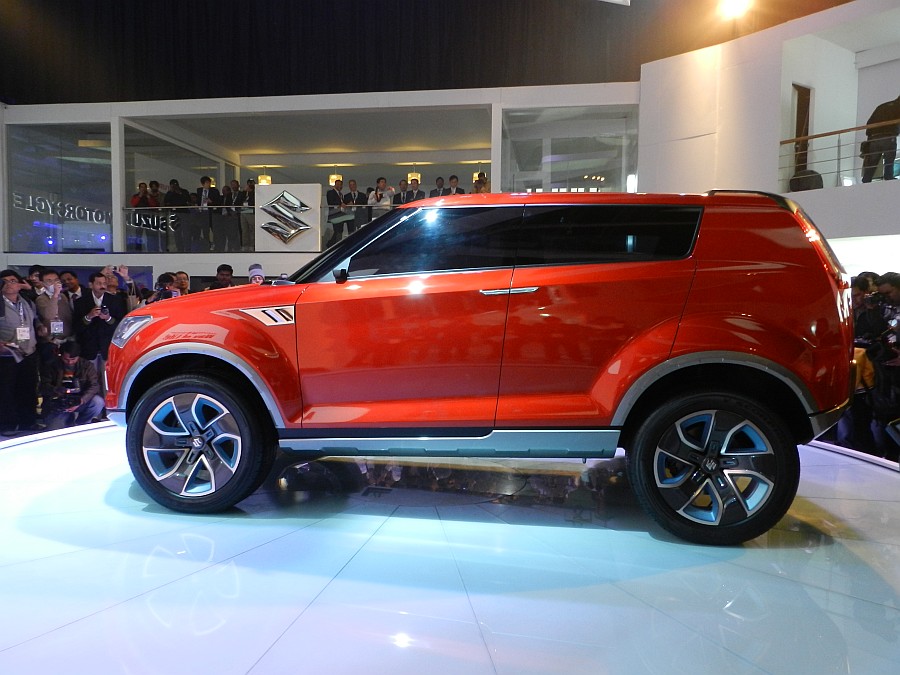
Maruti also has started showing a new habit since the Expo in 2008.  It shows a concept that becomes reality in two years time, by the next Expo.  In 2008 it showed the A Star concept with Indian design cues, the inspiration supposedly coming from the elephant.  In its production avatar it is watered down but by 2010 the car was in the market internationally as the Alto and as the A Star in India.  In the 2010 Exposition the RIII concept was shown.  This was Maruti’s announcement that it was getting into the MPV space but positioning its vehicle below the Innova.  By this year’s Expo the RIII came out in its production form as the Ertiga.  A compact MPV that can carry 6 to 7 people without the hassles of bulk in the city.  We are sure it will do well.  And this year the concept was a small SUV, a space that everybody is getting serious about.  Ford has shown the EcoSport and Maruti is gunning for this space with the XA-Alpha.  Presumably the XA stands for cross over vehicle while the Alpha stands for what Maruti Suzuki wants to make out of this SUV.  Alpha or Number One.  This is indication that Maruti Suzuki is in no mood to relinquish any segment.  It wants to be Alpha.Maruti Suzuki Ertiga unveiled at the 11th AutoExpo in New Delhi


02 Suzuki XA-α at the 11th Auto Expo 2012


Suzuki XA-α at the 11th Auto Expo 2012 : Side View


What is interesting is the cars that Maruti did not show at the Expo.  One of them has already made it into the market.  The cut short and cut price Dzire based on the new Swift platform.  The other is the Alto based new 800cc to be called the Maruti 800.  This is insurance against the Tata Nano and the Hyundai Eon.  It is rumoured that Maruti is working on the old F series 800cc engine to make it comply with even BSV engine norms.  It is also rumoured that it will be priced below the Rs. 2 lakh mark.  It does seem that Maruti knows how to be the Alpha.  Tough task for the competition to overhaul the leader who has benefitted from being active and agile and not slipping into complacency even when it had no competition. Now if that is not good thinking, then what is?

I am a motorcycle person, and generally hate cages. I do not like driving one bit, and generally rant about everything, including traffic to bad road to non existent driving sense on the streets.

Having finished saying all of the above, one cannot deny that a van has certain undeniable advantages.

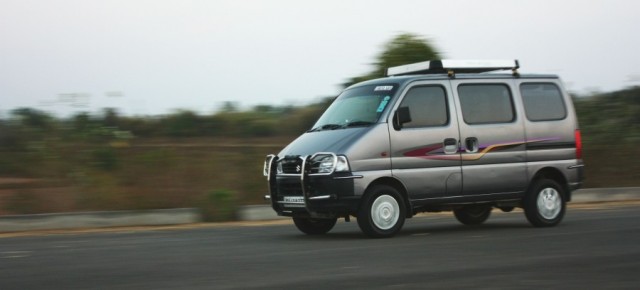
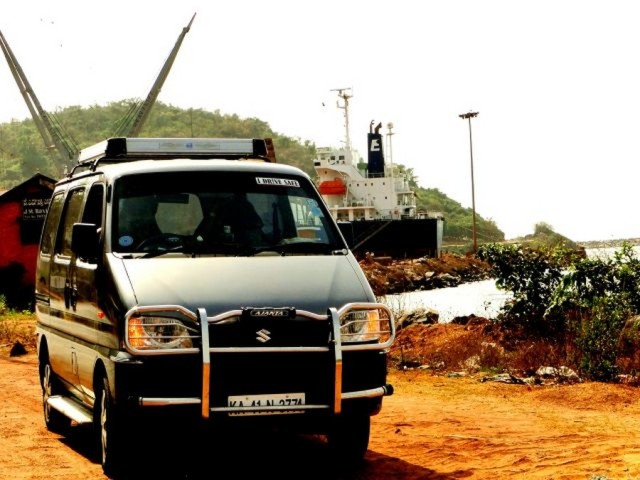
Maruti Suzuki Eeco : ENYA shot behind the grass

You can avoid getting wet, for one. A van is “generally” more stable than a motorcycle, even if it is a mere perception, undeniably, accidents on a motorcycles, even minor ones, increase the chances of death or dismemberment, in that order.

But then again, I am a certified two wheels nut, who does not want to drive at all. However, in the interest of the Family, consisting of a Wife and two dogs, I needed a van. After I sold off the 800, where it literally broke my heart to see her go because she was such a fantastic partner in crime, and also because she was the first car I bought with my own money, I had been largely travelling around on my trusty Apache 150, until the rains decided to arrive, and the prospect of arriving in office two up with a set of wet clothes were not one of the most attractive propositions. Ergo, I needed a van.

Maruti Suzuki Eeco 12

I started to scout for options. Looked everywhere for something suitable which can accommodate a truckload of my friends, my Family and then still have space for some, but will be well within the 4 lakhs range, which was my working budget. I discounted the second hand market, because although as much as I wanted a CJ3B or a Classic, I simply did not have the time which would be required to maintain the beast, and I did not want another beautiful machine to go to waste because of lack of time. I drove my friends up the wall, cribbed and cried to my folks and generally acted like an idiot and painfully resolved to buy myself the Omni, which, though is a fantastic Value For Money proposition, simply did not appeal to me because of the awkward looks and the non existent safety features. Until, that is, Maruti Suzuki decided to launch the Eeco.

Maruti Suzuki Eeco 11Maruti Suzuki Eeco 06

The moment I saw the first snaps doing the rounds on the internet, I decided to do a reconnaissance. The first weekend after the van was launched, I queued up at the local showroom for a Test Drive. As soon as that half an hour drive was over, I came home and immediately arranged my finances. The next day saw me back at the showroom, booking her. With a waiting period of three months, I sat around twiddling my thumbs, till Maruti Suzuki, in its true blue customer dedicated fashion, decided to give me delivery a lot earlier than what it had first proposed, and a spanking new Eeco stood all ready to be delivered to me on the 30th of July 2010.

Maruti Suzuki Eeco 01

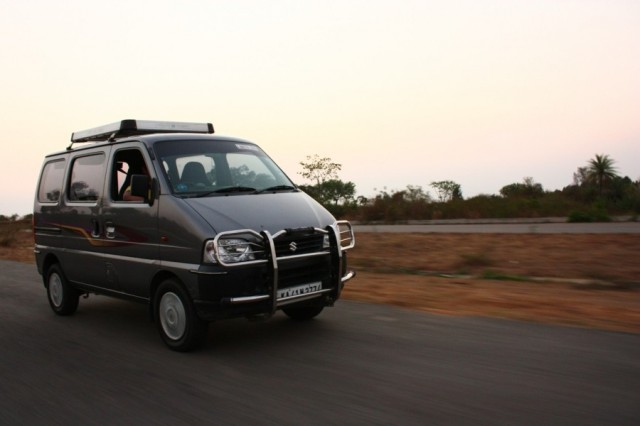
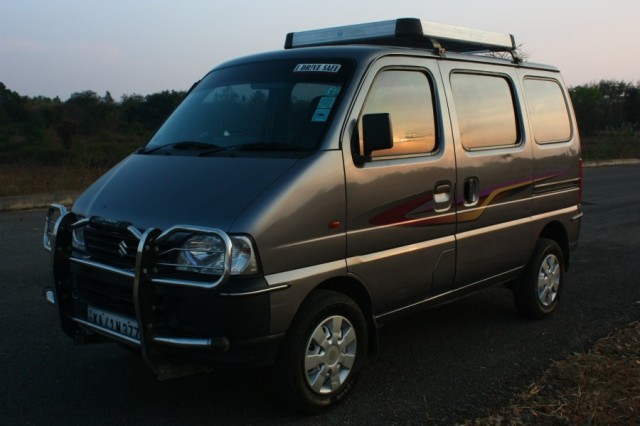
It was love at first sight. Metallic grey and shining under a gloomy sky, she looked like an awkward toddler who has just broken into adolescence. Tall and imposing, acres of room inside, the famed G13B engine, albeit in a 1.2 litre avatar to cater to the BS IV demands to boot, all of 73 horses and a 101 Nm of torque. Enough power to pull a mini truck and then some. Driving down from the showroom, I marveled at the height, at how I could acknowledge Innova and Scorpio owners with a nod of the head instead of looking into the sun, at a half of their price. I marveled at her power, which, when linear delivered to those rear wheels, had enough in them to slingshot the massive van to a ton in just under fourteen seconds.

Maruti Suzuki Eeco : Smooth, sensible torque spreadMaruti Suzuki Eeco 04

To heck with the body roll, to heck with lack of power steering, to heck with the archaic manual ac dials, to heck with the awkward dynamics. I could not care less. I was completely smitten.

A trip to the accessories guy saw me fitting her up with gadgets which I required most, a front nudge guard, a pair of steppers for the older folks to get up without straining themselves, a luggage carrier on top to carry that extra luggage on top when fully loaded on long trips and a Bluetooth enabled head-unit which enabled me to take calls on the go without troubling my concentration on the road too much.

I started driving around. A year and a half of driving, and I have notched up close to twenty five thousand kilometres. As a friend pointed out, the van is the first (his mistake, actually, it is the second, the first being the trusty 800) tin top which I actually connected with.

Drive quality and ergonomics

She has a fantastic engine. The power delivery is very linear, with no awkward surges, and no surprise gaps in the delivery. Smooth, sensible torque spread. That being said, the engine is absolutely dead under the 3000 rpm mark, and believe me, if you are downshifting on an uphill climb, you need to climb higher up in the rev range to extract the juice prior to slipping the gear down, else, the van just starts crawling if you do the shift when the torque starts to build up.

The gearshifts are nothing spectacular, and can do their assigned work quite well. Smooth is the word. The Diagonal Shift Assistance, which allows the driver to shift gears diagonally, is quite handy, allowing smooth shifts without carrying a ruler around. The second gear though, is ridiculously tall, the van can comfortably do a 20 to 80 without shifting into 3rd, which is actually a good thing, because you need a tall second gear for city driving conditions.

Maruti Suzuki Eeco : Fantastic Engine

It, like the Omni, is a rearwheel drive, so you need to be careful while taking fast corners, she does a fishtail the moment you take a sharp corner above 80 and then a frantic work ensues to oversteer, correct her line and she starts to slingshot again.

The suspensions are very good, and can take quite a beating, and remain unfazed with it all. I was very worried after the van went into a gigantic pothole on the NH7on a weekend dash to Chennai from Bangalore, and jumped up around ten inches or more when coming out and landed with a thud. I showed her to the service personnel next day. Nothing! The ride quality is on the stiffer side, owing to this essentially being intended to be used as a people mover and load carrier, and this is actually an advantage, because, at the expense of ride quality, the handling of such a tall van with small wheels and awkward ergonomics improves a lot for the stiff setting and does come quite in handy when driving fast.

The steering feedback is very good, owing to lack of a power steering, and each undulation of the road and the texture is transferred well to the driver. This is a huge confidence boost when one is driving fast in slick conditions.

The ergonomics are awkward, to say the least. It is tall, and it has small, 13 inch tyres. Which lends it bucket-loads of body roll, and then some more when she is done rolling. However, it would certainly be recommended to get at least a 175/70 R13, which will lend a slightly softer ride, and will be a boon when you are driving in cities like Bangalore with very bad roads. But she is very much drivable, and fast-drivable at that. Proof? I did a Chennai Bangalore dash in just around 4 hours with an average velocity of a 90 kmph, and kept pace with an Accord for over 2 hours during that journey, till, well, the Accord stopped for the driver to take a leak!

Space

Maruti Suzuki Eeco : Acres of Space

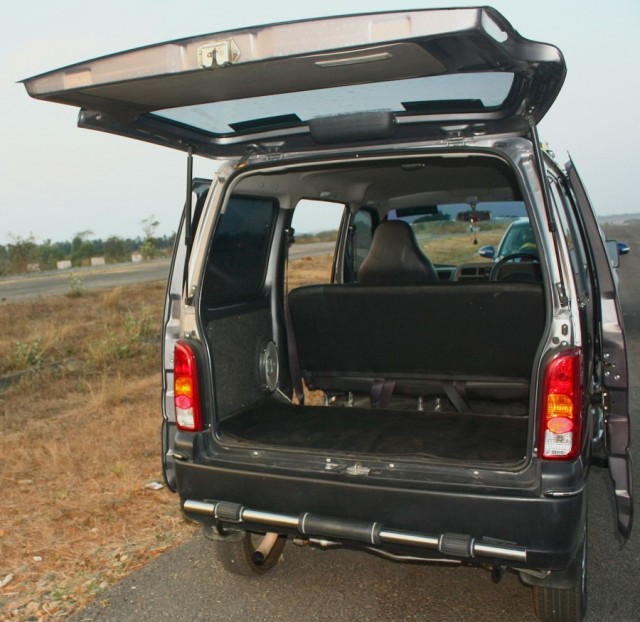
There is, quite literally, acres of space inside! Mine is a five seater air-conditioned version, ergo, there is plenty of space inside to hold five people comfortably, two dogs, and the luggage carrier does the job of carrying excess luggage, if any. And even with all that weight, it accelerates remarkably well. It is certainly no Innova, but for that price range, the amount of space it offers is well, fantastic!

Maruti Suzuki Eeco 08

Long distance capability

Maruti Suzuki Eeco 02

I keep reiterating that it is certainly no Scorpio or Innova when it comes to touring, but it can certainly hold its own. It does decent enough speeds (I hit almost 140 on the highway), it can run non stop for 400 odd kilometres (I am sure she can do more, I ran out of road). She does a very good job of keeping out the elements. The entire stretch from Chennai to Bangalore, it kept raining, and there was no leakage from anywhere, the sliding doors and the window reams held out. I arrived home safe and dry. The seats are comfortable and though the back can take a beating because of the stiff suspension setting and lack of a good lumbar support in the seats, such discomforts are nothing which a warm cuppa and a little walking around to get the blood flowing would not cure.

Maruti Suzuki Eeco : Luggage Space

Price range

This is quite simply the sole reason why one should buy an Eeco. It screams functionality from every nook and cranny. It is not an Innova. It is not a Scorpio. But then it does not claim to be one. It offers acres of space, a very decent power-train, a decent amount of features at a fraction of the Innova or the Scorpio’s price. It does not have the upmarket image of either, but then, with both being used as taxis nowadays, I do enjoy the occasional glances at the van which nobody has seen as taxis, but is big enough and looks powerful enough to be one.

Maruti Suzuki Eeco : Enya

Overall impression

Quite simply, I had never hoped to pay this amount, and get a van which can carry, quite literally everything! Although she is not the best looker in the market, although she does not have a powertrain to show off, although she suffers from awkward ergonomics, I am in love with her, completely. Why? Because whatever she promises she will do, she does. And she does it quite astonishingly well. There is room for improvement. Much room, but I wonder whether it can be offered at this price. I do not think so. Then again, if it is, I would be the happiest person around!

It is an amazing hold-all van, and I am very satisfied with the purchase. In the inimitable words of a friend, I bought the van because it was good, I am not praising it because I bought it!

Maruti Suzuki Eeco : Dawn to Dusk

Maruti Suzuki Eeco 15

Photography:

Ayan Ray
Debalina Das

Volvo Auto India launched today (February 15th 2012) the D3 engine variants of the S60, S80 and the XC60 in India at stunning prices.

Prices below are all ex showroom Delhi.

Model Kinetic Summum
Volvo S60 Rs. 23.99 Lakhs Rs. 26.99 Lakhs
Volvo S80 Rs. 31.99 Lakhs Rs. 34.99 Lakhs
Volvo XC60 Rs. 33.99 Lakhs Rs. 36.99 Lakhs

Volvo announced a special introductory price for all models that makes the above models cheaper by atleast Rs. 79,000 .

Keeping the promise of strengthening its product portfolio, Mr. Tomas Ernberg, Managing Director, Volvo Auto India said, “In light of changing customer and market dynamics, Volvo has launched its most successful global models in the last two years for the Indian customers. Launch of D3 variants reiterates our long-term commitment of a more human-oriented approach called ‘Designed Around You’, where we continue making safe, technologically-advanced and Scandinavian designed cars around customers.”

The vitals for the D3 5 cylinder turbo diesel engine would be 163 bhp, with 400Nm of torque and stated fuel consumption figures for the S60, S80 and XC60 being 18.5 kpl, 17.8 kpl and 14.7 kpl respectively.

While these figures sound fantastic, more so when taking into account the prices that have been announced, we do have some gripes. While the S80 D3 with the manual transmission abroad reportedly has a ‘EU Combined’ fuel consumption figure of around 20.4 kpl, the figure stated at the press conference in Delhi, for the S80 D3 variant in India is around 18.5 kpl. We have to consider the fact that while the S80 elsewhere gets Start/Stop technology, there was no mention of it at the conference. Until we receive confirmation from Volvo Auto India, we would have to assume that the disparity in FE figures are either due to the lack of start/stop on the manual version, or that the 18.5 kpl is calculated differently for India based on relevant local standards.

The D3 Engine

This 2.0 Litre 5 cylinder turbocharged diesel engine is essentially a scaled down version of the 2.4L D5 engine. The D3 has a shorter stroke and hence the reduced displacement. Its injection system has the same type of piezo-electric fuel injectors as the D5, but tailored for the smaller engine. The injectors reduce consumption with exceptionally quick and precise injection sequences under high pressure. The result is particularly effective combustion says Volvo. The D3 engine is also fitted with a variable-geometry turbocharger that was tuned again in 2011 for better driveability.

Volvo D3 2.0L  5-Cylinder Turbocharged Diesel Engine : New Features

The camshaft and connecting rod use lesser amount of steel ( less weight ) and work just as optimally. The new piston rings are of low-friction type and the oil pump is chain-driven. The piston cooling valves are controlled by demand instead of opening regularly at timed intervals and thereby consumption is reduced.

“It’s actually all about improvements in several areas that together make the cars both more enjoyable and cheaper to drive. This is the science of the small incremental steps. The engines are already so optimised that it takes many man-hours to identify and refine the tiny details that can make them even more efficient,” says Derek Crabb, Vice President, Powertrain Engineering at Volvo Cars.

“When comparing modern diesel engines, torque is of far greater interest than the number of horsepower. It is the available torque that gives the diesel the sort of acceleration and potent driveability that many petrol engines can barely match,” he added.

Volvo S60 India D3 Engine

Volvo S60 : Standard Features

  • Leather seats
  • Interior Air Quality System for clean cabin air and the Volvo Sensus with a touch interface.
  • City Safety – Laser Assisted Automatic Braking
    • At speeds up to 30 km/h, this laser-based technology can sense if a vehicle in front within 6–8 meters is at a standstill or is moving slower. If City Safety senses an impending collision, the brakes are pre-charged to respond faster if the driver reacts at the last moment. If the driver doesn’t, City Safety automatically applies the brakes and switches off the throttle to help mitigate the effects of a collision.
  • Whiplash Protection
  • Dynamic Stability Traction Control
  • Turn with Steering lights (Active Bending Lights)

Volvo S80

Volvo S80 has a redesigned interior, inspired by Scandinavian landscapes, promising more luxury and comfort. Plush leather seats are ergonomically designed with deep contours and full wide bolsters.

2012 Volvo S80 India redesigned Interior , now with D3 Engine Variant2012 Volvo S80 India redesigned Interior Rear , now with D3 Engine Variant

Laser Assisted Automatic Braking – City Safety technology is standard on both variants. Other safety features like Whiplash Protection, Dynamic Stability Traction Control, Turn with Steering lights (Active Bending Lights) make it one of the safest cars in the world.

Again, leather seats are standard.

Volvo XC60

Volvo XC60 D3 Engine Variant launch in India

Electronic One touch tailgate open/close on the Kinetic variant too.

Park Assist Front & Rear

Leather seats are standard.

Dual tone interiors should entice the customer.

Volvo XC60 India, D3 Engine, FrontVolvo XC60 India, D3 Engine, Rear

Volvo currently has dealerships in New Delhi, Mumbai, Chandigarh, Coimbatore, Hyderabad, Kochi and Pune. More dealerships to come soon.

The D5 Engine

For a moment, if we ignore the fantastic D3 engine, we come to our next gripe. Volvo India uses the previous generation D5 engine on its S60, S80 and XC60 models. While this engine, introduced way back in 2008, with advanced solutions such as sequential twin-turbo technology, ceramic glowplugs and piezo-electric fuel injectors, had among the best fuel economy figures in its segment when it was presented in the Volvo S80. It was the first Euro 5 engine in its class.

While it is good for 205 hp and maximum torque of 420 Nm, with its twin-turbo setup with two different-sized turbochargers operating in tandem to provide added power across a wider rev band and thus fast, powerful acceleration high up the rev range, the engine underwent an overhaul in 2011, and now can generate upto 215 hp and a torque of 440 Nm while consuming nearly eight percent less fuel working in tandem with the start/stop technology!

We think a product so cutting edge shouldn’t wait on its upgrades. Give us the new D5 engine, Volvo!

Mahindra and Mahindra which started of as Mohammed and Mahindra in the 1940s became Mahindra and Mahindra when Mr. Mohammed left India after the country attained independence.  For decades the company was associated with World War II vintage Jeeps that were originally made by the Willys Overland Corporation of America. Till the 1970s Mahindra did not even bother convert the left hand drive configuration Jeeps to right hand drive.  As was the case with most companies during the licence Raj, Mahindra was a lethargic giant that enjoyed the protectionist policies of successive governments.  It was only in the 1990s when India was forced to liberalize its economy to prevent itself from collapsing that Indian corporations also found themselves under compulsion to innovate or die.  For a company that was lethargic for so many years, Mahindra showed a tremendous sense of alacrity and business acumen and turned into a progressive company that spread its interests in various areas ranging from information technology to aircraft making.  But we are an automobile website so we will concentrate only on the automotive aspect of Mahindra’s interests.

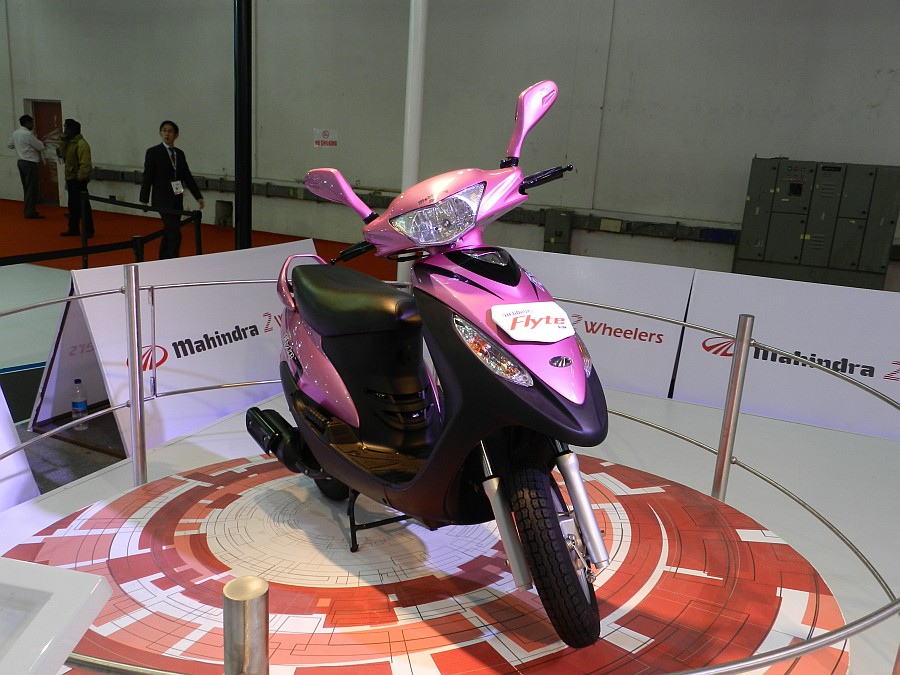
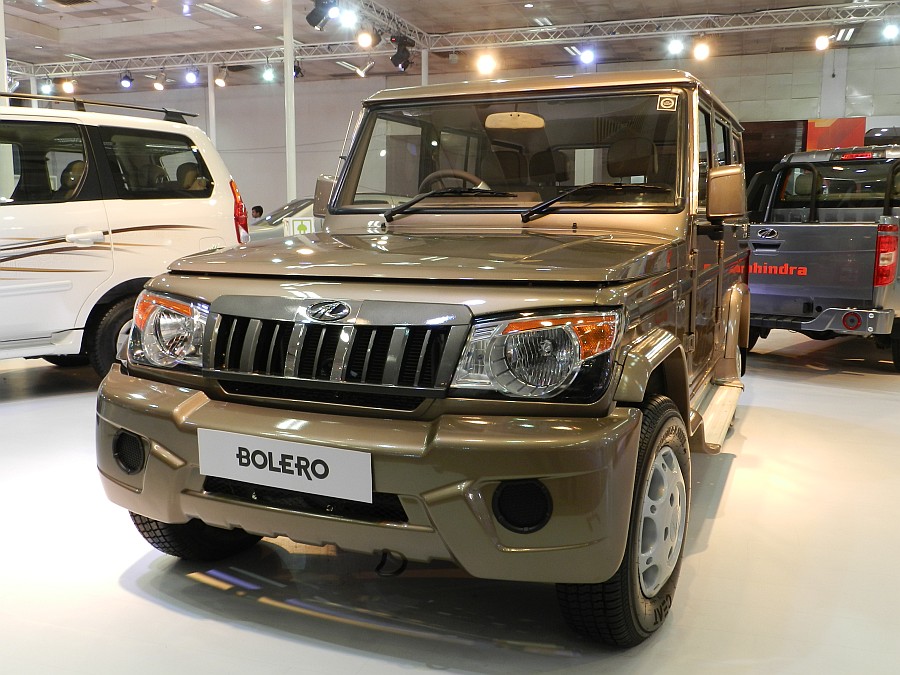
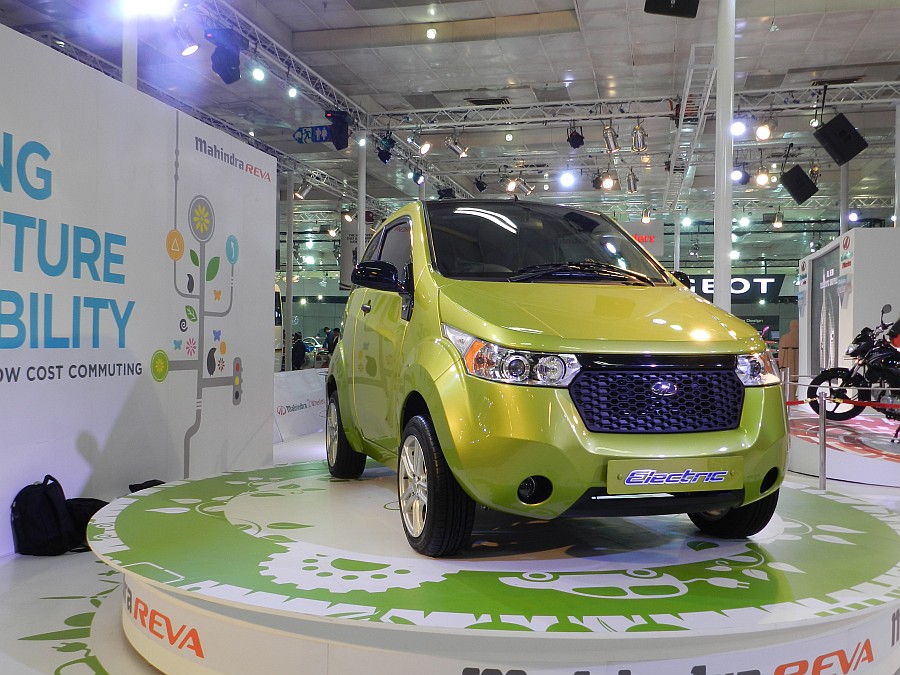
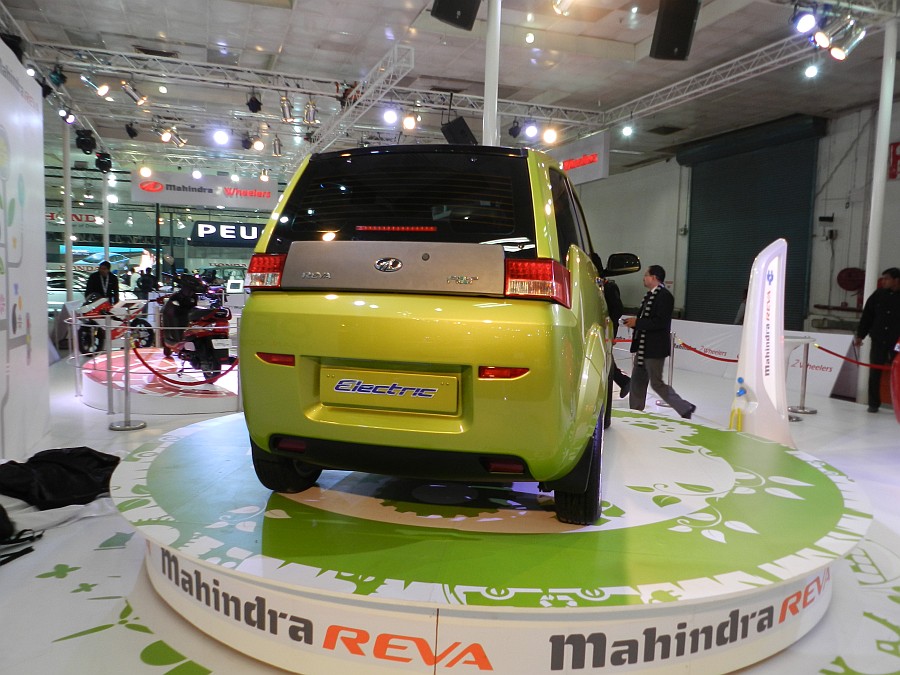
Mahindra is unique in the Indian automotive space.  It is the only company that makes from humble two wheeled scooters to mammoth trucks and everything in between.  Their true spirit however is to be seen in their SUVs and MUVs such as the Bolero, Scorpio, Xylo and now the XUV 500 which is a runaway success.  Their truck division is in collaboration with Navistar International of America.  Mahindra also made cars with Ford as Mahindra Ford and when the partnership soured Mahindra was left with nothing.  Then the company learnt its lessons when it went into partnership with Renault.  Like before the partnership turned sour but unlike before Mahindra inherited the rights to the Logan car platform minus the name and access to Renault engines.  So Mahindra is now a legitimate car maker in its own right.  Mahindra has also bought Ssangyong Motors of Korea who specialize in making SUVs but also make some cars.  This gives them access to new platforms and engines which were developed originally by Ssangyong in collaboration with no less a partner than Mercedes Benz.  Later Mahindra also picked up the Reva Car company makers of electric cars under the same brand name.  Though in India the Reva is called a car, in international markets it is only referred to as a quadricycle since it does not possess crash worthiness of a car.

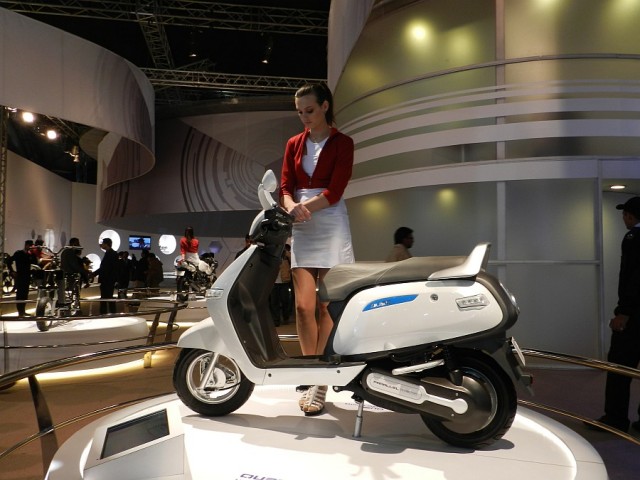
Mahindra Flyte at the 11th Auto Expo 2012

In the two wheeler space Mahindra saw an opportunity when once big name in the Indian moped and scooter sphere, Kinetic managed to take itself to the brink of collapse.  Kinetic which enjoyed a fair amount of success with the Luna moped and with the Kinetic Honda scooter found itself producing vehicles that had become synonymous with indifferent quality and an increasingly worsening dealer network.  Kinetic tried many things.  It first went into a technical collaboration with Hyosung of Korea to distribute and sell the 250cc Comet sports motorcycle and the Aquila cruiser with the same engine.  It then entered into a collaboration with Hyosung for technical support to make motorcycles of 125cc and 165cc capacity.  The GF series as it was called simply failed to take off owing mainly to lack of customer confidence in the company.  Kinetic then went on to acquire the Italian company Italjet which made scooters and motorcycles of small capacity but featured good technology.  The Blaze scooter was launched with the 165cc Hyosung  engine but featuring an Italjet designed body.  It sold for a while under the Italiano series (Kinetic said that there would be more from where the Blaze came but that never happened) before Kinetic’s reputation of indifferent quality caught up with it and made it a dud .  The company then went into collaboration with San Yang Motors or SYM of Taiwan.  The collaboration was horrifically touted as a marriage and invitations were issued to the press corps to witness the marriage. This marriage later on gave birth to a child which was a petite 125cc scooter called Flyte and sold under the Kinetic – SYM brand.  Indifferent quality was yet again becoming the hall mark of this product too and Kinetic decided to sell out and in Mahindra found a willing buyer.

Mahindra Duro DZ at the 11th Auto Expo 2012

What Mahindra inherited in the form of Kinetic Motor Company was a rogue that needed to be disciplined.  The first task on hand that Mahindra had was to ensure uniform and good quality in all the products.  To its credit Mahindra went on to achieve that.  And in order to not look like a one product company it reworked the front end of the Flyte scooter and called it the Rodeo.  With quality levels picking up the sales of the Flyte and the Rodeo and also started witnessing a rise.  Mahindra then looked into the old portfolio of Kinetic and found the Nova scooter which came with a 115cc engine first and a 135cc engine later but sank due to quality problems, to be an appropriate candidate for resurrection.  What Mahindra did was to be throw away the engine that Kinetic had used and in its place put in the 125cc SYM unit that does duty on both the Flyte and Rodeo.  This meant that Mahindra now had a scooter which was full size and in order to wipe out memories of non-reliability it gave it the name Duro (presumably to convey that it would be durable).

Mahindra Rodeo at the 11th Auto Expo 2012

This was a good move since its introduction meant that the Indian male famished for a full size scooter and confronted with a waiting list for the unisex Activa from Honda and Access from Suzuki had an alternative.  But the suspension on the Duro especially the front was antiquated.  It was only recently the Mahindra tinkered around with the suspension and gave it telescopic front forks and launched it as the Duro DZ.  This along with the Stallio 106cc motorcycle, and the 300cc Mojo motorcycle were the only prominent displays at the Auto Expo of 2012.  The Stallio and the Mojo were shown to the public two years ago.  The Stallio was launched with fanfare by Amir Khan (who reputedly does not know how to ride a motorcycle) and it looked suspiciously like the Velocity which was once made by Kinetic. Kinetic tried reverse engineering and started of with the K4-100 step through range before it went on to make the Challenger series of motorcycles which became Boss in its later avatar with an ageing Kapil Dev who was just declared Cricketer of the Millennium as its brand ambassador.  Kinetic was unequal to the challenge of selling the Challenger/Boss and later tried to make it look a bit more acceptable as the Velocity.  My feeling is that Mahindra were using the frame and engine of this motorcycle in a body style designed by Engines Engineering.  Engines Engineering was then owned fully by Mahindra and is now reportedly sold off completely since most companies who used the services of Engines Engineering, a boutique firm, were afraid that their intellectual property would be compromised if the firm was with another manufacturer.  This is the time to tell you that the name Engines Engineering is a bit misleading.  The firm is actually a design boutique with no known expertise in designing engines from ground up.  That is what makes me believe that the Stallio was just styled by Engines Engineering.  My suspicion is reinforced by Mahindra turning to another firm of Italian origin like Engines Engineering, Oral Engineering for engines for its Moto3 effort in this year’s MotoGP championship.  The Stallio’s suffering from the same kind of problems that plagued the Challenger/Boss and the Velocity only strengthens my idea of the origins of the Stallio.  The Stallio was withdrawn within months of its launch with a promise that it would relaunched soon.  It is over a year and even though both the Stallio and the Mojo were shown at the Auto Expo 2012 neither is yet to make it on to the roads.  The reports of the selling of Engines Engineering could mean that the Mojo will never see the light of day.  During the launch of the Duro DZ, when questioned about the Mojo, Mahindra executives only said that it was a prototype.

Mahindra Mojo at the 11th Auto Expo 2012 : Front

So at the Auto Expo apart from the Moto3 contending prototype motorcycle there was really nothing of significance at the Mahindra2Wheelers stall.

Mahindra Mgp 30 Auto Expo 2012 640x480

This is surprising because Mahindra, I am sure, can renew its partnership with SYM and offer a range of scooters and motorcycles because SYM does make good quality two wheelers.  Then there is the question of what happened to the intellectual property that Kinetic acquired from Italjet.  At the time when Kinetic struck the deal with a dying Italjet it had declared that it had acquired rights to no less than seven new designs for scooters.  I am not sure if Kinetic has sold the rights of those designs to Mahindra.  If it has not sold them, then the logic of that simply escapes me. What will a company that is exiting a business do with intellectual property that belongs to that business?  And if Mahindra has access to those designs why is it not using them?  The scooter space is where the opportunity of growth is now.  With cities becoming increasingly congested twist and go scooters are becoming the preferred mode of transport.  Why is Mahindra not exploiting the lack of capacity of Honda and Suzuki to its advantage?  Is it that by acquiring so many different businesses Mahindra has already spread its resources too thin?  Is there a resource crunch that is keeping Mahindra from being bullish in the two wheeler space?  Considering the fact that the clauses of the deal between Mahindra and Kinetic were never made public, these questions that I have raised will only remain that and answers will elude me and you.  Those who are in the know of things are maintaining a diplomatic silence.  So we shall leave this analysis here and like I have said in another post we can only wait and watch. Time shall tell the true story.

Mahindra Stallio on display at the 11th Auto Expo 2012

If there is reason to believe that Mahindra’s performance in the two wheeler sector is lukewarm and not robust enough, the exact obverse of this is true in the case of its four wheelers.  The Auto Expo saw Mahindra participating with its well known four wheelers such as the Bolero which defies all logic and sells about nine thousand units per month, the Scorpio and the latest rage, the XUV 500.

Mahindra Bolero at the 11th Auto Expo 2012

Mahindra XUV at the 11th Auto Expo 2012

Post the Expo when Mahindra has thrown open the bookings of the XUV500, 25,000 eager beavers lined up to book the vehicle.  Surprisingly though Mahindra avoided showing the facelifted version of the Xylo which it has launched a few days ago.  It also has taken care to not display the shortened version of the Xylo which is being referred to by the media as the mini Xylo.  But it did show the double cab pick up version of the Xylo which is called the Genio Double Cab.  The Genio which sported a different grille at the time of launch now has the old Xylo grille with the Xylo having had a facelift that changed its face.

Mahindra Genio Double Cab Pickup at the 11th Auto Expo 2012

Mahindra made sure that no one missed the point that it is the king of all off road vehicles.  The impressive Thar was on display as well.

Mahindra Thar at the 11th Auto Expo 2012

It is well known the Mahindra has taken over the Reva Electric Car company and its next model the NXR which will come with both lead acid and lithium ion batteries was on display.  India will not be getting the lithium ion batteries version.

Mahindra REVA nxr at the 11th Auto Expo 2012

Mahindra REVA nxr at the 11th Auto Expo 2012 : Rear

Surprisingly Mahindra displayed a full electric version of the Verito and called it the Mahindra Reva Verito Electric.

Mahindra Verito Electric 01 320x240

Mahindra’s best display came for the funky Ssangyong products.  The highlight was the electric version of the Korando called the Korando E as opposed to the regular Korando C.SsangYong Motors Korando E at the 11th Auto Expo 2012

Also on display was the the Ssangyong Actyon Sports double cab pick up truck. The face of this is much improved compared to the previous generation Actyon.

Mahindra SsangYong Actyon Sports at the 11th Auto Expo 2012

Then there was also the first Ssangyong that will debut in India later this year, the Rexton. The SUV is a Toyota Fortuner sized one and will probably compete against the Fortuner and the Ford  Endeavour.

SsangYong Rexton at the 11th Auto Expo 2012

And then there was the XIV Concept that promises to be something wonderful whenever it is launched.

Mahindra SsangYong XIV Concept at the 11th Auto Expo : Front 3/4

Mahindra SsangYong XIV Concept at the 11th Auto Expo : Rear 3/4

Mahindra SsangYong XIV Concept at the 11th Auto Expo : Interiors 02

Mahindra showed its complete might with the display of its trucks made in collaboration with Navistar of the USA.

Mahindra Navistar Mn25 Refrigeration Truck 01 640x480

Along with Tata, Mahindra is becoming that huge conglomerate and is well on its way to being a multinational of true worth.

Mahindra Navistar Mn31 Haulage Tipper 640x480


Let us try and understand what TVS two wheelers mean to people.  If you ask anyone as to what they think of TVS their choice of words to describe the company and their products, they would be solid, reliable and some may even say staid.  Now let us start with the staid bit.  Usually that word gets associated with dull, boring, lacking in flair and and if you take the politically correct way of putting things it would be inoffensive, conservative and not exciting enough.  However, if you look at the most successful auto and two wheeler makers coming out of Japan you can say with confidence that they too would be called staid. Apart from a design like the MR2 or the Celica/Supra of the 1980s can you think of any Toyota which is not staid?  Similarly even with its luxury brand Lexus, to which model can you attribute qualities such as ‘gets your adrenaline pumping’ or ‘sets your pulse racing’?  Same with Honda, both for its cars and its motorcycles.  Except the NSX car and maybe the the occasional CB/CBR motorcycles which Honda gets you jumping with joy and shouting over roof tops?  Nothing really comes straight to your mind, right?  Yet you can see that both Honda and Toyota are best sellers, in markets where you have the choice of Italian design flair and the combination of German solidity and the occasional evocative design.  So why are they so successful?  Why do they outsell most of their rivals?

The answer is clear.  They are solid engineering companies which manufacture motorcycles and cars with bullet proof engines and suspension aggregates that make a car go on and on without ever causing anxiety to their owners about reliability and high maintenance costs. So you see being called staid is not a bad thing at all.  Very much to the contrary it even seems to be a good thing.  The other words that are used to describe TVS products – solid and reliable do not need to be qualified.  Who does not want something solid and reliable? Even a cursory look back at the history of the TVS Motor Company from the days when it was Sundaram Clayton and was manufacturing the TVS 50 moped to what it is today, one finds a continuous underlying theme.  Solidity of engineering.  When the TVS50 moped was launched it went up against established competition from Kinetic Engineering’s Luna which had killed off competition from Suvega (a Mopeds India Limited product made in collaboration with a French company called Moto Becane) which was till then ruling the roost.  The Luna was better than the Suvega which howled like a banshee.  But when the TVS50 emerged on the scene it went on to claim leadership in the market displacing the Luna50 from its pedestal and killing of various attempts at moped making which appeared under brands such as Nisuki (they actually had Feroz Khan the Bollywood star endorsing them) and Pizzazz.  Kinetic tried to retaliate with products like the Swift, Spark and King only to see that there were not too many takers for their products.  TVS on the other hand was going from strength to strength.  They launched variants like the XL, the one time favourite with girls, the TVS Champ and the TVS Astra. The Champ and the Astra died after TVS launched its Scooty a brand that is ultra successful.  The Scooty was launched in the market while the Bajaj Sunny was already in the market and Kinetic were just introducing the Pride.  Bajaj tried to dethrone the Scooty which became a best seller in no time with attempts such as the Sunny Spice and the Spirit and Kinetic Engineering with the Style after the Scooty had pushed the Sunny and the Pride out of the market place.  Let me get straight to the point now.  TVS is the only company today that still makes mopeds and the Scooty is going from strength to strength while Bajaj has had to vacate the segment and later the entire scooter market.  Kinetic Engineering sold out to Mahindra who set up Mahindra2Wheelers.  What then are the reasons behind the phenomenal success of the TVS moped and the Scooty range now including the Pep+ and the Streak?  Simple -solidity, reliability and inexpensive to maintain.

TVS Motors Scooty Streak : All Black finishTVS Motors Scooty Pep

That should give you a good idea about the engineering capabilities of TVS.  Since we are already on the subject of scooterettes let us now move to scooters.  At one time TVS had great ambitions of dominating the scooter market as well.  They came out with the Spectra, a 150cc geared four stroke scooter which was introduced to the world by none other than the great Fellini himself.  I have driven the Spectra a few times.  I know people who still own Spectra scooters.  The scooter bombed in the market place but that was due to the fact that the bottom had fallen of the scooter market.  The Spectra’s failure was all about timing.  You can put it as a little too late or if you wish you can put it as a little too early. The late part can be justified by the fact that TVS in order to perfect its scooter took a long while and in this time a paradigm shift had occurred in the Indian two wheeler market.  People were preferring motorcycles which are always better at delivering better fuel consumption figures.  The scooter preferring markets up north were put off by the styling of the Spectra which was something like the Kinetic Honda (it was not a replica of the Kinetic Honda but the grammar of the design language was similar) and the Kinetic Honda was considered to be a bike for the sissies, one that women would ride (market perceptions in the northern part of the country).  Four stroke 150cc with four manually changed gears was ahead of its time. What remained of the scooter market was ultra-conservative and preferred two stroke Chetaks or LML 150NVs.  But the Spectras that were bought still run wonderfully with nary a problem. After the failure of the Spectra TVS decided to concentrate on the Scooty which ultimately turned four stroke and on its range of motorcycles.

Let us now look at TVS’ track record as a motorcycle manufacturer.  It all started as the Ind-Suzuki AX 100 which sold well enough to drive out Ideal Jawa the manufacturers of the Yezdi brand of motorcycles from the market and made sure that the Rajdoot was sold only in a couple of states in the northern part of the country.  In fact, it was the AX100 that started the process of attracting the traditional scooter buyer to motorcycles.  Its very big achievement was that it widened the motorcycle market which sadly turned out to be of greater advantage to Hero Honda first and Bajaj later.  The AX100 was a brilliant product and pristine examples of the 1985 model year can still be found.  When competition came into this widened motorcycle space it came from two flanks, as far as TVS was concerned.  One was from the commuter who wanted maximum bang for his buck and that the Hero Honda CD100 did much better than the two stroke AX100 in the fuel efficiency stakes.  On the performance front it got hit by the Yamaha RX100.  The power output of the AX100 was a modest 8.25 PS while the RX 100 was offering 11PS.  It was more fuel efficient than the RX100 but its 50+kmpl was no match to the 65+ kmpl of the CD100.  Those who wanted power did not mind the 35+ kmpl that the RX100 offered. Somewhere along the way came the KB 100 from Kawasaki Bajaj and offered a plethora of features and 10.5 PS.  Though the first iteration was a non-seller, the second as the KB100RTZ and Delta Super tuned engine became a serious enough seller.  But more importantly the cash rich Bajaj also turned to making the four stroke 4S.

TVS was a relatively small company with fewer resources at its disposal.  So unlike Bajaj it decided to stay with the two stroke engine from the AX100 and started, with minimal inputs from partner Suzuki, to upgrade the engine.  First came the Supra featuring dual tone colours and bikini fairing at the back and power out put went to 9.65 PS.  TVS also started giving a new form of test ride.  You could show a valid driving licence, leave your existing motorcycle at the TVS dealership and take a Supra home and drive it around for two days.  That was the level of confidence that TVS had in its product.  While the Supra started selling in good numbers it was still not good enough.  And that was when TVS decided to invest in motorsport, the ultimate testing ground for new technologies.  The company had Arvind Padgaonkar heading the motorsport division and since in the 1980s and 1990s the only real motorsport was motocross, TVS started fielding its official teams in these events.  TVS was initially competing against itself because most other entries were privateer entries which had minimally modified and tuned production motorcycles.  Later the RX100 from Yamaha entered the fray officially but was never able to displace TVS from its perch.

All the lessons that TVS learnt on the motocross track it took to its production motorcycles. It decided on a marketing strategy that had two prongs.  One model for the enthusiast and the other for the commuter.  It also decided that it should just use the Suzuki name on the products so as to take on the challenge of Honda and Yamaha.  The commuter came in the form of the Samurai bike that had lesser power than the Supra but had good mileage.  TVS positioned this as the “NO Problem” bike.  It even had a TVC featuring a Japanese gentleman saying “NO Problem”.  It clicked with the people.  This motorcycle was cheaper than the Hero Honda products, had decent fuel economy and kept its promise of being a no problem motorcycle.  The other prong saw it go for the jugular of the Yamaha.  This motorcycle called the Shogun developed 14 PS of power and till date is the most potent 100cc motorcycle built in India.  There are Shoguns still running about just as there are RX100s.  And no, the owner will give up his life but not sell the bike.  This two pronged strategy worked well for TVS.  It created for itself a space between the miserly four strokes and the powerful two strokes.

TVS still kept going with the motorsport programme.  And out of this came another motorcycle called the Shaolin.  The Shaolin had power comparable to the KB100 and the RX100 but featured a five speed gear box.  This maybe an appropriate time to mention that TVS was following a strategy that was the complete opposite of what was being done by Hero Honda.  Hero Honda had one engine and built different body styles around it with CD100, the CD100SS, the Sleek and the Splendor.  TVS on the other hand had one body style and built three different types of engines (though derived from the same AX100 unit) in the form of the Samurai, Shaolin and the top of the line Shogun.  This strategy worked just as Hero Honda’s did.  But when the emission norms kicked in it meant that the death knell had been sounded for the two strokes and therefore TVS’ two strokes slipped quietly into history.  But not the company.  The company launched a four stroke 150cc in collaboration with Suzuki called the Fiero.  The styling was odd ball but the motorcycle like all TVS bikes was bullet proof.  In order to set things right TVS worked on the styling of the motorcycle and introduced for the first time ever two engine mappings, one for economy and the other for power.  The rider had to just operate a button to choose the mapping he wanted.  The Fiero’s success in all its various avatars was tepid but TVS’ motorsport programme ensure that it was doing something with the Fiero and that manifested itself as the Apache.  But before that TVS had already replaced the Samurai with a new brand which it called the Victor , a 110 cc four stroke motorcycle.  The Victor did very well indeed and to me it is still a mystery as to why the brand was killed by TVS.  However, this year’s Auto Expo brings the good news that by the end of the year, the Victor brand will resurface in India.  TVS also made a 125cc variant of the Victor and along with the Max100, still the closest living relative of the original AX100 it continues to sell in international markets.  Go to the official TVS website to see the Victor 110 and the Victor125 along with the two stroke Max in markets other than India.
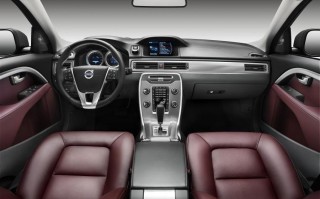
TVS Motors Max Dlx BigTVS Motors Xl Super Big

At every Auto Expo TVS shows new concepts and new technologies.  One of the new technologies that it showed in the previous Expos was one that featured two spark plugs (a system that Bajaj used on a small capacity engine for the first time in India and created a patent for that!!!!- what kind of antiquated patent laws do we have really?) and three valves instead of the traditional two.  This technology manifest itself on the Flame a motorcycle that had design flair too (along with the Apace the Flame started the trend of well designed motorcycles from TVS) .  But the protracted legal tussle with Bajaj killed the product even though TVS won the case.  TVS also showed its indigenously worked out fuel injection system from the time that it was making two stroke engines at various auto shows and this ultimately found way on to the Apace 160 Fi.  The Apache also became the show case for ABS that TVS developed and displayed at the previous editions of the Expo and is now available on the RTR 180 variant.  RTR or racing throttle response is again something that TVS developed due to its involvement in motorsport, a commitment that has never flinched.  At this Expo another motorcycle called the Radeon was shown and it seems as if it is of 125cc engine capacity because it had 125cc DX written on it.

TVS Motors Radeon at the 11th Auto Expo 2012

TVS Motors Tormax at the 11th Auto Expo 2012TVS Motors Tormax

At the Expo TVS also displayed the Tormax, an underbone chassis bike which is a big success in the Indonesian market.  The underbone chassis bikes are called ‘babeck’ in Indonesia (meaning duck) since they resemble ducks.  This bike is based on the the TVS Neo and the Rockz which sell in the crowded South East Asian markets and take on the various Hondas there.  It is to take on the Honda underbone bikes that TVS developed the clutchless (our automatic clutch) rotary gearbox system which we first saw in India on the non selling Hero Honda Street.  This technology found its way on to the TVS Jive.  TVS saw that Indians did not like the underbone chassis but may not mind the auto clutch rotary system on a traditional looking motorcycle.  Thus the Jive was born and positioned as the No Tension bike and the Radeon looked remarkably like the Jive.  At this Expo TVS also showed a new automatic transmission that is easy and inexpensive to put on a scooter or a motorcycle but will be reliable and convenient.  This technology is likely to debut on its up coming 125cc scooter.  The engine was mounted on a chassis which could be clothed and this could become the 125cc automatic transmission scooter.

TVS Motors Qube at the Auto Expo 2012

Now coming back to scooters, TVS showed off the Qube electric scooter in the Expo of 2010 and at this year’s Expo it showed a near production version of the Qube.  The difference is that it will be hybrid, featuring a 100cc internal combustion engine and DC electric motors.  It can run on just electric power or just the IC engine if the charge runs out.  This scooter is supposed to bring down emission levels and also decrease consumption of petrol.  Scooters have been the area that TVS has been growing despite the Spectra debacle.  The Wego is one scooter which has taken the battle to Honda in India.  Featuring 12 inch wheels and a compact body, the Wego offers better balance and is easy to drive.  It does not feel top heavy like the Honda Activa and Access from Suzuki.  It has well and truly taken the battle to Honda something that can be seen in the increased sale of the Wego.  One would imagine that the 125cc scooter will retain all the virtues of the Wego and give us a bigger engine to boot.  The Expo has shown that TVS has many new things coming our way, and as usual they will be technology intensive. The 250cc RTR FX  displayed at this year’s Expo is a motocross motorcycle.  But any day it can turn into a regular road motorcycle, something which will happen given the move to higher capacity engines by almost all players in the market.  TVS has always been a low profile company which lets its products do the talking.  It has turned several corners under the able stewardship of Venu Srinivasan who is himself an engineer.  And this year’s Expo has demonstrated that engineering will drive TVS forward but ominously it also seems that there will be design flair added to engineering excellence.

2012 Mahindra Xylo face lift : New Front

Mahindra and Mahindra, right from their humble beginnings in 1945, when they started off as a steel trading company, to assembling the iconic Willy’s Jeeps under license, to those benchmarks of offroading vehicles, the MM 540s and the 550s, to the days of the Armada and the Bolero, to the recent Scorpios and XUVs have always retained, as a Company, deep-seated ideas about values and relentless improvisation. Their products have always stood for one ideal, Value for Money. I do not know whether this is because this is a Company which has built itself ground up, or whether it is simply a marketing ploy, but as enthusiasts, we always speak of Mahindra in revered, hushed tones, because we know this is a Company unlike any other in the automobile business, constantly evolving, constantly redefining the boundaries of what a manufacturer can do if it has it’s heart in the right place.

2012 Mahindra Xylo face lift : New Head lamps

With the launch of the 2012 Xylo yesterday, Mahindra has proven yet again the old adage, having a ear to the ground. It is interesting the way Mahindra has decided to do multiple parallel launches in one country, going that extra mile to bring to the market the ideals of reaching out to as many people as possible on a one on one. Kudos Mahindra!

But as with any product, no matter how well it is marketed, the consumer is the king, quite simply put, and if the quality of the Product is not top notch, the products shall be summarily dismissed. And whatever we saw of the new Xylo, we liked! When I say new, I mean new. Although a majority of the media is calling it a facelift, it moves from being a mere facelift to practically a new car.

2012 Mahindra Xylo face lift : New Roof Rails, Wheel arches and masked out sections in the glass area

There is a new front facia with redesigned headlamps, grill, bumper, airdams and bonnet , pronounced wheel arches, an integrated footstep with redesigned mudflaps and roof rails with a redesigned rear spoiler. The front, the sides and the rear have all gone under the knife. The end results is a sleeker looking hood, a butch stance, cleaner lines, a premium look and a very pleasant overall effect. A walk-around reveals that the bulky shape has been trimmed down a bit, the logo-integrated hood makes the shape look slightly more aerodynamic, the curves are slightly less curvaceous, the arches are more pronounced and the roof rails are almost but blended into the roof architecture. More than just a bit of nip and tuck, then.

2012 Mahindra Xylo face lift : Interiors

And it does not stop there! There is premium leather on the seats, there is a leather wrapped gearknob, there is a two tone dashboard, a new centre console and glossy wood interior panels. The Xylo has always been a comfortable car, with flatbed seats and optional three stage lumbar support for the driver and co-passenger’s seat and arm rests. Mahindra, thankfully, has not changed much of that, and simply carries it over to the new edition. The interior plastics were of high quality, returning a soft thunk when you rapped your knuckles on them. Luxurious leather seats with lumbar support felt plush and upmarket.

2012 Mahindra Xylo face lift : Mahindra Badge2012 Mahindra Xylo face lift : XYLO Badge

What else is new? Well, for one, now you have a whole new trim added to the already formidable lineup and she is called the E9. The E9, amongst the other “premium” features, sports a rather cool feature, the Voice Command Technology. What this does is, primarily, it allows you to communicate with the car. What’s new, you ask? Well, this technology not only allows you to turn the volume up, down or make calls, but it actually performs functions of the car for you! Headlight on/ off, wipers on/ off, doors open or closed and so on. We have not tested the system yet, but with an honest claim that it can understand thirteen different dictions, we intend to find out as soon as weget our hands on one! Even without seeing it work in real life, we daresay it is immensely cool, and utterly desirable. Kudos again, Mahindra!

Mahindra also has included what they called (quite unimaginatively, I may add), Extra Stability Technology. What it does is, well, it provides extra stability in high speeds. The technology was not explained fully, but my hunch is that it is a hybrid version of traction control which enables stiffening and softening of rides based on the available traction between the tyres and the road. Ah well, mighty sweet of you, Mahindra!

The others, including ABS, EBD, airbags, cruise control and intellipark reverse assist are being carried forward from the older model.

All right, so the question is, how much is she worth? And here’s the knockout. The Xylo E9 topend, with all bells, whistles, jingbangs and the kitchen sink thrown in for good measure, retails at 10.6 lakhs ex showroom in Delhi. The competing trim of the Innova is a full three lakhs costlier than the E9! Three lakhs! Essentially, the money that you would save if you bought the Xylo can be used to get two mid range Nanos! How is THAT for being a price differentiator?

Frankly, I could not really find a glaring fault (yes, the GPS would have been nice), and were impressed with the quality of materials being used. But what impressed me most was the price point at which all this was being offered. This is a solidly built car, with a capable engine and lots of goodies thrown in. At a very affordable price bracket. With strong rumours of a mini Xylo doing the rounds around Diwali, it looks like the Year of the Frumpy Face.

If we had the resources (which we don’t, we assure you, we are poor journalists), we would have bought one TODAY! What would you have done? Let us know, so we can let Mahindra know!

Colors available

2012 Mahindra Face Lift New Xylo Face lift in Diamond White2012 Mahindra Xylo face lift in Toreador Red

2012 Mahindra Face Lift New Xylo Face lift in Rocky Beige2012 Mahindra Face Lift New Xylo Face lift in Mist Silver2012 Mahindra Face Lift New Xylo Face lift in Fiery Black2012 Mahindra Face Lift New Xylo Face lift in Java Brown

Clockwise starting from top left: Diamond White, Toreador Red,Java Brown, Fiery Black, Mist Silver and Rocky Beige.

Read the Live coverage of the Xylo launch event at Bangalore here.