Tag Archives: Power Stroke

Madras Exotic Car Club Launch 01

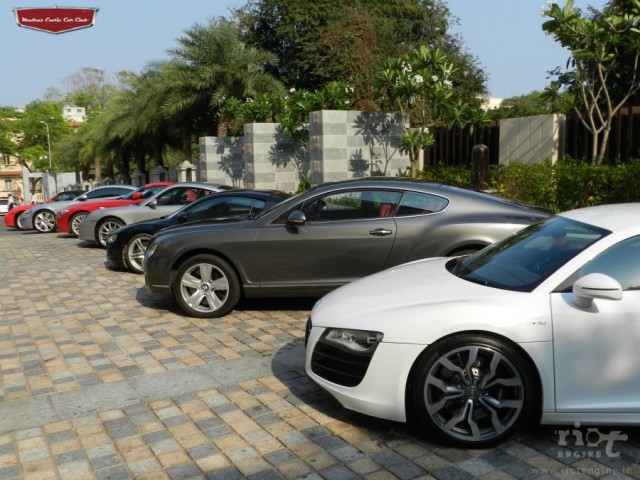
The Madras Exotic Car Club was launched today bringing together supercar enthusiasts from Chennai and around precluding the event tomorrow at Irungattukottai track.

Cars at the event

  1. Aston Martin Rapide
  2. Aston Martin V8 Vantage
  3. Audi R8
  4. Audi R8 V10
  5. Bentley Continental
  6. Bentley Flying Spur
  7. BMW M3
  8. BMW Z4
  9. Ferrari 458 Italia
  10. Jaguar XK R
  11. Jaguar XF R
  12. Lamborghini Gallardo LP 560-4
  13. Maserati Gran Turismo
  14. Mercedes Benz SL500
  15. Mercedes Benz SL600
  16. Mercedes Benz SLK55 AMG
  17. Porsche Boxster
  18. Porsche 911 Turbo
  19. Porsche 911 Carrera
  20. Porsche Cayenne
  21. Porsche Cayman S
  22. Porsche 911 Targa 4S
  23. Rolls Royce Ghost

Madras Exotic Car Club Launch 02

Madras Exotic Car Club Launch 03

Madras Exotic Car Club Launch 04

Madras Exotic Car Club Launch 05

Let me begin with an assurance.  I am under no illusion whatsoever that I am the first person to be writing about this subject in the recent past.  I am fully aware that people who have better credentials than I have, have spoken at length about this subject and that mine will be just another opinion on this issue.  Nevertheless, many people could be saying the same thing for different reasons and therefore I shall go ahead and say what  I have to say.

Before beginning my arguments the prudent thing to do would be set the context in which I am saying what I am saying.  In fact, it is not one context but two contexts that we should be looking at.  The first and for me this is the most important context is that there has been a huge melt down globally in the economy and there is no evidence that the world is going to be coming out of this anytime soon.  Please do not take me to be a doomsdayer who wants to show dark clouds around silver linings.  The world in the last four years has been moving from one economic crisis to another and most importantly these crises are happening in the developed part of the world; Europe and America.  This bit of information is of significance since motorsport as a category has been birthed, nurtured and evolved in the context of Europe and America.  Of course, there is Japan as well but then, on its own Japan also is not doing so excellently in economic terms.

Now to come to the second context which is that about Bridgepoint Capital being the owners of both MotoGP and World Superbike Racing since they have purchased Infront a company that has rights over World Superbikes among many other things.  Before I get to this part of the story let me acquaint you with an interesting piece of information.  MotoGP was originally owned by CVC Capital before good old Bernie Ecclestone decided to sell the rights of Formula1 to them.  The European Commission on monopolies then decided that it was not correct for CVC Capital to have rights over both F1 and MotoGP and as a result, CVC Capital sold the rights of MotoGP to Bridgepoint Capital.

Last year thanks to the global economic recession Infront was put up for sale and Bridgepoint that had the money bid for it and got control of it as well.  Interestingly enough the deal was passed by the European Monopolies Commission when it was told that there would be no merger of the series called World Superbikes with MotoGP.  Just word of mouth was good enough for one owner to have both series under its belt.  It is unprecedented but then so is the global recession which is now being touted as the bleakest after the recession of 1929.  Any objection at this time would mean that other series that are held by Infront such as Serie A football league would suffer.  So the deal went through with just oral assertions.

Now to take stock of health of the two series that go under the name of MotoGP and World Superbikes.  The former is older, has a richer history and is all about prototype racing that allows manufacturers to experiment with cutting edge technologies that would later find their way onto road going motorcycles.  The latter is all about road going motorcycles that can be raced on weekends and will not have any great cutting edge technology.  This was how things were supposed to be.  But we know that it is not very often that things are the way that they are supposed to be.  As competition between the two series hotted up World Superbikes stopped being a championship of pure road going motorcycles.  Let me give you an illustration.  In stock trim,  a Kawasaki ZX10R makes somewhat like 197 PS of power at the crank shaft.  But when it is going racing it makes about 215PS.  Same is the case with the BMW S1000RR.  In stock trim it makes about 193 PS but when it is raced it makes 220PS.  That kind of increase in power is due to the addition of parts that are  anything but stock.  So World Superbikes began encroaching on the prototype turf or  that of MotoGP.

The response of MotoGP was to make its technology even more cutting edge and out of the reach of World Superbikes and this has meant that they have not only experimented with newer technologies, metals and what have you but they also reduced all MotoGP racing to factory racing.  In the days of the two strokes there were privateer teams that bought engines mainly from Yamaha and chassis either from ROC or Harris.  Some used old engines and fit them in new chassis.  But with MotoGP going four stroke the strangle hold of the factories increased and there were only two types of teams, factory teams and leasing teams,  where the leasing teams could not even look at what went into the engine of their motorcycle.  The job of looking after the engine was left to representatives of the factory who had to be hired by the leasing teams, which are also called satellite teams.  This meant that the cost of running motorcycles in MotoGP went into millions of Euros and with the global economic recession monies from sponsorships to such operations have all but dried up.

So MotoGP can now only field 12 factory prototypes while smaller factories such as Aprilia, Kawasaki and Suzuki walked away from the series.  This forces the hand of Dorna who are a part of Bridgepoint Capital to introduce the CRT concept with a production engine and a prototype chassis.  So MotoGP starts going the World Superbike way, relying on production machinery.  What is important to note is that both series are unable to pack grids and with the exception of the new Moto3 class the engine capacities of Moto2 and World Supersports rely on 600cc engines and MotoGP and World Superbike have identical 1000cc engines.  Now comes the question.  When there are only something like 5 or 6 factories in both versions of motorcycle racing does it make sense to have to separate series?  What makes things even more difficult is that the lap times of GP and Superbikes are not separated by much.  More importantly unlike in cars where prototypes look very different from production models like F1 cars as against touring cars, production and prototype motorcycles look almost identical.

Instead of sponsor money being thinly spread over two series and with artificial attempts to keep them distinct, it makes less and less sense to keep the two going as separate entities.  It would be in the interest of motorcycle racing to therefore club the two together and that will also mean better TV viewership for both series since one can then do away with this two race format that Superbikes has and creates problems for most sports networks.  Also with Formula1 expanding to 20 weekends the exclusive availability of race weekends to both motorcycle racing series also is a problem.  All these can be overcome by all parties concerned sitting together and creating one series; a series that is financially and technologically strong and has the ability to satisfy the cravings of bike racing aficionados. Well that is what I think, what about you?  Do let us know.

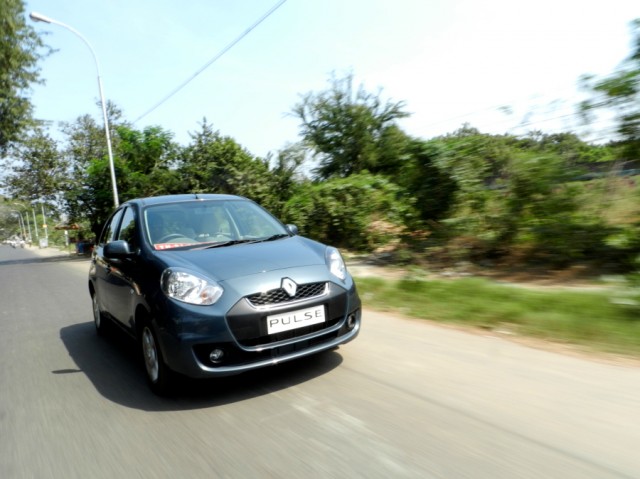
Renault Pulse Reviewed : French Aggression?

Hello, welcome to Chennai. You might want to drop that garden hose in your hand if you were just about to soak your lovely car wet, before the lynch mob gets to you. If your Sunday mornings are defined by the time spent hosing down your car gleaming wet, shampooing her up and then wiping her down, you might have to seriously consider moving. I tried once, washing my car with a hose, and the stares that burnt holes through my body still serve as reminders that people realize water is precious, very, very precious. Though the typical ‘conservative’ Chennaiite might not immediately go for your throat, there is always the possibility that they, er.. we, might try.

Renault Pulse : Pulse of the City

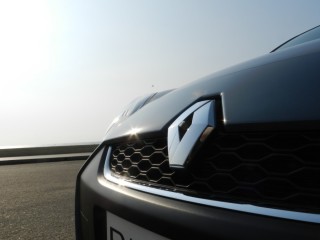
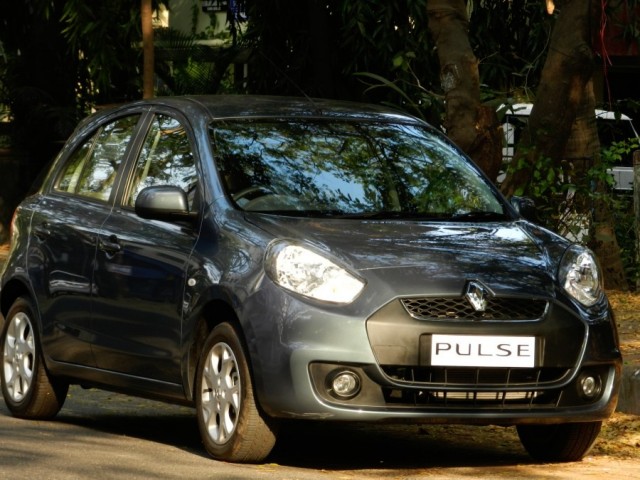
Obligatory tangential information dispensed with in the previous paragraph, let’s get down to the crux of the matter. Having been denied the pleasure of hosing down the car, a bucket of water and very wet cloth in hand, I was wiping down the Renault Pulse minutes before heading off for the photoshoot. In that poetic moment when the sun was just rising from behind a cluster of really tall buildings, I realized there wasn’t a better way to ‘see’ how the design of the Pulse is different from the Micra. As I ran the wash cloth over the angled planes on the hood, the edges of the hexagonal grille, the honeycomb pattern set further in from the edges of the grille, the prominent lip at the front end bottom and the wicked alloys, I realized the Pulse was a beast with a different temperament, as far as exterior styling goes. Stunning work by the cool chaps at Renault’s Design Centre in Mumbai.

Renault Pulse : Honeycomb pattern grille insetRenault Pulse : Fantastic redesigned head lamps

The Renault Nissan Alliance has been working wonders for either brand with the Alliance selling a record 8,029,222 units world over in 2011, a 10.3% increase from 2010. The Alliance shares a number of platforms including the B platform, used for Nissan’s Note, Juke and Renault’s Clio III, Modus. The much anticipated SUV from Renault, the Duster is built on a derived platform called B0. The C platform was initially designed for the Mégane II and is now shared by the Nissan Qashqai. The C platform is also shared by two premium Renault products in India, the Fluence and the Koleos. The latest platform would of course be the V-Platform where V stands for versatile. This is the latest platform developed by the Alliance and is what the Renault Pulse is built on.

Renault and Nissan also have drafted something they call the Interchangeable Components Policy (ICP). The policy enables the use of identical components on models based on different platforms. This simple shared use of components led to some 50 million Euros saved in 2009, says the Alliance. Taking all this into consideration, Renault’s strategy of developing its third entrant into the Indian market, based on an existing model from the Nissan lineup makes sense.

The V-Platform, and what it means for either brands in the future, is something we have our eyes on. Now, let me just give you the highlights.

    • The aim is to deliver optimum rigidity for excellent handling without compromising on the ride, but at the lowest possible weight
    • Key elements are strength and lightness
    • Results expected : enhanced performance, good fuel efficiency and low emissions

Over the course of the next few pages we delve into how exactly these were implemented in the Pulse.

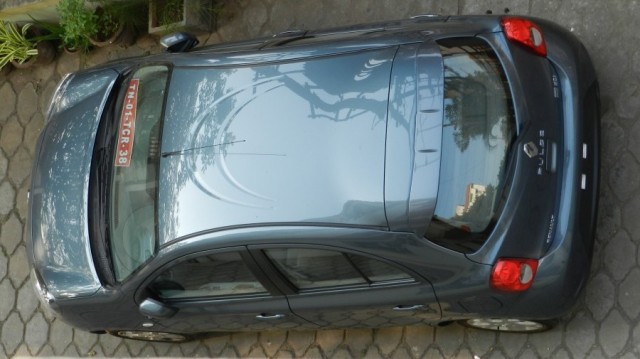
Renault Pulse : Boomerang Grooves on the roof

Now, back to the design. The roof has a twin set of deep grooves shaped like a boomerang. These roof line grooves work to reduce resonance in the cabin, reducing noise at all speeds. These grooves also work with the built in lip spoiler to reduce drag. The curvy side window shape is signature Micra and though there’s a chance you might get away with it in India, back in Japan and Europe people identify the Micra with this particular curve.

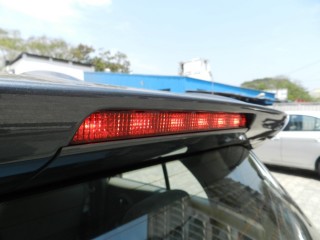
Renault Pulse : Roof spoiler with stop lampRenault Pulse : PULSE badging

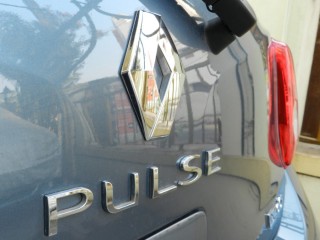
The rear has the prominent Renault lozenge as well as the well spaced letters that spell PULSE. The space cut out from the rear bumper for the number plate, is much bigger on the Pulse and adds to the aggression at the rear. Conspicuous by its absence is the black request button on the boot lid that would unlock the boot when pressed, if you had the key fob in your pocket.

Equipment

Having spent quite some time with the car, I can assure you, that you would be hard pressed to find a car in this segment that is easier to live with than the Pulse. Tilt adjustable steering is available on both variants, and works like a charm. Speed Auto Lock on the Pulse is something the Micra doesn’t have. Drive over 15kph and the doors lock themselves.

Renault Pulse : Front 3/4

Rear wiper and washer is standard on both RxL and RxZ variants whereas rear defogger with timer is available only on the RxZ version. While the RxL version gets 165/70 spec tyres on 14 inch steel wheels with full wheel caps, the RxZ version gets the wicked looking 15 inch alloys with 175/60 section spec tyres.

Automatic climate control system, front fog lamps, and the Smart Access key are available only on the RxZ version. The Smart Access Key, might have 10 year-olds like us going ga-ga ( that isn’t trademarked now, is it?) over it but may not be the primary reason why most customers would buy a Pulse. We have to point out though, after getting used to the comfort of not having to remove the key at all from your pocket, if God forbid you switch cars, you might actually have to go through a phase of depression. It’s just that convenient and addictive.

Renault Pulse : Rear 3/4

The black request button on the door handle lets you lock and unlock the doors as long as the key is in the proximity of the car. After being pampered so much, you cannot fault us for wishing the boot would also unlock itself when you have the key in your pocket and hands full of groceries or photography equipment. Nevertheless, it isn’t too difficult again to press the black button on either front doors and then pop the boot.

With one new gadget comes the requirement for another. The presence of the Smart Access Key requires an additional alarm. This alarm goes off when the car is still in ignition and you walk away from the car, 3 feet to be precise. Ignore the alarm at your own peril and watch the ‘Immobilzer’ kick into action and the engine shut down.

On the topic of alarms, I cannot emphasize how much I hate the door open alarm. This is the ubiquitous alarm that you would find in every other clock manufactured from the land of the Great Wall. When it goes beep-bip-beep-bip-pause-beep-bip-beep-bip you cannot help but think of that morning when all you wanted to do was flick the alarm off the table and through the open window, but all you could do was press snooze and beg nobody in particular for a couple of more minutes of sleep.

There is one other alarm that goes off if you forget to disengage the handbrake when you set off.

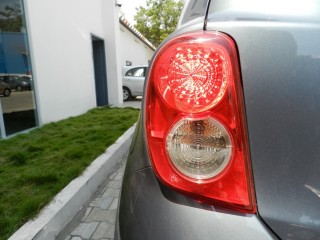
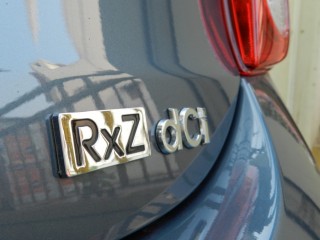
Renault Pulse : Redesigned tail lampRenault Pulse : RxZ dCi badging

A very mothering car, if I may say so.

Renault Pulse Roof DesignRenault Pulse Stunning HeadlampsRenault Pulse Side BlinkersRenault Pulse : ORVM

The last few days have seen the news that Tata is upgrading the Nano to a three cylinder engine potentially putting out anywhere between 70PS to 80PS of power.  The story broke cover on the website of a very reputed magazine which has quoted Ratan Tata himself as having said this.  Usually when rumours and gossip start circulating, auto webzines and regular magazines cite “our inside sources”, so when this news’ source is Ratan Tata himself it feels a bit strange.  Adding to the mystique of this whole thing is that while Ratan Tata’s name has been used liberally, even the reputed automobile publication that started all failed to specify a context and that is what makes the whole thing intriguing.  And poor little websites like us who have no contacts with anyone anywhere will faithfully reproduce the story, hoping that there would be more hits on the website and improve the rankings of the website.  We resisted the urge to carry that story and waited for a few days to see if any clarifications would emerge about the context in which Ratan Tata supposedly said whatever he said.

Some of the automotive webzines have even carried their own analysis of what prompted the move to a three cylinder 80PS engine. Some of the analysts have cited the failure of the car being a result of the poor man’s car image that it carried and therefore people have stayed away from it.  Now, Tata has learnt its lessons and is positioning the car as an upmarket offering to correct the mistake it made. Like all urban legends most of the analyses are based in projection of individual beliefs as universal beliefs.  When the “follow the herd mentality” mentality kicks in more and more people will spread this theory that has germinated in the corner of some individual’s mind and thus urban legends are created.  My take on this is that the Nano three cylinder 80PS petrol engine is very much an urban legend.  I can feel some of you bristling with anger at this holier than thou attitude that I seem to be taking.  I would like to clarify that there is no holier than thou attitude here. I shall present you with facts about the Nano which will clearly demonstrate to you as to why this whole thing is just an urban legend.

There is nothing like beginning at the beginning so just to ensure that we are all standing on the same ground let me narrate the famous story that apparently made Ratan Tata brief his engineers for the creation of the Rs. One Lakh car.  The story is that in Mumbai while Ratan Tata was travelling in the rain he saw a couple of families consisting of husband, wife and two kids travelling on two wheelers in absolutely treacherous conditions and then he thought about how a four wheeler with a roof over the head would be so much more safer.  Ratan Tata later clarified that the One Lakh was not to be taken literally, and that it was only a figure that he suggested so that his engineers would work on an inexpensive car that could be afforded by more people.  It was the automobile press that gave publicity to the Rs. One Lakh figure and in fact the same publication that has broken this news had an editorial in which it called the car the TATA ONE.  But a number of times Ratan Tata has said that he was looking at a car that would be more spacious, convenient and cheaper than the Maruti 800.

We all know that all kinds of ideas, including the use of plastics, no doors, just a tarpaulin roof were all considered and rejected since the man who gave the brief and the marketing team at Tata Motors insisted that this car will have to be a proper car.  The only thing that they were willing to compromise was on luggage space since the car would be driven within the city.  That was also the reason why a two cylinder 624cc engine sitting at the rear and driving the rear wheels was chosen.  The same reason went into the creation of a petrol tank that is smaller than some of the petrol tanks on motorcycles.  But apart from all that, the car was to be a proper car, not some half -hearted or completely botched up four wheeler.

A lot of thought went into the creation of a proper but inexpensive car.  For example when you see the wheels on the Nano you will see that they are secured by three nuts and bolts instead of the use of four.  You will also see that despite the high ground clearance the tyres are small.  The dash board is very spartan and originally came in a shade of gray alone (though for the 2012 model things are a little more colourful).  But the top end Nano not only came with a full HVAC system, it also came with mechanical central locking, anti-glare mirror, fog lamps, body coloured bumpers and front power windows.  Yet the cost of this high end LX model was lower than the base Alto’s price on the road.  As the owner of a Nano, I can assure that its air-conditioning is best in the class.  But that is not the point that I am making.  The point is that the Nano though a proper car was built to a price and this has extended into its mechanical components and the monocoque body shell.  The Nano’s engine originally liberated 35 horses and the 2012 model has a re-calibrated ECU that allows the engine to put out a further three horses.  This engine in a light weight car (which is what the Nano is) with a driver alone or just one passenger along with the driver can reach speeds in excess of 120 km/h.  Yet the car’s top speed is electronically limited by the ECU to 105 km/h only.

The question then is what is the reason for this limitation?  Let me introduce you to a couple of terms which are significant in the context of automobile engineering (my apologies to those who are already familiar with these).  The first term that is necessary is friction, the second is torsional rigidity, the third is strength of material and the fourth is tolerance.  The Nano has wheels that have only three wheel nuts.  Increase the speed of the Nano beyond the top speed of 105 km/h and the wheel nuts and bolts will start melting due to the excessive heat generated by friction.  The Nano has a corrugated roof, and that is to bolster the torsional rigidity of the monocoque which is subjected to lateral and vertical forces when it is in motion.  In order to keep the weight of the car light, the monocoque’s rigidity has been limited to accepting different forces acting on it only to a certain extent, and if the forces increase beyond that the car’s monocoque does not have the strength or the tolerance to absorb them and that would mean that the car will start to fall apart.

While unquestionably the Nano is a proper car, it is that in the context of certain limitations.  If those limitations are not respected or adhered to the car will no longer be proper and needless to say, it will cease to be safe.  So to tell this story in one line, the Nano as it has been conceived and exists today cannot take an engine that puts out 70 or 80PS of power.  Given how tightly the existing engine itself is put in place it is difficult to believe that an engine with an additional cylinder can be shoe horned into the rear.  In fact the reason why Tata is not introducing a diesel version though a twin cylinder diesel is available on the Tata Ace could have something to do with this.  The diesel engine is two cylindered but it is bulkier, heavier and occupies more space.  The breaking story also talked about how the new Nano will have bigger wheels and even bigger tyres.  Please look at the wheel wells, take a peek inside them and see if that is possible.  It will also become to put the spare wheel in the front or in the bonnet where it exists today because a bigger size will not have the space to fit in there.

Now to the part that the car is not selling because of the perception that the car is cheap.  As a Nano owner I have been part of many surveys that have been conducted by Tata to seek feedback about the car.  I have been told by the dealers and the personnel who call from Tata Motors that the LX variant is the highest selling followed by the CX which has an air conditioner only.  The base variant is the one that sells the least.  What can be surmised from this is that people have sufficient money to buy the variant with all the bells and a few whistles as well.  Tata Motors has therefore shifted focus on to selling the LX and CX models, given more colours to choose from, differently coloured interiors and the all important ORVM on the left side.  The mistake that Tata made was in underestimating the buying potential of the target audience.  The chappie riding a two wheeler with wife, kids, mother in law and luggage can pay up to Rs.2.5 lakhs (on road price) and therefore will go for something that looks upmarket.  The Nano is also a second car for many and is a favourite with women who not only find it cho chweet but also find it a breeze to drive.  So it is not as if the rich are shying away from buying a car that is considered to be cheap. They are the ones who are actually buying it.

Lets face it, the Nano cannot take an 80PS engine.  It will mean complete re-engineering to make it compatible with that kind of power.  So either Ratan Tata has been misquoted (he maybe referring to a European specification that needs this or is talking about a car that fits in between the Nano and the Indica and a car called Dolphin is supposedly under development to sit in that space) or has been simply misunderstood, unless for some strange reason Ratan Tata was just talking nonsense.  Whatever it is, this whole thing is a huge urban legend in the making or it is that for some inconceivable reason Ratan Tata has given up on a great idea and its execution, both of which have won his company approbation all across the world and made even the mighty Carlos Ghosn invent the term frugal engineering.

We have been bringing to you perspectives and analyses of what products manufacturers have in store for us, the consumers, on the basis of their history, their presence at various editions of the Auto Expo and specifically this years exposition.  We have covered all big manufacturers and those who had product launches or unveiling of significance.  There are others who have not been consistent participants at the Expo but have been there this time or there are others who have been there consistently but did not show anything of great significance.  This is the final article on manufacturers who could or will spring something good for us the consumers in the very near future.

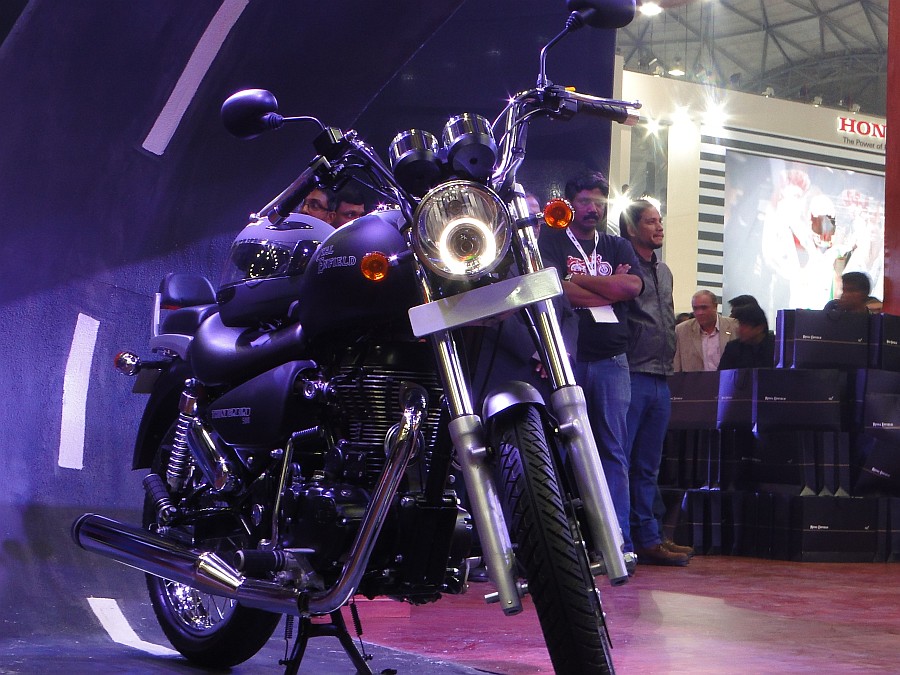
In the two wheelers notably the Royal Enfield Thunderbird 500 in all black caught the attention but what is of greater interest is the Cafe Racer which we hope will hit the market sooner than later.Royal Enfield Thunderbird 500 launch

Royal Enfield Cafe Racer Concept at the 11th Auto Expo

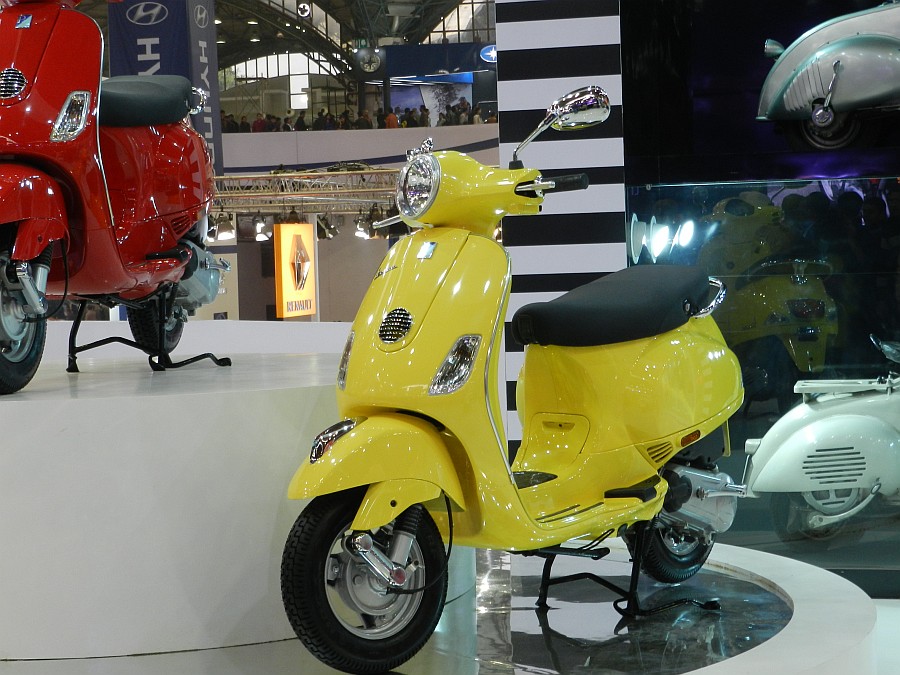
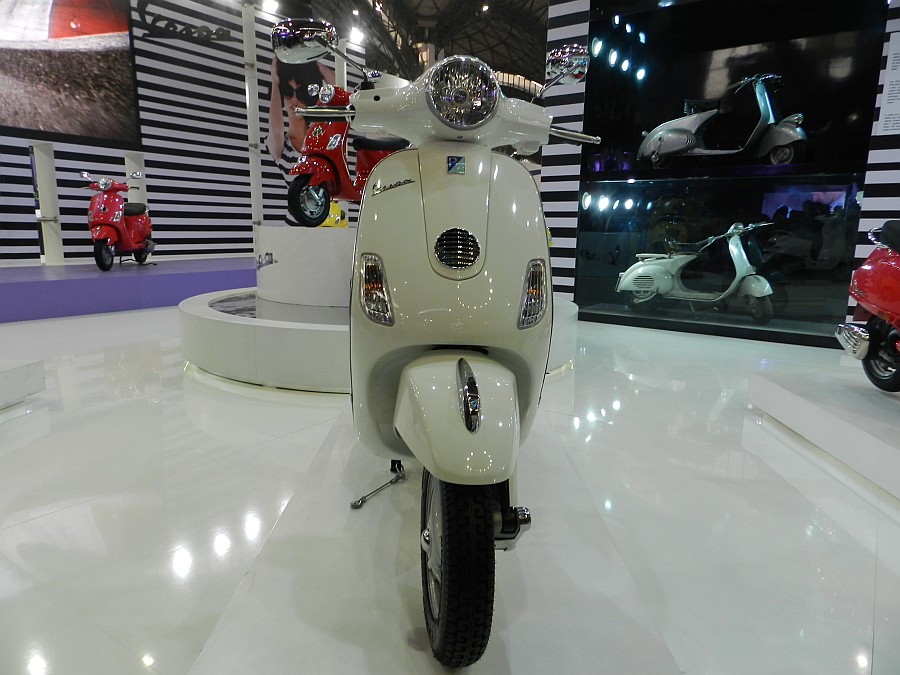
The other significant piece of news in the two wheelers section is the coming of Vespa this time on its own steam with parent company Piaggio.  The Vespa LX125 will be launched at the end of this financial year and it looks stunning.

Vespa LX 125 Yellow at the 11th Auto Expo 2012

Vespa LX 125 White at the 11th Auto Expo 2012

Among the four wheelers Premier Limited which is trying to make a comeback has shown an updated version of the Rio compact SUV which it makes with a Zotye derived body (originally a Daihatsu) and an AVL derived petrol engine and from May onwards with a Fiat Multijet 1.3 litres.

Premier Rio at the 11th Auto Expo 2012

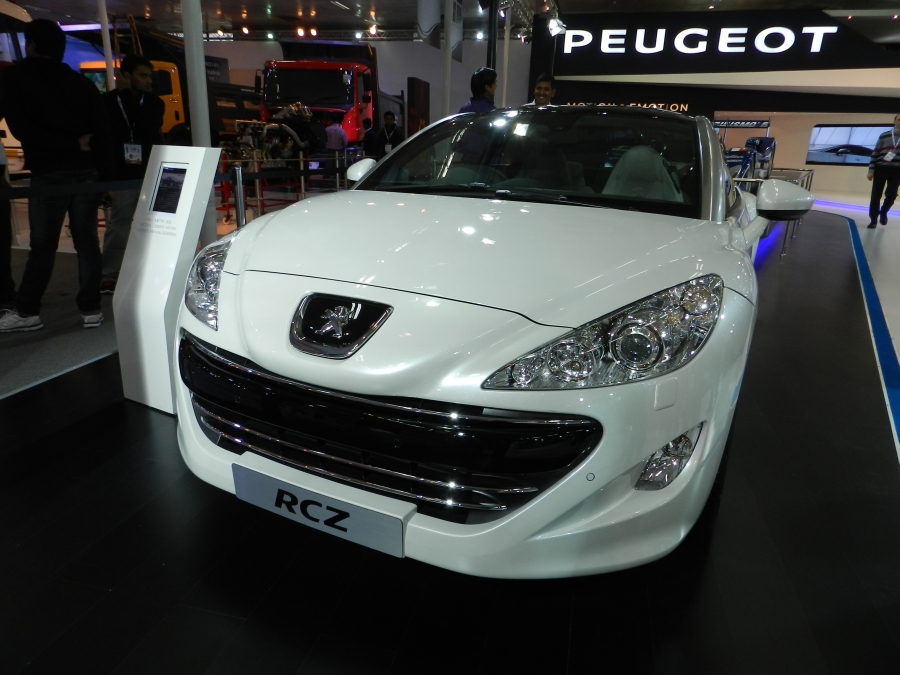
Peugeot was there too.  Subsequent to the Auto Expo there have been some rumours about Peugeot delaying its India entry and also that it is once again looking for a local partner.

Peugeot RCZ Coupe at the 11th Auto Expo 2012 : Front

Peugeot 508 at the 11th Auto Expo 2012Peugeot 508 at the 11th Auto Expo 2012 : Rear

Force Motors has shown the 4X4 version of its Force One SUV.

Force Motors Force One 4x4 at the Auto Expo 2012

And Ford came back to the Expo with the unveiling of its EcoSport compact SUV which will come to India soon.

Ford EcoSport Unveiled at New Delhi : Rear 3/4

Ford EcoSport Unveiled at New Delhi

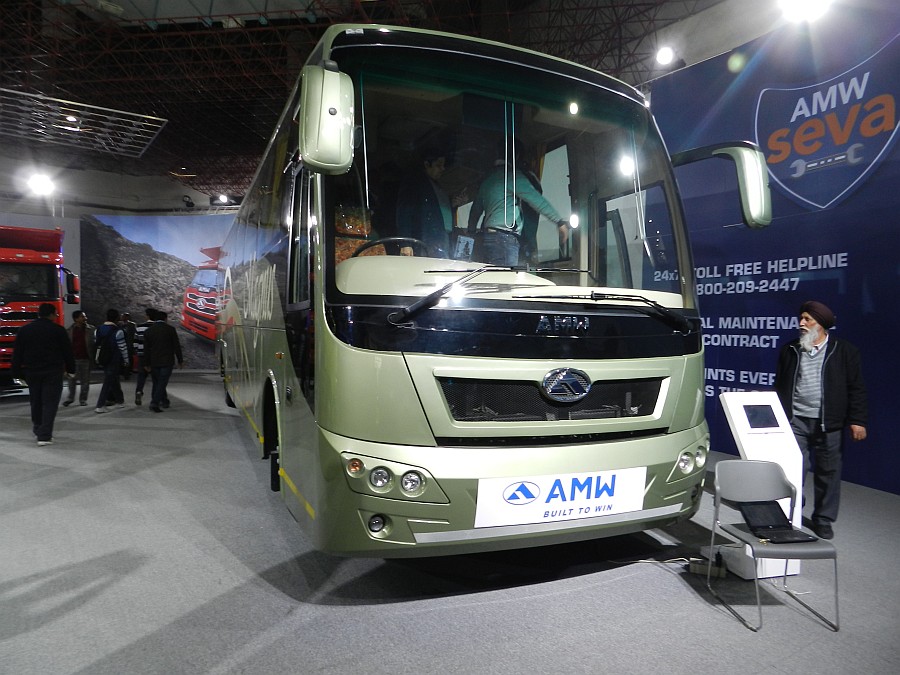
Among commercial vehicles were the SML Isuzu bus, the AMW bus, the Force Traveller 26 the biggest monocoque bus in India  and the MAN AirobusSML Isuzu LT134 Bus at the 11th Auto Expo 2012

AMW Magnus at the Auto Expo 2012

Force Motors Traveller-26 at the 11th Auto Expo, 2012 : Front

Man Airobus 01 640x480

Royal Enfield Classic 350 and a 2002 Bullet Electra trippin'

Where does one find contentment? On a Royal Enfield, of course. Before we delve into the specifics of how and where, it seems prudent to ride the time machine back to a distant past and witness the genesis of this hallowed marque. The ‘Townsend Cycle’ manufactured by Givry Works in the early 1880s, reputed for its sturdy frame is what spawned the first seeds for motorcycles ‘Made Like a Gun’. After a financially tumultuous phase the company changed hands to become the ‘Eadie Manufacturing Company Limited’. Fortunately, the owners Albert Eadie and R W Smith were good businessmen who won a contract to supply precision rifle components for the Royal Small Arms factory in –cue the drum roll– Enfield, Middlesex. To commemorate this contract, in 1892, they designed a new bicycle to be manufactured and sold by the ‘The Enfield Manufacturing Company Limited’ which then became ‘Royal Enfield’ the next year. It was in 1893 the trademark ‘Made Like a Gun’ appeared first.

MADE LIKE A GUN : Royal Enfield Classic 350

In 1901 the first Royal Enfield motorcycle, a belt driven machine with the engine mounted over the front wheel was born. After more experiments with quadricycles, tricycles and four wheelers Royal Enfield found its calling when it put on display a small 214 hp V-Twin powered small motorcycle, at an international motorcycle show. The company survived the war, and the depression to give the world the first ‘Bullet’ in 1932. It was finally in 1949, after the II World War, Enfield arrived in India, through the Madras Motor Company.

It was in 1994 the Royal Enfield name was purchased by the Eicher group, who still own the brand. You can read more about Royal Enfield’s progress through the years in this article the Ed penned a while back. We have to head straight to August 2001 when Royal Enfield launched the Electra.

2002 Royal Enfield Bullet Electra

The Bullet Electra, was one of the first Royal Enfields to have coil ignition, technically CDI (Capacitor Discharge Ignition). This made the motorcycle far more reliable than previous Bullets that had to rely on contact breaker points (point Bullet saar!) ignition. The Electra has a four-stroke engine that delivered 18 bhp when it rolled out of the assembly line. How many horses the bike’s powertrain is capable of now, is anybody’s guess. It was available in three colors when launched,  Silver Ash, Riviera Red and Amazon Blue. While the Bullet Electra was launched at Rs. 56,931 ex-showroom, Chennai, a second hand Electra in today’s market is anywhere between twenty to thirty thousand more expensive!

Saurabh on his Royal Enfield Bullet Electra

Royal Enfield had tie-ups with Criterion Engineers,UK for gear box design and AVL, Austria for engine design. The Electra owes much if its engineering to these firms. Engineering, a word that sounds extremely delicious and inviting while we’re on the topic of Bullets. The Electra squashes notions of a heavy, lumbering, unreliable, usually unstoppable mass of metal AND metal and probably stakes claim to being the first Bullet that started the phase of putting the Bulleteer’s ear to ear grin on a larger number of motorcyclist faces. Who can say no a Bullet that doesn’t compromise too much on the ‘thump’ and still manages to start up perfectly when fully drenched?

Selva by his Royal Enfield Classic 350 and Saurabh by his '02 Bullet Electra

That question brings us to the Classic. We had the Royal Enfield Classic 350 with us for a day, thanks to our movie star doppelganger friend Selva. Saurabh, the man ( he probably prefers boy! ) with the 2002 Bullet Electra was only too willing to join us for the ride.

The Classic 350 is powered by the 19.8 bhp, 28 Nm torque Unit Construction Engine ( UCE ) with a 29mm, CV Carburettor while the Classic 500 is of course, fuel injected. The Classic 350 definitely scores lower on the characteristic ( uh-oh) thump, but for somebody who started learning to ride on his brother’s ye old Bullet, Selva seems to not mind. Saurabh though, will sit you through hour long classroom sessions on how the mechanical clatter ( not that I noticed any ) of the Classic’s engine makes more noise than the exhaust, the combined effect being a thump that cannot be compared to the full lunged bellow of the cast iron engines.

Bah. Flintstones-ish we say. As Bassee will mention somewhere else in this article, the appeal of a Bullet is that you can sit back comfortably, let the revs rise up slowly thanks to the long stroke engine with all the torque in the world and allow yourself to be transported to your intended or preferably unintended destination while astride the magnificence that is a Royal Enfield accompanied by the sonorous thump. When a Bullet can take you from Kanyakumari to Leh like no other motorcycle can, and not break down in the process of doing it, I’m sure you can find it in your hearts to forgive the perceived loss of the thump. Can you Saurabh?

Royal Enfield Classic 350

The four speed gearbox on the right hand side of the Bullet Electra needs a bit of coaxing to slot it in the cogs properly. If the 5 speed gearbox on the Classic 350 is any improvement, let’s just say, there is scope for perfection. Ride quality on both motorcycles was stunningly fantastic and gave new meaning to Evo’s off hand comment that I’d be so much more comfortable touring on a Bullet than on my 220. Getting off the Classic 350 was as hard as trying to wake up in the middle of the night and getting to the loo, afraid that when you do wake up the fantastic dream would vanish leaving no trace in your memory.

Royal Enfield Bullet Electra outpacing the  Classic 350 ?

The 19 inch rims on both motorcycles coupled with working front discs make either Royal Enfields a breeze to ride in the city and also bravely attempt to take the few long winding curves on the ECR at a clip reserved for sportier motorcycles. This 2002 Electra was modded to have a front disc setup and if we aren’t wrong, it was only in 2005 that the Electra got the disc brakes as standard. The tyres on the Classic 350 may not be very Royal Enfield, but they sure do make an appreciable difference compared to the ribbed ones on the Electra. Again the Bulleteer will argue that an Enfield can have only ribbed tyres and anything else will ruin the character (uh-oh).

Royal Enfield Classic 350 : Oval toolboxRoyal Enfield Classic 350 : RE Badging

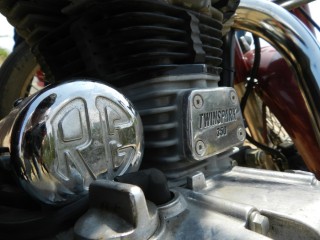
Before we wrap up the first half of this article, we should mention Mark Wells and Ian Wride from Xenophya Design, the firm that worked with the industrial designers from Royal Enfield and brought back the oval toolbox, the sprung seat, the unique tail lamp and the fantastic winged RE emblems stamped on the crankcase, back from the 1950s to the motorcycles that have defined the future of Royal Enfield, the Classic range, now including the Classic 500 & 350, the Classic Desert Storm, Chrome and the Battle Green. It would be an understatement to say the Royal Enfield revival was primarily brought about by the desirability factor of the Classic range. Thousands of lads ( and some lasses) across the country lost their soul to the Classic 500 that was unveiled in Teal Blue and oodles of chrome, and went on to buy one.

Does the Cramster Breezer go with the Royal Enfield Classic 350 ?

I was feeling extremely out of place astride either Royal Enfield in my Cramster Breezer mesh riding jacket with armour. Royal Enfield, when can we get one of those scuffed leather jackets? Thanking Bassee for graciously allowing me to kick start his article, allow me to ask you dear reader to click on the link to Page 2 below to continue reading the article for Bassee’s perspective on a day well spent and some more fantastic photographs!

170hp Chevrolet Optra  and 96hp Fiat Punto

It was, quite literally, end of the road. The highway we were in had successfully gotten itself mired in deep legal wrangles, and halfway through, the contractors had erected a stone wall, which suited us perfectly. Not many can lay claim to have witnessed a standoff between Brahma Bull on steroids and Catwoman on acid. It was a mouthwatering prospect to have them inside one ring and an orgasmic proposition to shoot them in one frame. Pure, simple and white. Sex on wheels.

Fiat Punto, Chevrolet Optra Magnum

One was a proper redneck, been bent over years toiling away, developing a massive set of arms and calves. Not satisfied with what she is endowed with, she pumps up on anabolic steroids and works out like a devil possessed. But all that pill popping has it’s effects. She can move in only one direction, straight, but when she does, she goes like a rocket. And when I say rocket, I mean it. She seems destined to teach Newton’s first law of motion to kids and if handled without care, promises to break your neck in two. She is happiest on a straight line, and hates taking corners. Pure American muscle then, ooh yeah!

The fiery Italian and the Redneck

The other one was a fiery Italian with a slightly quirky sense of style and a pompous nose. She would do powerslides as easily as she would show off those lightning quick reflexes. She would hold her line, and inspire the driver to push her to the brink of her capabilities. And yet, when you shake your head in sheer disbelief at what she is capable of doing, she would pull out new tricks from her sleeve. She is happiest at being thrown around the corners, all of which she handles with élan and then when you step out and look at her, she would exhibit that strange mix of emotions, impassive and snooty. A thoroughbred Italian, then.

Making the dough

It all started when I met Vyshak, the owner of a popular auto service and spare parts station. Vyshak is one of us, an auto enthusiast to the core who is living out his dreams, that of staying and working with machines. A humble chap otherwise, his eyes gleam with immense pride when the conversation drifts around to his own automobiles. There is a 1986 Omni, a chocolate coloured beauty, whose engine has NEVER been opened and whose gearbox has only been overhauled once in the twenty four odd years and the four lakh odd kilometers that she has traversed. There is his 1988 RD 350, painted in a rather curious red body, black chassis combo, gleaming under the hot workshop lights. Then there is the restored Suzuki Shaolin, in a gleaming red colour. When you finish with all of this, there is his Yamaha R6, in the trademark white and blue, gawked at by clients and fawned upon by the loyal troop of technicians dotting his garage.
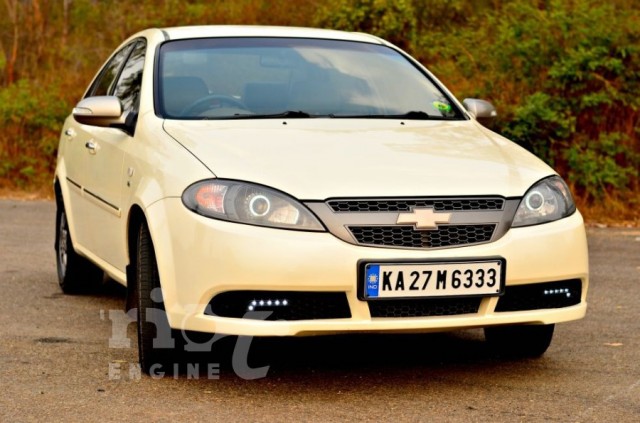
Turbocharged  170hp Chevrolet Optra Magnum 2.0 LT

And amongst all this, stands his 2006 Chevrolet Optra 2.0 LT. Pearl white, beautiful, as pristine as a lamb, not a single scratch on her. There is only one decal, stating in bold red, “TURBO”, on her rear which should give an idea to the beholder of what a beast she can transform into. No jingbangs, no screaming LED stickers, no loud music system. Simple, evocative and powerful.

The Optra, which first started off as the Korean carmaker GM Daewoo’s Lacetti in 2002 has undergone a multiple number of iterations and rebadging, including being sold as Buick Excelles in China and the Suzuki Forenza in other parts of the world to become the Chevrolet Optra as we know it today in India. The sedan had been designed by the legendary Italian design firm Pininfarina (yes, the same guys who gave you Maserati Quattroporte and Ferrari 360 Spider, not to mention countless other breathtaking beauties!).

Turbocharged  170hp Chevrolet Optra Magnum 2.0 LT  : Rear

This one, however, was special. The ECU had been remapped to boost the torque and the power, and if the dynos were to be believed, the car was spewing out, at 3,500 rpm, an astonishing one hundred and seventy horsepower (up roughly forty from stock trim) and a jaw-bending four hundred Nm of torque between 1600 ~ 2000 rpm (up roughly ninety five from stock trim). No clowning matter, this, then, eh?

Garnishing, meat or veggies?

We needed to contrast this Thing (I know not whether there is any other character other than the chap from Fantastic Four whose name and persona can be thrust upon this beast so befittingly) with Twinkle Toes. We needed some sanity to offset the madness, some curve gobbling power to offset the straight line brutality. So we turned (where else) to the Italians. A good friend, Soumya had a Grande Punto, a 1.3 MultiJet version, (incidentally, the first Grande Punto to be delivered in Bangalore), onto which, he had slapped on a Diesel Express box, and which now churned out a healthy ninety six horsepower and two hundred and thirty five Nm of torque.

Tuned 96 hp Fiat Punto 1.3L MJD

The Grande Punto is a third generation Fiat supermini to bear the name Punto. The Grande Punto was unveiled at the 2005 Frankfurt Motor Show. Designed by the legendary Giorgetto Giugiaro, (who, incidentally, also styled the Optra Station Wagon), the Grande Punto is based on the Fiat-GM Small platform, and in India, is available in a number of avatars, the 1.2 litre and the 1.4 litre petrol and the 1.3 litre MultiJet engine. The Punto has largely garnered very positive reviews about her superb handling and the frugal yet powerful 1.3 MultiJet engines. Because of her enormous weight, a full 1.2 tonnes, the Punto’s acceleration, especially the earlier ones, were on the sluggish side, but there were very few cars which could hold a candle to it in the ergonomics department.

Pearl White Chevrolet Optra Magnum 2.0 LT and Medium Grey Fiat Punto 1.3 MJD

Would you like some fries with that?

The potential standoff had all the trappings of a redneck pasta, smooth and hot, gut wrenchingly powerful and surprisingly creamy. Which one will be the car of choice then? Read on to find out!

Turbocharged Optra vs Tuned Fiat Punto


The Optra, as expected, could pull away with such command on the straights, it would be a feat to outrun her even with a Mondeo. Yes, she is THAT fast. The turbo kicks in around the 1500 ~ 1600 mark, and between that and the 4500 rpm that it redlines at, the curve is sharp uphill, no breaks in between. I saw her doing a 210 flat out, with the curve showing the first signs of tapering off. When Vyshak floored the accelerator at a 140, in the fourth gear, my butt slid into the seat, the neck snapped back and I could feel my cheeks being pulled back. It was that oh-sh!t moment when the scenes become a blur, when cars doing upwards of 150 appear to be at standstill and when you can see nothing else other than the lane dividers and the road melting into the horizon. A proper take off machine, this was.

Nose to Nose : Chevy Optra and Fiat Punto

The Punto was surprisingly quick on the straights as well. It was nowhere near the gut wrenching, butt-sliding-off feeling that the Optra was capable of, but you could feel the perceptible difference that the tuning box had made. There was a healthy and smooth torque spread available at all gears, the lowdown torque was available by the truckloads, and the point and shoot capabilities of the car had improved by a considerable deal. She would comfortably cruise at a 160 all day long. Given the bulk of the car, it was no surprise that the 100 came up real fast and the power went flat out after the 165 mark. On the straights, there was no comparison. The Optra was a much faster car.

Up close with a 170hp Chevrolet OptraCaution : 170 hp Chevrolet Optra Magnum  2.0 LT TCDi

When it came to the curves, however, it was a completely different story. The Optra in a stock trim had a very soft suspension, owing to this being used primarily as a city sedan, and as such, is completely useless for high speed corner-carving. For a car capable of doing upwards of 220 kmph, the Optra was easily unsettled when a sharp curve was thrown at her above the 130 mark. It is a scary feeling, yes? The opposite suspensions bottomed out, the rear spinning like Abhimanyu himself had some role to play in it, you can literally feel the control on the car diminishing, and you know that if you brake and for some reason the ABS does not kick in, it could result in a spectacular powerslide which would result in you flying over that hedge and in all probability, landing butterside down. So, you do the sane thing and understeer, all the while gently touching the brakes to allow the ABS to do their work and steer you clear off the greenery and keep the rubber side down. Whew, that was a close one!

No time like dusk : Chevy Optra and Fiat Punto

The Punto, on the other hand, was born to take the curves on. She took them on with such ferocity and a sure, planted feel that much before I could get out of one, I found that she was in line and ready for the next one, much ahead of my preparation. Not once, not even at a 150, did I find the Punto not towing the line that I had asked her to. She threw me around inside the car, sure, but she had a surefootedness about her which was extremely comforting. Even when I was taking curves while accelerating, I could feel the tyres groaning in protest, but never going off the intended route. Most of all, the ability to transmit all of what the car was going through when taking a corner back to the driver through the responsive steering had a very reassuring effect. We did not actually time the cars, or race them across the block, but had we done that, I am sure that the Punto would have actually held it’s own against the bigger, powerful Optra, because of the sheer delight that it takes in gobbling up the curved tarmac.

Our verdict on the speeds? On a highway, there is no question. The Optra would be the pick anyday, especially with long straight roads and when you have those minimal curves, you can always slow down and take them at a pace the car is comfortable with. Our recommendation is to change the shockers pronto, and get a stiffer set slapped on. It would make a world of difference to the handling.

Inside a city, especially overburdened cities like Bangalore, the Optra does not stand a chance, however. The Punto, because of it’s size and quick and agile engine and a shorter footprint, would be able to get in between the gaps far quicker and overtaking other cars and motorcycles would be an absolute breeze. The Optra, with it’s bulk and footprint, would be a labour to drive inside the city, and I have a hunch you would end up drumming your fingers out of frustration more often than not.

Farfalle, anyone?

Now to some of us, a pasta is a pasta is a pasta. But then there are some who love the excitement which fine dining provides. Making a dough into a butterfly shaped pasta involves some amount of work and making it look even more beautiful when cooked involves a certain amount of dedication. So then, who will the fine diner please?

Redneck Pasta : 170hp Chevrolet Optra

The Optra interiors are plush and feel premium, both to touch and visually. The seats have good lumbar support and a decent thigh support. The pedals were easy to reach, and visibility over the long bonnet was very good. The large windows and well placed mirrors provide excellent overall visibility. The backseat looks pretty cramped, but it is only an illusion, helped on generally by the recessed honeycomb-like structure of the seats. The knees had a good amount of travel before touching the back of the front seats and there was a general feel of wellness when you sat inside because of the premium feel.
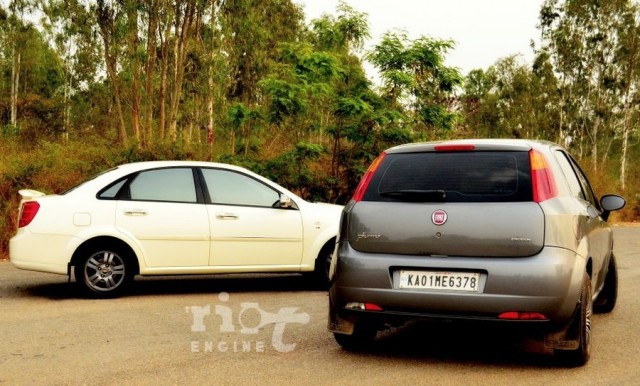
Giorgetto Giugiaro designed Fiat Punto

The Punto, on the other hand, has a relatively demure interior. Which is kind of surprising, given her Italian heritage and the flair which Italians have for style. The dashboard is bright and reading the information off it was quite easy. What was once fun and premium gadgets, Bluetooth and steering mounted volume controls and message reading capabilities have become commonplace now. When you are paying almost eight lakhs for the top-end trim, you may as well expect a hot hatch with premium feel. This is where we think the Punto in the present crop of hatches, loses a bit of the sheen. We recommend getting some quality interior work, (nice handcrafted seat-covers, perhaps some leather for the ceilings and a dash of hazelnut wood for the dashboard, or would that be asking too much) done for the Punto right out of the showroom to match the go that the car is capable of.

Ready in 2?

You must be joking, Sir. Modifying a car such as these take perseverance, patience, dedication, knowledge and deep pockets. Maintenance of these cars take even more time. The wear and tear is much faster and checkups need to be more and with lesser space in between each.

So, do we recommend either? YES! We recommend both, in fact. Both cars are found relatively cheap in the second hand market, and both have brilliant mills which are capable of being tinkered around with to a reasonable extent. You need to be careful to find a decent quality piece, tune it well and then run her around like nobody’s watching.

Just remember to give us some credit when you execute said idea. After all, where would the plant be if the seeds did not germinate?

Photography: Soumya Paul, Ayan Ray

YES! We recommend both!

Maybe in his native country, Spain Jorge Lorenzo has a fan following.  But even there his fans are outnumbered in good measure by those of Daniel Pedrosa.  In the rest of the world, it would be safe to say that Jorge Lorenzo does not have too many fans.  People may admire him, his never say die attitude, but fans, no way.  If one were to ask themselves about why Jorge Lorenzo does not have fans (and that is putting things very politely, since reality is that many people dislike him) not too many good reasons surface.  Therefore one will have to use the “theory of wavelengths” as proposed by Sigmund Freud, but then most believe that the whole theory is bunkum because it is somehow based in the occult.  But there must be something to this occult, otherwise how does one explain the dislike and contempt that one feels for a rider that one does not even know at a personal level?

While one cannot pin point the exact reasons why Lorenzo is not popular, there are perhaps clues that can be used to get to the bottom of it all.  There is no doubt that when Lorenzo raced in the 250cc category, and rather successfully at that, he came across as a very brash and often times stupid person.  This had something to do with his misdemeanours on and off the track.  On track Lorenzo was a hard racer, so hard that he was ruthless.  The only other racer who could match him on that count was Marco Simoncelli.

Lorenzo And Simoncelli

But the receiving end of Lorenzo’s brutal tactics usually was the habitual whiner Andrea Dovizioso.  Lorenzo took wide lines into corners and in the process of returning to the racing line usually chopped the front end of the rider who was behind him.  But then there are fans of this variety of racing as well.  So while this trait put some off it did not affect many.  But what put everyone off was what Lorenzo did after winning races.

It will be very relevant here to talk about Jorge Lorenzo and his relationship with Valentino Rossi.  There is no doubt that Rossi is afraid of Lorenzo’s talent.  That is the reason why he served Yamaha the ultimatum choose between me or him.  Rossi never said that about any of his other teammates.  Colin Edwards was his favourite since Rossi was sure that Edwards was no threat to him.  Lorenzo’s relationship with Rossi is a little more difficult to characterize.  While there is no doubt that Lorenzo is a fierce competitor who has appropriately been likened to a bulldog by Kenny Roberts Sr. and that he took his competitiveness to Rossi, one cannot discount the probability of Lorenzo being a Rossi fan. I can assure you that it is not as far fetched as it sounds.

Lorenzo is much younger than Rossi and at a very impressionable age it is easy to make heroes out of those whom one admires.  This statement of mine can substantiated with adequate number of examples.  Prior to the emergence of the Valentino Rossi on the MotoGP scene no one, and I mean no one, in Rossi’s immediate past brought celebrations to the racetrack post victory and continued them on the podium.  The generation of people such as Eddie Lawson, Wayne Gardner, Wayne Rainey, Kevin Schwantz, Mick Doohan and even Alex Criville never brought zaniness to the track or the podium post victory.  Rossi changed all that.  While he was a hard racer, he also came across a lovable, teddy bear like character thanks to his uninhibited and unencumbered sense of fun.  While greats like Rainey, Schwantz and Doohan were respected, Valentino Rossi was loved.  That is how he became so important to MotoGP.

People in Rossi’s own generation also maintain reserve.  Casey Stoner post victory goes to his wife Adrianna, Pedrosa will go with his brow furrowed to Alberto Puig, presumably because if he were to smile, then Puig would make sure that Pedrosa would get a whipping and even Marco Simoncelli for all his other flamboyance had nothing in the way of celebrating with fans.  But Lorenzo was the one who tried to emulate Rossi.  After the race was over and he had won it, Lorenzo normally parked his bike next to a fence and played air guitar in the gravel trap.  Then he would go on to the podium with a lollipop in his mouth.

Lorenzo Lollipop

He also started playing around with themes for his helmet and for his leathers.

Lorenzo Helmet Lorenzo Helmet1

Finally he even stopped using his regular number 48 and enlisted the support of fans to get a new number which turned out to be 99.

Lorenzo2 Lorenzo99

Despite his emulating Rossi, his fans who were minuscule in number did not grow into huge legions like Rossi fans.  That is because Lorenzo simply did not have the natural flair that Rossi has.  And his planting the Lorenzo land flags at circuits where he won races, drove people away from him in droves.  In short, Lorenzo had succeeded in achieving the exact opposite of what he had set out to achieve.

Lorenzo Land1

But gradually in the last couple of years Lorenzo has been showing a different side to his personality.  Sometimes it seems as if he is a genuinely nice person.  When Rossi crashed a broke his leg, Lorenzo who managed to get on the podium in that very race somehow managed to get hold of yellow T shirt with the number 46 on it and dedicated his podium to the injured Rossi.  While making sure that he is still ultra-competitive towards his former teammate, Lorenzo unlike Stoner, did not have nasty things to say when Rossi’s chips were down.  He maintained that Rossi is an incredible talent and that it was only a matter of time before he would return to the top spot on the podium.  Perhaps his most humane gesture came after the death of Marco Simoncelli last year.  In the initial part of the season of 2011 there were two rivalries happening.  One was the Casey Stoner-Valentino Rossi rivalry and the other was Jorge Lorenzo-Marco Simoncelli rivalry and both these were as much off track as they were on track.  Lorenzo lost no opportunity to criticize Marco Simoncelli’s riding saying that he was far too dangerous in his manoeuvres and that he was danger to himself and other riders on the track.  While saying this he had the magnanimity to accept that he once rode in a similar fashion and that he mended his ways keeping in view the safety of himself and other riders on the track.

Lorenzo And Simoncelli Crashing

But after Marco Simoncelli died at Sepang in a crash during the race and when Lorenzo’s estranged father found it suitable to comment that considering how Simoncelli was riding, it was inevitable that he had to die the way he did, Lorenzo made it known to the whole world that he did not subscribe to what his father was saying and that he was ashamed of his father who would say such insensitive things when a rider had just died. He could have very well said, I told you so, but did not.  He actually expressed solidarity with the Simoncelli family and went to the funeral of the fallen rider.  That was indeed a display of character that one rarely associated with Lorenzo, especially after he made a fuss about going to Motegi fearing radiation.

Last year was also the year when Casey Stoner, who never lost an opportunity to complain about an overtaking move that was put on him by Rossi at the Laguna Seca race in 2008, put an equally questionable overtaking move on Lorenzo.  But Lorenzo maintained his equanimity and simply shrugged it of by saying ” Casey is normally a very tidy rider.  It can happen to anyone sometimes and therefore there is no point in complaining about it”.  I sincerely hope Mr. Stoner squirmed in his leathers, because he has proved beyond doubt that he is incapable of generosity even if it is for winning people over to your side.  But that is highly unlikely.

Lorenzo1

At this point we will do well to remember that Jorge Lorenzo lost his number 1 plate to Casey Stoner last year but he was never bitter (at least outwardly) and has been very complimentary about the man.

Casey Stoner1

Even at the beginning of this year when in preseason tests, Casey Stoner has gone faster than anyone and when Lorenzo was asked about this he said “Casey is fast on anything.  He will go very fast even if you give him a cycle”.  Anyone who understands competition will understand that these things are very difficult to say when you are talking about a competitor.  Rossi’s good humour always evaporated when he was put on the back foot but Lorenzo in saying what he did showed a side to his persona which I certainly did not think existed.

Lorenzo At BIC2

So now to ask ourselves the question is this the real Lorenzo or has he been coached by some PR managers to say the right things and do the things that are considered right?  I am sure that I can never answer that question for you or for myself.  But I am equally sure that even the worst case scenario (which is that Lorenzo is only parrotting all the things that have been taught to him) Lorenzo has demonstrated that he is at least sensible and reasonable to understand that his image needed mending.  Now that in itself is not such a bad thing.  I am beginning to like Lorenzo, that much you must have gathered by now.  I do not know if I will actually become his fan.  But I like the fact that he rode around the Buddh International Circuit on an R15 and said that he wants to race in India.  I like the fact that he rides a Yamaha, my favourite marque after Kawasaki.  Now if he only stopped that habit of planting blag Lorenzo’s Land flags.

Lorenzo At BIC Lorenzo At BIC1

Who knows, he may actually have genuine fans outside of Spain and I could be one of them.  I will tell myself that he is at least not a barbarian like Casey Stoner whose hobby is hunting animals with a bow and arrow.  Stoner is a great rider but there is no taking away that hunting and that too with a bow and arrow is barbaric.  Only white skinned, idiot journalists find that a symbol of simplicity and cuteness.  Yeah this year, I am settling for Lorenzo.  He’d better not let me down.  Otherwise you know what fans can do when they get disillusioned.  If you do not get what I am saying I strongly suggest you see the deranged fan that Robert De Niro plays in the movie “The Fan”.

This is a time to be truthful.  We are dazed and confused because what happened today is akin to a slap on the face when we were actually readying ourselves for a punch in the solar plexus.  Yesterday when we received an invitation to attend a press conference called by Hero MotoCorp, we were slightly flummoxed.  We were wondering what this could be about.  The invitation simply talked about unravelling a strategic initiative.  We got into a huddle and started discussing scenarios.  Nothing seemed realistic and so we went to bed waiting for everything to come out into the open.  And then in the afternoon in Delhi, there was heightened anticipation.  Is this going to be an announcement of a collaboration or would this be a buy out?  Our minds ticked.  At the venue there were no Japanese or Korean people, so obviously this was not going to be anything about a buy out of Hyosung or a strategic tie up with Kawasaki (honestly even that thought entered the head of at least one of us. Another one of us even thought of Yamaha originally since they were not getting volumes, so were they entering into a strategic tie up with Hero). But there were many people of European stock.  So was this a new collaboration?  But with whom?

Related Articles here

EBR 1190RS images from the Hero MotoCorp-EBR event

Hero MotoCorp announces strategic alliance with Erik Buell Racing!

Hero MotoCorp to sponsor two EBR teams in AMA Pro Racing!

Most of Europe’s surviving motorcycle makers were in the Piaggio basket and with Piaggio having just announced intention of launching products in India there was no way this was going to be, Hero-Gilera, Hero-Derbi,  Hero-Aprilia, or Hero-Moto Guzzi.  Laverda is resting so why would anyone wake Laverda up?  Benelli is barely surviving and has no products or technologies worth collaborating or buying out.

There are two iconic Italian brands, one of them definitely struggling and the other one always up for sale.  We are talking about MV Auguta and Ducati.  Claudio Castiglione’s death has put MV Augusta in a bit of a spot.  Harley Davidson bought MV Augusta but hit by recession they promptly handed it back to Claudio Castiglione.  Post his death was his son putting up the brand for sale or was it Ducati?  Only a couple of days ago we had reported that sale of Ducati rumours were yet again gaining strength.  Was Hero MotoCorp buying Ducati?  That was very much in the realm of possibility.  Inspite of having paid huge royalties to Honda for the Impulse, Ignitor, Passion X Pro and the Maestro, Hero surely has enough capital to pick up Ducati.

But let us face it, what will Hero MotoCorp do with Ducati?  Ducati sells about forty thousand motorcycles per year and it does not have small engines in its portfolio so no, it could not be Ducati.  The same would be true with MV Augusta which is essentially a two model company.  And the only thing distinguishing between both the models is engine capacity and that smaller engine capacity is much bigger than anything Indians can afford to buy.  So MV Augusta is out.  More head scratching.  Is it possible that Hero is renewing ties with BMW?  Remember it did sell the BMW F650 Funduro.  But then the motorcycle was priced at Rs. 5 lakhs and the by the time the last one was sold, the price dipped down below the Rs. 2 lakh mark.  But BMW can make small engines.  In fact, Escorts when it was still making motorcycles, toyed with the idea of bringing a 125-150cc capacity scooter with a roof.  It was called the C1.

While we were letting our imagination run riot, we also explored the possibility that Hero could be getting into the four wheeler space.  The notorious Peugeot came to mind immediately.  It pulled out of the World Endurance Championship, citing lack of funds and also rumours about its India project not taking off have been doing the rounds.  Some auto journalist with an imagination as fertile as ours even said that Peugeot was scouting for Indian partners.  Was Hero that?  Peugeot also makes scooters with small engines.  So Peugeot?  Could be.  The anticipation kept building up and we were wondering which of these conjectures could turn out to be true.

When the announcement came we were ready, with our abs tightened waiting for the punch.  The punch did come but not into the abs but straight on to the face.  Hero MotoCorp had tied up with Erik Buell Racing!!!  Those of you who heard of Erik Buell and know about the Buell Motorcycle Company and subsequently Erik Buell will know why we felt the way we did.  You will also understand the headline of this article, the bit that talks about strange brew.  For those of you who are uninitiated into Erik Buell and his enterprises it is time to tell you a small story.

Erik Buell was an engineer working with the Milwaukee based manufacturer of the famous push rod engined and glorious exhaust sound generating, Harley Davidson.  Now everyone knows Harley Davidson.  It is the true American icon.  At one time the equivalent of our own venerable Bullet, Harley’s were notoriously low tech.  Like the Bullet, low tech did not translate into simplicity and ease of maintenance.  In fact it was just the opposite.  Bullets and Harley Davidsons were special children of their parents.  They needed great care.  In this company was this man Erik Buell, who loved racing motorcycles.  And so he was able to persuade the lethargic American giant to look at least into different frames if not engines.  And thus began Harley Davidson’s transformation.  Erick Buell’s claim to fame is his use of the frame of the motorcycle as the fuel tank.  Fuel stored in the frame meant that he could create a chassis that was nimble and relatively light.  Greater centralization of mass produced better and lower centre of gravity.

Harley Davidson like Erik Buell.  So they even indulged him by letting him create his own brand of motorcycles.  Thus the Buell marque was born.  It stayed alive till the recession hit the US of A and Harley closed down this division when it also handed MV Augusta back to Claudio Castiglione.  Erik Buell was back in the wilderness.  And with no disrespect meant to him we can tell you that Buell is not John Britten.  The New Zealander Britten could build a whole bike in his garage.  Not so with Erik Buell.  Buell could not do his own engines.  But he is a racer and wants to go racing.  So he looks to Rotax in Austria for engines.  Rotax is a well known builder of engines both four stroke and two strokes.  At some point in its history it was taken over by the Bombardier Corporation of Canada.  Please don’t smirk.  The Canadians are good entrepreneurs. You don’t have to take our word.  Ask the people at Spice Jet.  They use Bombardier turbo prop aircraft for smaller towns and cities, the ones that were once serviced by Vayudoot (no relation of Rajdoot) which used tiny Dornier aircraft.  The point is Rotax builds engines for some Bombardier aircraft.  We talked about the F650 Funduro right?  Well BMW got engines for it from Rotax.  In fact Rotax built the bikes that were marketed by BMW.

So Erik Buell uses Rotax engines in his motorcycles now.  Eric Buell also does not make his own suspension components.  He gets them from the Swedish suspension specialists Ohlins.  Don’t laugh please.  Even Honda, Yamaha, Suzuki, Kawasaki, Aprilia, BMW and all those who race, get their suspensions for Ohlins.  These suspensions are literally worth their weight in gold.  No, no, don’t take our word.  Ask Alan Cathcart who writes for Business Standard Motoring will vouch for that.  Gold is used in Ohlins’ suspension components.  Not by the kilograms s but in milligrams.  Eric Buell makes an ECM but that cannot be customised.  It has to be used in its standard settings.

By now the perspicacious among you may have got the drift of this article.  What has Hero MotoCorp have to gain with this strategic tie up.  I can tell you what Erik Buell Racing can gain.  Money to run its teams in AMA Superbike racing.  But Hero?  Let us try the elimination method.

1. Hero MotoCorp will get visibility in USA because AMA is an all American racing series.  The question is what will this exposure translate into?  There is not market in the USA for the bikes that Hero makes.  That does not seem to be the case then.

2. Hero MotoCorp will get access to cutting edge racing technology.  The question then is for what?  Hero does not have and more importantly does not need a racing programme. Cross this out as well.

3. Hero will get to know how to use fuel injection technologies and the like.  Er, why don’t they go straight to Rotax or to Rotax’s Austrian neighbour, AVL Technologies.  We are pretty sure that is a more economical and less complicated way to doing things.

4. It is not suspension technology either.  Hero can go to Ohlins but for the record, Hero has its own suspension company called Munjal Showa.  Therefore this is not the reason then.

5. So ladies and gentlemen, that leaves us with only one thing.  Hero is going to Erik Buell Racing to get access to the technology of using the motorcycle frame as a fuel tank.  Now the thing is why is this so important.  We can’t figure that out.

We have scratched our heads so much that almost all of us in the team have gone bald.  The editor has had a wild thought.  Did Hero get conned into something that is of no use to them?  That you decide or time will unravel everything.  Pawan Kant Munjal has made things even more difficult by saying that the Leap scooter has some Erik Buell technology. That can only be the ECM and as far as our knowledge goes, Buell has no known expertise in electric/hybrid vehicle technology.   Or is it that Erik Buell holds a key to something that nobody is telling us about at this point.

Now you understand the slap bit?  Do you also understand the reason why we have generously borrowed a line from the classic rock band Cream.  The line is from their song, Strange Brew.  Yeah we are looking at what is inside this seemingly strange brew.  And the honest answer is we cannot see a thing.  But then that could be our problem not Hero MotoCorp’s.

Hero MotoCorp New Strategic Initiative Announcement

Riot Engine has been invited to the Hero MotoCorp press conference where the biggest two wheeler manufacturer in India intends to announce its new strategic initiative.

Updates

No plans to bring in EBR bikes to India independently.

Technology from EBR to trickle down to products to be launched in THIS calendar year. Buell technologies like Fuel in frame, belt drive, centralized mass and so on, to eventually find place in Hero products.

AMSOIL Hero by Hero Motocorp EBR 1190RS

Hero MotoCorp to enter motorcycle racing with Erik Buell Racing!

Two teams will be sponsored : Team Hero and AMSOIL Hero at the AMA Pro Racing National Guard Superbikes Championship.

Danny Eslick for Team and Geoff May for AMSOIL Hero will ride the EBR 1190RS bikes.

Unveils the EBR 1190RS to be racing for Team Hero and AMOSIL Hero.

More information to come soon.

Multiple types of collaboration.

Next generation of “HIGH-END” products to be developed by Buell and Hero MotoCorp R&D.

Leap developed in collaboration with EBR.

New strategic partnership with BUELL!

Mr. Munjal reiterates our Editor Satish Chandra statement in his recent article on Hero MotoCorp. Steady growth. While others have much to say about Hero, the numbers speak for the company.

Intent demonstrated through the hybrid scooter the Leap.

Projects ‘day dreams’ in good light. These are the dreams that you remember and take your life forward with.

We would speculate if we could, but Riot Engine has principles about not going down the much trodden wild-speculation-path, so you’ll have to hold your breath for a while longer.

Riot Engine brings you the announcement live from the venue.