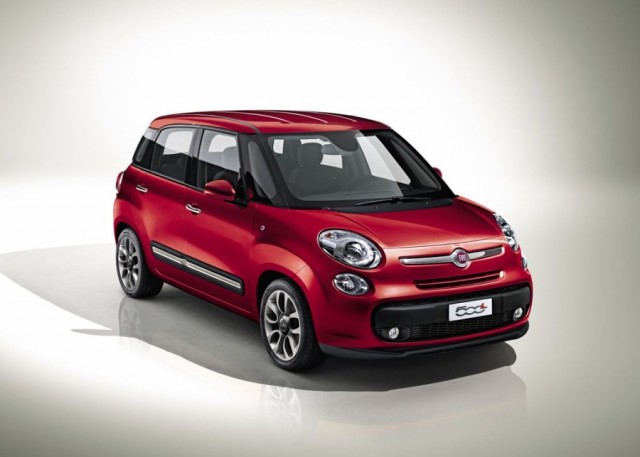
After the slew of spy pictures we’ve been seeing, Fiat has finally come out with the official images of the 500L, the new model which will have its world preview at the International Geneva Motor Show on the 6th of March 2012.
500L ( L for Large) follows the 500 Abarth and Cabrio versions and will further the brand’s strategy.
Fiat says the 500L will have MPV passenger space, the feel of a small SUV on the road and the compact dimensions and appreciable fuel efficiency of a B segment car. Combining the typical characteristics of different categories the 500L is a unique and interesting alternative to the traditional B and C segment cars.
Fiat says the 500L has a 5-seater single-volume structure which is 414 cm long, 178 cm wide and 166 cm high. It is a further development of the concept of ‘cab forward’ introduced by Fiat with the 600 Multipla a popular compact people carrier.
The Fiat 500L, to be manufactured at the Fiat factory in Kragujevac, Serbia, will be introduced to Europe in the last quarter of 2012, with an engine range which will initially comprise two petrol engines (TwinAir and 1.4-litre) and a turbodiesel engine (1.3 MultiJet II) and the most advanced, state-of-the-art technology from Fiat Group Automobiles.
The extra space in the Fiat 500L should find favour with consumers in India, so we see no reason why Fiat shouldn’t bring the 500L as soon possible!
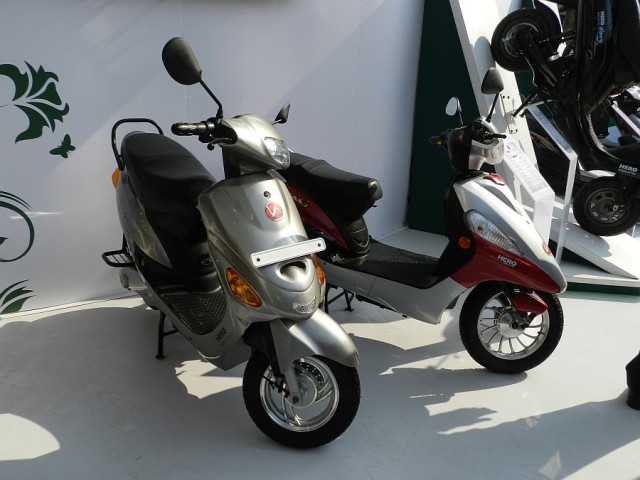
Spot the Hero Electric stall at the Auto Expo and you know they are much bigger than the competition. Close to ten models on display, and a separate section for their high end bicycle brand, Winn and electric powered A2B cycles from the recently acquired Ultra Motors.
Hero Electric E-Sprint & maxi
The only electric bike manufacturer at the Expo to have a ‘high-speed’ e-bike that has a claimed top speed of 45kph. The E-Sprint has a range of 65 km in ‘Power Mode’ and 110 km in ‘Economy Mode’. The E-Sprint has 10 inch wheels and other features include a mobile charger, a front disc brake, telescopic suspension, and a anti-theft alarm.
The ‘maxi’ Hero Electric says, is its flasgship model with sturdy design, 16 inch wheels, detachable batteries and ample space up front.
Hero Electric Optima +, Photon, Cruz, Zion, Wave DX
The Wave DX differentiates itself from the rest of the lineup by having a range of 100km thanks to the 33Ah battery. It also has an odometer and an anti-theft alarm system. Wave DX has 10 inch wheels.
The Optima+ has provision for fitting additional batteries and runs on 16 inch wheels.
The ZiON hasn’t much to its credit but polycarbonate headlamps for clear night visibility, underseat storage, light at 74 kg, and 16 inch wheels.
The Cruz has a range of 70km, an odometer, large seats and soft suspension making it one of the comfortable bikes on offer by Hero Electric.
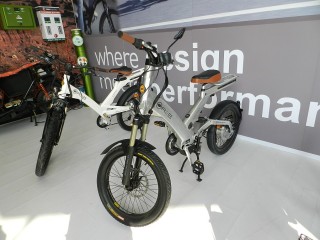
Hero Eco Group, led by Vijay Munjal recently acquired Ultra Motors, UK and had on display their electric motor powered bikes. The A2B brand cycles were on display. High end bicycles, under the Winn brand also took space in the Hero Electric stall.
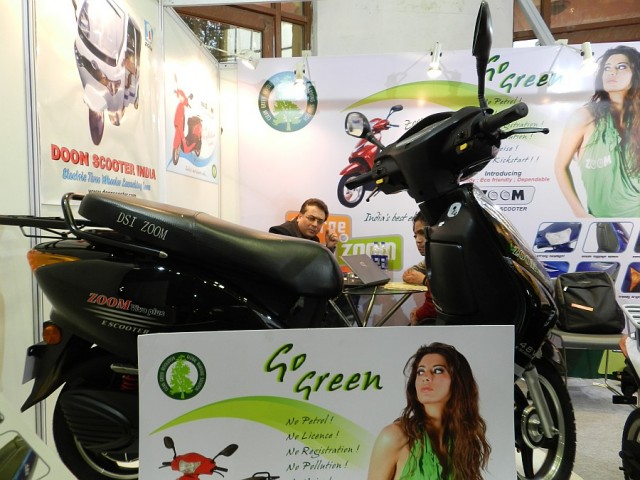
Doon Scooter India is an electric bike manufacturer based in Dehradoon (Dehradun, if you care to argue with the Doon website) Uttaranchal and headed by a team comprising of the Chairman Mr. Ranjan Chawla Managing Director, Mr. Rajeev Sachar and Mr. Manish Galhotra. Rajeev Sachar was at the Auto Expo and seemed to be busy fielding queries from prospective dealers, from places as remote as Nepal!
The concept on display had the kids interested, we were given no details on the availability.
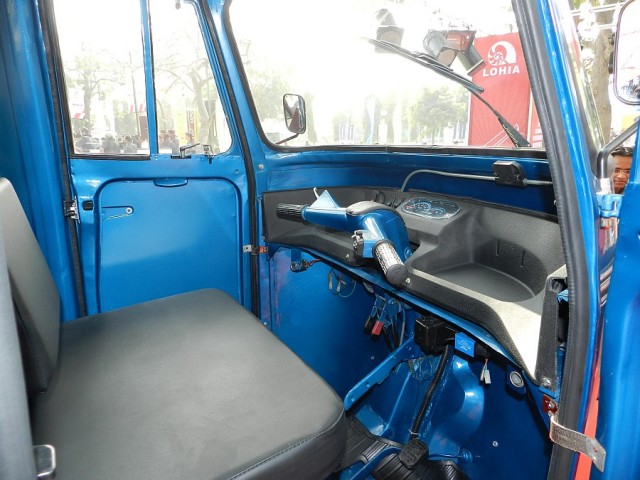
Lohia Auto launched the humsafar range of three wheelers at the Auto Expo. A single cylinder four stroke, direct injection, diesel engine of 436cc, rated for a peak power of 7.5HP@3600+50RPM and torque of 18NM@2400+200 RPM meeting BS III emission standards powers the three variants of the humsafar.
Lohia had on display the people carrier humsafar, the open loading bay humsafar LDi and the covered loading bay humsafar HDi. While all variants are available in the colors of Red,Blue and Green, White is an option only on the people carrier.
Lohia Auto Genius, Fame
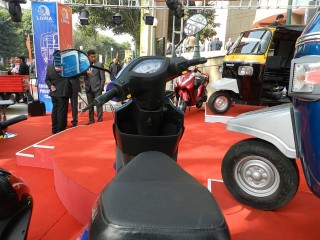
One of the more recent launches from Lohia, the Genius is a decent looking e-bike with a claimed range of 70km, and a top speed of 25kph. The motor is of course, Brushless DC type, rated at 250 Watts and an input voltage of 48V. Battery is a 20Ah maintenance Free, lead acid, Gel Type, 12V unit.
The Fame has none of the sharp edges of the Genius and is a more rounder e-bike, and we are guessing probably intended for the fairer sex.
Lohia Auto OMA Star
A dated version of the Genius is what we would say the OMA Star is. The tech specs are exactly similar to that of the Genius.
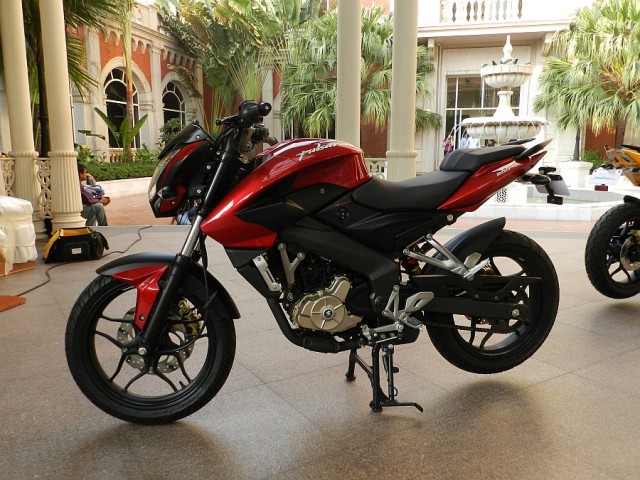
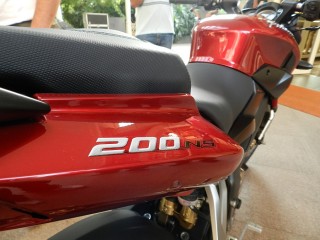
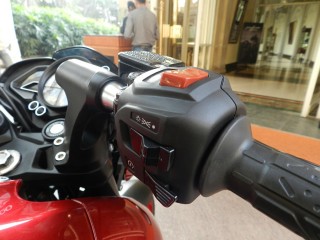
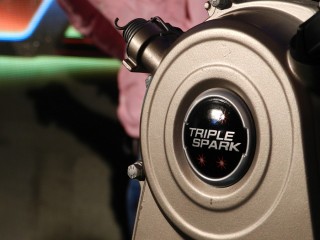
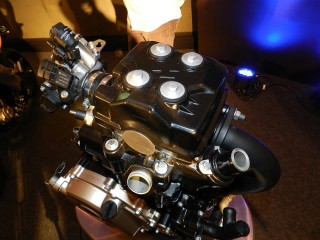
The new Bajaj Pulsar 200NS ( Naked Sport ) to be priced at less than a Lakh Rupees, will be powered by a water cooled 200cc mill, with 4 valves and triple spark plugs. The triple spark plug leads to a 50% increase in combustion speed, said Mr. Joseph Abraham, Chief Technology Officer, Bajaj Auto. This in turn leads to a Lower Brake Specific Fuel Consumption ( fuel consumed for 1KW output for one Hour), fuel Consumption improvement between 10% to 17% and a peak power of 23.5 PS at 9500 rpm and torque of 18.5 Nm at 8000 rpm. Redlined at 10500 rpm, the new Pulsar is sure to be the street fighter its always been.
A new six speed gearbox has been pressed into service, we’ll have to see how it performs on track, and on road.
The Bajaj Pulsar 200NS is to be launched in the next fiscal.
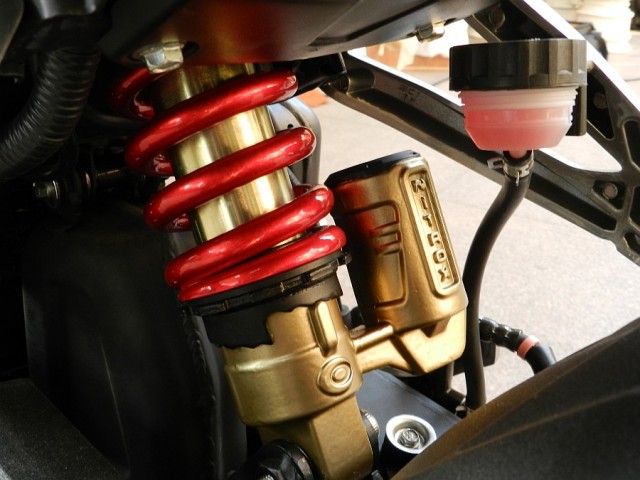
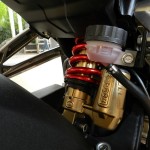
The new Pulsar 200NS drops the traditional down tube steel frames for a pressed steel perimeter beam section frame with rectangular tube section swing arm that lead to a lateral stiffness that is three times more rigid than the previous gen Pulsar 220. The Nitrox Monoshock with the piggybacking gas canister ( oh, Bajaj ) and the 280mm petal disc up front, with the Bybre floating caliper and the 230mm disc at the rear aid handling.
For the first time on an indigenous motorcycle, the exhaust is mounted centrally for better weight distribution. Performance figures are as follows :
Top Speed 136 kph
0-60 kph 3.61 sec
0-100 kph 9.83 sec
Braking Distance 16.33 m, which is a metre lesser than the previous generation Pulsar 220.
Missing though are the fantastic 55W head lamps with the projector. The Pulsar 200NS uses HS1 35/35W headlamps without projectors! A Bajaj exec assured us that was in store for us when they bring out the faired version of the new gen Pulsar.
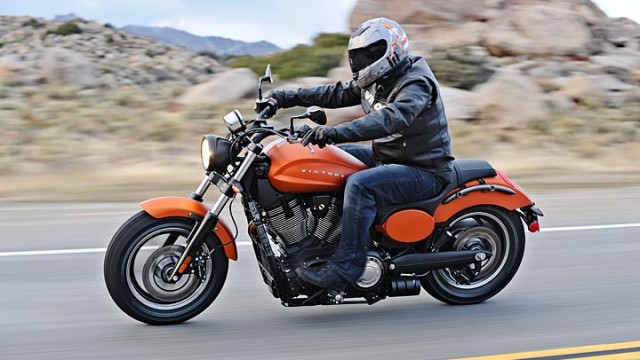
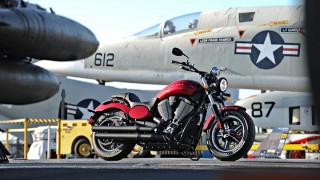
The new Victory Judge was unveiled in the US on 20th January at the New York Motorcycle Show. The Judge is positioned as an affordable hot rod cruiser with minimalistic styling.
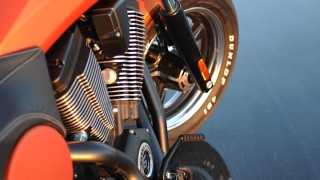
The Judge is powered by the 106 cubic-inch Freedom V-Twin Engine with a peak 113 ft lbs torque. American styling cues of the 1960s muscle car era, such as cast 5-spoke wheels shod with premium Dunlop Elite II tires with raised white lettering, give the the perfect retro look on this cruiser.
The Victory Judge is a powerful rolling sculpture showcasing fresh bodywork, blacked-out features, new drag handlebars, a new headlight nacelle and side panels an owner can customize. The Victory ignition cover between the cylinders also features a great new look.
Mid mounted foot controls ensure long-riding leg comfort for riders.
The Judge is available in shades of Gloss Black, Sunset Red and we kid you not ‘Suede Nuclear Sunset’. Perfect!
If Polaris India Pvt. Ltd, the fully owned subsidiary of Polaris Industries do bring the Victory range of motorcycles to India, the Judge might lead the pack. Until then, dream on.
CES (Consumer Electronics Show) is mostly about new phones ( have you seen the Nokia Lumia 900? ), tablets, and other consumer electronics. Automotive brands like Mercedes-Benz and Ford though, have understood the need to present to consumer the advances they’ve made in automotive electronics and how they make life easier for the driver and occupants.
Dr. Dieter Zetsche, Chairman of the Board of Management of Daimler AG and Head of Mercedes-Benz Cars explains : “Here at the Consumer Electronics Show in Las Vegas there are some people who view the automobile as an accessory to consumer electronics. Conversely, at the auto show in Detroit there are many people who view consumer electronics as mere trimmings for the car. Both points of view miss the point: as much as a smartphone can be far more than just a tool for communication, a smart car can be more than just a means of transportation. Precisely at the interfaces between communication and mobility, vast potential for innovation lies dormant, and we intend to tap it,”
DICE (Dynamic & Intuitive Control Experience)
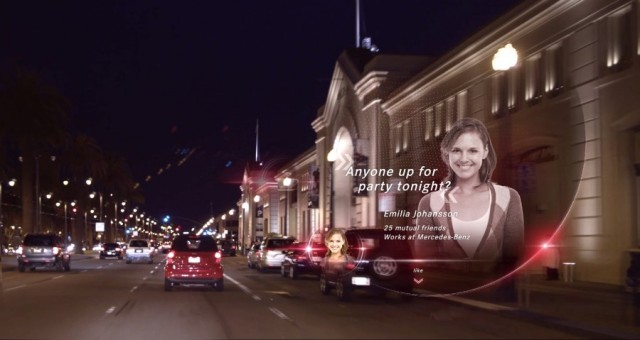
There are two facets to DICE. Augumented Reality and gestures based control. As you would expect, the windshield is the system’s canvas to paint on, and a heads up display projects the information on to the windshield.
Vehicles approaching intersections will be virtually superimposed on the windshield to enhance the driver’s situational awareness. Augumented Reality, a term often used today, is simply a view of reality enhanced with digital elements, mostly interactive and manipulable. Here the system recognizes the vehicle, and highlights the position of the vehicle/s approaching the intersection and enhances the driver’s awareness of the situation. In addition to digital information about the actual vehicle surroundings, points of interest, friends, pedestrians are also presented on the windscreen.
A gesture based control system, is used to interact with the information presented on the windscreen. The gesture based system, provides a control experience far more flexible and less time consuming than a simple touch screen interface.
With the DICE (Dynamic & Intuitive Control Experience) demonstration, at the CES 2012 Mercedes-Benz provides a vision of the interactive, intuitive and simultaneously safe operating experience.
It would seem the time has come to say goodbye to elaborate, complex, multi level menu systems. Mercedes-Benz presents a world first context-dependent, place-related presentation, as ‘an information swarm’ of the menu contents of the infotainment system : “Media”, “Social” and “Places”.
Under “Social”, for example, friends from one’s social networks are shown in the 3-D city arranged underneath. The same goes for “Places”, where the personal points of interest like restaurants or movie theaters can be stored. 3-D gestures and the swarm permit dynamic and intuitive control.
What does all this translate to?
For example, when one drives past a club, by a simple movement of the hand one can transmit the music playing there by live stream into one’s car. In the same way, local news from social networks, about points of interest, buildings or localities can be retrieved, or news can be left for others.Vehicles approaching intersections will be virtually superimposed on the windshield to help avoid possibly hazardous situations. To simplify the search for a parking space, mobility concepts like car2go or network information, can be used to proactively identify spaces which will become vacant soon. These are virtually displayed on the windshield, showing the actual environment.
The level of social integration being displayed by automotive manufacturers, though welcome, is bound to raise the question of safety. A gesture based system does make sense as opposed to plonking a touch based tablet on the central console, but we do wonder about the legal hurdles, what with all the proposed measures in various countries to stop people from making calls, even if you are using handsfree methods.
Ford EcoSport
After the global unveiling of the EcoSport just the day before, Ford needed to do little but put up the stunning EcoSport on the stage.
Safety Features on a Ford Fiesta
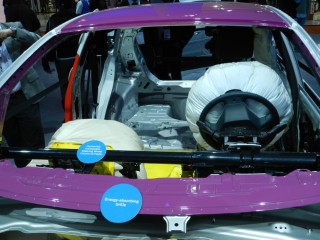
Helping consumers understand the safety features in a Ford, the Fiesta hatch was used to explain the high strength steels used in the structure, the horizontal collapsible steering column and airbags up front.
1.0 Liter EcoBoost Engine
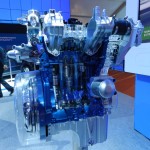
Following the success of the 3.5 Liter V6 EcoBoost engine doing duty in Ford trucks abroad, this little wonder, the 1.0 Liter EcoBoost engine, should find acceptance with Indian consumers. Expected to offer the performance of a 1.6 L naturally aspirated engine and much better fuel economy.
Ford Endeavour
Polaris India Pvt. Ltd unveiled an all-new range of youth Powersports products, the Sportsman® 90 and RANGER RZR® 170, at the 11th Auto Expo 2012 on the 6th January, 2012. The Polaris Youth Powersports Segment is targeted at the younger crowd who want a slice of adventure.
Speaking on the occasion, Mr. Pankaj Dubey, Managing Director, Polaris India said, “We have seen a huge potential for youth Powersports in the Indian market. Polaris Youth Powersports products will address the need for quality youth product and will take adventure riding to an all new level for young auto enthusiasts. The Youth segment will provide a golden opportunity to extreme sports lovers to experience a new route of excitement and fun.”
Polaris Sportsman 90
Sportsman 90 has a 4-stroke 89cc engine, 2WD and automatic transmission with reverse. It includes a safety flag, helmet and built-in safety features. The features include long-travel rear suspension which keeps the ride smooth, Parent-adjustable speed limiter and a safety flag, helmet and instructional DVD.
Polaris RANGER RZR 170
RANGER RZR 170 is the world’s only youth Side x Side by a major manufacturer. This 2WD youth vehicle has a 4-stroke 169cc engine, electric start and automatic PVT transmission with reverse. It includes a safety flag, two helmets and built-in safety features as standard equipment. Some of the features include- Bucket seats with 3-point seat belts, Parent-adjustable speed limiter, and Includes safety flag, two helmets, and instructional DVD.
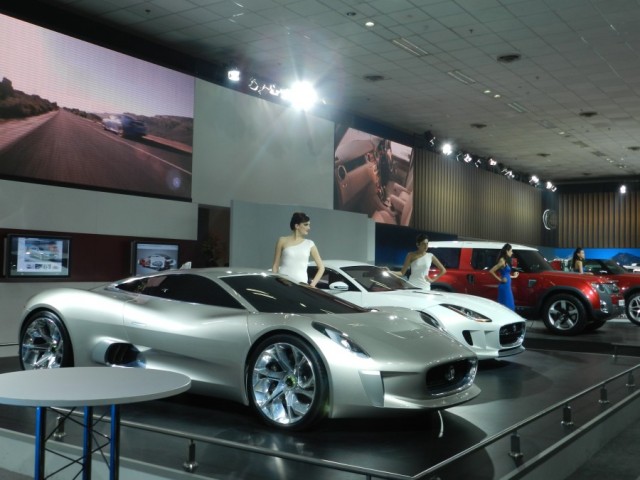
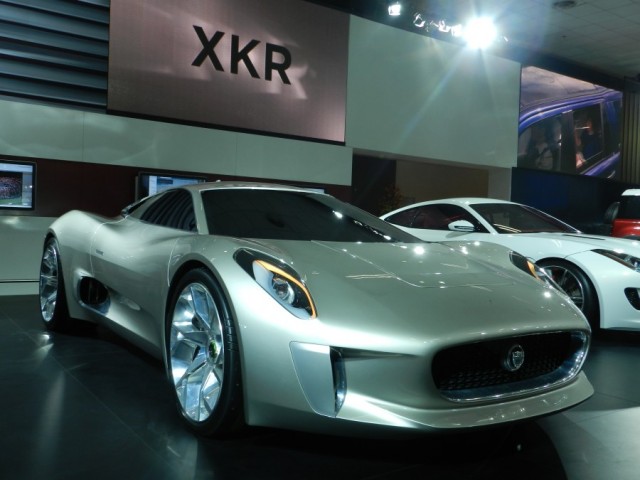
Jaguar C-X75
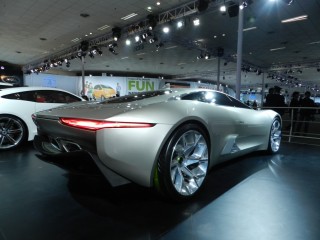
The C-X75 is going into production. If that wasn’t enough to grab us by the collar and focus on the car, the design certainly was. In many ways the C-X75 is definitely the future Jag. Delivering a sub-three second 0-60mph time and a top speed in excess of 200mph, the C-X75 also boasts low emissions, less than 99g/km CO2, thanks to the lightweight construction and cutting-edge powertrain technology.
Ah, the powertrain. The gas turbines, developed by Bladon Jets will be replaced by a downsized highly boosted petrol engine. Tata has taken a significant stake in Bladon Jets, and will continue to develop this technology as a medium-term aspiration that Jaguar says will play a part in its cars of the future. To bring Project C-X75 to production in a specified window of time, it was decided that the road-going supercar will use a state-of-the-art, small-capacity, highly-boosted internal combustion engine with one powerful electric motor at each axle.
Jaguar C-X75 will be developed in association with Williams F1 who will provide their engineering expertise in areas including aerodynamics, carbon composite manufacture and hybrid technologies. All this means a top speed in excess of 200mph, 0-60mph in less than 3 seconds and 0-100mph in less than 6 seconds. While running on the silent electric motors, the range is in excess of 50km.
An underbody system incorporates a moveable aerofoil and directional control of exhaust gases to ensure maximum downforce and ultra-low drag. Only 250 examples will be built, each costing between £700,000 – £900,000 depending on market and local taxes.
Jaguar C-X16
The two-seater concept has inspired new advances in design, in engineering and in vehicle technology to create the most compact and responsive Jaguar in a generation. The C-X16 is a compact, rear-wheel drive, two-seater, hybrid, with a true sporting character, underpinned by immensely strong aluminium architecture characterized by a perfect 50:50 weight distribution. The C-X16 is powered by an innovative supercharged 3.0-litre V6 producing 380 PS (280 kW) and 332 lb ft (450 Nm) of torque.
The Hybrid system is controlled by a steering-wheel mounted ‘Push to Pass’ button boosts output by 70 kW and 235 Nm. Top speed is around 186 mph, and 0-62 mph is dispensed with in 4.4 seconds and the CO2 emissions are close to 165 g/km.
Jaguar XF
The 2012 Jaguar XF, borrows lines from the bigger sibling, the Jaguar XJ to fall in line with the Jaguar family look. As stunning as ever.
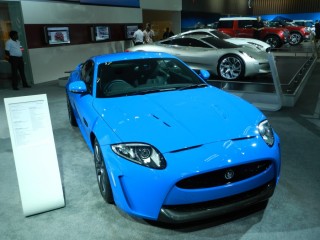
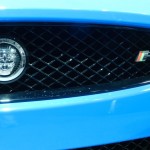
Jaguar XKR-S
The fastest production Jaguar ever. Powered by a 5.0 LITRE SUPERCHARGED V8 PETROL, the power output has been increased to 550PS and maximum torque now reaches 680Nm all of which propels the Jaguar XKR-S to 100 kph in 4.4s and a top speed of 300 kph! The Jaguar High-Performance Braking System features lightweight aluminium twin-piston sliding front calipers and single-piston sliding rear calipers. The Vulcan 20″ alloy wheels, a sigh to behold, are forged and lightweight, feature increased tyre widths – 9″ in the front and 10.5″ at the rear.
A combination of lightweight aluminium body construction and revised suspension aid handling. The Active Differential has been reprogrammed to reduce steering sensitivity at very high speed, increasing stability and driver control. The Dynamic Stability Control has also been reworked. Revised settings alter slip thresholds, differential torque distribution and engine and brake intervention levels, give the experienced driver the benefit or reduced electronic intervention.