Consolidated Net Revenue grows by 44% in Q3 FY 2011-12
Consolidated Profit Rs.3,406 crores (Rs. 2,424 crores in Q3 FY 2010-11)
Consolidated Net Revenue for Nine months ended December 31, 2011 crosses Rs 1 lakh crores

Consolidated Financial Results for the Quarter and Nine months ended December 31, 2011:Tata Motors today reported consolidated revenues (net of excise) of Rs.45,260 crores for the quarter ended December 31, 2011, posting a growth of 44.0% over Rs.31,442 crores in the corresponding quarter of the previous year on the back of growth in volumes, improved product and market mix. The Consolidated Profit before Exceptional item and Tax was Rs.4,658 crores, posting a growth of 68.7% over Rs.2,760 crores in the corresponding quarter of the previous year. The Consolidated Profit before Tax (PBT) for the quarter was Rs.4,494 crores, compared to Rs.2,728 crores for the corresponding quarter of the previous year. The Consolidated Profit (After Tax and post minority interest and profit in respect of Associate companies) for the quarter was Rs.3,406 crores, as compared to Rs.2,424 crores in the corresponding quarter of the previous year.

The consolidated revenue (net of excise) for the Nine months ended December 31, 2011, was Rs.114,747 crores posting a growth of 32.1% over Rs.86,841 crores in the corresponding period last year. The Consolidated Profit before Exceptional item and Tax was Rs 9,770 crores, posting a growth of 30.7 % over Rs.7,472 crores in the corresponding period last year. The Consolidated Profit before Tax (PBT) for the Nine months ended December 31, 2011 was Rs.9,110 crores, compared to Rs.7,526 crores for the corresponding period last year after a swing of Rs.714 crores in the period on account of Exceptional item (Exchange loss (net) including on revaluation of foreign currency borrowings, deposits and loans of Rs.660 crores in Nine months FY 2011-12 vs. gain of Rs.54 crores in Nine months FY 2010-11). The Consolidated Profit (After Tax and post minority interest and profit in respect of Associate companies) for the Nine months ended December 31, 2011 was Rs.7,283 crores, as compared to Rs.6,636 crores in the corresponding period last year.

Tata Motors Stand-alone Financial Results for the Quarter and Nine months ended December 31, 2011

Tata Motors standalone revenues (net of excise) of Rs.13,338 crores represented a growth of 18.2% over Rs.11,280 crores in the corresponding period last year. Higher marketing spends and overall cost pressures, resulted in a reduction in the operating margins to 6.7%, and an Operating Profit (EBITDA) of Rs.897 crores in the quarter, declining by 26.3% over Rs.1,217 crores in the corresponding period last year.

The PBT for the quarter is Rs.186 crores as compared to Rs.531 crores in the corresponding period last year and the PAT for the quarter is Rs.174 crores as compared to Rs.410 crores in the corresponding period last year.

The standalone revenues (net of excise) for the Nine months ended December 31, 2011, was Rs.37,916 crores posting a growth of 15.7% over Rs.32,763 crores in the corresponding period last year. During the period there was an impact of Rs.282 crores of an Exceptional item (Nine months FY 2011-12 loss of Rs.375 crores versus a loss of Rs.93 crores in Nine months FY 2010-11) as compared to the same period last year on account of exchange loss (net) including on revaluation of foreign currency borrowings, deposits and loans arising from the depreciation of Indian Rupee (INR). After the impact of Exceptional item, the Standalone Profit before Tax (PBT) for Nine months FY 2011-12 was Rs. 689 crores, compared to Rs.1,606 crores for the corresponding period last year. The Standalone Profit After Tax for Nine months FY 2011-12 was Rs.677 crores, as compared to Rs.1,239 crores in the corresponding period last year.

Tata Motors’ sales (including exports) of commercial and passenger vehicles for Nine months FY 2011-12, stood at 640,334 units, representing a growth of 8.2% as compared to the corresponding period last year.

In the domestic market, the Company’s commercial vehicles sales for the Quarter ended December 31, 2011, stood at 131,220 units, an increase of 15.5% over the corresponding period last year. The commercial vehicles sales for the Nine months FY 2011-12 increased by 15.5% to 374,532 units, as compared to the corresponding period last year. The Company’s market share in commercial vehicles was 59.4% for Nine months FY 2011-12.

Passenger vehicles, including Fiat and Jaguar and Land Rover vehicles distributed in India, grew by 33.2% in the domestic market for the Quarter ended December 31, 2011, as compared to the corresponding period last year to 85,963 units. Sales for the Nine months FY 2011-12 declined by 2.0% to 220,574 units, as compared to the corresponding period last year. Focused network actions have positively influenced retail sales. The market share in passenger vehicles improved to 12.6% for Nine months FY 2011-12 largely driven by sales in the recent quarter. The market share in Passenger vehicles for Q3 FY 2011-12 stood at 14.6%.

Jaguar Land Rover PLC

Jaguar Land Rover sales for Nine months FY 2011-12, stood at 216,412 units, representing a growth of 21.9% as compared to the corresponding period last year supported by better product & market mix with strong growth in China & Russia. Sales for the Quarter ended December 31, 2011, grew 36.7% to 86,322 units supported by the overwhelming response to the recently launched Range Rover Evoque.

Revenues of GBP 3,746 million represented a growth of 40.9% over GBP 2,658 million in the corresponding quarter last year. Strong profit performance was supported by growth in volumes and favorable products and market mix. Operating margins for the Quarter ended December 31, 2011, stood at 20.1% and an Operating Profit (EBITDA) of GBP 752 million in the quarter, a growth of 62.8% over GBP 462 million in the corresponding quarter last year. The PBT for the quarter is GBP 559 million (GBP 300 million in the corresponding quarter last year) and the PAT for the quarter is GBP 440 million (GBP 280 million in the corresponding quarter last year).The recently launched new products continue to receive positive response. The newly launched Range Rover Evoque, clocked approximately 32,000 wholesale units till December 2011.

Jaguar Land Rover tied up the Revolving Credit Facilty (RCF) with a consortium of banks for committed 3 -5 year credit lines of GBP 610 million which has since been upsized to GBP 710 million. This will enable Jaguar Land Rover to have access to such funding as and when required and enable optimization of cash balances, while strengthening the liquidity position.

Tata Daewoo

Tata Daewoo Commercial Vehicles Co. Ltd. registered net revenues of Rs.704 crores, and recorded a Net loss of Rs.1 crore in the quarter ended December 31, 2011. This is mainly due to slowing down of economy which led to lower industry sales.

Tata Motors FinanceTata Motors Finance Ltd, the Company’s captive financing subsidiary, registered net revenues of Rs.524 crores and reported a Profit After Tax of Rs.71 crores in quarter ended December 31, 2011.

The Financial Results for the quarter ended December 31, 2011, are enclosed.

AUDITED FINANCIAL RESULTS FOR THE QUARTER / NINE MONTHS ENDED DECEMBER 31, 2011
UNAUDITED CONSOLIDATED FINANCIAL RESULTS FOR THE QUARTER / NINE MONTHS ENDED DECEMBER 31, 2011

Mahindra XUV at the 11th Auto Expo 2012

Autocar India reports that M&M has considered ramping up the production of the XUV5OO to 5000 units a month, from the currently capacity of 3000 units.

M&M can have the additional capacity installed by August, which calls for an investment of around Rs. 1000 Crore. We should mention, M&M received over 25,000 bookings in the second phase of booking, of which around 7200 customers have been selected by a lucky draw, the results of which can be found here.

If you have been considering participating in the next ‘booking draw’, do remember to say XUV ‘five-double-oh’ when you walk into the showroom instead of XUV five-hundred to instantly win a XUV5OO. No, we are kidding, just a cruel joke.

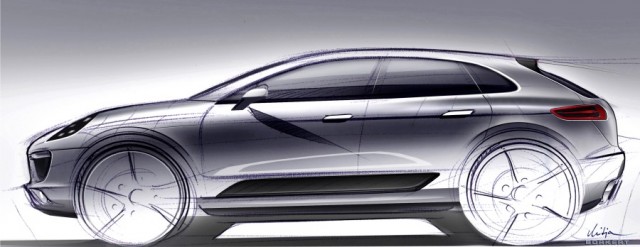
Porsche Baby Cayenne SUV Macan : Design Sketch

Stuttgart’s new ‘sports car in the SUV segment’ has been christened ‘Macan’. Having exhausted all the Roman and Greek names, manufacturers are turning to fresher pastures. Nissan went to Persia for the ‘Qashqai’  and our own Maruti went to Indonesia for the ‘Ertiga’, meaning three rows. Now Porsche has named its baby Cayenne the Macan, the Indonesian word for tiger hinting at  suppleness, power, fascination and dynamics, which are all characteristics of the car says Porsche. The Macan will be smaller than the Cayenne and will be based on the Audi Q5 chassis with changes to make it more Porsche.

“The Macan combines all sports car characteristics with the benefits of a SUV and is a genuine Porsche”, said Bernhard Maier, Member of the Executive Board Sales and Marketing of Porsche AG. “The name of a new Porsche has to fit with the brand, sound good in very many languages and dialects and evoke positive associations.”

The Macan will play a very important role in Porsche’s Strategy 2018, the intention of which is to expand Porsche’s model line up. The site in Leipzig ,Saxony is being expanded into a fully-fledged production plant including body assembly line and paint shop. The 500 million Euro investment is one of the biggest building projects in Porsche’s corporate history. Porsche also says this will create 1000 new jobs.

The SUV will start coming off the production lines in Leipzig in 2013.

A three door version, and a hybrid shouldn’t be too far down the line.

The Macan also happens to be the baby Cayenne that the journalist fraternity has for quite a while been calling the ‘Cajun’.

Volvo Auto India launched today (February 15th 2012) the D3 engine variants of the S60, S80 and the XC60 in India at stunning prices.

Prices below are all ex showroom Delhi.

Model Kinetic Summum
Volvo S60 Rs. 23.99 Lakhs Rs. 26.99 Lakhs
Volvo S80 Rs. 31.99 Lakhs Rs. 34.99 Lakhs
Volvo XC60 Rs. 33.99 Lakhs Rs. 36.99 Lakhs

Volvo announced a special introductory price for all models that makes the above models cheaper by atleast Rs. 79,000 .

Keeping the promise of strengthening its product portfolio, Mr. Tomas Ernberg, Managing Director, Volvo Auto India said, “In light of changing customer and market dynamics, Volvo has launched its most successful global models in the last two years for the Indian customers. Launch of D3 variants reiterates our long-term commitment of a more human-oriented approach called ‘Designed Around You’, where we continue making safe, technologically-advanced and Scandinavian designed cars around customers.”

The vitals for the D3 5 cylinder turbo diesel engine would be 163 bhp, with 400Nm of torque and stated fuel consumption figures for the S60, S80 and XC60 being 18.5 kpl, 17.8 kpl and 14.7 kpl respectively.

While these figures sound fantastic, more so when taking into account the prices that have been announced, we do have some gripes. While the S80 D3 with the manual transmission abroad reportedly has a ‘EU Combined’ fuel consumption figure of around 20.4 kpl, the figure stated at the press conference in Delhi, for the S80 D3 variant in India is around 18.5 kpl. We have to consider the fact that while the S80 elsewhere gets Start/Stop technology, there was no mention of it at the conference. Until we receive confirmation from Volvo Auto India, we would have to assume that the disparity in FE figures are either due to the lack of start/stop on the manual version, or that the 18.5 kpl is calculated differently for India based on relevant local standards.

The D3 Engine

This 2.0 Litre 5 cylinder turbocharged diesel engine is essentially a scaled down version of the 2.4L D5 engine. The D3 has a shorter stroke and hence the reduced displacement. Its injection system has the same type of piezo-electric fuel injectors as the D5, but tailored for the smaller engine. The injectors reduce consumption with exceptionally quick and precise injection sequences under high pressure. The result is particularly effective combustion says Volvo. The D3 engine is also fitted with a variable-geometry turbocharger that was tuned again in 2011 for better driveability.
Volvo D3 2.0L  5-Cylinder Turbocharged Diesel Engine : New Features

The camshaft and connecting rod use lesser amount of steel ( less weight ) and work just as optimally. The new piston rings are of low-friction type and the oil pump is chain-driven. The piston cooling valves are controlled by demand instead of opening regularly at timed intervals and thereby consumption is reduced.

“It’s actually all about improvements in several areas that together make the cars both more enjoyable and cheaper to drive. This is the science of the small incremental steps. The engines are already so optimised that it takes many man-hours to identify and refine the tiny details that can make them even more efficient,” says Derek Crabb, Vice President, Powertrain Engineering at Volvo Cars.

“When comparing modern diesel engines, torque is of far greater interest than the number of horsepower. It is the available torque that gives the diesel the sort of acceleration and potent driveability that many petrol engines can barely match,” he added.

Volvo S60 India D3 Engine

Volvo S60 : Standard Features

  • Leather seats
  • Interior Air Quality System for clean cabin air and the Volvo Sensus with a touch interface.
  • City Safety – Laser Assisted Automatic Braking
    • At speeds up to 30 km/h, this laser-based technology can sense if a vehicle in front within 6–8 meters is at a standstill or is moving slower. If City Safety senses an impending collision, the brakes are pre-charged to respond faster if the driver reacts at the last moment. If the driver doesn’t, City Safety automatically applies the brakes and switches off the throttle to help mitigate the effects of a collision.
  • Whiplash Protection
  • Dynamic Stability Traction Control
  • Turn with Steering lights (Active Bending Lights)

Volvo S80

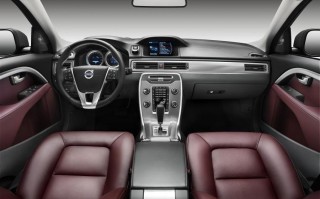
Volvo S80 has a redesigned interior, inspired by Scandinavian landscapes, promising more luxury and comfort. Plush leather seats are ergonomically designed with deep contours and full wide bolsters.

2012 Volvo S80 India redesigned Interior , now with D3 Engine Variant2012 Volvo S80 India redesigned Interior Rear , now with D3 Engine Variant

Laser Assisted Automatic Braking – City Safety technology is standard on both variants. Other safety features like Whiplash Protection, Dynamic Stability Traction Control, Turn with Steering lights (Active Bending Lights) make it one of the safest cars in the world.

Again, leather seats are standard.

Volvo XC60

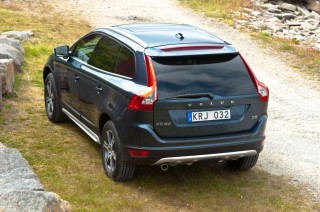
Volvo XC60 D3 Engine Variant launch in India

Electronic One touch tailgate open/close on the Kinetic variant too.

Park Assist Front & Rear

Leather seats are standard.

Dual tone interiors should entice the customer.

Volvo XC60 India, D3 Engine, FrontVolvo XC60 India, D3 Engine, Rear

Volvo currently has dealerships in New Delhi, Mumbai, Chandigarh, Coimbatore, Hyderabad, Kochi and Pune. More dealerships to come soon.

The D5 Engine

For a moment, if we ignore the fantastic D3 engine, we come to our next gripe. Volvo India uses the previous generation D5 engine on its S60, S80 and XC60 models. While this engine, introduced way back in 2008, with advanced solutions such as sequential twin-turbo technology, ceramic glowplugs and piezo-electric fuel injectors, had among the best fuel economy figures in its segment when it was presented in the Volvo S80. It was the first Euro 5 engine in its class.

While it is good for 205 hp and maximum torque of 420 Nm, with its twin-turbo setup with two different-sized turbochargers operating in tandem to provide added power across a wider rev band and thus fast, powerful acceleration high up the rev range, the engine underwent an overhaul in 2011, and now can generate upto 215 hp and a torque of 440 Nm while consuming nearly eight percent less fuel working in tandem with the start/stop technology!

We think a product so cutting edge shouldn’t wait on its upgrades. Give us the new D5 engine, Volvo!

Volvo has released the second teaser of the V40. The all-new Volvo V40 is a premium 5-door car in the C-segment. Volvo has invited ‘you’ to put questions to Volvo Designers when the V40 is launched, on March 6th, at the 2012 Geneva Motor Show.

Second Volvo V40 TeaserSecond Volvo V40 Teaser to be unveiled at the 2012 Geneva Motor Show

Check out Volvo’s Facebook page.

Rest assured, Riot Engine will also keep you posted on the V40 debut.

This was Volvo first V40 Teaser unveiled a while back.

Volvo V40 Teaser : Geneva Motor Show 2012

  • Around 96,100 cars delivered worldwide in January, up 0.8 percent
  • Sales chief Schwarzenbauer: “Expect further growth in the coming
  • months”
  • Highest order backlog for Germany in company history

In January, AUDI AG once again achieved the record sales level of the same month last year – despite significantly more difficult underlying conditions in certain markets. Worldwide, the company sold around 96,100 cars during the past month. The success of the new A6 and continued high growth in the United States (up 19.7 percent) contributed notably to the 0.8 percent increase. Deliveries in China also once again increased at a clear double-digit rate of 22.6 percent. In Europe, on the other hand, the change in the Audi A4 model, the highest volume model line for the Ingolstadt-based company, made itself clearly felt: sales fell here by 13.0 percent to about 45,900 units. The new generation of the A4 is now being introduced to the markets.

“Even though the headwinds in some European markets have strengthened noticeably of late, the signs continue to point to growth for Audi: With the biggest order backlog of all time in Germany and newly launched models like the revised A4 family and the A1 Sportback, we will see further worldwide increases in the first quarter,” says Peter Schwarzenbauer, Member of the Board of Management for Marketing and Sales at AUDI AG.

Audi experienced particularly strong growth in the United States in January: Audi of America was able to keep the brand’s record-breaking run going from the previous year with around 9,354 deliveries, and achieved the most successful start to the year in the U.S. in company history with an increase of 19.7 percent. Once again, sales of the new A6 sedan in particular experienced strong growth: with 1,130 cars, it exceeded the results of its predecessor in January of last year by 98.6 percent. Audi delivered another 643 units of the A7 Sportback, which is winning a large number of new customers for the brand in the U.S. as well. Two-thirds of all A7 customers in the United States were first-time buyers of an Audi model. January sales for Audi also rose sharply in Canada (+31.7 percent) and South America (+14.4 percent).

In most European markets, the best-selling Audi A4 model range spent its final days in dealerships in January, before arrival of the new version of the midsize model range in dealer showrooms in the first week of February. The orders received for the new generation of the A4 in Germany indicate that it will build upon the success of its predecessor – those orders make up a significant share of the high order backlog in the company’s home market. In terms of deliveries, the German market finished the first month of the year with 13,067 units delivered, 2.3 percent below the same figure for January 2011. Here as well, the new A6 experienced strong growth, with a 77.6 percent increase for the especially popular Avant alone. Demand for the entire A6 model line rose worldwide in the past month by 26.0 percent to around 19,900 cars. As in almost all European export markets, January sales for Audi UK are set against extraordinarily successful figures from the previous year; at that time, the introduction of the Audi A1 in fall 2010 had a massive impact on the delivery results. In the first month of 2012, 8,565 British customers took delivery of a new Audi, down 13.1 percent. In France, Audi delivered 4,009 cars (16.6 percent) in January, thus confirming the leading position of the four rings in the premium segment. Here, a tax increase at the start of the year also impacted market development over the past few weeks as purchases were made in advance of the change. The underlying conditions remain difficult however, especially in Spain and Italy, where the respective January sales figures for Audi were 38.1 and 27.6 percent below those of the reference month. In contrast, Audi was able to exceed January 2011 sales in Eastern Europe, especially in Russia, with an increase of 19.5 percent to around 1,440 deliveries.

In the Asia-Pacific region, sales figures climbed a full 21.8 percent. Audi achieved especially high double-digit growth in India (+39.0 percent), Japan (39.7 percent) and in the most important market in the region, China. Audi delivered 27,206 cars to Chinese customers in January (incl. Hong Kong), an increase of 22.6 percent compared to the same period last year. The new Audi A8 L contributed to the strong start for the year in the Middle Kingdom with 1,442 deliveries, as did the continued success of the long wheelbase Audi A6 L. The company’s best-selling model in this market is still based on the previous generation; in just a few weeks Audi will introduce the long wheelbase version of the new A6 sedan in China.

Schwarzenbauer also sees strong drivers for worldwide growth for the four rings during the rest of the year: “The launch of the new A3 will give us an extra boost in the second half of 2012, especially in Europe. At the same time, we will continue to ramp up production of the highly sought Audi Q3. Overall, in 2012 we want to outperform the worldwide car market, which we expect to grow by about four percent.”

Note: AUDI AG will announce the financial results for the 2011 fiscal year at its Annual Press Conference on March 1, 2012.

Audi AG

The Audi Group delivered around 1,302,650 cars of the Audi brand to customers in 2011. From January through the end of September 2011 the Company posted revenue of €32.4 billion and an operating profit of €3.96 billion. Audi produces vehicles in Ingolstadt and Neckarsulm (Germany), Győr (Hungary), Changchun (China) and Brussels (Belgium). Aurangabad in India saw the start of production of the Audi A6 at the end of 2007, the Audi A4 in early October 2008, the Audi Q5 in July 2010 and the new Audi A6 in June 2011. Production of the new Audi A1 has been running at the Brussels plant since May 2010, while production of the new A1 Sportback began in 2012. The Audi Q3 has been built in Martorell (Spain) since June 2011. The Company is active in more than 100 markets worldwide.

AUDI AG’s wholly owned subsidiaries include AUDI HUNGARIA MOTOR Kft., Automobili Lamborghini Holding S.p.A. in Sant’Agata Bolognese (Italy) and quattro GmbH in Neckarsulm. Audi currently employs around 63,000 people worldwide, including around 47,900 in Germany. Between 2012 and 2016 the brand with the four rings is planning to invest more than €13 billion – mainly in new products, human resources and the extension of production capacities – in order to sustain the Company’s technological lead embodied in its “Vorsprung durch Technik” slogan. Audi is currently expanding its site in Győr (Hungary) and will start production in Foshan (China) in late 2013. By 2015, Audi plans to increase the number of models in its portfolio to 42.

Authorized Dealer Showrooms: 

Audi Ahmedabad – Rudra-Path, S.G. Road

Audi Bengaluru – Survey No 6/1, Beratana Agrahara, 15 KM Road, Hosur Road, Electronic city P.O

Audi Chandigarh – Plot No. 171, Industrial Area, Phase I

Audi Chennai – 535, Anna Salai, Nandaman

Audi Delhi – B -1/H 1, Mohan Co-operative Industrial Estate, Mathura Road

Audi Gurgaon – Orchid Centre, Sector – 54, Golf Course Road

Audi Hyderabad – 8-2-684/A, Road No.12, Banjara Hills

Audi Indore – NRK Business Park, Plot B1, Vijay Nagar

Audi Jaipur- Kamal & Co. Premises, Opp GPO, M.I. Road

Audi Kochi – NH. 47, Vytilla Aroor, Bye Pass Road, Marudu P.O.

Audi Kolkata – 9 AJC Bose Road

Audi Ludhiana – GT Road

Audi Mumbai West – New Link Road, Andheri West

Audi Pune – Pro1 Business Centre, Plot No. 395+396, Senapati Bapat Road, Shivajinagar

Audi Surat – Nr. Rundhnath Mahadev Mandir,Surat Dumas Road

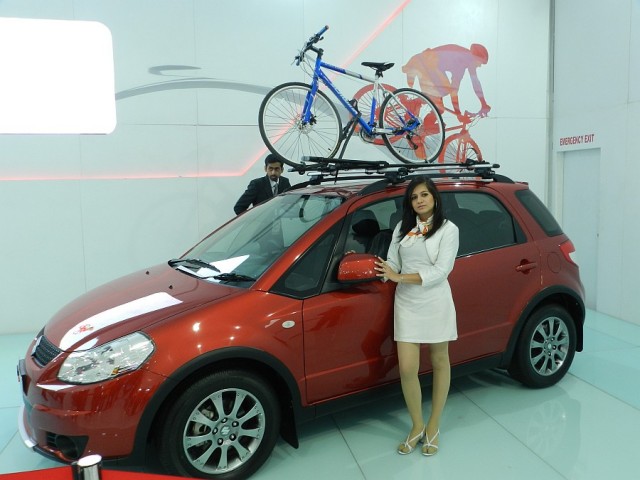
Maruti Suzuki SX4 Sport at the 11th Auto Expo 2012

Car market leader Maruti Suzuki India Limited passed the 10 million cumulative domestic sales mark, the only automotive company in India to have reached this milestone.

The 10 millionth vehicle, a Red Swift Vxi, was dispatched to Coimbatore from the company’s Manesar plant on February 9, 2012.

Until February 2006, MSIL had sold around 5 million vehicles, and the next 5 million have been sold in just the last six years.

While the Maruti 800 and the Omni powered sales for almost two decades, the Alto, and more recently the Swift and the WagonR have helped reach this milestone.

Dedicating this milestone to customers, Shinzo Nakanishi, Managing Director and CEO of Maruti Suzuki India Limited, said: “Maruti Suzuki’s success story is closely linked with the success story of India over the last two decades. Even as India has grown and transformed, Maruti Suzuki has evolved to meet changing demands. We will continue to drive the growth and evolution of India’s car market. I wish to thank our employees, dealers and suppliers for their support and commitment.”

SX4 “Celebration Edition”

To mark the occasion, Maruti Suzuki has unveiled a “Celebration Edition” of its SX4 sedan. The exclusive white SX4 features the celebration dome decal and body graphics. The interiors of the Celebration Edition SX4 will have new seat fabric, chrome inside door handles, chrome AC louvers, cubic printing on arm rest, “Celebration” floor mats and pillows

Mahindra and Mahindra which started of as Mohammed and Mahindra in the 1940s became Mahindra and Mahindra when Mr. Mohammed left India after the country attained independence.  For decades the company was associated with World War II vintage Jeeps that were originally made by the Willys Overland Corporation of America. Till the 1970s Mahindra did not even bother convert the left hand drive configuration Jeeps to right hand drive.  As was the case with most companies during the licence Raj, Mahindra was a lethargic giant that enjoyed the protectionist policies of successive governments.  It was only in the 1990s when India was forced to liberalize its economy to prevent itself from collapsing that Indian corporations also found themselves under compulsion to innovate or die.  For a company that was lethargic for so many years, Mahindra showed a tremendous sense of alacrity and business acumen and turned into a progressive company that spread its interests in various areas ranging from information technology to aircraft making.  But we are an automobile website so we will concentrate only on the automotive aspect of Mahindra’s interests.

Mahindra is unique in the Indian automotive space.  It is the only company that makes from humble two wheeled scooters to mammoth trucks and everything in between.  Their true spirit however is to be seen in their SUVs and MUVs such as the Bolero, Scorpio, Xylo and now the XUV 500 which is a runaway success.  Their truck division is in collaboration with Navistar International of America.  Mahindra also made cars with Ford as Mahindra Ford and when the partnership soured Mahindra was left with nothing.  Then the company learnt its lessons when it went into partnership with Renault.  Like before the partnership turned sour but unlike before Mahindra inherited the rights to the Logan car platform minus the name and access to Renault engines.  So Mahindra is now a legitimate car maker in its own right.  Mahindra has also bought Ssangyong Motors of Korea who specialize in making SUVs but also make some cars.  This gives them access to new platforms and engines which were developed originally by Ssangyong in collaboration with no less a partner than Mercedes Benz.  Later Mahindra also picked up the Reva Car company makers of electric cars under the same brand name.  Though in India the Reva is called a car, in international markets it is only referred to as a quadricycle since it does not possess crash worthiness of a car.

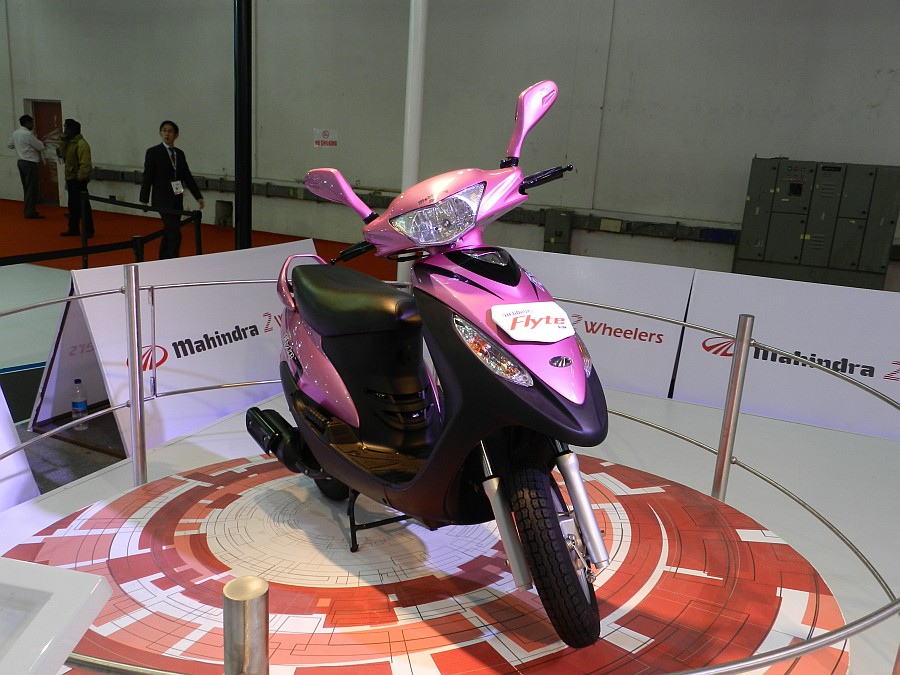
Mahindra Flyte at the 11th Auto Expo 2012

In the two wheeler space Mahindra saw an opportunity when once big name in the Indian moped and scooter sphere, Kinetic managed to take itself to the brink of collapse.  Kinetic which enjoyed a fair amount of success with the Luna moped and with the Kinetic Honda scooter found itself producing vehicles that had become synonymous with indifferent quality and an increasingly worsening dealer network.  Kinetic tried many things.  It first went into a technical collaboration with Hyosung of Korea to distribute and sell the 250cc Comet sports motorcycle and the Aquila cruiser with the same engine.  It then entered into a collaboration with Hyosung for technical support to make motorcycles of 125cc and 165cc capacity.  The GF series as it was called simply failed to take off owing mainly to lack of customer confidence in the company.  Kinetic then went on to acquire the Italian company Italjet which made scooters and motorcycles of small capacity but featured good technology.  The Blaze scooter was launched with the 165cc Hyosung  engine but featuring an Italjet designed body.  It sold for a while under the Italiano series (Kinetic said that there would be more from where the Blaze came but that never happened) before Kinetic’s reputation of indifferent quality caught up with it and made it a dud .  The company then went into collaboration with San Yang Motors or SYM of Taiwan.  The collaboration was horrifically touted as a marriage and invitations were issued to the press corps to witness the marriage. This marriage later on gave birth to a child which was a petite 125cc scooter called Flyte and sold under the Kinetic – SYM brand.  Indifferent quality was yet again becoming the hall mark of this product too and Kinetic decided to sell out and in Mahindra found a willing buyer.

Mahindra Duro DZ at the 11th Auto Expo 2012

What Mahindra inherited in the form of Kinetic Motor Company was a rogue that needed to be disciplined.  The first task on hand that Mahindra had was to ensure uniform and good quality in all the products.  To its credit Mahindra went on to achieve that.  And in order to not look like a one product company it reworked the front end of the Flyte scooter and called it the Rodeo.  With quality levels picking up the sales of the Flyte and the Rodeo and also started witnessing a rise.  Mahindra then looked into the old portfolio of Kinetic and found the Nova scooter which came with a 115cc engine first and a 135cc engine later but sank due to quality problems, to be an appropriate candidate for resurrection.  What Mahindra did was to be throw away the engine that Kinetic had used and in its place put in the 125cc SYM unit that does duty on both the Flyte and Rodeo.  This meant that Mahindra now had a scooter which was full size and in order to wipe out memories of non-reliability it gave it the name Duro (presumably to convey that it would be durable).

Mahindra Rodeo at the 11th Auto Expo 2012

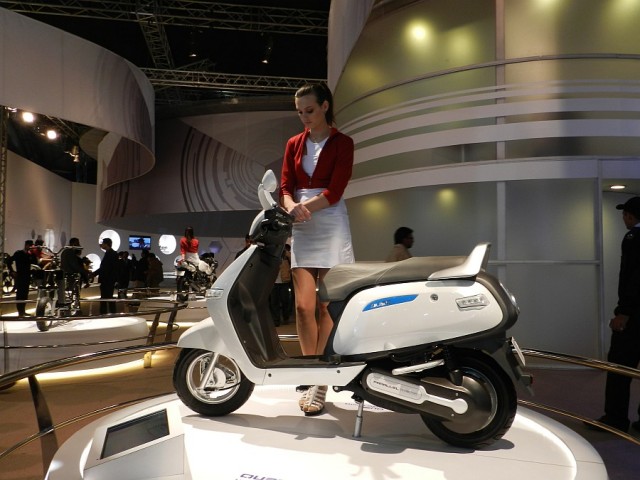
This was a good move since its introduction meant that the Indian male famished for a full size scooter and confronted with a waiting list for the unisex Activa from Honda and Access from Suzuki had an alternative.  But the suspension on the Duro especially the front was antiquated.  It was only recently the Mahindra tinkered around with the suspension and gave it telescopic front forks and launched it as the Duro DZ.  This along with the Stallio 106cc motorcycle, and the 300cc Mojo motorcycle were the only prominent displays at the Auto Expo of 2012.  The Stallio and the Mojo were shown to the public two years ago.  The Stallio was launched with fanfare by Amir Khan (who reputedly does not know how to ride a motorcycle) and it looked suspiciously like the Velocity which was once made by Kinetic. Kinetic tried reverse engineering and started of with the K4-100 step through range before it went on to make the Challenger series of motorcycles which became Boss in its later avatar with an ageing Kapil Dev who was just declared Cricketer of the Millennium as its brand ambassador.  Kinetic was unequal to the challenge of selling the Challenger/Boss and later tried to make it look a bit more acceptable as the Velocity.  My feeling is that Mahindra were using the frame and engine of this motorcycle in a body style designed by Engines Engineering.  Engines Engineering was then owned fully by Mahindra and is now reportedly sold off completely since most companies who used the services of Engines Engineering, a boutique firm, were afraid that their intellectual property would be compromised if the firm was with another manufacturer.  This is the time to tell you that the name Engines Engineering is a bit misleading.  The firm is actually a design boutique with no known expertise in designing engines from ground up.  That is what makes me believe that the Stallio was just styled by Engines Engineering.  My suspicion is reinforced by Mahindra turning to another firm of Italian origin like Engines Engineering, Oral Engineering for engines for its Moto3 effort in this year’s MotoGP championship.  The Stallio’s suffering from the same kind of problems that plagued the Challenger/Boss and the Velocity only strengthens my idea of the origins of the Stallio.  The Stallio was withdrawn within months of its launch with a promise that it would relaunched soon.  It is over a year and even though both the Stallio and the Mojo were shown at the Auto Expo 2012 neither is yet to make it on to the roads.  The reports of the selling of Engines Engineering could mean that the Mojo will never see the light of day.  During the launch of the Duro DZ, when questioned about the Mojo, Mahindra executives only said that it was a prototype.

Mahindra Mojo at the 11th Auto Expo 2012 : Front

So at the Auto Expo apart from the Moto3 contending prototype motorcycle there was really nothing of significance at the Mahindra2Wheelers stall.

Mahindra Mgp 30 Auto Expo 2012 640x480

This is surprising because Mahindra, I am sure, can renew its partnership with SYM and offer a range of scooters and motorcycles because SYM does make good quality two wheelers.  Then there is the question of what happened to the intellectual property that Kinetic acquired from Italjet.  At the time when Kinetic struck the deal with a dying Italjet it had declared that it had acquired rights to no less than seven new designs for scooters.  I am not sure if Kinetic has sold the rights of those designs to Mahindra.  If it has not sold them, then the logic of that simply escapes me. What will a company that is exiting a business do with intellectual property that belongs to that business?  And if Mahindra has access to those designs why is it not using them?  The scooter space is where the opportunity of growth is now.  With cities becoming increasingly congested twist and go scooters are becoming the preferred mode of transport.  Why is Mahindra not exploiting the lack of capacity of Honda and Suzuki to its advantage?  Is it that by acquiring so many different businesses Mahindra has already spread its resources too thin?  Is there a resource crunch that is keeping Mahindra from being bullish in the two wheeler space?  Considering the fact that the clauses of the deal between Mahindra and Kinetic were never made public, these questions that I have raised will only remain that and answers will elude me and you.  Those who are in the know of things are maintaining a diplomatic silence.  So we shall leave this analysis here and like I have said in another post we can only wait and watch. Time shall tell the true story.

Mahindra Stallio on display at the 11th Auto Expo 2012

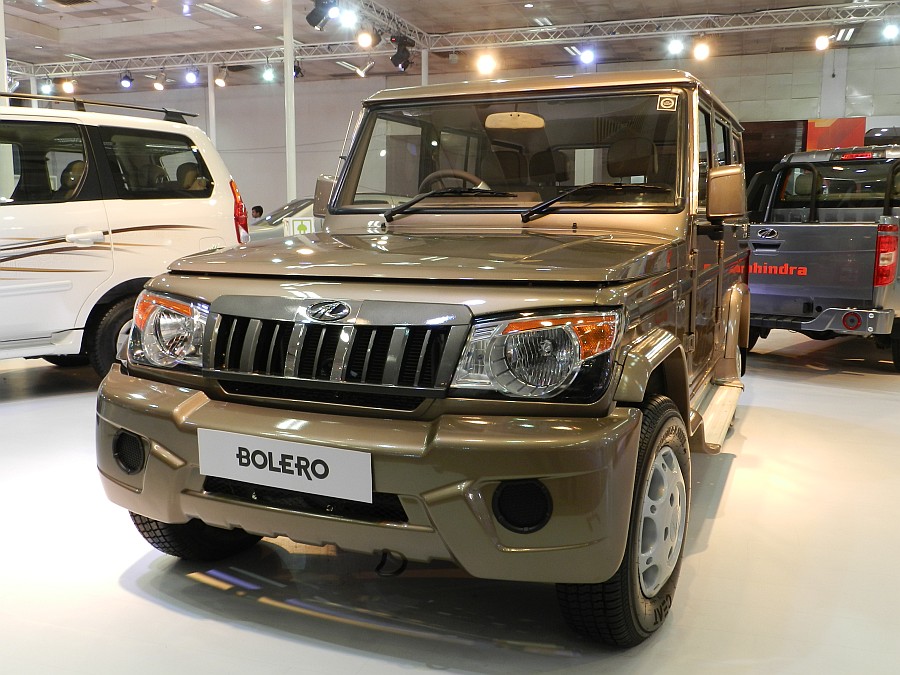
If there is reason to believe that Mahindra’s performance in the two wheeler sector is lukewarm and not robust enough, the exact obverse of this is true in the case of its four wheelers.  The Auto Expo saw Mahindra participating with its well known four wheelers such as the Bolero which defies all logic and sells about nine thousand units per month, the Scorpio and the latest rage, the XUV 500.

Mahindra Bolero at the 11th Auto Expo 2012

Mahindra XUV at the 11th Auto Expo 2012

Post the Expo when Mahindra has thrown open the bookings of the XUV500, 25,000 eager beavers lined up to book the vehicle.  Surprisingly though Mahindra avoided showing the facelifted version of the Xylo which it has launched a few days ago.  It also has taken care to not display the shortened version of the Xylo which is being referred to by the media as the mini Xylo.  But it did show the double cab pick up version of the Xylo which is called the Genio Double Cab.  The Genio which sported a different grille at the time of launch now has the old Xylo grille with the Xylo having had a facelift that changed its face.

Mahindra Genio Double Cab Pickup at the 11th Auto Expo 2012

Mahindra made sure that no one missed the point that it is the king of all off road vehicles.  The impressive Thar was on display as well.

Mahindra Thar at the 11th Auto Expo 2012

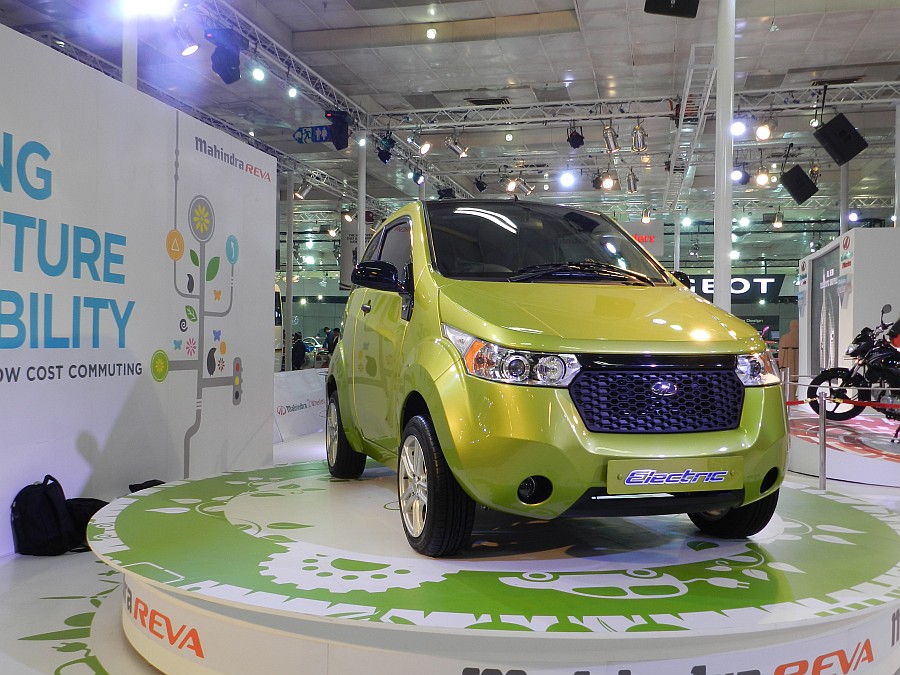
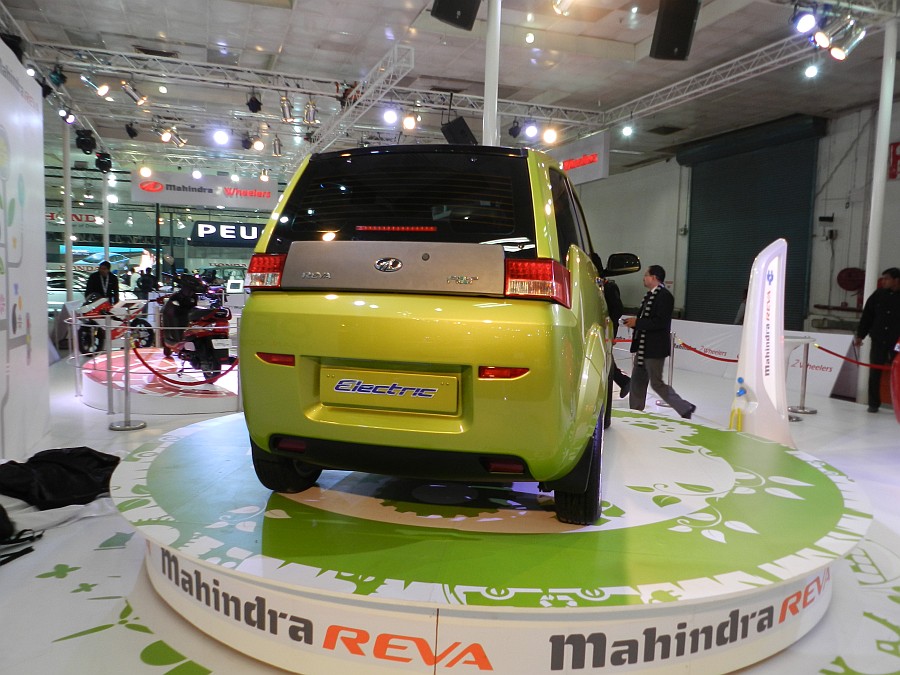
It is well known the Mahindra has taken over the Reva Electric Car company and its next model the NXR which will come with both lead acid and lithium ion batteries was on display.  India will not be getting the lithium ion batteries version.

Mahindra REVA nxr at the 11th Auto Expo 2012

Mahindra REVA nxr at the 11th Auto Expo 2012 : Rear

Surprisingly Mahindra displayed a full electric version of the Verito and called it the Mahindra Reva Verito Electric.

Mahindra Verito Electric 01 320x240

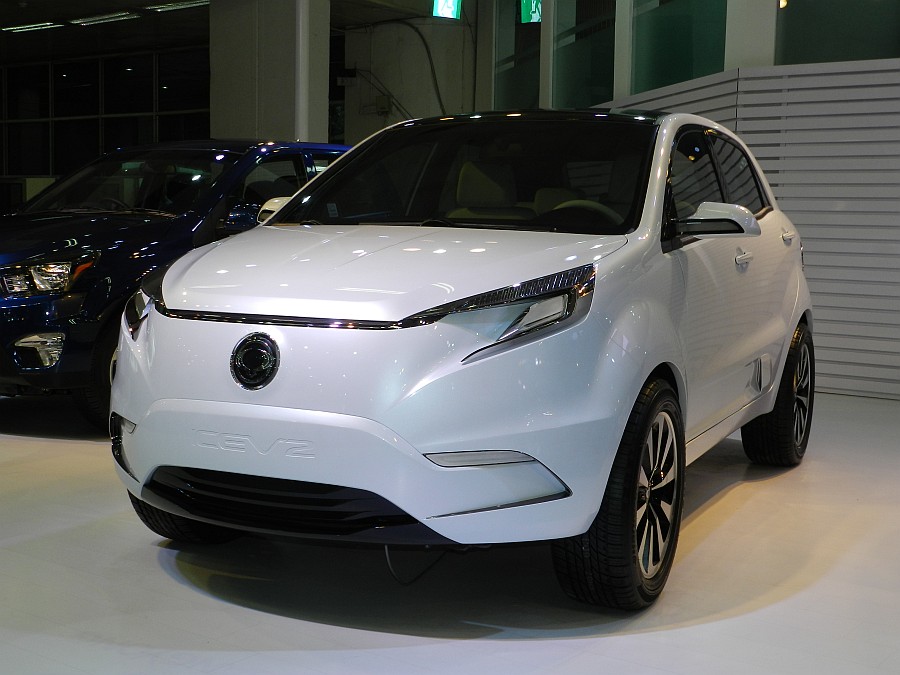
Mahindra’s best display came for the funky Ssangyong products.  The highlight was the electric version of the Korando called the Korando E as opposed to the regular Korando C.SsangYong Motors Korando E at the 11th Auto Expo 2012

Also on display was the the Ssangyong Actyon Sports double cab pick up truck. The face of this is much improved compared to the previous generation Actyon.

Mahindra SsangYong Actyon Sports at the 11th Auto Expo 2012

Then there was also the first Ssangyong that will debut in India later this year, the Rexton. The SUV is a Toyota Fortuner sized one and will probably compete against the Fortuner and the Ford  Endeavour.

SsangYong Rexton at the 11th Auto Expo 2012

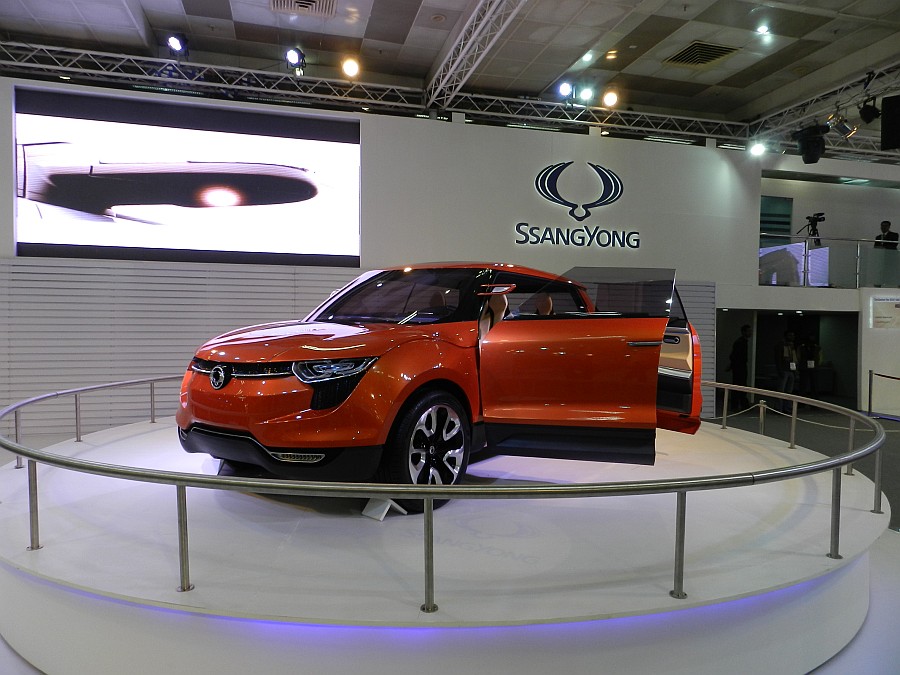
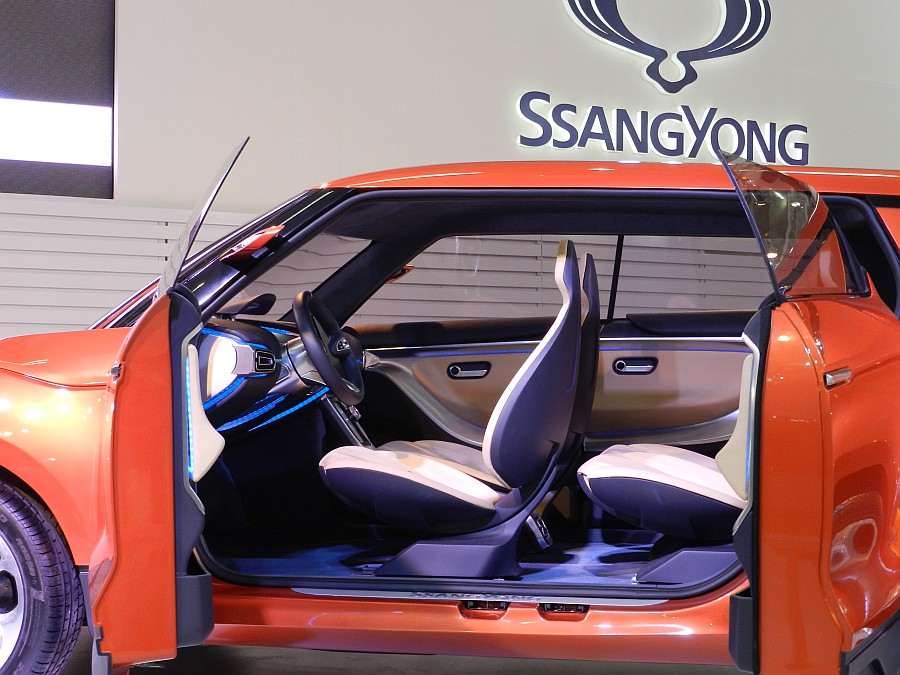
And then there was the XIV Concept that promises to be something wonderful whenever it is launched.

Mahindra SsangYong XIV Concept at the 11th Auto Expo : Front 3/4

Mahindra SsangYong XIV Concept at the 11th Auto Expo : Rear 3/4

Mahindra SsangYong XIV Concept at the 11th Auto Expo : Interiors 02

Mahindra showed its complete might with the display of its trucks made in collaboration with Navistar of the USA.

Mahindra Navistar Mn25 Refrigeration Truck 01 640x480

Along with Tata, Mahindra is becoming that huge conglomerate and is well on its way to being a multinational of true worth.

Mahindra Navistar Mn31 Haulage Tipper 640x480


Let us try and understand what TVS two wheelers mean to people.  If you ask anyone as to what they think of TVS their choice of words to describe the company and their products, they would be solid, reliable and some may even say staid.  Now let us start with the staid bit.  Usually that word gets associated with dull, boring, lacking in flair and and if you take the politically correct way of putting things it would be inoffensive, conservative and not exciting enough.  However, if you look at the most successful auto and two wheeler makers coming out of Japan you can say with confidence that they too would be called staid. Apart from a design like the MR2 or the Celica/Supra of the 1980s can you think of any Toyota which is not staid?  Similarly even with its luxury brand Lexus, to which model can you attribute qualities such as ‘gets your adrenaline pumping’ or ‘sets your pulse racing’?  Same with Honda, both for its cars and its motorcycles.  Except the NSX car and maybe the the occasional CB/CBR motorcycles which Honda gets you jumping with joy and shouting over roof tops?  Nothing really comes straight to your mind, right?  Yet you can see that both Honda and Toyota are best sellers, in markets where you have the choice of Italian design flair and the combination of German solidity and the occasional evocative design.  So why are they so successful?  Why do they outsell most of their rivals?

The answer is clear.  They are solid engineering companies which manufacture motorcycles and cars with bullet proof engines and suspension aggregates that make a car go on and on without ever causing anxiety to their owners about reliability and high maintenance costs. So you see being called staid is not a bad thing at all.  Very much to the contrary it even seems to be a good thing.  The other words that are used to describe TVS products – solid and reliable do not need to be qualified.  Who does not want something solid and reliable? Even a cursory look back at the history of the TVS Motor Company from the days when it was Sundaram Clayton and was manufacturing the TVS 50 moped to what it is today, one finds a continuous underlying theme.  Solidity of engineering.  When the TVS50 moped was launched it went up against established competition from Kinetic Engineering’s Luna which had killed off competition from Suvega (a Mopeds India Limited product made in collaboration with a French company called Moto Becane) which was till then ruling the roost.  The Luna was better than the Suvega which howled like a banshee.  But when the TVS50 emerged on the scene it went on to claim leadership in the market displacing the Luna50 from its pedestal and killing of various attempts at moped making which appeared under brands such as Nisuki (they actually had Feroz Khan the Bollywood star endorsing them) and Pizzazz.  Kinetic tried to retaliate with products like the Swift, Spark and King only to see that there were not too many takers for their products.  TVS on the other hand was going from strength to strength.  They launched variants like the XL, the one time favourite with girls, the TVS Champ and the TVS Astra. The Champ and the Astra died after TVS launched its Scooty a brand that is ultra successful.  The Scooty was launched in the market while the Bajaj Sunny was already in the market and Kinetic were just introducing the Pride.  Bajaj tried to dethrone the Scooty which became a best seller in no time with attempts such as the Sunny Spice and the Spirit and Kinetic Engineering with the Style after the Scooty had pushed the Sunny and the Pride out of the market place.  Let me get straight to the point now.  TVS is the only company today that still makes mopeds and the Scooty is going from strength to strength while Bajaj has had to vacate the segment and later the entire scooter market.  Kinetic Engineering sold out to Mahindra who set up Mahindra2Wheelers.  What then are the reasons behind the phenomenal success of the TVS moped and the Scooty range now including the Pep+ and the Streak?  Simple -solidity, reliability and inexpensive to maintain.

TVS Motors Scooty Streak : All Black finishTVS Motors Scooty Pep

That should give you a good idea about the engineering capabilities of TVS.  Since we are already on the subject of scooterettes let us now move to scooters.  At one time TVS had great ambitions of dominating the scooter market as well.  They came out with the Spectra, a 150cc geared four stroke scooter which was introduced to the world by none other than the great Fellini himself.  I have driven the Spectra a few times.  I know people who still own Spectra scooters.  The scooter bombed in the market place but that was due to the fact that the bottom had fallen of the scooter market.  The Spectra’s failure was all about timing.  You can put it as a little too late or if you wish you can put it as a little too early. The late part can be justified by the fact that TVS in order to perfect its scooter took a long while and in this time a paradigm shift had occurred in the Indian two wheeler market.  People were preferring motorcycles which are always better at delivering better fuel consumption figures.  The scooter preferring markets up north were put off by the styling of the Spectra which was something like the Kinetic Honda (it was not a replica of the Kinetic Honda but the grammar of the design language was similar) and the Kinetic Honda was considered to be a bike for the sissies, one that women would ride (market perceptions in the northern part of the country).  Four stroke 150cc with four manually changed gears was ahead of its time. What remained of the scooter market was ultra-conservative and preferred two stroke Chetaks or LML 150NVs.  But the Spectras that were bought still run wonderfully with nary a problem. After the failure of the Spectra TVS decided to concentrate on the Scooty which ultimately turned four stroke and on its range of motorcycles.

Let us now look at TVS’ track record as a motorcycle manufacturer.  It all started as the Ind-Suzuki AX 100 which sold well enough to drive out Ideal Jawa the manufacturers of the Yezdi brand of motorcycles from the market and made sure that the Rajdoot was sold only in a couple of states in the northern part of the country.  In fact, it was the AX100 that started the process of attracting the traditional scooter buyer to motorcycles.  Its very big achievement was that it widened the motorcycle market which sadly turned out to be of greater advantage to Hero Honda first and Bajaj later.  The AX100 was a brilliant product and pristine examples of the 1985 model year can still be found.  When competition came into this widened motorcycle space it came from two flanks, as far as TVS was concerned.  One was from the commuter who wanted maximum bang for his buck and that the Hero Honda CD100 did much better than the two stroke AX100 in the fuel efficiency stakes.  On the performance front it got hit by the Yamaha RX100.  The power output of the AX100 was a modest 8.25 PS while the RX 100 was offering 11PS.  It was more fuel efficient than the RX100 but its 50+kmpl was no match to the 65+ kmpl of the CD100.  Those who wanted power did not mind the 35+ kmpl that the RX100 offered. Somewhere along the way came the KB 100 from Kawasaki Bajaj and offered a plethora of features and 10.5 PS.  Though the first iteration was a non-seller, the second as the KB100RTZ and Delta Super tuned engine became a serious enough seller.  But more importantly the cash rich Bajaj also turned to making the four stroke 4S.

TVS was a relatively small company with fewer resources at its disposal.  So unlike Bajaj it decided to stay with the two stroke engine from the AX100 and started, with minimal inputs from partner Suzuki, to upgrade the engine.  First came the Supra featuring dual tone colours and bikini fairing at the back and power out put went to 9.65 PS.  TVS also started giving a new form of test ride.  You could show a valid driving licence, leave your existing motorcycle at the TVS dealership and take a Supra home and drive it around for two days.  That was the level of confidence that TVS had in its product.  While the Supra started selling in good numbers it was still not good enough.  And that was when TVS decided to invest in motorsport, the ultimate testing ground for new technologies.  The company had Arvind Padgaonkar heading the motorsport division and since in the 1980s and 1990s the only real motorsport was motocross, TVS started fielding its official teams in these events.  TVS was initially competing against itself because most other entries were privateer entries which had minimally modified and tuned production motorcycles.  Later the RX100 from Yamaha entered the fray officially but was never able to displace TVS from its perch.

All the lessons that TVS learnt on the motocross track it took to its production motorcycles. It decided on a marketing strategy that had two prongs.  One model for the enthusiast and the other for the commuter.  It also decided that it should just use the Suzuki name on the products so as to take on the challenge of Honda and Yamaha.  The commuter came in the form of the Samurai bike that had lesser power than the Supra but had good mileage.  TVS positioned this as the “NO Problem” bike.  It even had a TVC featuring a Japanese gentleman saying “NO Problem”.  It clicked with the people.  This motorcycle was cheaper than the Hero Honda products, had decent fuel economy and kept its promise of being a no problem motorcycle.  The other prong saw it go for the jugular of the Yamaha.  This motorcycle called the Shogun developed 14 PS of power and till date is the most potent 100cc motorcycle built in India.  There are Shoguns still running about just as there are RX100s.  And no, the owner will give up his life but not sell the bike.  This two pronged strategy worked well for TVS.  It created for itself a space between the miserly four strokes and the powerful two strokes.

TVS still kept going with the motorsport programme.  And out of this came another motorcycle called the Shaolin.  The Shaolin had power comparable to the KB100 and the RX100 but featured a five speed gear box.  This maybe an appropriate time to mention that TVS was following a strategy that was the complete opposite of what was being done by Hero Honda.  Hero Honda had one engine and built different body styles around it with CD100, the CD100SS, the Sleek and the Splendor.  TVS on the other hand had one body style and built three different types of engines (though derived from the same AX100 unit) in the form of the Samurai, Shaolin and the top of the line Shogun.  This strategy worked just as Hero Honda’s did.  But when the emission norms kicked in it meant that the death knell had been sounded for the two strokes and therefore TVS’ two strokes slipped quietly into history.  But not the company.  The company launched a four stroke 150cc in collaboration with Suzuki called the Fiero.  The styling was odd ball but the motorcycle like all TVS bikes was bullet proof.  In order to set things right TVS worked on the styling of the motorcycle and introduced for the first time ever two engine mappings, one for economy and the other for power.  The rider had to just operate a button to choose the mapping he wanted.  The Fiero’s success in all its various avatars was tepid but TVS’ motorsport programme ensure that it was doing something with the Fiero and that manifested itself as the Apache.  But before that TVS had already replaced the Samurai with a new brand which it called the Victor , a 110 cc four stroke motorcycle.  The Victor did very well indeed and to me it is still a mystery as to why the brand was killed by TVS.  However, this year’s Auto Expo brings the good news that by the end of the year, the Victor brand will resurface in India.  TVS also made a 125cc variant of the Victor and along with the Max100, still the closest living relative of the original AX100 it continues to sell in international markets.  Go to the official TVS website to see the Victor 110 and the Victor125 along with the two stroke Max in markets other than India.

TVS Motors Max Dlx BigTVS Motors Xl Super Big

At every Auto Expo TVS shows new concepts and new technologies.  One of the new technologies that it showed in the previous Expos was one that featured two spark plugs (a system that Bajaj used on a small capacity engine for the first time in India and created a patent for that!!!!- what kind of antiquated patent laws do we have really?) and three valves instead of the traditional two.  This technology manifest itself on the Flame a motorcycle that had design flair too (along with the Apace the Flame started the trend of well designed motorcycles from TVS) .  But the protracted legal tussle with Bajaj killed the product even though TVS won the case.  TVS also showed its indigenously worked out fuel injection system from the time that it was making two stroke engines at various auto shows and this ultimately found way on to the Apace 160 Fi.  The Apache also became the show case for ABS that TVS developed and displayed at the previous editions of the Expo and is now available on the RTR 180 variant.  RTR or racing throttle response is again something that TVS developed due to its involvement in motorsport, a commitment that has never flinched.  At this Expo another motorcycle called the Radeon was shown and it seems as if it is of 125cc engine capacity because it had 125cc DX written on it.

TVS Motors Radeon at the 11th Auto Expo 2012

TVS Motors Tormax at the 11th Auto Expo 2012TVS Motors Tormax

At the Expo TVS also displayed the Tormax, an underbone chassis bike which is a big success in the Indonesian market.  The underbone chassis bikes are called ‘babeck’ in Indonesia (meaning duck) since they resemble ducks.  This bike is based on the the TVS Neo and the Rockz which sell in the crowded South East Asian markets and take on the various Hondas there.  It is to take on the Honda underbone bikes that TVS developed the clutchless (our automatic clutch) rotary gearbox system which we first saw in India on the non selling Hero Honda Street.  This technology found its way on to the TVS Jive.  TVS saw that Indians did not like the underbone chassis but may not mind the auto clutch rotary system on a traditional looking motorcycle.  Thus the Jive was born and positioned as the No Tension bike and the Radeon looked remarkably like the Jive.  At this Expo TVS also showed a new automatic transmission that is easy and inexpensive to put on a scooter or a motorcycle but will be reliable and convenient.  This technology is likely to debut on its up coming 125cc scooter.  The engine was mounted on a chassis which could be clothed and this could become the 125cc automatic transmission scooter.

TVS Motors Qube at the Auto Expo 2012

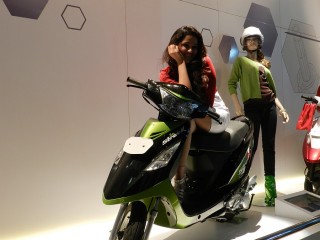
Now coming back to scooters, TVS showed off the Qube electric scooter in the Expo of 2010 and at this year’s Expo it showed a near production version of the Qube.  The difference is that it will be hybrid, featuring a 100cc internal combustion engine and DC electric motors.  It can run on just electric power or just the IC engine if the charge runs out.  This scooter is supposed to bring down emission levels and also decrease consumption of petrol.  Scooters have been the area that TVS has been growing despite the Spectra debacle.  The Wego is one scooter which has taken the battle to Honda in India.  Featuring 12 inch wheels and a compact body, the Wego offers better balance and is easy to drive.  It does not feel top heavy like the Honda Activa and Access from Suzuki.  It has well and truly taken the battle to Honda something that can be seen in the increased sale of the Wego.  One would imagine that the 125cc scooter will retain all the virtues of the Wego and give us a bigger engine to boot.  The Expo has shown that TVS has many new things coming our way, and as usual they will be technology intensive. The 250cc RTR FX  displayed at this year’s Expo is a motocross motorcycle.  But any day it can turn into a regular road motorcycle, something which will happen given the move to higher capacity engines by almost all players in the market.  TVS has always been a low profile company which lets its products do the talking.  It has turned several corners under the able stewardship of Venu Srinivasan who is himself an engineer.  And this year’s Expo has demonstrated that engineering will drive TVS forward but ominously it also seems that there will be design flair added to engineering excellence.

2012 Mahindra Xylo face lift : New Front

Mahindra and Mahindra, right from their humble beginnings in 1945, when they started off as a steel trading company, to assembling the iconic Willy’s Jeeps under license, to those benchmarks of offroading vehicles, the MM 540s and the 550s, to the days of the Armada and the Bolero, to the recent Scorpios and XUVs have always retained, as a Company, deep-seated ideas about values and relentless improvisation. Their products have always stood for one ideal, Value for Money. I do not know whether this is because this is a Company which has built itself ground up, or whether it is simply a marketing ploy, but as enthusiasts, we always speak of Mahindra in revered, hushed tones, because we know this is a Company unlike any other in the automobile business, constantly evolving, constantly redefining the boundaries of what a manufacturer can do if it has it’s heart in the right place.

2012 Mahindra Xylo face lift : New Head lamps

With the launch of the 2012 Xylo yesterday, Mahindra has proven yet again the old adage, having a ear to the ground. It is interesting the way Mahindra has decided to do multiple parallel launches in one country, going that extra mile to bring to the market the ideals of reaching out to as many people as possible on a one on one. Kudos Mahindra!

But as with any product, no matter how well it is marketed, the consumer is the king, quite simply put, and if the quality of the Product is not top notch, the products shall be summarily dismissed. And whatever we saw of the new Xylo, we liked! When I say new, I mean new. Although a majority of the media is calling it a facelift, it moves from being a mere facelift to practically a new car.

2012 Mahindra Xylo face lift : New Roof Rails, Wheel arches and masked out sections in the glass area

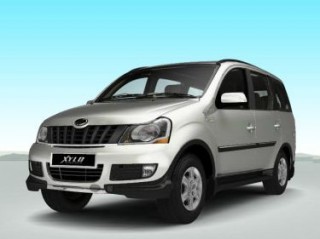
There is a new front facia with redesigned headlamps, grill, bumper, airdams and bonnet , pronounced wheel arches, an integrated footstep with redesigned mudflaps and roof rails with a redesigned rear spoiler. The front, the sides and the rear have all gone under the knife. The end results is a sleeker looking hood, a butch stance, cleaner lines, a premium look and a very pleasant overall effect. A walk-around reveals that the bulky shape has been trimmed down a bit, the logo-integrated hood makes the shape look slightly more aerodynamic, the curves are slightly less curvaceous, the arches are more pronounced and the roof rails are almost but blended into the roof architecture. More than just a bit of nip and tuck, then.

2012 Mahindra Xylo face lift : Interiors

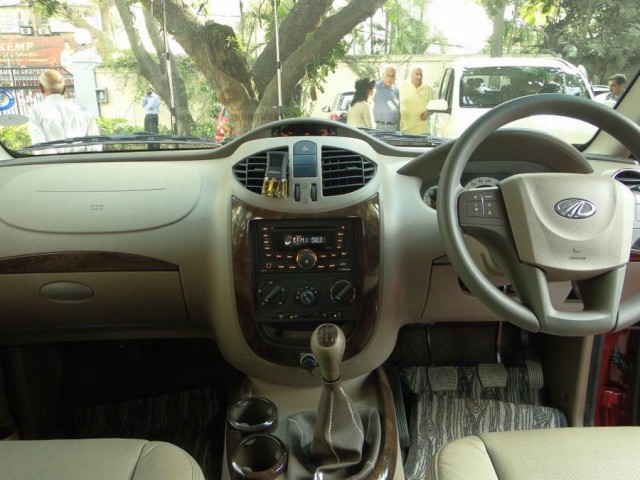
And it does not stop there! There is premium leather on the seats, there is a leather wrapped gearknob, there is a two tone dashboard, a new centre console and glossy wood interior panels. The Xylo has always been a comfortable car, with flatbed seats and optional three stage lumbar support for the driver and co-passenger’s seat and arm rests. Mahindra, thankfully, has not changed much of that, and simply carries it over to the new edition. The interior plastics were of high quality, returning a soft thunk when you rapped your knuckles on them. Luxurious leather seats with lumbar support felt plush and upmarket.

2012 Mahindra Xylo face lift : Mahindra Badge2012 Mahindra Xylo face lift : XYLO Badge

What else is new? Well, for one, now you have a whole new trim added to the already formidable lineup and she is called the E9. The E9, amongst the other “premium” features, sports a rather cool feature, the Voice Command Technology. What this does is, primarily, it allows you to communicate with the car. What’s new, you ask? Well, this technology not only allows you to turn the volume up, down or make calls, but it actually performs functions of the car for you! Headlight on/ off, wipers on/ off, doors open or closed and so on. We have not tested the system yet, but with an honest claim that it can understand thirteen different dictions, we intend to find out as soon as weget our hands on one! Even without seeing it work in real life, we daresay it is immensely cool, and utterly desirable. Kudos again, Mahindra!

Mahindra also has included what they called (quite unimaginatively, I may add), Extra Stability Technology. What it does is, well, it provides extra stability in high speeds. The technology was not explained fully, but my hunch is that it is a hybrid version of traction control which enables stiffening and softening of rides based on the available traction between the tyres and the road. Ah well, mighty sweet of you, Mahindra!

The others, including ABS, EBD, airbags, cruise control and intellipark reverse assist are being carried forward from the older model.

All right, so the question is, how much is she worth? And here’s the knockout. The Xylo E9 topend, with all bells, whistles, jingbangs and the kitchen sink thrown in for good measure, retails at 10.6 lakhs ex showroom in Delhi. The competing trim of the Innova is a full three lakhs costlier than the E9! Three lakhs! Essentially, the money that you would save if you bought the Xylo can be used to get two mid range Nanos! How is THAT for being a price differentiator?

Frankly, I could not really find a glaring fault (yes, the GPS would have been nice), and were impressed with the quality of materials being used. But what impressed me most was the price point at which all this was being offered. This is a solidly built car, with a capable engine and lots of goodies thrown in. At a very affordable price bracket. With strong rumours of a mini Xylo doing the rounds around Diwali, it looks like the Year of the Frumpy Face.

If we had the resources (which we don’t, we assure you, we are poor journalists), we would have bought one TODAY! What would you have done? Let us know, so we can let Mahindra know!

Colors available

2012 Mahindra Face Lift New Xylo Face lift in Diamond White2012 Mahindra Xylo face lift in Toreador Red

2012 Mahindra Face Lift New Xylo Face lift in Rocky Beige2012 Mahindra Face Lift New Xylo Face lift in Mist Silver2012 Mahindra Face Lift New Xylo Face lift in Fiery Black2012 Mahindra Face Lift New Xylo Face lift in Java Brown

Clockwise starting from top left: Diamond White, Toreador Red,Java Brown, Fiery Black, Mist Silver and Rocky Beige.

Read the Live coverage of the Xylo launch event at Bangalore here.