The Ford Figo is the last country specific car according to Ford sources. That is a little ironical considering the fact that the Figo is exported to so many countries even though it is manufactured in India only. From now on India will fall into the One Ford strategy that Alan Mullaly has set for Ford. The Fiesta was the first to come with this and the EcoSport is likely to be the second. However, we ask you dear reader to stop for a minute and think. Cars that are made for global markets are likely to be more expensive to meet the demands of developed markets. The advantage of the Figo is that it could be made cheaply since it is based on an older platform. So could Ford lose the pricing edge with the One Ford strategy? We think it would. You have your say as well.
Live from the event, updates in the link below.
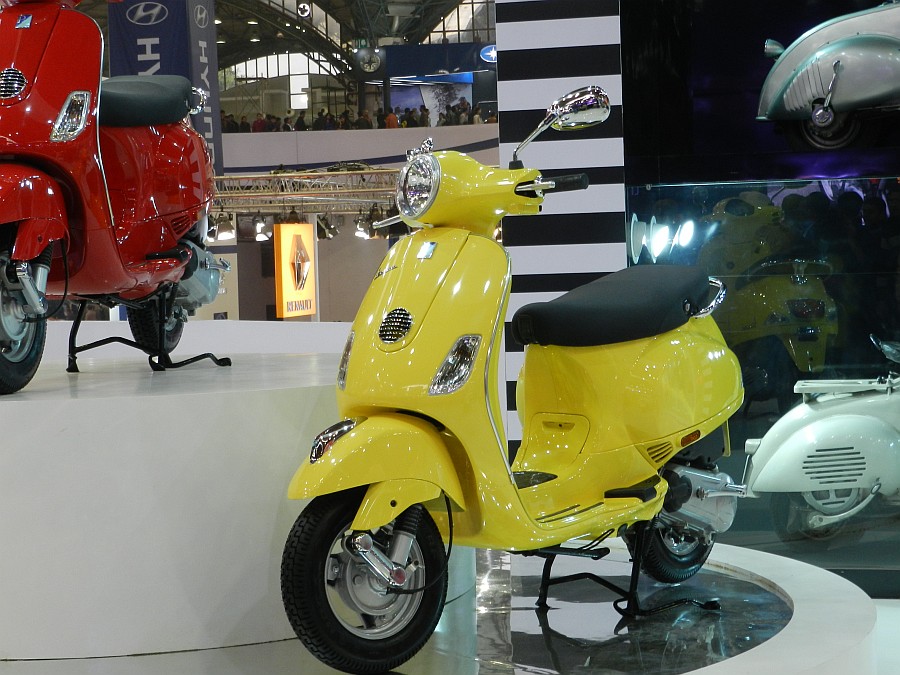
Piaggio Vehicles Pvt. Ltd., launches ‘the Vespa’ in India; we get a closer look
Piaggio Vehicles Pvt. Ltd., launches ‘the Vespa’ in India; we get a closer look
March could be an exciting month for two wheeler enthusiasts. It could see the return of the hallowed Vespa name in the Indian scooter market and this time around it will come with parent company Piaggio setting shop in India and not with an collaboration. The model identified has been the LX125 scooter which is likely to be substantially more powerful than any other scooter. Leaked figures are pegging the power output at 10.7 PS. Some website has already carried pictures of dealerships that are almost ready indicating that the launch of the vehicle is not very far away.
The CBR250R motorcycle from Honda started the tradition of affordable but technologically superior motorcycles. The price of the CBR250R was working out to half that of the Kawasaki Ninja250R but the motorcycle was blighted by poor quality parts leading to a recall of motorcycles for free replacement. Honda seems to have sorted that out and is in the process of launching a new colour variant of the same. The bike will come with Heron Blue, Red and Pearl White combination and is likely to cost Rs. 1500 more than the other coloured models.

Honda will also be launching the smaller version of this motorcycle the CBR150R in the month of March and media speculation has put the price at Rs. 1,15,000. There is no reason to believe that this off the mark when you compare the price with the 250 it seems logical enough. This motorcycle will go up against the Yamaha R15 that retails at Rs.1,07,000. Though some enthusiastic journalists are also pitting this motorcycle against the KTM Duke 200 that is taking things a little too far. Such a comparison if anything will work in favour of the Duke 200 since it is a 200cc motorcycle putting out 25 PS of power while the 150R is a 150cc putting out around 17/18 PS of power. The Duke will give much more for the marginal two or three thousand more that one will have to pay.

Some of the older people who are reading this article may remember an ad campaign of Tata Steel. It showed the community service that Tata was doing in the backward areas of what is now Jharkhand and it said “We also make steel”. Tata is one of the original business houses of India that was there from the beginning of the 20th Century, even during British Colonialism and post independence it went from strength to strength. There is probably no one in India whose life has not been touched by a Tata product. Tata makes salt, hair oil, at one time radio sets, information technology products and services and of course the subject of interest for us automobiles. What we know today as Tata Motors started as TELCO or Tata Electric and Locomotive Company. It made trucks and buses in collaboration with no less a company than Daimler Benz AG, the makers of the Mercedes Benz cars, trucks and buses which sported the three pointed star.
Along with Ashok Leyland, Tata Motors was the behemoth that took care of the transport requirements of cargo and passengers to areas which were not touched by the Indian railways. With the ascendancy of Ratan Tata within the Tata group, Telco or Tata Motors looked to making passenger cars. It is well know that Ratan Tata is a car buff and for him to move making cars was a natural progression from what they had been doing till then. During the 1980s, Tata applied for licence to make the Honda Accord in India, and were promptly refused by the Government of India. Tata then chose the long and difficult route to making cars, where in it relied on its own expertise in known areas to move into areas that were not very well known to them. If you want to understand the progression of Tata to making cars then the beginning point will have to be the Tatamobile – a pick up truck. Under the stewardship of Sumant Mulgaonkar, Tata took the first step towards making passenger cars by launching the 206 Tatamobile, a one tonne pick up. The intention was not to just remain a pick up truck maker. The Tatamobile was the platform that would start Tata’s definitive movement towards making passenger cars.

The Tatamobile featured a ladder chassis and a single cab up front which was followed by a load bed. The lessons learnt with the 206 Tatamobile translated into the 207 Tatamobile which refined things such as driver comfort, steering wheel position, brakes and suspension. While this was happening Tata also began working on two passenger vehicles the Tata Sierra and the Tata Estate. The Tata Sierra was essentially a load beta van with a hard top and a seat at the back. And to avoid unnecessary complications the rear only had a large glass on either side which was fixed like it was on some Ford SUVs in the USA and swinging rear door that also had the spare wheel mounted on it. The Sierra captured the imagination of the people and can rightfully be considered to be the first SUV to have been launched in the Indian market. The vehicle was reliable and many journalists travelled in it to difficult parts of India such as Leh, the Rohtang Pass and some areas of the north eastern part of India. The Sierra built itself the reputation of being rugged and fairly reliable.

The Sierra was followed by the Estate. This was more of a car than the Sierra. It had four doors and a hatch that opened like all proper hatches. The build quality was iffy, there were suspension problems but like the Tatamobile and the Sierra its face bore resemblance to old time partner Mercedes Benz vehicles. The Estate did not fare as well as the Sierra, though it did sell in decent numbers for a pretty long time. At one time it was considered to be a status symbol, but the Estate died much before the Sierra.


Through all this Tata were learning their lessons. They were investing heavily in R&D and even established a crash testing facility at their factory in Pimpri near Pune. Tata’s R&D was taken care of by its ERC or Engineering Research Centre, probably the first of its kind in India set up by an Indian manufacturer. The year 1995 can be considered to be an important year because it was in that year that Tata introduced the Sumo, a vehicle that went on to make history for the company. The Sumo was reputedly named after the departed Sumant Mulgaonkar, but this story has never been corroborated by anyone in Tata. Some said it was called Sumo simply because it was heavy, a characteristic of Tata vehicles which also became its bug bear. Since Tata drew heavily from its truck making experience, its passenger cars used the same methodology of construction and it took a while before Tata could unlearn this aspect of their engineering.

The Sumo was also built on the 207 Tatamobile platform but took the Sierra in the direction of making a proper SUV with four doors and a hatch. It tried to look like the Mercedes Benz G class or the Gelandewagen. It succeeded in its attempt at looking like the G class and ironically when Mercedes Benz has launched the G class in India recently many thought it looked like the Sumo!! The Sumo satisfied the requirements of the Indian joint family. It was humongous, swallowed people and luggage but it was not SUV. It had handling that was so bad, that in the initial years of its launch the sight of Sumo’s turned turtle on highways was very common. The Sumo was simply top heavy and had a centre of gravity and this in combination with its mushy suspension meant that it could just turn turtle when going around sharp bends at high speeds or if sudden changes in direction are attempted. However this did not stop the vehicle from selling in large numbers. It was launched only in five states initially and was overbooked. Tata was selling the Sumo only in white because that was the easiest colour to paint quickly. The Sumo still sells around two thousand units a month, mainly because the rural maxicab or taxi market loves it. It also now comes as the Grande.

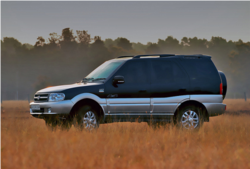 After the Sumo became an MUV Tata worked on the Safari which was launched in 1998. The Safari was a proper SUV that was designed by the now defunct Mayfair engineering. The Safari start with an IDI engine but went on to have a Dicor or Direct Injection Common Rail Engine of 3 litre capacity and this was later replaced by the 2.2 litre Dicor engine with a Variable Geometry Turbo (VTT in Tata speak). The Safari’s replacement the Safari Storme has been shown at the 2012 Expo. While the body looks similar to the existing Safari it is actually all new with the chassis coming from the Aria.


While the Sumo was being produced and improvements were being made, Tata also had dabbled in making a monocoque van which some auto journalists had started calling the Calypso. In typical Tata style the name was neither denied nor confirmed and the van never made it into production. But the lessons learnt on the van which was displayed at a couple of Expos were used in the creation of the first proper monocoque car that Tata made, the Indica. Much before the Indica was made Tata did make public the project that it had taken up and it was from the conceptualizing of the Indica that one actually started seeing Ratan Tata at work. Even though the Indian economy was liberalized and cars taken off the licence system, Ratan Tata decided that the company had invested enough to warrant making cars on their own. So he gave his first famous brief to his engineers. Make a car that had the space of an Ambassador inside, had the size and ride of the Maruti Zen on the outside and the price of the Maruti 800 as its price point.
Sceptics, who were plenty in numbers, pooh poohed the idea. But Ratan Tata and the team were determined. The only outside help that was taken for this car was for the external design of the car and this came from IDeA which also designed the Fiat Palio. The small car was kept under wraps and nobody got to see even a glimpse of what the car looked like. The journalists fraternity gave it the name Indica and again in typical Tata style the name was neither confirmed nor refuted for a very long time. Internally the car was called the Mint, because the engineers in Tata were so sure of their product that they thought it would mint money for the company. Finally the covers were taken off in grand style from the car at the Auto Expo of 1998 and it was there that Ratan Tata himself announced that Tata had decided to go with the name Indica since everyone was already calling the car that.

The Indica debuted into a market that had seen the launch of the Santro, the Daewoo Matiz and already there was the Zen from Maruti. But when the covers came off the Indica it scared the competition. It was unlike anything that Tata had done before and it seemed that Tata engineers delivered on the brief given to them. It scare Maruti sufficiently for them to bring down the price of the Maruti 800. Patriotic Indians celebrated the launch of the Indica and like the Sumo it was overbooked. And like the Sumo it had a bugbears relating to quality and handling. But unlike with the Sumo, Tata were faster to react to feedback and very soon the V2 or version2 of the Indica was launched. The version two has been around for more than a decade now and that it still sells in good numbers is testimony that Tata had ironed most of the problems. Problems pertaining to plastics and other small things could not be ironed out because the Indica had to be built to a price. But its suspension, engine and handling all improved and the car also had a trump card in the form of the diesel engine that no other car had. This forced Maruti to source the TUD5 diesel engine from Peugeot and plonk it in the Zen.
The Indica also inaugurated the Tata link with Fiat’s thinking and the disconnect with its obsession with Mercedes Benz. Like the A178 platform of Fiat, the Indica platform was also meant to support other body styles such as a sedan and an estate car. The sedan became the Indigo (apparently to symbolize the Indian on the go) and the estate the Indigo Marina. The Indica range also showed another facet of Tata which was till then unseen. Its marketing savvy. Tata quickly learnt that marketing was important in a competitive environment. Tata saw that there was huge market for the Indica from taxi operators. In order to ensure that Indicas did not end up as taxis and drive away the personal car buyer, they launched a de-specced version called the Indicab which was available only in white. When the Indian Government came up with the sub four metre rule for cars to qualify for excise relief Tata took advantage to create the Indigo CS or the Compact Sedan. Tata went from being India’s biggest truck and bus maker to third biggest car maker behind two multinational companies Maruti Suzuki and Hyundai.

The enormity of Tata’s achievement will be clear when you see that companies that had more experience than itself in the manufacture of cars have struggled to get anywhere near the numbers that Tata sells. GM, Ford, Fiat, Renault, Nissan et al have mass market products with diesel engines, yet Tata is comfortably ahead of them.

A struggling Fiat was given a life line by Tata when it agreed to distribute, sell and service Fiat cars through its extensive dealer network which can match that of Maruti and Hyundai. Tata also inked a pact to create a new entity called FIAL or Fiat India Automobiles Limited, a company in which Tata holds half the stake. This gave Tata access to Fiat engine technology, both petrol and diesel and a few years ago when the time came to create a new Indica which became the Vista, Tata used engines from Fiat. The sedan which became the Manza also uses Fiat tech and is actually built at the Ranjangaon facility that Fiat owns. All this has meant that Tata has been honing its technological and manufacturing skills without pushing up prices inordinately.
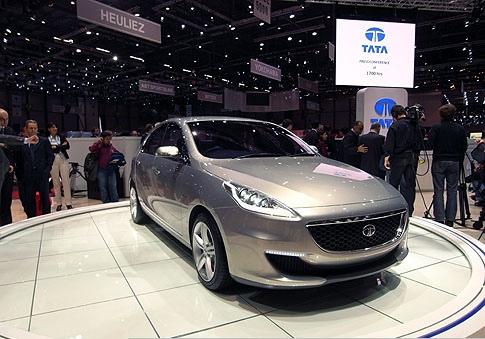
While all this was happening, Tata never lost an opportunity to display new concepts at all Auto Expos and it has also been displaying concepts such as the Indiva or Indivan at international motor shows like the Geneva motor show. These concepts have been the grounds on which newer vehicles such as the Aria have been built.

At one point Tata used the Prima name to show a Pininfarina designed D segment sedan as a concept. It seems however that the idea of making this concept into reality has been dropped.
But the next big idea again came from a radical brief. The story goes that Ratan Tata was travelling home one day and it was raining. He saw a family on a motorcycle with an umbrella aloft and saw that it was hazard not just for the family on the motorcycle but for others as well. So he came up with the idea of the Rs. One Lakh car. This brief was more difficult than the Indica brief and meant taking on completely new engineering challenges. Thus the Nano was born. A brave attempt.

When the Nano was announced the Greens cried foul and said it would worsen traffic and atmospheric pollution because it would sell in large numbers. Tata tried his own version of affirmative action by taking the project to the backward state of Bengal a decision that he will regret for the rest of his life. Mamata Banerjee made political capital out of this and Tata Motors was forced to go to the other extreme of the country, Sanand in Gujarat. But the movement from Singur to Sanand consumed time, pushed up the project costs and in general won a bad name for the Nano. Numbers have been bad sales wise and it is only with a concerted push from the marketing side and addition of new features and colours to make the car an icon for the youth that the sales of the Nano have started picking up. But the Nano is still far from being out of the woods. Tata needs to use its marketing muscle to push the car which everybody thought did not need pushing. There is no denying that the Nano is a wonderful car that can seat four oversized adults in complete comfort and chug along at a decent clip. It also has a cutesy design that is not overly fussy but elegant in the right measure.

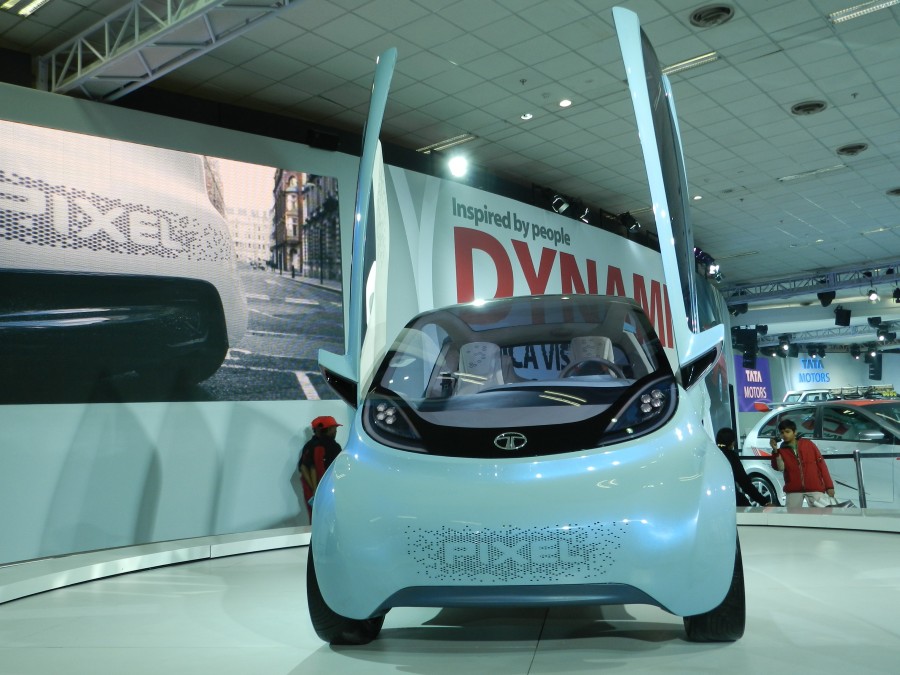
As usual at the Auto Expo 2012, Tata had various concepts. The most important of these is the hybrid Manza featuring a combination of petrol engine and electric motors. This could also be how the facelifted Manza would look. Then there is the Pixel, Tata’s take on the Nano for congested spaces in developed markets such as Europe. The car features scissor doors that lift upwards and therefore give the ability for the car to be parked in congested spaces. It also could be how the next generation Nano would look like.

The Nano platform also is the basis for an auto rickshaw replacement the Tata Magic Iris.

Tata has been doing all this while it has acquired Jaguar/Land Rover from Ford. When Ford sold the two companies together, Land Rover was the better performing marque while Jaguar was mired in the boon docks. It is to Tata’s credit that they have managed to make Jaguar/Land Rover profitable and incredibly enough it is Jaguar which is now growing faster. And the Jaguar/Land Rover range including the new XJ sedan and the Range Rover Evoque were displayed at the Auto Expo. Despite not having enough dealers in India, Jaguar/Land Rover is growing rapidly and with new dealerships in place the Jaguar range can become legitimate competition to the German trio of Mercedes Benz, BMW and Audi.


In the commercial vehicle space too Tata has been very mobile. Internationally it acquired Daewoo Trucks, Hispano Carrocera of Spain and has a collaboration with Brazil’s Marco Polo. Tata has launched the Prima range of tractor trucks and heavy duty trucks for mining apart from the Divo range of buses to take on Volvo and Mercedes Benz. Tata also displayed a hybrid bus featuring a fuel cell, no less, at the Expo.


Tata has also tied up/bought over a French firm that is working on air as a propulsion.

Tata has also shown a fully electric version of the Vista and the Nano.

After seeing all this it is pretty much evident Tata is almost there with the best. A little more time and continued dedication and innovation is the key to getting there fully. The acquisition of Jaguar/Land Rover will only strengthen Tata’s engineering skills.
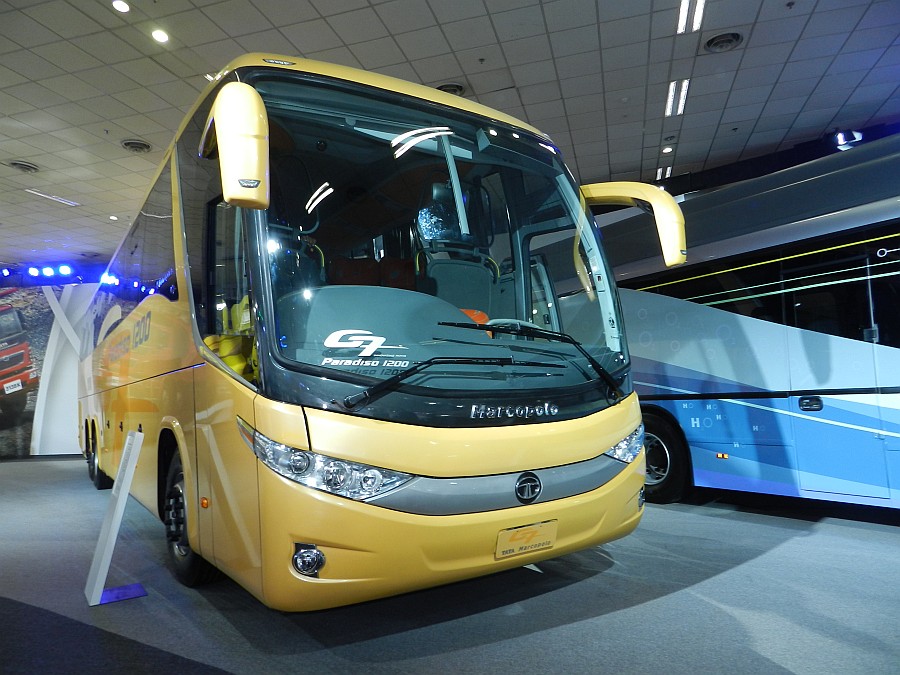
Cyrus Mistry has to fill in a very big void that the retirement of the visionary Ratan Tata will create. The good thing is that the great man will be there for guidance. And one hopes that the youth of Cyrus Mistry will take Tata to greater heights and make it a global player of consequence.

What is it that comes to mind when you think Hyundai? India’s second largest car maker. Originally from Korea. Had a huge hit in the Santro and the Accent. Failed badly with the Getz, Elantra, the Sonata Embera, the Terracan and the Tucson. Tasted moderate success with the previous generation Verna. Again tasted success with the i10, then with the i20, then with the new Fluidic Verna and now with Fluidic Eon. Oh, it has also tasted reasonable success with the Santa Fe SUV. That Hyundai is the second largest car maker in India tells us the story, but it conceals more than it reveals. Time to look at the revelations and to start revealing all that is concealed behind that innocuous statement that Hyundai is India’s second largest car manufacturer.
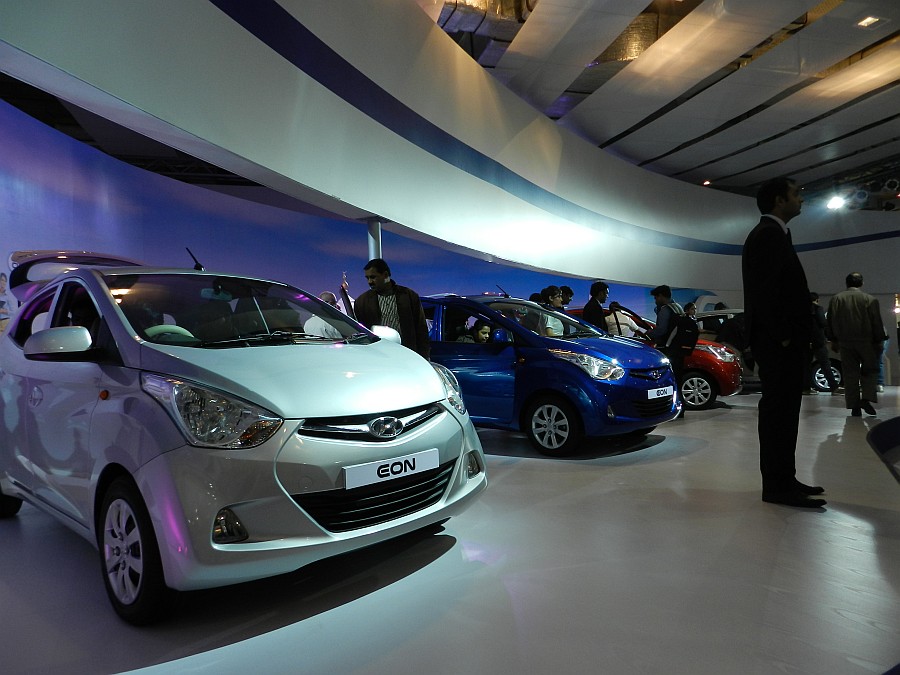
To say that India is after South Korea the most important car market for Hyundai is simply stating the obvious. But this too is a seemingly innocuous statement that does conceals more than it reveals. As is my habit, I need to rewind a bit before I can get to the present and then fast forward into the future. Since Hyundai came to India just about fifteen years, its history is easy to map. But it is slightly more difficult to profile the company. So let me start with a bold and provocative statement. Hyundai as a company is doing better than Maruti Suzuki, so what if the latter is number one and the former is number two. Let me illustrate this point a little clearly for all those who are shocked. Maruti Suzuki has been around for more than twice the amount of time that Hyundai has been around, yet it is only known for its inexpensive, cheerful and reliable little cars which cost less than Rs. 6 lakh. The 800 was huge, as was the original Zen, the 1000, erm, okay not bad and the Esteem, yeah, that one was good. The Esteem was primarily the Maruti 1000 with a 1300cc engine. But it did well in the absence of competition. When the competition came from the Daewoo Cielo, the Hyundai Accent, the Opel Corsa it just did not do well anymore. It was sought to be replaced by the Baleno, a great car that people refused to buy. The estate version the Baleno Altura must have sold less ten numbers. Then came the SX4, a competent car but no hot seller. The biggest selling three box in the times of competition has to be the Swift Dzire.
Now look at Hyundai. This was company that reinvented itself from the word go. I know that sounds illogical but let me explain. When Hyundai wanted to come into India like all other international players it scouted around for partners. Most Indian partners had been taken and the ones that were there were not worth it. So Hyundai took the bold step of entering the Indian market on its own steam. A different kind of beginning from anything that existed prior to it. Like all the other international companies who thought that the C segment was where the action would be Hyundai too decided that it would launch a three box car. That is when one gentleman by the name of B.V. Subbu intervened and changed the face of Hyundai and India’s automobile landscape. It was Subbu who persuaded Hyundai to take a relook at its strategy. He convinced them that it made business sense to hit the small hatchback market where most of the volumes lay. Hyundai heard him and changed strategy. It rummaged through its portfolio and found that it had a hatchback called the Atoz (there is some controversy about the Atoz, with some saying that it was Atos but those who claim that it was Atoz claim that it was meant to be A to Z. I will not dwell on this since I have nothing much to add by the way of credibility to it).
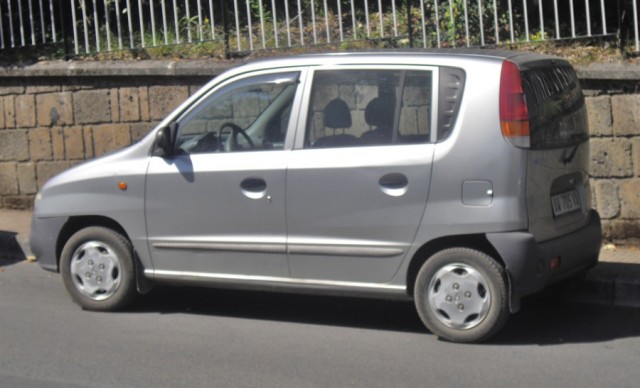
Irrespective of the spelling of the name of the car, the one thing that was very certain was that the Atoz was neither a looker nor was it a big seller. It was obvious that Hyundai could not just bring a car which was not doing well in the international market. After extensive research and customer clinics, Hyundai decided to modify the Atoz and make it more palatable to customers. Thus its first product for India was a made for India car and they named it Santro (please don’t ask what that is supposed to mean, I only know a story that says that it was a name thrown up by a computer which scrambled the letters of the English alphabet; I cannot vouch for the veracity of this story though and if there is anything more to the name, Hyundai made sure that we did not get to know of it sufficiently). When the Santro was revealed to the auto journalists in India, they all gaped in disgust. They said it was horrible looking, they called its front grille toothsy and ugly, passed snide remarks about the Korean sense of aesthetics and rounded it all of with a doomsday prediction. But the Santro confounded the critics. It sold in good numbers, in fact in great numbers. In doing so it beat back competition from the Daewoo Matiz which was designed by star designer Georgetto Giugiaro and his company Italdesign. It helped that Daewoo was dying so it could not really fight back. But the Santro also beat competition from the Tata Indica, designed by IDeA of Italy who also designed the A 178 platform vehicles from Fiat – the Palio, Siena and the Adventure. This in addition to severely threatening the established Zen from Maruti which finally caved in.
So what was it that Hyundai did right with the Santro? Well it was not one thing but a combination of many. The Santro was a tall car (B.V. Subbu and Co lost no time in trademarking it as the Tall Boy) and that meant ingress and egress was easy even for the aged and the physically challenged. For most Indians the rear seat of the Ambassador represented the most comfortable perch on the face of the earth and the rear seat of Santro was/is like a throne. It had good space, though it too was a mono volume like the better looking Matiz, it had a two box profile. It came with an engine that came with a three valve head and compared itself to what Mercedes Benz was offering as engine tech on its high end cars. Then there was the master stroke. All models came with air conditioning as standard and for Indians who always associated air conditioning with opulence it came as a pleasant surprise that a humble inexpensive little car was offering air conditioning as standard across all variants. Cleverly Hyundai also refused to put in a sound system in the car. They said tastes of customers varied and therefore they left it to the individuals purchasing the car to choose their own stereo systems. This also helped in keeping the price down a little. And when India decided to introduce pollution norms, Hyundai started the practice of badging its cars “Euro II”.


Marketing counts for a lot but not for everything. The Santro was a sound product and Hyundai wasted no time in expanding its service network, an important variable if it had to succeed. Perhaps Hyundai again achieved in this space what Maruti achieved in half the time. Hyundai scrapped the Atoz internationally and replaced it with the Santro and where the Atoz did not sell the Santro did. One can say without fear of contradiction that Hyundai learnt and perfected the art of making a good small car in India, a fact seldom acknowledged by anyone writing about Hyundai. Hyundai has learnt invaluable lessons in India that stood it in good stead in getting recognition internationally as well. The next car that Hyundai introduced in India came pretty quickly after the Santro since the original plan was to start with the Accent anyway. The Accent was advertised as the $120 million car (referring to its development costs) and its understated yet elegant design made us Indians take to it like fish to water. It still sells more than a dozen years after its original introduction and with very little changes to the body except the grille. The Santro too sells in substantial numbers with a couple of facelifts that saw it transform from the Santro the Santro Zip and the Santro Xing. Engines were suitably altered to meet pollution norms.
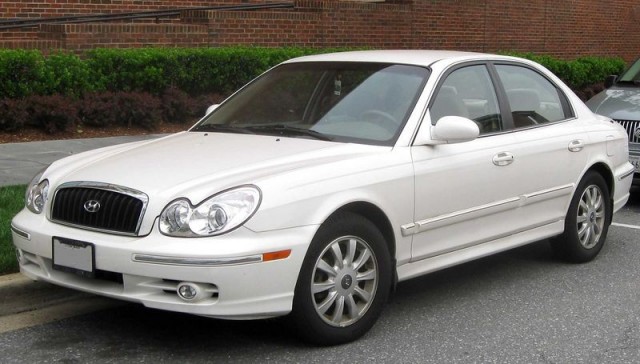
What followed after the Accent was the original EF Sonata, a car that unashamedly borrowed styling cues from the C Class Mercedes Benz (front) and Jaguar cars (back). It was flashy, but we Indians love flashy things and it sold reasonably well but Hyundai replaced it with the Embera when they decided to bring the Sonata range in line with the international line up. The car was good but unexciting. Hyundai also introduced the Elantra and the car did not do too well at the hustings thanks to indifferent styling. There was a big lesson here for Hyundai to learn. It found that things such as elegance and premium styling do not matter to the humble hatch buyer maybe, but they certainly do when it comes to forking out larger amounts of money.
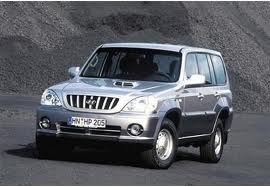

This Hyundai saw with the SUVs such as Terracan and the smaller Tucson as well. Even though Hyundai was still working with these model names in its own domestic market and some other markets it made sure that these names stayed away from India. Hyundai was sure that it did not want to go the Maruti Suzuki way, where people will queue up to by the small cars but not even bother about the bigger ones. Maruti still cannot sell the Grand Vitara and the Kizashi despite their being good cars.
One can safely say that the first decade of the 21st Century was one where Hyundai became a good student and dedicated itself to the study of design and design language. The first product to emerge from this study was the i10 and Hyundai started using the i followed by a numeral to proclaim that it now understand design better than it did in the past. The i30 big hatch was technically the first car to carry the i nomenclature but it was the i10 that typified the change in design direction. Design cues from the i10 went into the replacement of the Getz which began life looking like a VW and ended looking like a Peugeot. The i20 evolved out of the i10 and it was more fluid and in fact has the face which went on to inaugurate the fluidic architecture on the i45 or the Sonata. With the Sonata or the i45 Hyundai boldly announced to the world that it was not a wannabe company trying to ape European manufacturers, a trait that even its expensive Genesis sedan had. Now I do not need to tell the rest of the story. The Verna (Accent in some markets) incorporated the design language that is now unique to Hyundai and is globally acceptable. To announce its intentions clearly Hyundai gave the i10 a fluidic face and also launched the Eon with the same design language.

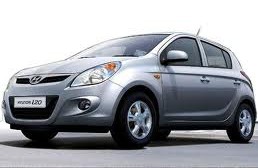


At the Auto Expo 2012, one found Hyundai strutting with a new confidence. It showed off the existing range of cars including the very recently launched Eon and the Verna. More importantly it launched the fluidic Sonata and also showed the new Elantra also sporting a fluidic design. More importantly Hyundai announced that it will be bringing the new Elantra into India later in the year. The response of the people at the Auto Expo indicates that this car is likely to be a winner as well.


In all this Hyundai has been helped by the fact that it has a diesel engine at its disposal and that makes the task of selling cars that much more easier in Europe and India where diesel is the preferred fuel but for different reasons. The Santa Fe will also get fluidic architecture in the near future as will the i20 which is already found testing with its front and rear camouflaged. But make no mistake it was the original i20 which spawned the fluidic design language. In its second iteration it will have a face and a derriere which will bring it in line with the rest of the Hyundai range. Now you can see why Hyundai is better than Maruti Suzuki. Even Suzuki has not found acceptance internationally as a seller of big cars, something that Hyundai has found. If the success of the Verna is anything and it should be something since it sells more than the Honda City, the VW Vento, the Skoda Rapid and the Maruti Suzuki SX4, and if the response at the Expo to the Sonata and the Elantra are taken into consideration, then it seems unlikely that Hyundai will be stuck with the label of small car maker.

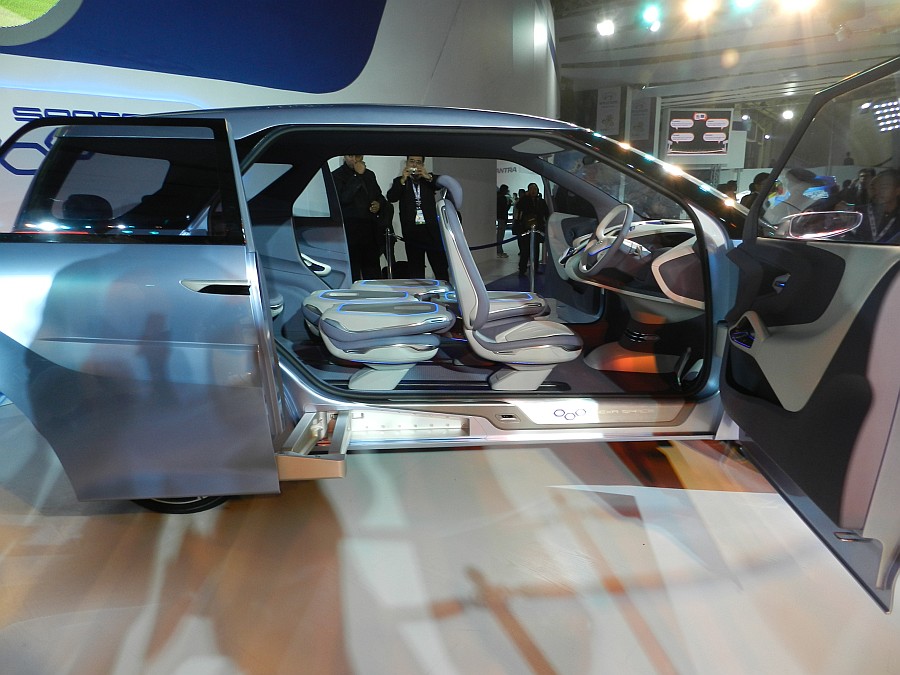
Over the years Hyundai has been working on its engine tech and design language and with the Expo it is now clear that Hyundai is also looking at clever packaging of MPVs to take its case forward. At the Expo Hyundai had the World Premiere of the HND7 MPV called the Hexaspace. It is still very much in concept form but it the production cues are there and it is going to hit the market sooner than later. It has an innovative zig zag seating which makes it possible to seat a large number of people in comfort and it is of a monocoque construction. Expect it to handle like a car. It will give the Innova some sleepless nights since it is more “Innova”tive than the Toyota. Already Toyota has said that the manufacturer that it fears most is Hyundai and it seems as if their fears are likely to come true.


I suppose you now know why I said statements like “Hyundai is the second largest car maker in India” and “India is an important market for Hyundai” conceal more than they reveal. From the global launch of the Santro to the global launch of the i10 and Eon in India to the World Premiere of the Hexaspace at the Indian Auto Expo you can easily deduce where Hyundai has become what it has. It is also of great importance that India is the manufacturing hub of small cars including the i20. Hyundai’s only other R&D facility outside of Korea is in Hyderabad, India. Now there is not much left to your imagination right?

Last year out of the blue came the news that Narain Karthikeyan was going to drive for the HRT F1 team. The year before that, in their rookie year, Hispania Racing Team as it was then called took Karun Chandok aboard and he drove a few races when he was replaced since the money that he was bringing to the team was not sufficient. Last year, Narain drove a few races before Red Bull backed Daniel Ricciardo replaced him and Narain was only again allowed to drive in the Indian GP. Now this year Narain has been announced as the driver partnering Pedro De La Rosa at HRT. The question now is how many races will Narain actually drive? No one seems to believe that he will last the full season. That raises the question “why is Tata pouring money into something when Narain is not guaranteed to drive in all races of the season?” Business economics you see elude the thinking of common people like you and me.
Okay here is the history in one short line. Maruti Udyog Limited, set up in collaboration with Suzuki, renowned for its experience in making small cars, by the Indira Gandhi headed Government of India, as homage to her son who wanted to make a car for the masses went on to become not only became the company that made the best selling cars but also incorporated best manufacturing and corporate practices and thereby changed the face of car manufacturing and also the car market permanently. Now that is not a short sentence (and apologies for that, the Americans would call it a loopy sentence) but it is still one sentence only. What separated Maruti from other Indian four wheeler manufacturers (read that as Hindustan Motors, Premier Automobiles Limited and Mahindra and Mahindra) was that it continued to compete against itself, raised the engineering bar and along with it the reliability of its products and created a service network which is still unprecedented in its length and breadth, even when it has killed of the competition. Maruti had the vision to look beyond its nose, into the future and was prepared to take on the toughest of competition whenever it came.
Come it did in the middle of the 1990s, with India struggling to find enough foreign exchange and liberalizing its economy and in the process getting rid of the licence Raj. All car makers from the world were here. GM, Ford, Peugeot, Fiat, Honda, Mitsubishi, Mercedes Benz, Hyundai, Toyota and Daewoo. All the names mentioned here with the exception of the Korean Chaebol Hyundai came in with Indian partners. Daewoo tied up with Toyota’s erstwhile partner for manufacturing light commercial vehicles- DCM, GM tied up with Hindustan Motors and set up its factory at Halol in Gujarat, Ford collaborated with Mahindra and started operations from the Mahindra facility at Nasik, Peugeot and Fiat both collaborated with Premier Automobiles Limited, Honda with SIEL, Mitsubishi with HM, Mercedes Benz with old partner Tata and Toyota with Kirloskar.
Of all these collaborations it is interesting to note that those companies that tied up with Hindustan Motors almost never took off. GM for instance came in with the Opel brand and struggled to sell those cars. They first bought out HM and then dropped the Opel brand and brought in the Chevrolet brand and survived. Ford had to divorce Mahindra and go it alone and shifted base to Tamil Nadu with its factory near Irunguttukottai. It took them nearly 20 years to find a product that could produce volumes. Peugeot had all sorts of problems with Premier Automobiles Limited and left the country in a hurry. Fiat was braver than Peugeot, it bought out Premier Automobiles’ Kurla facility and tried to resurrect the Uno car but to no avail. It is still fighting to come out of the hole despite having a tie up with Tata for sales and service of its vehicles.
An over confident Mercedes Benz introduced the W124 E Class in India when it had been phased out internationally and the Indian customer cocked a snook at the company by not buying its cars. Soon Tata and Mercedes parted ways in a friendly fashion and Mercedes reorganized its strategy, a lesson that has proved most useful to BMW and Audi. Honda’s partner Siel’s shareholding came down to 5% and Toyota proved to another slow moving giant taking calculated steps. Mitsubishi still has ties with HM and is therefore not a company of consequence in India. Daewoo’s attempt to grow too fast ended in its crashing world wide and only Hyundai proved to be a serious competitor to Maruti-Suzuki apart from home grown major Tata who late in the 1990s decided to go on its own and take the fight to Maruti Suzuki.
In 2012 it is clear that none of the manufacturers with the exception of Hyundai perhaps have the wherewithal to take the competition seriously to Maruti Suzuki. Maruti has been the true success story for cars as far as Suzuki is concerned. In no other markets can anyone see the kind of domination that Suzuki cars enjoy in India. If you look at statistics you will see that the percentage of cars that Maruti sells in the Indian car market has eroded. At one time it was over 70% but later came down to near 50%. But the truth is that Maruti was selling more cars in the 50% market than it did in the 70% market because the market had been considerably widened. Despite experiencing a crippling strike last year, Maruti could not be overhauled from its numero uno status. All this can be attributed to Maruti Suzuki’s understanding of the Indian market and its uncanny ability to read what the consumer wants and to give him/her an experience of happy motoring.
The Maruti Suzuki display at the Auto Expo only bolsters this perception of the company. What may seem to be frivolous, incomprehensible or even eccentric to the casual observer is actually a deliberate study. This year’s Expo saw for instance two Kei Jidosha cars from Japan, the Palette and the MR Wagon. To most they just seemed two ugly cars that were standing there for some unknown reason. The truth is that Maruti Suzuki is studying the market for small cars that pack good space and offer affordable market. The Kei Jidosha cars in Japan sport high tech 660cc turbo charged engines. Till the advent of the Tata Nano it was believed that less than 800cc engine in a car would not be viable. Though the numbers are small, it does seem that the Tata Nano is increasingly finding buyers with its 624cc engine. If you see it in this light then the PaletteSW, Solio and MR Wagon will begin to make sense. Maruti is exploring the possibility of making more small cars and extend its strangle hold over the small car market.


Let us look at the other products on display. There is one car in the Maruti line up which is a matter of great concern. The A Star. It is relatively new car and has replaced the Alto in most international car markets where it carries the Alto moniker. But in India it has come a cropper with monthly sales plummeting below the one thousand mark. Maruti has tried to generate some buzz around the car by displaying a cabriolet version of the A Star. Please look at the thinking. The perception of the A Star has been that the rear of the car is too claustrophobic thanks to the small window. When you take the roof of the car then it is all airy. When you see a car like this in a different light then the perception of the actual production car changes. People tend to wipe out the negative perceptions that they originally had. It would be very interesting to see if this strategy of Maruti is actually going to work. Sales numbers will soon speak the truth.

Then there is the Omni. Since its launch in 1983 with minimal changes to the front the Omni has been soldiering on and in the process confounding market analysts completely. It is widely used as a family car, an ambulance, a panel van and a taxi for five or eight people. Look at what Maruti did with the Omni in this Expo. It gave new ideas to Omni buyers who are increasingly business people. Maruti presented the idea of Cafe on Wheels. We Indians are innovative and when the manufacturer supplies us with one idea we will find ten more around it. Maruti is ensuring that its nearly three decade old vehicle will still throw up new ideas and therefore will ensure that the product will continue to sell. With dies and everything else depreciating, it makes total sense to sell old vehicles because they bring in larger margins. In the small car space new cars have to operate on wafer thin profit margins. But old cars can become cash cows. The Omni is one of the cash cows in the Maruti farm.

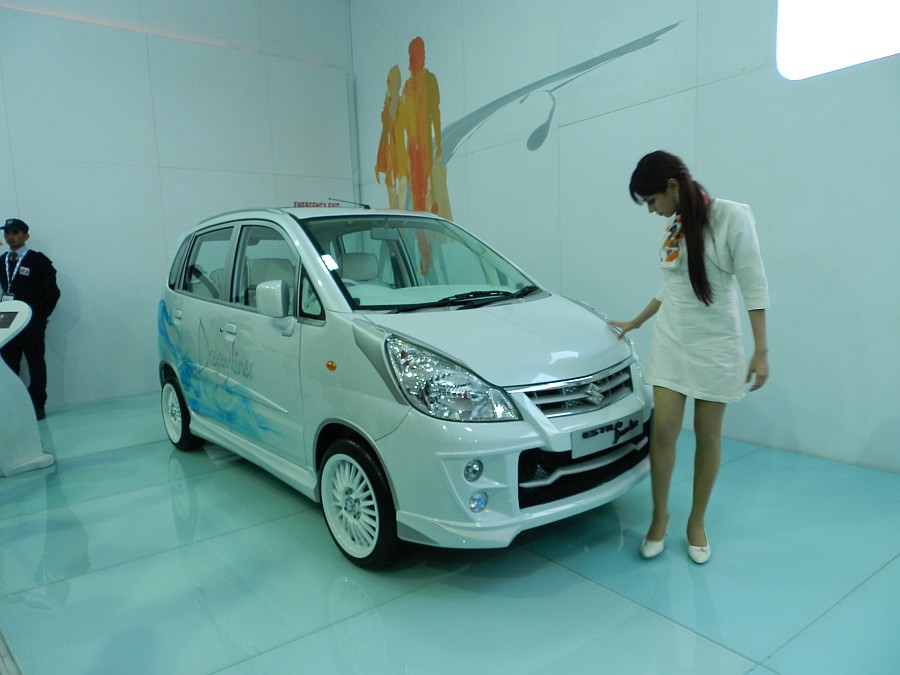
The Blues Lounge concept of the Ritz a car that sells in decent numbers is yet another instance of Maruti bolstering the image of its product by making it funkier. The Ritz anyway comes with blue interiors and to position it is a lounge with blues referring to a genre of music, Maruti is sending subliminal messages to its Ritz customers. Configure your car to your tastes. Make it a comfortable lounge. That is the message. Similarly with the Estilo as well. While the popular perception about the Estilo is that it is a super flop the reality is that it is a moderate success that sells anywhere between 1500 to 2000 units. GM, Ford, Fiat et al would like to have a car like the Estilo in their portfolio. So what if auto journalists and wannabe journalist bloggers say it is a horror. Maruti by calling it a Dream Liner concept is conjuring images of the Boeing 787 Dreamliner. Again the message is make it your dreamliner. After all the Estilo is a cheap and cheerful car that is far from bad looking. Similarly the Wagon R Urbane concept. Make it look mean and wicked. Who does not like driving in all black car with alloy wheels and beefed up tyres. Throw in a couple of projector lamps and you have your own version of the Wagon R. The SX4 is another slow seller. Maruti has shown the hatchback version of it which is more funky and it has also put up a mountain terrain cycle on the roof of the sportily done up SX4. Maruti is supplying potential customers with ideas and that is a great way of marketing your products. Maruti did not have much to do with the Swift, with the car overbooked and many waiting for its delivery. But it did show the old Dzire. What are its plans for the old Dzire? Renaming it and selling it to the taxi segment is the rumour. Mahindra and Verito watch out.


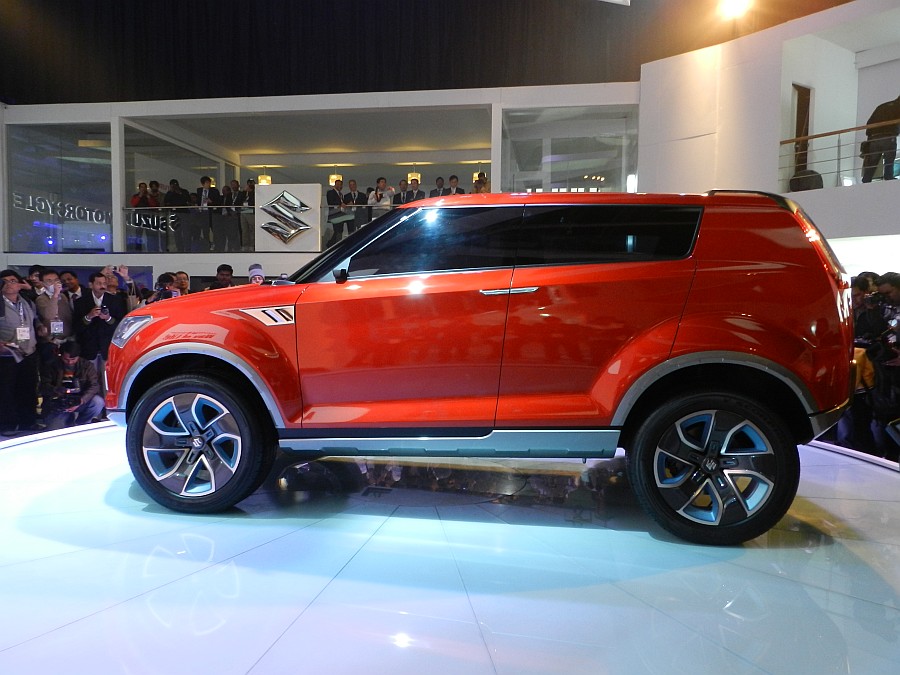
Maruti also has started showing a new habit since the Expo in 2008. It shows a concept that becomes reality in two years time, by the next Expo. In 2008 it showed the A Star concept with Indian design cues, the inspiration supposedly coming from the elephant. In its production avatar it is watered down but by 2010 the car was in the market internationally as the Alto and as the A Star in India. In the 2010 Exposition the RIII concept was shown. This was Maruti’s announcement that it was getting into the MPV space but positioning its vehicle below the Innova. By this year’s Expo the RIII came out in its production form as the Ertiga. A compact MPV that can carry 6 to 7 people without the hassles of bulk in the city. We are sure it will do well. And this year the concept was a small SUV, a space that everybody is getting serious about. Ford has shown the EcoSport and Maruti is gunning for this space with the XA-Alpha. Presumably the XA stands for cross over vehicle while the Alpha stands for what Maruti Suzuki wants to make out of this SUV. Alpha or Number One. This is indication that Maruti Suzuki is in no mood to relinquish any segment. It wants to be Alpha.

What is interesting is the cars that Maruti did not show at the Expo. One of them has already made it into the market. The cut short and cut price Dzire based on the new Swift platform. The other is the Alto based new 800cc to be called the Maruti 800. This is insurance against the Tata Nano and the Hyundai Eon. It is rumoured that Maruti is working on the old F series 800cc engine to make it comply with even BSV engine norms. It is also rumoured that it will be priced below the Rs. 2 lakh mark. It does seem that Maruti knows how to be the Alpha. Tough task for the competition to overhaul the leader who has benefitted from being active and agile and not slipping into complacency even when it had no competition. Now if that is not good thinking, then what is?
The Nissan NV200 will be called the Evalia in the Indian car market. That was made clear at the Auto Expo of this year. It is also supposed to be going up against the Toyota best seller the Innova which continues to reign supreme despite attempts made by other manufacturers such as Mahindra to produce a cheaper MPV like the Xylo. However, Nissan thinks that it can take the battle to the Innova fair and square. We are not sure if this positioning is the creation of auto journalists or the actual intent of the company. Whatever the case maybe the Evalia does not look like a convincing competition to the Innova mainly due to the fact that it appears like a panel van with windows thrown in. The sliding rear doors add to the panel van feeling. Even the face of the Evalia is not the prettiest in the business. So it should be interesting to see how the MPV fares in the Indian market when it is launched. Rumours are that it will be launched in the month of August. Before you think we have trashed a car even before it is launched we would like to say that we have done no such thing. The Indian market is unpredictable and trashing something before the launch is a very stupid thing to do. When the Hyundai Santro was to be launched everybody believed that it would not sell. We know that it went on to become a huge success story for Hyundai. Similarly, when the Toyota Qualis was launched many thought it was dud. It proved to be anything but that. So the Nissan Evalia could join the Santro and the Qaulis in scripting a success story. We are absolutely open to that.
After years of struggling to find a foothold in the Indian car market Ford finally launched a winner in the Figo, a car that was specifically designed for India by the Australian division of Ford. The Figo is the first hatchback that Ford has produced in India (please discount the attempt of a hatchback version of the Escort) and is based on the previous generation Fiesta platform. Ford as a company is huge and it usually takes it very long to make strategic decisions and make quick changes to its product portfolio. After years and years of belief that Indians love three box cars and that the true market lies there, it finally dawned on Ford that it does not matter what Indians want; what matters was what Indians will buy. Most of the best selling cars in India are small hatchbacks preferably with a diesel engine and a modest price. The Figo was the result of this realization and it started producing per month volumes that were equal to the per year volumes of other Ford cars. The Figo is a decent sized, diesel engined and relatively inexpensive hatchback that captured the imagination of the Indian car bazaar. Ford found an opportunity to export this car and over the last couple of years the number of countries that the car was being exported to gradually rose to 32. Now Ford is taking its best sellers to another 18 countries. Needless to say these are developing countries which want a reliable but inexpensive car. And the Figo fits the formula to a tee.
The first of the products that Suzuki Motorcycles India showcased at the Auto Expo has been launched. The Swish 125cc scooter shares the mechanicals with the Access scooter which has done well for Suzuki and has kept the Suzuki flag flying while most of its motorcycle offerings have fallen by the wayside. The Access has a waiting period but the perception about the Access was that it looked a little too staid and therefore suited the middle aged male. To draw younger folk into the Suzuki family, the Swish125 has been launched. Well the name is funky, even though we do not know what it is supposed to mean (it can mean rustling, effeminate, silky, or the sound of a cane when it is swung in the air) since it is more like a sound than a word. But it does look smashing or should we say swishy and we are sure it will bolster Suzuki’s presence in the scooter segment further. Now we wait for the launch of the Hayate motorcycle and hope that it turns around Suzuki’s motorcycle fortunes.
