Yearly Archives: 2012

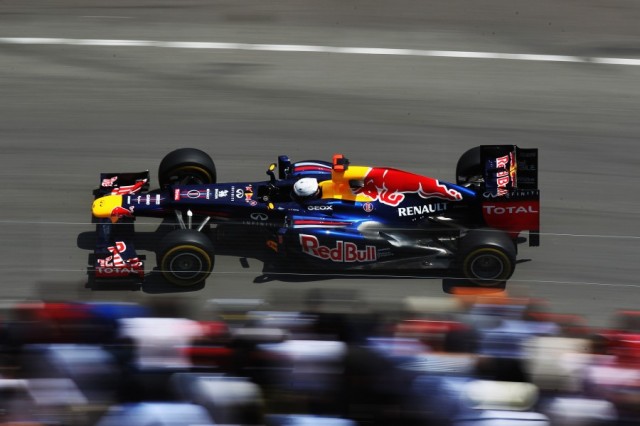
Mark Webber Red Bull Racing Renault Qualifying 2012 Formula 1 Monaco Grand Prix 01

Photo by Clive Mason/Getty Images

Mark Webber

“It was a strong day, particularly this afternoon. It’s normal around here that the momentum has got to build before qualifying and then you have to start putting it all together and the guys did a really good job on the car. I felt comfortable, which is important, you need to go to the absolute limit everywhere to get the maximum out of the car and squeeze everything you can. It’s a great effort from the whole team; we had a lot to do on Thursday night, but the team reacted really well. It’s Michael’s day and he did a great lap, but we are right there and will have a good race tomorrow. It’s been a happy hunting ground for me in the past – Monaco is a very special, unique challenge for the drivers.”

Sebastian Vettel Red Bull Racing Renault Qualifying 2012 Formula 1 Monaco Grand Prix 03

Photo by Mark Thompson/Getty Images

Sebastian Vettel

“It was a bit mixed up for me. It was looking very good this morning, but then I think we took a step in the wrong direction and ended up with a difficult car for qualifying. It’s a bit of a disappointment, as Mark showed what the car can do around here, so we’ll see what we can do tomorrow. It’s Monaco and everything is possible here. We could be on a different strategy tomorrow as we’re able to start the race on hard tyres, slightly different to the cars ahead, so we’ll see how the first stint goes and go from there. It’s hard to predict, as it’s a long race.”

Sebastian Vettel Red Bull Racing Renault Qualifying 2012 Formula 1 Monaco Grand Prix 01

Photo by Clive Mason/Getty Images

Christian Horner, Team Principal

“A very interesting qualifying. Mark looked competitive in all three sessions and had a great last lap where he made up a lot of time in the last two sectors to take second place, which will become pole with Michael’s penalty. It was a great performance by Mark and it’s the best possible place to be starting the Monaco GP from. Sebastian appeared to struggle for pace through
qualifying. He was never particularly happy with the car compared to this morning, which required him to run on options in Q1. He progressed through to Q3 on his second set of options, but based on what we could see pace-wise, we felt that it was better for us to have freedom of tyre choice to start the race tomorrow. So, he carries a new set of options into the race, plus primes, so hopefully that gives some good strategic options”

Cyril Dumont, Track Support Leader and engineer, Renault Sport F1 :

“Fantastic! Like the last two years, a Red Bull will start from pole position at the Monaco GP. It’s really good for Mark, he did a really solid lap, so congratulations to him. For Seb, it was a bit more difficult. He struggled to get a good lap in and so we decided to put him on the harder tyres for Q3, in order to have the option to start the race on either tyre tomorrow. It makes the start wide open and should be an interesting race.”

Sebastian Vettel Red Bull Racing Renault Qualifying 2012 Formula 1 Monaco Grand Prix 02

Photo by Mark Thompson/Getty Images

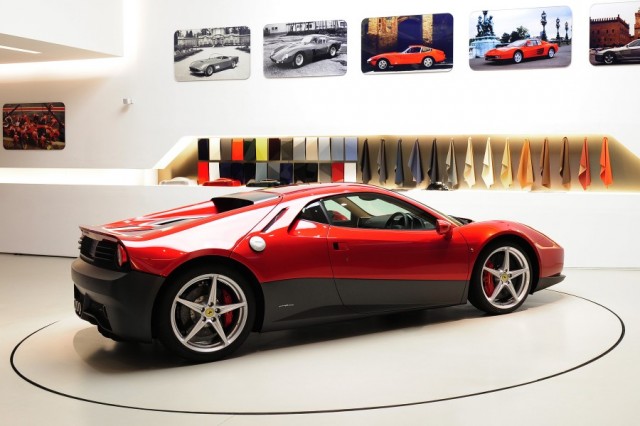
Eric Claptons Ferrari SP12 EC 03

Eric Clapton’s love for the brand Ferrari has been rewarded by the company with a one-off  designed by the Centro Stile Ferrari in collaboration with Pininfarina and the engineers from Maranello : the SP12 EC. The one-off Ferrari was created under Ferrari’s One-Off Programme as homage to Clapton’s career and his long lasting experience as a Ferrari owner.

Clapton has owned three 512 BBs over the years. His desire was to drive a car inspired by this model, with influences from the 458 Italia. Eric Clapton had the privilege of following the project from the start, which Ferrari says was ‘a blank canvas’. Claption said this was ‘one of the most satisfying things I’ve ever done.”

Eric Claptons Ferrari SP12 EC 02

Meticulous attention in terms of style and technology was paid to the proportions and architecture of the SP12 EC making this exceptional car even more significant. Just like music is created, applying the right notes in the right places to build a musical score, so was the creative process behind the SP12 EC says Ferrari.

Eric Claptons Ferrari SP12 EC 01

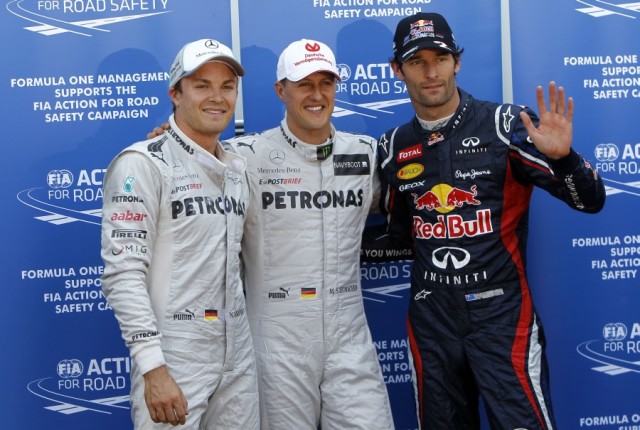
Michael Schumacher Nico Rosber Mark Webber Monaco Qualifying 01

Michael Schumacher

It is simply a wonderful feeling to set pole after such a long time, and particularly here in Monaco. Okay, it has taken a little bit longer than I might have wanted in the second chapter of my career, but that makes it even sweeter. It’s just beautiful. We already thought that this circuit should suit us, and it’s the perfect confirmation of all the work from every team member in Brackley, Brixworth and Stuttgart – a big thank you to every one of them, because this is a team result. Of course, it’s unfortunate that I won’t start from the very front but that’s how it is. I will do as well as I can. We know that overtaking is tough but with DRS and KERS, you might as well try it – and you can be sure I will.

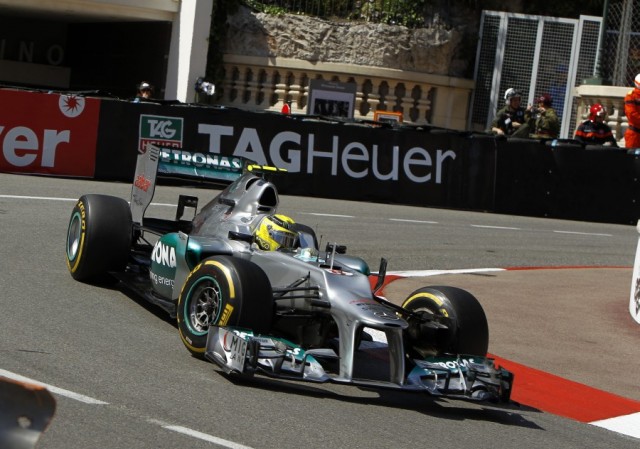
Nico Rosberg Mercedes AMG Petronas 2012 Formula 1 Qualifying Monaco Grand Prix 01

Nico Rosberg

I am pleased with the result today and especially for what we have shown as a team in the past few weeks. We have had a couple of difficult races since the win in China but there has been a lot of hard work to turn it round, and today we were on top as a team which is great to see. Thank you to everybody back at base who has brought us back to the front again. I had a pretty smooth qualifying session, and managed to save two sets of new super soft tyres for the race, but it was just so close out there this afternoon, it’s incredible and fantastic for Formula One. Congratulations to Michael, he did a fantastic job. Of course, I am sorry for him that he must take the penalty, but that means I will be on the front row in Monaco. And at a race where overtaking can be so difficult, that’s a great place to start.

Michael Schumacher Mercedes AMG Petronas 2012 Formula 1 Qualifying Monaco Grand Prix 01

Ross Brawn

It was a wonderful qualifying session and we are obviously delighted. Michael will take a five-place penalty tomorrow, but today he was the quickest guy out there – congratulations to him. Nico did a fantastic job as well, and was in the hunt for pole throughout the session. Having both drivers in the top three shows that the team has done a superb job this weekend to dial in the car and follow the evolution of the track. But it was a real team effort today and my thanks also to everyone back at the factories in Brackley and Brixworth. Now, we have one more step to make. Last year, we suffered big problems with the tyres at the beginning of the race. That is something we must avoid tomorrow.

Norbert Haug

What a phenomenal performance from Michael. He was the fastest man on track today when it counted and Michael truly deserves this P1 result. His five-place penalty puts him back on the third row while Nico will start from the front row tomorrow. Thank you to everybody in our team for a great effort today. Inside our team, our belief in Michael was never in danger and this has paid off big time.

Nico Rosberg Mercedes AMG Petronas 2012 Formula 1 Qualifying Monaco Grand Prix 02

Mark Webber Red Bull Racing Team 2012 Formula 1 Monaco Grand Prix Qualifying 01

Photo by Mark Thompson/Getty Images

The dust from Saturday’s free practice session had long settled and the teams were geared up for the Qualifying session of the Formula 1 Monaco Grand Prix 2012. Thursday’s practice session did anything but paint a picture of the grid order for the qualifying session due to the changing weather conditions.

However, the weather for Saturday’s final practice session was dry, and the times showed that the Mercedes, Red Bull, Lotus and Ferrari were all good for a pole and McLaren were struggling to find the balance in the car.

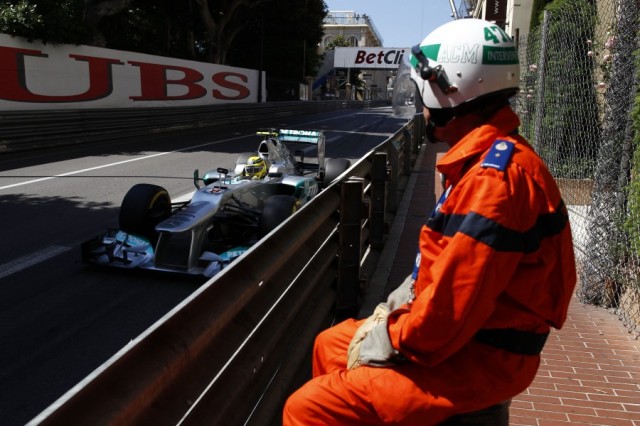
Michael Schumacher set the fastest time in the Qualifying session of the 2012 Formula 1 Monaco Grand Prix, going across the line in 1:14.301 beating Webber’s 1:14.381 and his team mate Nico Rosberg’s 1:14.448. That however does not give Schumacher a pole position because of a 5-place Grid Penalty he incurred from the stewards at Spain for crashing into the back of the Williams of Bruno Senna. This would have been the 2nd pole of the season for the Mercedes F1 team. The penalty pushes Schumacher to 6th on the grid and Webber moves into pole position and Nico Rosberg alongside him in P2.

“It is simply a wonderful feeling to set pole after such a long time, and particularly here in Monaco. Okay, it has taken a little bit longer than I might have wanted in the second chapter of my career, but that makes it even sweeter. It’s just beautiful. We already thought that this circuit should suit us, and it’s the perfect confirmation of all the work from every team member in Brackley, Brixworth and Stuttgart – a big thank you to every one of them, because this is a team result. Of course, it’s unfortunate that I won’t start from the very front but that’s how it is. I will do as well as I can. We know that overtaking is tough but with DRS and KERS, you might as well try it – and you can be sure I will.” said Michael Schumacher.

Lewis Hamilton will start from P3 and Romain Grosjean in P4. Fernando Alonso starts in P5 after failing to meet the expectations from him after the free practice times. Felipe Massa starts in P7 and Kimi Raikkonen in P8. Pastor Maldanado finished in P9, but he’ll move back 10 places on the Grid after the penalty that was given to him after his silly crash with Perez in Free Practice 3. Sebastian Vettel finished in 10th place after struggling with the setup of his car all through the session. Coming into the final qualifying session, he had no new sets of Option, the Red tyre walled Super-Soft Compound tyres left and so did a single run on the Prime Tyres, the yellow side walled Soft Compound tyres, which means he’ll be the only guy in the top 10 to start on the Prime tyres. This is also the first race in this season to feature the Super-Soft compound tyres.

Nico Hulkenberg of the Force India F1 team was 11th on the grid and behind him Kamui Kobayashi in the Sauber C31. Jenson Button was struggling to find the correct balance in the car, and he was not at all happy with the way his car handled. The end result being the 13th position on the Grid. This is the 2nd time he has failed to make it into the 3rd Qualifying session. This means he has a brand new set of Option tyres at his disposal, but in a track like Monaco, grid position matters more. This is the 6th time he has been beaten by his team mate in a qualifying session in as many sessions. But Jenson has always been better on raceday, so he may still spring a surprise. The rest of the order on the grid are Senna, Paul di Resta, Ricciardo, Vergne, Kovalainen, Petrov, Glock, Pedro de la Rosa, Charles Pic, Karthikeyan and at the very back of the grid, Sergio Perez in the 2nd Sauber. The first qualifying session was not even 5 minutes old when Sergio Perez put his car in the barriers, as his car under-steered out of the turn 14. In the process he damaged his front wing, and brushed his left front and left rear tyres. The left rear tyre took a massive beating and was barely hanging on to the car. Perez tried to nurse the car back to the pits but the tyre went loose a few moments later. The new regulations for F1 do not allow a car to be driven without all the four tyres intact, so Perez pulled up on the side of the track and thus bringing out the red flag briefly so that his car could be retrieved safely.

“I am disappointed as I felt we could fight for a very good grid position here. We are still analysing everything to see if there was something wrong with the car. I was on my first lap, so was not pushing a lot. I went into the tunnel and had a lot of understeer and then I went into turns 13 and 14. Thirteen was quite fine but in 14 I just went straight and didn’t get the car to turn.” said Sergio Perez after the qualifying session.

The Grid Order after the penalties have been applied:

1. Mark Webber, Red Bull Racing-Renault.
2. Nico Rosberg, Mercedes.
3. Lewis Hamilton, McLaren-Mercedes.
4. Romain Grosjean, Lotus-Renault.
5. Fernando Alonso, Ferrari.
6. Michael Schumacher, Mercedes.
7. Felipe Massa, Ferrari.
8. Kimi Raikkonen, Lotus-Renault.
9. Sebastian Vettel, Red Bull Racing-Renault.
10. Nico Hulkenberg, Force India-Mercedes.

Renault Alpine A110-50 Design 06

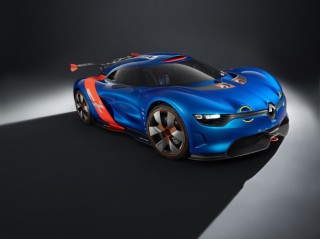
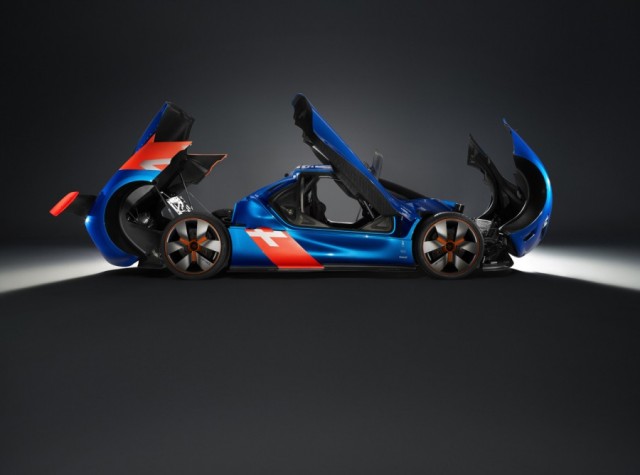
The Alpine Berlinette turns 50 this year and, to mark the event, Renault has created the Renault Alpine A110-50, a concept built around the racing Megane Trophy car. The Renault Alpine A110-50 concept car translates the most characteristic design features of the original A110 in a modern and spectacular way. The shade of blue is a refreshed interpretation of the original Alpine Blue seen in the Berlinette. The A110-50 has a carbon fibre body.

Renault Alpine A110-50 Design 24Renault Alpine A110 50 Design 21

Designer Yann Jarsalle and Concept and Show Car Director Alex Breun were entrusted with the task of reinterpreting the Berlinette design and adding a touch of Laurens van den Acker’s design introduced in the DeZir. “Developing this concept car was a great adventure. It was a catalyst for creativity. We wanted to make a Berlinette that was of our time, and which boldly embodies Renault’s passion for motorsport. We were guided by our hearts and emotions.” Axel Breun.

“For everybody on the team, it was a dream come true to work on an Alpine concept car. We wanted to put this car firmly in the modern day, while resonating with its heritage” said Laurens van den Acker, Senior VP, Corporate Design.

Renault Alpine A110-50 Design Rear

Renault Alpine A110

The most prominent of the reinterpreted design cues from the original Alpine A110 would be half-domed additional lamps, at the centre, now using LED technology and appearing as thin semi circles and staying true to the original in colour yellow. The characteristic 3D rear window gives a view into the mid-rear engine. Air intakes on each side are reminiscent of the ducts on the rear wheel arches of the Berlinette. The one on the right cools the gearbox whereas the one on the left cools the engine bay.

Renault Alpine A110-50 Design : Interiors 12 Renault ensures no stone is left unturned to ensure you realize the sporty intent of this car as soon as you’re in it.

Carbon fibre door sills, driver’s seat featuring embroidered ‘Renault Alpine A110-50’ badging, Sabelt full harness belts and different, attractive shades of blue establish this car’s relationship with the original Alpine A110 and its sporting intent.

The Renault Design-created steering wheel incorporates a colour screen and houses the same technology as a Formula Renault 3.5 single-seater to provide drivers with all the information they need.

Much thought ha also gone into selecting the materials for the inside, the orange coloured bits contrast with the rest of the interior.

Engine & Transmission

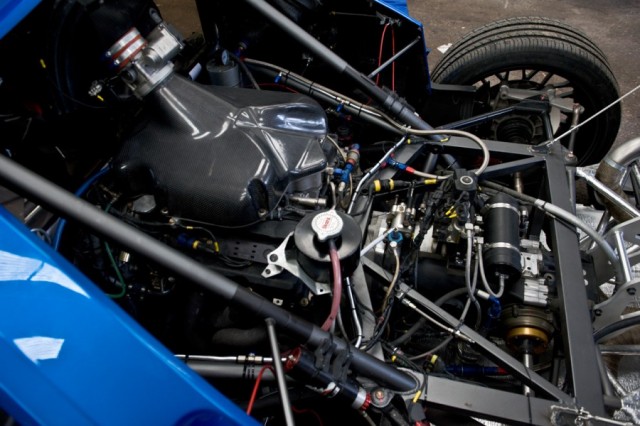
The Renault Alpine A110-50 concept car is developed on the same technical platform as the Mégane Trophy, a proven beast on the track. Powering the A110-50 is the Renault V4Y engine block, a 3.5 litre 24-valve 400hp V6 mounted in a mid-rear position. The crankcase (semi-wet), moving parts (pistons, connecting rods, crankshaft), valve train (camshafts and valve springs) and exhaust system have been engineered specifically for the A110-50 concept. The Renault Alpine A110-50 uses the carbon air intake employed in the Mégane Trophy V6.

Renault Alpine A110-50 : 3.5 litre 24-valve 400hp V6 Renault V4Y engine block

The Renault Alpine A110-50 concept car is fitted with a semi-automatic six-speed sequential gearbox, as well as a twin-plate clutch that can be controlled using either with the clutch pedal or a paddle on the steering wheel. The gearbox is fitted longitudinally behind the engine and incorporates a limited-slip differential (discs and ramps) with adjustable pre-loading. The cerametallic twin-plate clutch is also engineered for this car. It is activated automatically when downshifting, and Renault assures this leads to fast and reliable gear changes.

Chassis

The tubular chassis from the Mégane Trophy has been stiffened and undergone several developments before being used for the Renault Alpine A110-50.The roll cage and bracing in the engine bay were lowered. The final weight distribution is at 47.8% over the front wheels. The concept car also has integral pneumatic jacks derived from systems used in endurance racing.

Renault Alpine A110-50 Design 26

Aerodynamics

At the front, a splitter hidden in the bumper generates low pressure, which results in significant aerodynamic downforce. At the rear, a diffuser accelerates air flow beneath the floor. These two contribute to nearly one third of the car’s downforce. The massive split wing accounts for the other two thirds.

Renault Alpine A110-50 Design 03

The wheelbase of the Renault Alpine A110-50 is identical to that of Mégane Trophy (2,625mm), while the track is slightly wider at 1,680mm front and 1,690mm rear. The 21-inch wheels, with a single central nut are fitted with road legal Michelin tyres. The Sachs dampers can be adjusted in compression and extension, and are mounted directly onto the lower wishbones. There are numerous different set-up options: castor, camber and alignment, ride height, anti-roll. Renault has stripped the car of ABS, traction control, and other electronic gadgetry to keep the driving experience pure.

Renault Alpine A110 50 Design 23

Renault Alpine A110 50 Design 02Renault Alpine A110 50 Design 07

Renault Alpine A110 50 Design 10Renault Alpine A110 50 Design 13

Thanks to some sweet soul in Monte Carlo we have these videos of the Renault Alpine 110-50 through the Grand Hotel hairpin in Monaco, probably driven by Carlos Tavares himself.

This fantastic noise is courtesy of the Renault V4Y engine block, a 3.5 litre 24-valve 400hp V6 mounted in a mid-rear position. The crankcase (semi-wet), moving parts (pistons, connecting rods, crankshaft), valve train (camshafts and valve springs) and exhaust system are specific compared to the version featured on productions models. The Renault Alpine A110-50 uses the carbon air intake employed for  Mégane Trophy V6.


Renault's COO Carlos Tavares and the Renault Alpine A110-50 at Monaco

Carlos Tavares, Chief Operating Officer, Renault, joined the company in 1981 as a test-driving engineer at the Aubevoye test center. He went onto become the head of ground link engineering in 1985. After this he moved up the ladder putting to use his technical and managerial skills when he moved to Nissan as Program Director and finally was back with Renault as the Chief Operating Officer on July 1, 2011.

All through his career Tavares has enjoyed racing and this weekend he put his skills to good use driving the stunning Alpine A110-50 on the Monaco street circuit.

Renault Alpine A110-50 at Monaco 08Renault Alpine A110-50 at Monaco09

Renault Alpine A110-50 at Monaco 10

Renault Alpine A110-50 at Monaco 03Renault Alpine A110-50 at Monaco 06

Renault Alpine A110-50 at Monaco Grand Hotel Hairpin

Renault Alpine A110-50 at Monaco 07Carlos Tavares and Alain Prost during the Renault Alpine A110-50 premiere at Monaco 11

Carlos Tavares and Alain Prost during the Renault Alpine A110-50 premiere at Monaco

Renault Alpine A110-50 Monaco 02

Carlos Tavares, Renault's COO driving the Renault Alpine A110-50 around Monaco

BMW Zagato Coupe 08

Zagato took home the prestigious Concorso d’Eleganza Design Award in 2010 for the Zagato Alfa Romeo TZ3 Corsa Coupé and again in 2011 for the Aston Martin Zagato V12. Add to this the fact that Zagato chief designer Norihiko Harada and Adrian van Hooydonk, Senior Vice-President BMW Group Design have been friends for many years, so when Andrea Zagato proposed a collaboration, it wasn’t long before the decision was made to build a car at Zagato that embodies the two companies’ passion for cars.

BMW Zagato Coupe 01 : Norihiko Harada, Chief Designer Zagato and  Adrian van Hooydonk, Senior Vice-President BMW Group Design

Norihiko Harada, Chief Designer Zagato and Adrian van Hooydonk, Senior Vice-President BMW Group Design

“It is relatively easy to build a design study which is not intended for use on the road. Not having to meet any stipulations governing crash safety or pedestrian protection opens up a host of new avenues in terms of design. The challenge lies in injecting the emotional appeal of a concept car into a road-legal machine. And we think we have succeeded in doing just that with the BMW Zagato Coupé.” says Dr.Andrea Zagato, who represents the third generation of his family to sit at the helm of the company

BMW Zagato Coupe 03

“Working with Zagato was a fantastic experience. It was extremely enriching for us to create something with people who share our understanding of good design and passion for cars,” explains Karim Habib, the newly appointed Head of Design BMW Automobiles. “And that is what makes the car so special – the open and constructive dialogue with Zagato, their experience, craftsmanship and incomparable sense for forms. All of these gifts are wrapped up in the BMW Zagato Coupé.”

BMW Zagato Coupe 09BMW Zagato Coupe 11

The body of the BMW Zagato Coupé has been built entirely by hand. As in the past, the new skin was tailored to fit the car’s mechanical architecture, tracing its lines yet giving it space to breathe. The Zagato experts spent many hours crafting the aluminium sheet metal by hand and meticulously moulding it to give the car its unique form.

The most apt description would be the one from BMW itself : The BMW Zagato Coupé is a collaboration between auto enthusiasts – a BMW seen through the eyes of Zagato. The extremely long bonnet, greenhouse set well back and double bubble roof and Kamm Tail sum up the dynamic focus of the car as only a coupé could. The flowing roofline melts away into the compact, muscular rear. The car’s dynamic silhouette sees precise lines forging a path over taut surfaces towards the rear.

“For me, the BMW Zagato Coupé holds a very special magic. It exudes a certain spontaneity which, when combined with the type of unconventional solutions typical of Zagato, lend the car a very individual elegance,” says Zagato chief designer Norihiko Harada.

BMW Zagato Coupe 20

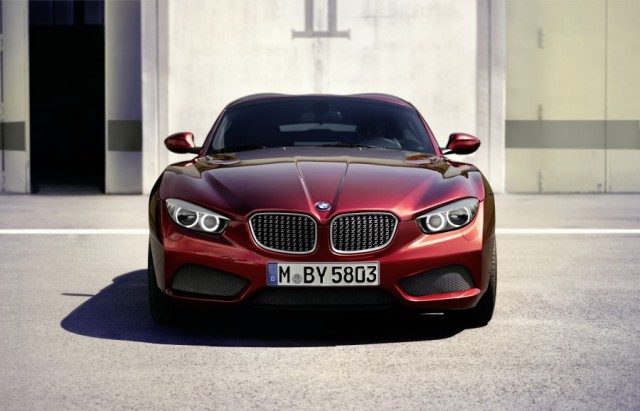
The characteristic BMW design features – kidney grille, twin circular headlamps and the BMW logo up front make this concept easily recognizable as a BMW. Integrated air intakes in bonnet are functional and direct air into the engine compartment. The contours of the bonnet are picked up by the double-bubble roof as the lines of the body continue on to the rear of the car. These two domes built into the structure of the roof are a signature feature of Zagato design and reduce the front area. As well as providing greater headroom when wearing a helmet on the track, the double bubble (“doppia gobba”) roof also enhances the car’s aerodynamics and increases the roof’s torsional rigidity.

Zagato’s take on the BMW radiator grille is interesting, to say the least. Matt kidney frames house countless small matt Zagato “z” letters to make up the kidney grille instead of the more conventional slats! Viewed from the front, the “z” letters appear to be floating within the kidneys. Close-up, it is clear that they are set against a collection of other dark-coloured “z”s positioned into octagons. Gleaming chrome “z”s are used only on the visible side of the octagons.

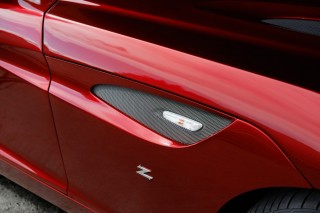
Below the side vents, the silver “z” provides another nod to the cooperation between BMW and Zagato.Slightly offset behind the silver “z”, a matching indentation provides greater depth and three-dimensionality. The two “z”s in the air intakes and BMW badges are the only gleaming chrome elements on the BMW Zagato Coupé.

BMW Zagato Coupe 07

The lower section of the side window surrounds slants dramatically upwards just ahead of the rear end and extends to form the upper border of the rear window. This is another typical Zagato trait, that links the sides and rear via the C-pillar and ensures a harmonious connection between the different sections of the car.

Kamm Effect

Professor Kamm’s studies on aerodynamic rear end have inspired both BMW and Zagato to implement the K-tail layout. The 1940 BMW 328 Kamm Coupé as well as the Alfa SZ and TZ boosted a typical Kamm-tail (K-tail) layout. This solution became famous in Italy with the name “Coda Tronca” bodies which were tested by Zagato in the beginning of the 60s.The reduction of the wind resistance is assured with the Kamm Tail design, without any need for a separate rear wing.

BMW Zagato Coupe 16

Zagato stamps its personality again with the transparent panel in the rear upper section. Divided visually into three sections, the generous glass surfaces open up a line of sight to the lights and into the interior. Their dark tint gives the BMW Zagato Coupé an even sportier look. A curved bar featuring the Zagato trademark splits the surface into sections and gives the car a greater impression of width. The likewise tinted rear window can be opened, offering access to the rear luggage compartment.

BMW Zagato Coupe 05

A prominent rear bumper feeds downwards into a large diffuser. The diffuser extends well out to the sides, providing an effective contrast to the bar dividing the glass and lending the rear an extremely broad and sporty presence in the process. Matt edging accentuates the form of the diffuser, draws the focus to the wheels and underlines the planted stance of the BMW Zagato Coupé. The exhaust tailpipes, positioned towards the outer edges of the rear, add further emphasis, their matt finish contributing another stylish flourish to the rear.

BMW Zagato Coupe 15 : five-spoke design have a hint of propeller about themBMW Zagato Coupe 10

The 19-inch light-alloy wheels in classically sporty five-spoke design have a hint of propeller about them, offering a subtle nod to the origins of both companies. while the Bavarian automakers roots in aeroplanes is common knowledge, it would surprise a few that Zagato’s founder Ugo Zagato was building lightweight aircraft bodies when he decided try to transfer these techniques to cars.

The Paint finish : Rosso Vivace

The exclusive exterior paint finish Rosso Vivace brings the surfaces and forms of the BMW Zagato Coupé to life. Depending on how the light hits the body, the colour spectrum ranges from something close to black all the way to a brilliant red. BMW and Zagato have achieved this by sophisticated paint application technology. The primer coat – made up of a black application, followed by a layer of shimmering metallic silver – is applied first. Then come six ultra-thin coats of the exclusively developed red shade to deliver this unique effect. Finally, two layers of clear coat seal in the colour.

Interior

Exquisite materials and high-quality details are to expected in this handcrafted masterpiece. Horizontal lines in the instrument panel and doors, heighten the interior’s sense of sporting elegance. The lines continue into a dynamic upward curve. The base colours for the exclusive leather trim are a light and dark shade of grey. Together, they underline the horizontal geometry of the interior, while red decorative stitching in the instrument panel, doors and seats brings the colour of the body into the interior and adds extra sporting touches. A “z” is embroidered into the seat head restraints.

BMW Zagato Coupe 21 Interior

BMW Zagato Coupe 14BMW Zagato Coupe 18BMW Zagato Coupe 17BMW Zagato Coupe 19

The “horizontal line” design theme has also found its way into the luggage compartment, as have the two shades of grey and the red accents. Here, the lines are a subtle reference to the form of the double-bubble roof.

Mechanical details of the BMW Zagato Coupe are scarce at the moment, all we know is the engine is mounted up front and the Coupe is rear wheel driven. We can safely assume though, the underpinnings must be of the Z4 Roadster.

Renault Alpine 110-50

The Alpine Berlinette turns 50 this year and Renault celebrates this anniversary with the concept car named Renault Alpine A110-50.

The Renault Alpine A110-50 concept car translates the most characteristic design features of the original A110 in a modern and spectacular way says Renault. The Alpine A110-50 has its underpinnings from the racing Renault Mégane Trophy. The carbon-fibre bodywork features a new shade of blue which refreshes and reinterprets the famous original ‘Alpine Blue’.

“Developing this concept car was a great adventure. It was a catalyst for creativity. We wanted to make a Berlinette that was of our time, and which boldly embodies Renault’s passion for motorsport. We were guided by our hearts and emotions.” says Axel Breun, Concept and Show Car Director.

The Alpine A110-50 is powered by the Renault V4Y engine block, a 3.5 litre 24-valve 400hp V6 mounted in a mid-rear position. The Renault Alpine A110-50 concept car is fitted with a semi-automatic six-speed sequential gearbox, as well as a twin-plate clutch that can be controlled using either the clutch pedal or a paddle on the steering wheel. The gearbox is fitted longitudinally behind the engine and incorporates a limited-slip differential (discs and ramps) with adjustable pre-loading. The cerametallic twin-plate clutch is also specific to the car. It is activated automatically when downshifting, guaranteeing fast and reliable gear changes.

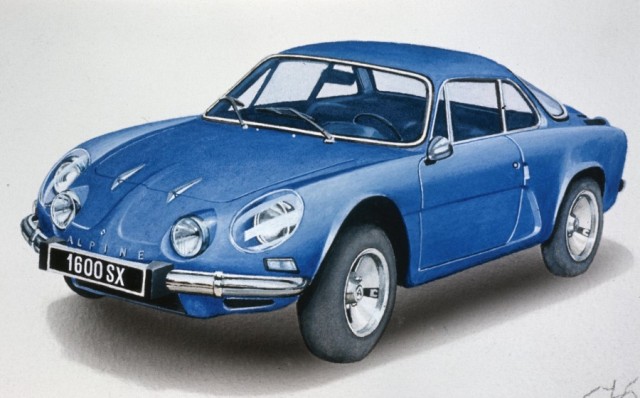
When Jean Rédélé unveiled the A110 Berlinette at the 1962 Paris Motor Show, it marked the start of an Alpine adventure for the engine from the Renault 8. The car had been developed from the Alpine A108, but was more stylish and more dynamic, with an even lower engine cover, a larger glazed area and the rear lights from the Renault 8. This car won a number of rallies through to 1975.

More images and details to follow in our Design Story which we will have up soon.

1977, Renault Alpine A110 Berlinette 1600 SX

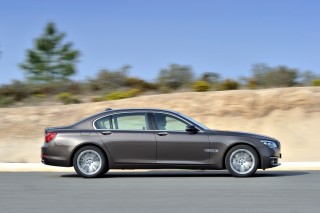
2012 BMW 7 Series Long-wheelbase version 09

Exterior

The grille’s chrome surround is now larger and there’s a new slat arrangement (nine slats instead of 12). The large, full-width air intake dominating the lower section of the modified front apron is now split into three sections, a pair of chrome bars marking its outer sectionss. Two narrow vertical air intakes sit beyond even the LED foglamps to the left and right of the wide intake. These are included as part of the “air curtain” technology, which lowers fuel consumption at higher speeds by forcing the air to flow more aerodynamically around the front wheels. The BMW 7 Series also gets integrated indicators in the outer rear view mirrors.

2012 BMW 7 Series : Vertical air slat for the 'air curtain' 2012 BMW 7 Series Headlamps

2012 BMW 7 Series : Vertical air slat for the ‘air curtain’

2012 BMW 7 Series Rear

The horizontal lines and subdivision of the rear into several levels visually lowers the height of the car. The design of the brand’s familiar L-shaped rear lights is retained but the shades of red have been varied to provide more contrast. A new chrome strip, links the thin reflectors on the rear bumper. Another chrome bar between the four chromed tailpipe embellishers in the rear apron is a distinguishing feature of the 12-cylinder flagship model.

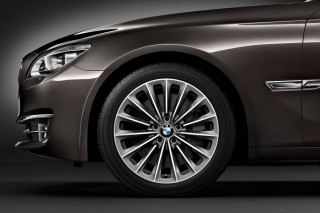
2012 BMW 7 Series Tail lamps2012 BMW 7 Series new Alloys

Long Wheelbase Version

2012 BMW 750Li : Long wheelbase variant of the 7 Series2012 BMW 750Li : Long wheelbase variant of the 7 Series

The long-wheelbase version of the BMW 7 Series is longer than the standard 7 Series by 140 millimetres, adding to leg room at the rear and a lot more comfort. Changes to the roofline of the long-wheelbase version surprisingly adds 10 millimetres of extra headroom in the rear!

Interior

BMW says the colour of the ambient light can be changed. The BMW 7 Series can be ordered with a folding table in the backrest or with the Rear Seat Entertainment package as an option. A brand-new feature are the 9.2-inch screens which, instead of being integrated into the front seats, appear to be “floating”.

2012 BMW 7 Series Interior : Center Extending Speaker

Center Extending Speaker

The new 1,200-watt Bang & Olufsen High End Surround Sound System music system is hooked up to 16 speakers, some of which are positioned behind illuminated, satin-finish aluminium grilles sited in the mirror triangles of the doors and the parcel shelf. The most attention-seizing member of the speaker line-up is the illuminated centre speaker which extends out of the instrument panel and uses B&O Acoustic Lens Technology. Its distinctive form guarantees perfect sound quality in every seat. When the music system is switched off, the centre speaker retreats back into the instrument panel almost without trace.

2012 BMW 7 Series Interior : multifunctional instrument display, Sport+ Mode
2012 BMW 7 Series Interior : multifunctional instrument display, Comfort Mode2012 BMW 7 Series Interior : multifunctional instrument display, Eco Pro Mode

New multifunction instrument display in Sport+, Comfort and Eco Pro Mode

A particular highlight of the BMW 7 Series is the multifunctional instrument display, which makes its debut. In place of four circular analogue dials keep the driver informed of the car’s speed, engine revs, fuel level and oil temperature a 10.25-inch display is used. While the familiar format of four circular instruments is retained here, the extended black-panel technology hands the driver a whole new set of display options.The display shows varying information and different colous in the COMFORT, SPORT and ECO PRO driving experience modes.The information shown is tailored to the driving mode currently engaged.

In ECO PRO mode the display is primarily blue. If the driver is aggressive with the throttle,the full display turns grey and alerts them to the amount of fuel they are burning unnecessarily. A speedometer zoom function can also be activated in ECO PRO and COMFORT modes.

In SPORT mode the display takes on a signature BMW orange hue. This display mode purposefully retains a very puristic look and only shows the driver the most essential information, so that he can maintain maximum concentration on the road ahead.

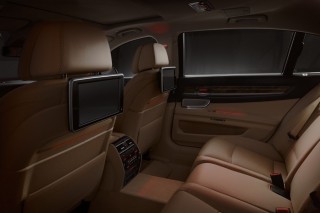
2012 BMW 7 Series Long Wheelbase2012 BMW 7 Series Interior Rear Legroom

Long wheelbase variant on the left
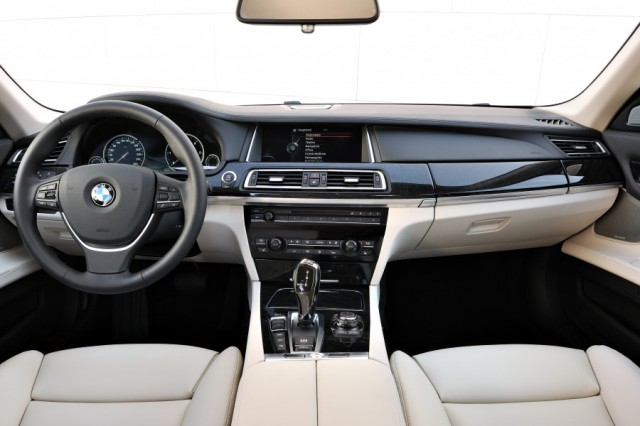
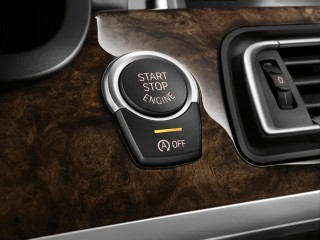
2012 BMW 7 Series Start Stop2012 BMW 7 Series iDrive Controller

2012 BMW 7 Series Interior Dashboard

Powertrain

Innovative eight-speed automatic gearbox now fitted as standard. For the year 2012 BMW is fitting all 7 Series models with the extremely effective eight-speed automatic transmission previously reserved for the BMW 760i, BMW 740d xDrive and BMW ActiveHybrid 7. Its additional ratios allow the gearbox to combine unbeatable shift comfort and efficiency, while at the same time aiding the dynamic qualities of the BMW 7 Series Sedan. With its intelligent control technology, the eight-speed transmission boasts extremely fast shift and reaction times and direct downshift capability. The electronic transmission controller can also alter the shift characteristics as required, to cater either for a more sporty or for a more relaxed, fuel-saving driving style.

BMW 760i

The V12 engine with BMW TwinPower Turbo technology, direct petrol injection and continuously variable camshaft control is a mill worthy of the flagship 760i. The all-aluminium powerplant generates output of 544 hp and makes peak torque of 750 Nm. 0 to 100kph in 4.6 seconds for a car so huge is jaw droppingly fast, and top speed is of course limited to 250 kph.

BMW 750i

2012 BMW 7 Series : 750Li revised V8 powerplant, that makes 450 hp

The 750i gets the revised V8 powerplant, that makes 450 hp and a peak torque of 650 Nm propelling the 750i from 0 to 100kph in 4.8 seconds. Optimised high-pressure direct injection and seamlessly variable control of intake valve lift that leads to reduced charge cycle losses have upped the power by 10% and torque by 8.5% over the previous engine.

BMW 740i

The 740i gets the new inline six cylinder loaded with BMW TwinPower Turbo technology with High Precision Direct Petrol Injection, twin-scroll turbocharging, Double-Vanos variable camshaft timing and Valvetronic variable valve timing. The engine is good dfor 320hp and maximum torque of 450 Nm from as low as 1300 rpm. BMW says this

BMW 730i

The older straight six 3.0L engine from BMW powers this entry level 730i and is available only in select markets. Figures stands at 258 hp and maximum torque of 310 Nm at 2,600 rpm. Coupling this engine with the now standard eight speed transmission improves the fuel efficiency.

BMW 750d xDrive

2012 BMW 7 Series : TwinTurbo Technology 3 litre diesel in 750d xDrive

With TwinPower Turbo technology at the heart of the six-cylinder unit, there are three turbochargers and a further developed common rail injection system for the first time in order to optimise the engine’s output, torque and responsiveness. The presence of three precisely coordinated turbochargers ensures that the 3-litre high-performance diesel engine develops enough torque across the full rev range. The first charger starts work at just over idle so the combustion chambers can be supplied at an early stage. At 1,500 rpm a larger high-pressure turbo kicks in to help the engine reach its maximum torque. Finally, the third turbocharger joins the fray at 2,700 rpm and ensures particularly impressive power delivery until maximum revs are reached. Piezo injectors spray the fuel into the combustion chambers at up to 2,200 bar, with three pre-injections, one main injection and four post-injections of fuel during each power stroke ensuring efficient and clean combustion.

This diesel makes 381hp, peak torque of 740 Nm and propels the car to 100 kph in 4.9 seconds! Fuel efficiency is claimed to be 18.75 kpl! xDrive should help keep all this power under control.

BMW 740d

The 3 litre six cylinder diesel that powers that 740d makes 313 hp and 630 Nm. The peak power is 5kW higher than the predecessors and fuel efficiency is 17% better.

BMW 730d

Another round of fuel consumption and emissions reductions sees the BMW 730d building on its position as the world’s most economical luxury sedan with the lowest emissions. Peak output of the 3-litre six-cylinder diesel engine, whose construction mirrors that of the engine in the BMW 740d, has
increased by 10 kilowatts to 258 hp. And its maximum torque has also risen to 560 Nm.

However, average fuel economy of 5.6 litres per 100 kilometres (21.42 kpl) in the EU test cycle and CO2 emissions of just 148 g/km allow it to outperform its predecessor by 17 per cent.

BMW ConnectedDrive

A host of tech wizardry under the ConnectedDrive make driving easier and safer in the new BMW 7 Series. BMW Night Vision + Dynamic Light Spot with pedestrian recognition technology (unique in the premium segment), the anti-dazzle LED High-Beam Assistant, Driver Assistant Plus with Stop & Go function, Active Protection with automatic fatigue recognition and Speed Limit Info including the No Passing Info display using road sign symbols. A more powerful operating system governing the central Control Display ensures the entertainment programs are simpler to operate, optimises office and online services, and makes using the telephone easier. The Professional navigation system, meanwhile, is now more powerful and features new and ultra-sharp map graphics and 3D city mode.

2012 BMW 7 Series hands free access

Comfort Access control unit (the key) in your hand, move your feet under the rear bumper and the sensors detect the command and pop the boot open.

Design Sketch

2012 BMW 7 Series Design Sketch

The new BMW 7 Series, Exterior Designer Christopher WeilExterior-Details Designer Sebastian Morgenstern

The new BMW 7 Series, Exterior Designer Christopher Weil, Exterior-Details Designer Sebastian Morgenstern

Bmw 2012 7 Series 04

Bmw 2012 7 Series 06