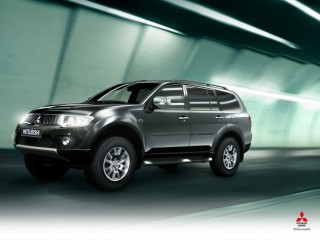
Mitsubishi Outlander 2013 : Front

The 2013 Outlander marks the beginning of a generation of all-new global products for Mitsubishi Motors, in line with Mitsubishi’s “Jump 2013”, the business plan for a greener and more global Mitsubishi.

The 2013 Mitsubishi Outlander is very reminiscent of the Concept PX-MiEV II. The design brief is identical, the highlights being that it should be an “engineer’s car” with a “Solid – Safe – Simple”.

Mitsubishi Outlander 2013 : Rear 3/4

The high flanks, raised beltline, uncluttered surfaces or soft-contoured fenders minus strong wheel arches are the identifying design features on the car.

The most distinct design feature has to be the front grille. Mitsubishi says the hockey-shaped chromed strips (probably a reference to ice hockey sticks) seem to be milled directly from solid brass as if to shield the Three-Diamond logo and are placed bang in-between the feline lines of the sculptured wraparound headlamps.

As with the previous generation Outlander, premium materials grace the interior. Padded surfaces, soft-touch finish, silver or wood accents, gloss black surfaces are all part of the package.

Mitsubishi Outlander 2013 debuts in Geneva : Front 3/4

The 2013 Mitsubishi Outlander was designed on a versatile platform, capable of accommodating various powertrains including Mitsubishi’s P-HEV, the EV-based plug-in hybrid technology. Mitsubishi will offer the 150PS 2.0 litre 4J11 MIVEC petrol that has been upgraded with a new valve train as well as the 150PS 2.2 litre Clean Diesel codenamed 4N14. The diesel mill packs a host of technologies including ultra-low 14.9:1 compression ratio, all geared to deliver high performance and lowered emissions. In addition to these, on offer will also be the EV-based plug-In hybrid powertrain.
This powertrain can be run in different modes :

  • Pure :Twin Motor 4WD EV
  • Series : Twin Motor 4WD EV supported by a petrol engine, that will act as a generator
  • Parallel : Twin Motor 4WD EV supplemented by the petrol engine powering the front wheels

Mitsubishi also claims that this would make the Outlander the first permanent 4WD electric car in series production.

The high capacity traction batteries define a range of 50km in 4WD ‘Pure’ mode. Depending on power consumption and remaining battery charge, the system will start the petrol engine automatically as a generator, switching to ‘Series Mode’. At higher vehicle speeds the petrol engine, with its better high-end energy efficiency, will supply supplementary drive torque to assist the front and rear motors, the ‘Parallel Mode’.

Driver can also select the “Battery Drive Mode” with the push of a button, to use pure EV power or “Battery Charge Mode” while on the move to use the engine as a generator to charge the batteries.

Regenerative braking is of course present, to recover kinetic energy and use it to charge the traction battery. Mitsubishi Motors’ P-HEV system uses a newly developed twin-motor four-wheel-drive system mated to Mitsubishi’s S-AWC (Super-All Wheel Control). Based on the four-wheel-drive technology developed in the legendary Lancer Evolution, S-AWC integrates control of the 4WD, ASC and ABS systems. Working in tandem with the Mitsubishi plug-in hybrid EV system, S-AWC also contributes to better fuel efficiency.

The two motors drive the front and rear axles independently. The Twin Motor 4WD system does away with the mechanical bits like the propeller shaft, hydraulic system and clutch plate used to connect the front and rear axles in conventional 4WD systems and offers virtually lag free performance. Mitsubishi’s P-HEV system as with other electric powertrains gives the torque right off-the-line with acceleration comparable to that of a 3.0-liter V6 engine, says Mitsubishi. The twin electric motor setup will guarantee the smooth progression required in difficult wintery driving conditions.

All-new Automatic Stop & Go system should drive up the fuel efficiency. Though we doubts the availability in India, there is on the options list an all-new 6-speed automatic gearbox. India, probably will get the 6 speed manual trasmission. The new Outlander has also lost weight in a number of places which should again be good for FE, and lower emissions.

Safety features include Adaptive Cruise Control system, Forward Collision Mitigation system, that detects obstacles on the road ahead of the car and automatically applies the brakes to help preventing a collision and Lane Departure Warning system.

The new Outlander comes with the Super-HiD “Wide Vision” xenon headlamps that are 1.4 times more powerful than conventional HID headlights, they provide a 1,350-lumen beam that shines over an extremely wide area of 80°x 2 in total, instead of the 42° x 2 of conventional HiDs.

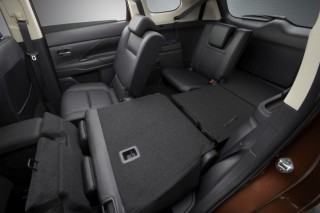
2013 Mitsubishi Outlander : Comfortable third row
2013 Mitsubishi Outlander : 60:40 Split Second Row2013 Mitsubishi Outlander : 50:50 Split Third Row

While there have been reports of the current gen Outlander getting the dreadful looking third row jump seats in India, Mitsubishi has done away with these jump seats in the 2013 model in favour of a wide and comfortable 3rd row 50/50 split seating. The Outlander also gets dual zone air conditioner.

2013 Mitsubishi Outlander : Power tail gate

When the 2nd and 3rd seats are folded down you get a fully flat 1.69m long floor which is 335mm longer than that in the previous generation Outlander. A one-piece power tail gate also features in the options list.
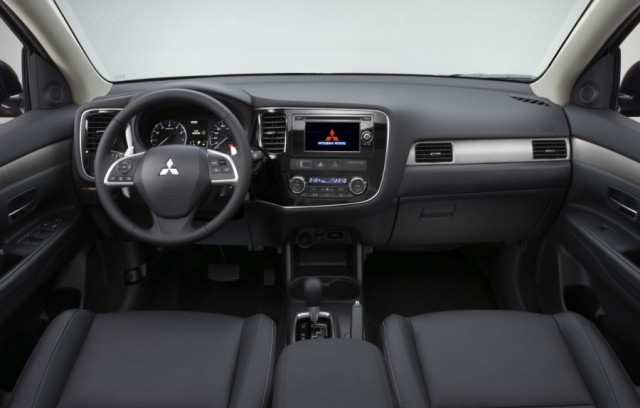
Mitsubishi Outlander 2013 : Interior

A tilt adjustable telescopic steering column and a rear view display incorporated in the central console completes the features list.

Note that all features mentioned in this article may not make it to the Indian market.

Mitsubishi has said the 2013 Outlander will debut in Russia, this summer, prior to European (late summer), Japanese, Oceania, Chinese and North American debuts. There has been no official word on the Indian debut, but it wouldn’t be far fetched to see this beast on our shores sometime in 2013.

2013 Mitsubishi Outlander : 'Hockey Stick' chrome strips on the grille flank the three diamond  logoMitsubishi Outlander 2013 : Tail lamp

Renault Pulse Reviewed : French Aggression?

Hello, welcome to Chennai. You might want to drop that garden hose in your hand if you were just about to soak your lovely car wet, before the lynch mob gets to you. If your Sunday mornings are defined by the time spent hosing down your car gleaming wet, shampooing her up and then wiping her down, you might have to seriously consider moving. I tried once, washing my car with a hose, and the stares that burnt holes through my body still serve as reminders that people realize water is precious, very, very precious. Though the typical ‘conservative’ Chennaiite might not immediately go for your throat, there is always the possibility that they, er.. we, might try.

Renault Pulse : Pulse of the City

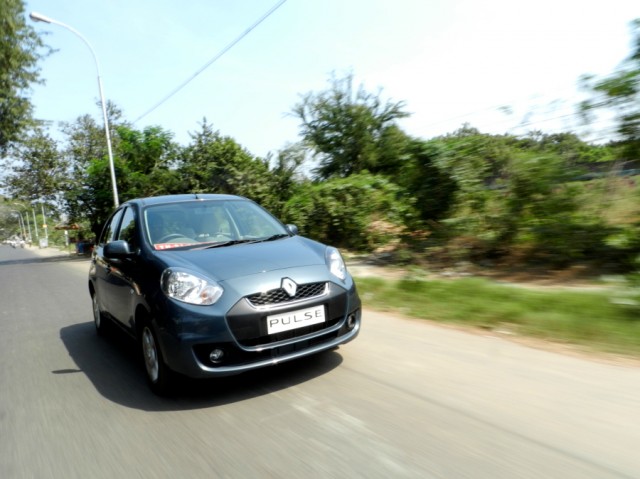
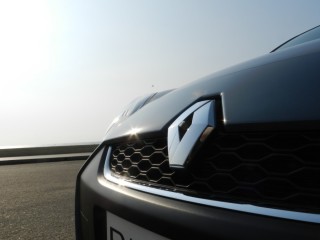
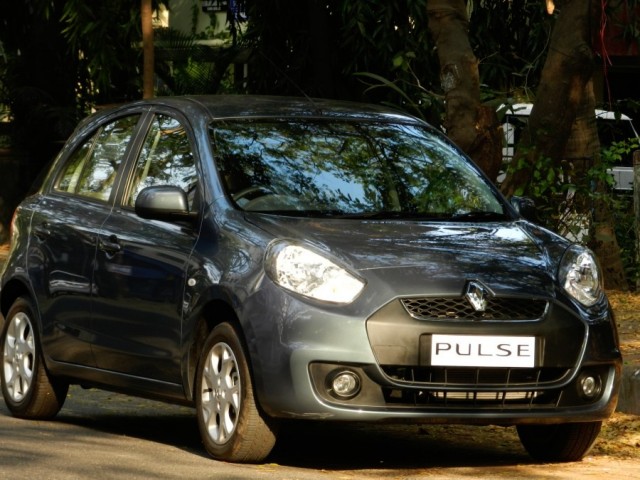
Obligatory tangential information dispensed with in the previous paragraph, let’s get down to the crux of the matter. Having been denied the pleasure of hosing down the car, a bucket of water and very wet cloth in hand, I was wiping down the Renault Pulse minutes before heading off for the photoshoot. In that poetic moment when the sun was just rising from behind a cluster of really tall buildings, I realized there wasn’t a better way to ‘see’ how the design of the Pulse is different from the Micra. As I ran the wash cloth over the angled planes on the hood, the edges of the hexagonal grille, the honeycomb pattern set further in from the edges of the grille, the prominent lip at the front end bottom and the wicked alloys, I realized the Pulse was a beast with a different temperament, as far as exterior styling goes. Stunning work by the cool chaps at Renault’s Design Centre in Mumbai.

Renault Pulse : Honeycomb pattern grille insetRenault Pulse : Fantastic redesigned head lamps

The Renault Nissan Alliance has been working wonders for either brand with the Alliance selling a record 8,029,222 units world over in 2011, a 10.3% increase from 2010. The Alliance shares a number of platforms including the B platform, used for Nissan’s Note, Juke and Renault’s Clio III, Modus. The much anticipated SUV from Renault, the Duster is built on a derived platform called B0. The C platform was initially designed for the Mégane II and is now shared by the Nissan Qashqai. The C platform is also shared by two premium Renault products in India, the Fluence and the Koleos. The latest platform would of course be the V-Platform where V stands for versatile. This is the latest platform developed by the Alliance and is what the Renault Pulse is built on.

Renault and Nissan also have drafted something they call the Interchangeable Components Policy (ICP). The policy enables the use of identical components on models based on different platforms. This simple shared use of components led to some 50 million Euros saved in 2009, says the Alliance. Taking all this into consideration, Renault’s strategy of developing its third entrant into the Indian market, based on an existing model from the Nissan lineup makes sense.

The V-Platform, and what it means for either brands in the future, is something we have our eyes on. Now, let me just give you the highlights.

    • The aim is to deliver optimum rigidity for excellent handling without compromising on the ride, but at the lowest possible weight
    • Key elements are strength and lightness
    • Results expected : enhanced performance, good fuel efficiency and low emissions

Over the course of the next few pages we delve into how exactly these were implemented in the Pulse.

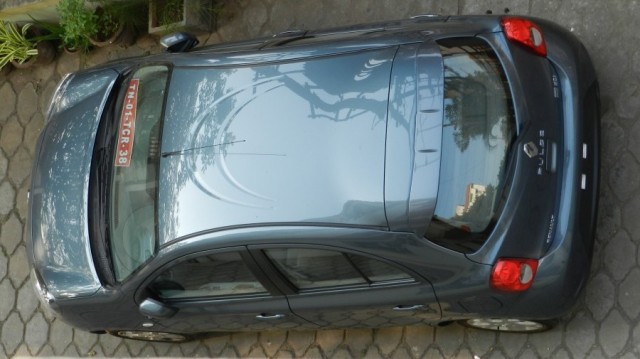
Renault Pulse : Boomerang Grooves on the roof

Now, back to the design. The roof has a twin set of deep grooves shaped like a boomerang. These roof line grooves work to reduce resonance in the cabin, reducing noise at all speeds. These grooves also work with the built in lip spoiler to reduce drag. The curvy side window shape is signature Micra and though there’s a chance you might get away with it in India, back in Japan and Europe people identify the Micra with this particular curve.

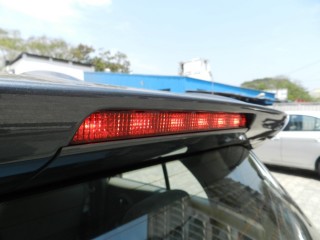
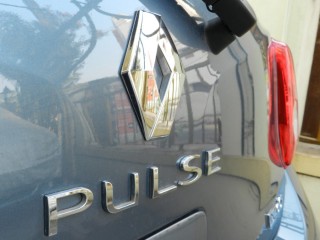
Renault Pulse : Roof spoiler with stop lampRenault Pulse : PULSE badging

The rear has the prominent Renault lozenge as well as the well spaced letters that spell PULSE. The space cut out from the rear bumper for the number plate, is much bigger on the Pulse and adds to the aggression at the rear. Conspicuous by its absence is the black request button on the boot lid that would unlock the boot when pressed, if you had the key fob in your pocket.

Equipment

Having spent quite some time with the car, I can assure you, that you would be hard pressed to find a car in this segment that is easier to live with than the Pulse. Tilt adjustable steering is available on both variants, and works like a charm. Speed Auto Lock on the Pulse is something the Micra doesn’t have. Drive over 15kph and the doors lock themselves.

Renault Pulse : Front 3/4

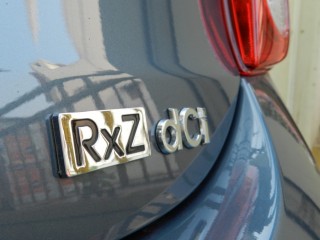
Rear wiper and washer is standard on both RxL and RxZ variants whereas rear defogger with timer is available only on the RxZ version. While the RxL version gets 165/70 spec tyres on 14 inch steel wheels with full wheel caps, the RxZ version gets the wicked looking 15 inch alloys with 175/60 section spec tyres.

Automatic climate control system, front fog lamps, and the Smart Access key are available only on the RxZ version. The Smart Access Key, might have 10 year-olds like us going ga-ga ( that isn’t trademarked now, is it?) over it but may not be the primary reason why most customers would buy a Pulse. We have to point out though, after getting used to the comfort of not having to remove the key at all from your pocket, if God forbid you switch cars, you might actually have to go through a phase of depression. It’s just that convenient and addictive.

Renault Pulse : Rear 3/4

The black request button on the door handle lets you lock and unlock the doors as long as the key is in the proximity of the car. After being pampered so much, you cannot fault us for wishing the boot would also unlock itself when you have the key in your pocket and hands full of groceries or photography equipment. Nevertheless, it isn’t too difficult again to press the black button on either front doors and then pop the boot.

With one new gadget comes the requirement for another. The presence of the Smart Access Key requires an additional alarm. This alarm goes off when the car is still in ignition and you walk away from the car, 3 feet to be precise. Ignore the alarm at your own peril and watch the ‘Immobilzer’ kick into action and the engine shut down.

On the topic of alarms, I cannot emphasize how much I hate the door open alarm. This is the ubiquitous alarm that you would find in every other clock manufactured from the land of the Great Wall. When it goes beep-bip-beep-bip-pause-beep-bip-beep-bip you cannot help but think of that morning when all you wanted to do was flick the alarm off the table and through the open window, but all you could do was press snooze and beg nobody in particular for a couple of more minutes of sleep.

There is one other alarm that goes off if you forget to disengage the handbrake when you set off.

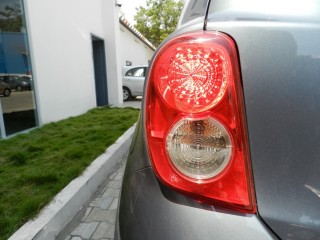
Renault Pulse : Redesigned tail lampRenault Pulse : RxZ dCi badging

A very mothering car, if I may say so.

Renault Pulse Roof DesignRenault Pulse Stunning HeadlampsRenault Pulse Side BlinkersRenault Pulse : ORVM

Mitsubishi Pajero Sport launched in  India

Go.Play. is how HM intends to market the new Mitsubishi Pajero in India. With the 2.5L 16 valve Common Rail DI-D engine with a variable geometry turbocharger, powering the new Pajero Sport, it shouldn’t be that hard. The High-Power 4D56 diesel powerplant is good for maximum power of 178 PS at 4000 rpm and 400Nm torque in the 2000-2850 rev range. The 5 speed manual transmission box is what we expect the Pajero Sport to come with, at least initially.

Pajero Sport unveiled by Mr. A Sankara Narayanan, Director, Hindustan Motors Ltd (left) and Mr. Masahiko Ueki, Executive Officer and Corporate General Manager of Asia and ASEAN Office, Mitsubishi Motors Corporation, Japan

Initially being launched as a CBU, Pajero Sport is priced at Rs. 23.53 lakh, ex-showroom New Delhi. For this price you also get Mitsubishi’s Super Select 4WD that lets you shift from 2H mode ( highway performance) to the 4H mode (traction, off road) without having to stop, up to a speed of 100km/h.

Mitsubishi Pajero Sport IndiaMitsubishi Pajero Sport India Launch 04

Double-wishbone front suspension with coil springs and a 3-link coil spring rear suspension, both with stabilizer bars working with the ladder-frame chassis endows it with the kind of off road ability that you associate with the brand ‘Pajero’. The rugged ladder-frame chassis is constructed with beams that are thinner, lighter steel while still providing all the strength of thicker beams, with less weight. Collapsible beads built into the frame absorb impact energy before it can reach the cabin interior.

Mitsubishi Pajero Sport India : DashboardMitsubishi Pajero Sport India : Interior

Available as a seven seater, the utilitarian Pajero offers flexible seating design. 60:40 split foldable second row, and flat folding third row make hauling extra luggage easy.

Turning radius of 5.6m makes parking slightly easier. 16 inch ventilated discs up front complete the package. The new Pajero Sport will be available in six colors: Medium Red, Quartz Brown Metallic, Cool Silver Metallic, White Pearl, Black Mica and Eisen Gray Mica. Missing from the list is the Deep Blue Mica which we’ve seen look nothing less than stunning on the Outlander.

BMW has taken the covers off its M3 based challenger that will compete in the Deutsche Touringwagen Masters or DTM series again this year after a many year hiatus.  BMW will fight it out with the Mercedes Benz and Audi cars that have traditionally taken part in the DTM series.  Though it has been a long time since BMW has raced in the DTM series, it has been racing in the World Touring Car Championships till recently apart from being in F1 till a couple of seasons ago.  BMW is confident that it can take the fight to the competition right from the first race.

BMW M3 DTM Car

Ferrari F12 BerlinettaWhat you see is a Ferrari and it is called the F12 Berlinetta and it replaces the Ferrari 599.  It has a potent V12 engine that puts out a gob smacking 730 PS of power from its 6.3 litre capacity and breach the 100 km/h mark in 3.1 seconds. This car has now been officially unveiled at the Geneva Motor Show but it had been previewed to its potential customers sometime ago.  Most Ferraris are sold on invitation and it is believed that Ferrari already has taken deposits for more than 350 F12 Berlinettas.  The horse is really prancing, one must say.


Mercedes AMG SL 63 This ladies and gentlemen is the new SL 63 with AMG magic worked on it.  It puts out 557 PS or 530 PS of power depending on the state of tune that an owner specifies. Mercedes Benz has adopted the lighter twin turbo engine of 5.5 litre capacity in place of the 6.2 litre naturally aspirated unit that did work on the previous SL 63  AMG.  More importantly it is lighter by a whopping 125 kilograms.  The car is capable of reaching 100 km/h in 4 seconds, giving the wind in the hair idiom an entirely new meaning.

A few days ago we brought you pictures of the facelifted i20 from Hyundai.  The car has been launched officially in Europe at the Geneva Motor Show.  For the European markets the i20 is likely to come with the new three cylinder 1.1 litre engine diesel engine which has been designated U-II.  One can surmise that the said engine is unlikely to come to India where Hyundai is still undecided about its diesel engine manufacturing strategy.Hyundai I20 Facelift

Audi has shown its new A3 three door hatchback, based on VW’s MQB platform which allows for different body styles by taking a modular approach.  For Europe, the A3 will be a three door hatchback since there is a significant market for that there.  But in other parts of the world including India Audi is likely to launch a saloon based on the same platform.  The saloon will have four doors and a boot, much like its sibling the Jetta which is sold under the Volkswagen name.  The front styling of the car is in line with the design trend that Audi has unleashed with the latest generation A6.

Audi A3 Hatchback

Craig Pollock is the maverick and ultra ambitious ex manager of Jacques Villeneuve who tried building the BAR team around the French Canadian driver with great failure.  But since he is a man with business acumen he has taken up the task of making Formula1 engines by the time the new engine regulations kick in, in a couple of years.  He has called his venture PURE and this company though located now in France, will use the Toyota F1 teams Cologne facilities in Germany to test his new V6 engines which he is sure will find takers.  His logic is that Toyota’s Cologne facilities are the best in the world to test an F1 engine on the bed and has therefore tied up with them to use the facility even though the company will continue to operate out of France.  This is interesting since Cosworth Engineering which has a proven record started supplying engines to four teams two years ago but are now down to two with Caterham and Williams having abandoned them for Renault engines.  So under the circumstances it will be interesting to see how the PURE engines will be received by Formula1 teams.  Pollock is no idiot, he must have a strong plan in place to have drawn investors to put their money into the venture.  Already the grapevine suggests that if PURE engines turn out to be good, McLaren could use them by branding them as McLaren engines.  Another rumour suggests that team Renault which has become Lotus this year could also pursue the strategy of calling PURE engines Lotus engines.  Danny Bahar is an ambitious man so one never knows with Lotus.

Marussia F1 Car Of 2012For the last two years this team was called the Virgin F1 racing team.  It experimented with CFD alone and eschewed the use of wind tunnels that were expensive.  It was believed that this was the best way to cut costs in Formula1.  Nick Wirth and his Wirth Research were shown the door last year and Marussia the super car maker from Russia who was till then the title sponsor took over the team from this year on and rebranded it the Marussia F1 Team.  Along with it they also signed up with McLaren for some help and they seem to have found that since Marussia is the only team other than McLaren to stay away from the ghastly looking stepped nose.  The thing is that the car was unveiled without it passing all the tests at Barcelona and since this year’s rules state that unless the car has passed all tests it cannot run in a test, it could not be tested at Barcelona.  But the good thing is that it has now passed the tests and therefore you can expect to see at the first GP of the season at Melbourne. It means that while all teams are racing, Marussia and HRT will be using the GP as a venue for testing.  That is not so great, right?

For those with some interest in how the Marussia road cars look here are the B1 and B2 super cars from the Russian manufacturer.

Marussia B1 A Russian Super Car 1Marussia B2