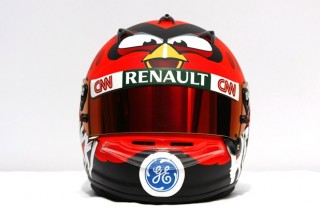
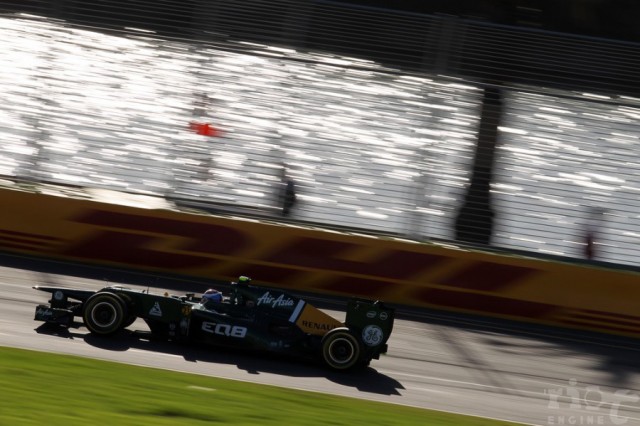
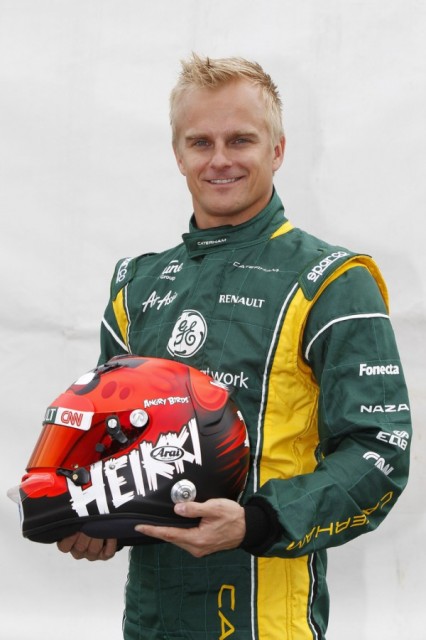
Heikki Kovalainen, car 20, chassis CT01-#3: “I’m reasonably positive about today. We didn’t get everything we could out of the car in Q1 but it felt better this afternoon than it did in FP3 and on my last quick lap I was held up by an HRT which probably cost me something like six tenths, but around this sort of circuit that’s one of the issues you have to deal with. There are quite a few positives to take out of today, the main one being that we know we’re much closer to the cars in front than where we finished last year, and now we have KERS and a better package overall, so I think tomorrow’s race could be really interesting.”
Vitaly Petrov, car 21, chassis CT01-#2: “For me that was an ok qualifying, maybe not quite what we had hoped for but we know there’s more to come. We obviously lost time yesterday, and today the performance run was cut short in FP3 with a hydraulics issue, but I pushed as hard as I could and I think my engineer and I are finding out more about how to fine tune the setup for me every time I go out on track so the more time I spend in the car, the better I’m feeling.”
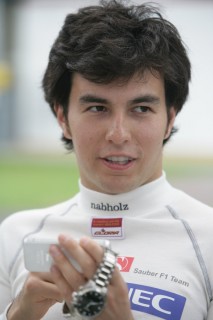
After a very positive first qualifying session in which Kamui Kobayashi set the fastest lap overall and Sergio Pérez was fifth, the second part of qualifying turned out to be disappointing for the Sauber F1 Team. Kobayashi struggled from a lack of grip and some traffic and could not repeat the lap time he did in Q1. The Japanese qualified 13th for the Australian Grand Prix in Melbourne. For Pérez Q2 was even worse as he could not do a flying lap because of a gearbox problem. The Mexican finished last in Q2, which means he qualified 17th overall.
Kamui Kobayashi, Sauber C31 Ferrari
“This is obviously disappointing. In Q1 I was really happy with the car and the grip and, of course, it felt great to have set the fastest lap. But then on my second run in Q2 with another new set of soft tyres I just could not find grip. I have no explanation for that, it felt totally different. I also had traffic in the last sector, but the main surprise was the lack of grip. Thirteenth is not really a nice position to start from and it doesn’t reflect the potential of the car. However, we will try to achieve the best possible result tomorrow.”
Sergio Pérez, Sauber C31-Ferrari
Sergio Pérez“We made some set-up changes to the car today and in Q1 I was busy adapting my driving style a bit. In Q2 I knew exactly what to do but then I could not shift anymore because of a gearbox problem. It is a true shame as there was a lot more to come from the car and from myself. Starting from 17th will make it very difficult to get a good result on Sunday. I will do my best.”
Peter Sauber, Team Principal:
“After a very promising start to qualifying, the result is obviously a big disappointment. Kamui was quickest in Q1 with a time that would have been seventh best in Q2. Unfortunately things didn’t work out for him in Q2 and he was out. Sergio suffered a gearbox failure and didn’t have the chance to set a time in the second qualifying session. The positive thing is we confirmed that our car is fast, which gives us hope for the race, although overtaking is not easy here.”
Michael Schumacher and Nico Rosberg qualified in fourth and seventh places respectively at the end of an exciting qualifying hour for the Australian Grand Prix at Albert Park in Melbourne.
Michael and Nico progressed smoothly through Q1, with Nico completing one run and Michael two on the primes
Their first runs in Q2 were aborted due to a red flag, before the pair finished in P1 and P2, using option tyres
Two option runs in Q3 saw Michael finish in P4, with Nico in P7 after making a small mistake at turn three
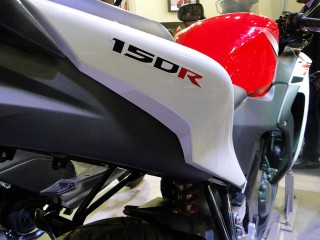
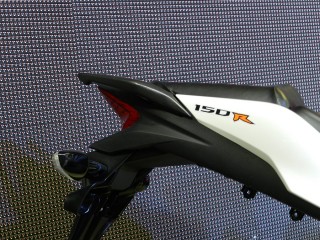
HMSI has finally announced the prices for the surprise launch at the Auto Expo 2012, the CBR 150R. The CBR 150R will be available in 2 variants : Standard and Deluxe.
Standard Variant : Available in colors of Black with Pearl Sunbeam White & Sports Red with Pearl Sunbeam White priced at Rs 1,16,385 (ex-showroom, Delhi)
Deluxe variant: Blackwith Candy Palm Green & Vibrant Orange with Pearl Sunbeam White colour at Rs 1,17,385
Bookings have already begun, expect the motorcycles to hit the showrooms by the end of March.
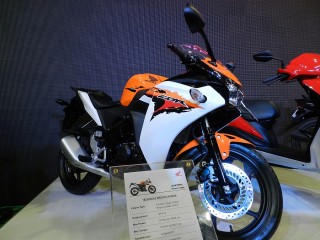
In the footsteps of the new VFR, and subsequent launches from Honda, the CBR 150R also has dual layered full body cowling, which Honda says improves aerodynamics and performance of the bike. CBR 150R also has the characteristic Y shaped Headlight, short pentagonal muffler and the taken for granted digital meter.
The CBR 150R is powered by a DOHC 150cc engine which produces peak power of 18 BHP @ 10,500 RPM and peak torque of 12.6 Nm @ 7500rpm. Adding to the sports performance, CBR 150R has twin tubular frame, liquid cooling and Honda’s PGM-FI.
CBR 150R comes with Front & Rear Disc brakes, Mono-Suspension and wide front and rear tubeless tyres.
Advance O2 sensor ( closed loop fuel injection) and air inductor leads to low emissions from the bike says Honda.
CBR 150R will be available in 2 variants – Standard and Deluxe. The Standard variant will be available in 2 shades – Black with Pearl Sunbeam White and Sports Red with Pearl Sunbeam White. The Deluxe model (with special sporty graphics) will be available in Black with Candy Palm Green and Vibrant Orange with Pearl Sunbeam White colour.
Standard : CBR 150R in Sports Red with Pearl Sunbeam White
Deluxe : CBR 150R in Vibrant Orange with Pearl Sunbeam White colour
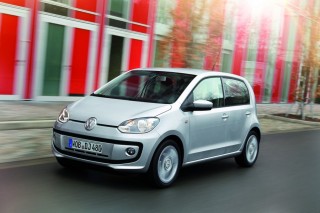
In addition to the eco up! Volkswagen will also present the four-door version of the ‘up!’. The four-door will be powered by the same engines – the 60PS and 75PS 1 litre petrol engines. The combined fuel consumption as a BlueMotion technology version with features like Stop/Start system, battery regeneration and tyres optimised for low rolling resistance is advertised as : 4.1 l/100 km (60 PS) and 4.2 l/100 km (75 PS). Equipment versions will still include the take up!, move up!, high up!, black up!, white up! variants. There is no change in the exterior dimension of the 4 door car.
While the lower window line of the two-door rises towards the rear near the C-pillars, it forms a straight line on the four-door car. The crisp and short body overhangs are also distinctive on the four-door. The rear doors open wide and offer comfortable entry – including for adults. The four-seat, four-door car offers the same good interior space as the two-door, and the amount of space is remarkable given the vehicle’s size.
The up! has been quite the rage in Europe, registering highest number of bookings in Germany, in its class. Optional features like City Emergency Braking improve safety of occupants. This system is active over a speed range of 5 to 30 km/h.
As an alternative to the standard 5-speed manual gearbox, for the first time Volkswagen will be offering these two petrol engines with a new, automatic 5-speed gearbox as an option over the course of the year. In May, the four-door version will arrive at dealers in Germany whereas the rest of Europe will get it by early summer.
Of course, any speculations of this car or the Skoda Citigo coming to India have been put to rest, thanks to a statement from Skoda Auto.
Delta wing is a term that comes from aircraft design where the wing planform (not a typo) is in the form of a triangle. Usually aircrafts like these do not have horizontal stabilizers (tails) and are famed for efficient high speed speed flight. HAL Tejas is one example that pops to mind, that makes use of the tail-less delta wing configuration. Ben Bowlby, a Briton who started building and racing his own cars at a very early age is bringing his interpretation of the delta wing design to motor sports.
Ben Bowlby and Riot Engine have one thing in common. We believe there has been little, if any innovation over the past few years in racing, case in point Formula 1 where rules clearly stipulate how many cylinders can be used, what metals and composites to use, the angle of the cylinders and size of the intakes and so on.
Ben Bowlby, the man who came up with the concept of DeltaWing and designed it explains : “It [DeltaWing] was born out of the fact that motor racing, particularly in the States where I’ve been based for some years, has become dominated by spec formulae – which stifle design and innovation. The rules are so tight that the cars are basically all the same. I was witnessing the decline in interest in motor racing, seeing my own kids growing up and asking why they had to watch the race as ‘it was so boring’. I realised that I was part of a dinosaur industry… or one at least at risk of becoming a dinosaur.”
Bowlby wanted to build a racing car concept that would be more aligned with the R&D that a automotive manufacturer undertakes for their road cars. Bowbly understood the need to reduce the costs involved in motor sports. Focus was also reducing aerodynamic drag, reducing weight massively, and the need for a downsized engine that could deliver outstanding performance in spite of its size while being as efficient as possible.
The final product is the Nissan DeltaWing unveiled on the 13th of March, 2012. The DeltaWing is unlike any other racing car currently on track. The driver sits well back in the car, almost over the rear axle and looks ahead down a long, narrow fuselage to narrow twin front tyres, specially created for the car by tyre partner Michelin. With a rear-mounted engine, the car has a strong rearward weight bias, which makes it highly manoeuvrable, while its light weight and slippery shape make it far more efficient, says Nissan.
DeltaWing started out life as one of the prospective choices to replace the ageing Dallara chassis in the IZOD IndyCar Series. When the DeltaWing concept was rejected for the 2012 season, even though it met all the requirements put forth by IndyCar’s ICONIC Committee, Bowlby decided to take his creation elsewhere. Meetings with Don Panoz, one of the officials at American Le Mans Racing, followed up quickly with the organizers of Le Mans 24 Hours Racing, including Jean-Claude Plassart, President Automobile Club de l’Ouest (ACO) soon gave the DeltaWing new life.
Getting involved next in the project was Dan Gurney from All American Racers who would build the DeltaWing and Duncan Dayton who owns Highcroft Racing, the team that will be fielding the DeltaWing as an entrant at Le Mans. In June 2011, ACO invited DeltaWing to take its start from ‘Garage 56′, the spot in the pitlane reserved for experimental cars. Of course, a car designed for the IndyCar series didn’t meet the regulations of Le Mans 24 Hours, and so will race with the number 0, ineligible for any podiums.
It helped that Dr. Don Panoz, the founder of the American Le Mans Series is the managing partner of Project 56, which has been set up to get DeltaWing to Le Mans.
Michelin was announced as the first technical partner, followed by key suppliers including EMCO Gears (gearbox) and Performance Friction for the brakes. Until March 2012, DeltaWing was still looking for a technical partner who would provide the engine.
“As motor racing rulebooks have become tighter over time, racing cars look more and more similar and the technology used has had less and less relevance to road car development. Nissan DeltaWing aims to change that and we were an obvious choice to become part of the project,” said Andy Palmer, Executive Vice President, Nissan Motor Co., Ltd.
“But this is just the start of our involvement. Nissan DeltaWing embodies a vast number of highly-innovative ideas that we can learn from. At the same time, our engineering resources and commitment to fuel efficiency leadership via our PureDrive strategy will help develop DeltaWing into a testbed of innovation for Nissan”.
“This announcement gives Nissan the opportunity to become part of a ground-breaking motorsport project and one which could shape the future of the sport,” he added.
Nissan stepped in primarily under the direction of Darren Cox, General Manager, Nissan in Europe. “We see much of our own character and spirit in DeltaWing’s engineering innovation. It’s a great fit. We are making a bold statement here, and it’s one that reflects our growing confidence in Europe. We had a record year in 2011, while globally we handled big problems like the Japanese earthquake and the floods in Thailand significantly better than our rivals. We are right to be confident. Besides, backing a project like this once it’s successful is too late. We see something really innovative here and we are prepared to take a calculated risk to help take it to the next step.” explained Darren Cox when asked why Nissan is confident enough to back the DeltaWing project until the car proves itself.
Key Design/Engineering Features
One quick glance and you know this racing car is different. Very different. The rear track width is about 70 inches whereas the front track is only 24in! DeltaWing Racing Cars says this shape reduces drag by half compared to conventional IndyCar racing cars. DeltaWing has a very small frontal area and the design uses a twin vortex underbody downforce system. There are no wings up front that would be influenced by the ‘wake’ from the lead car. This wake from the lead car passes over the car behind with minimal disruption to the underbody downforce performance. The wheels are also shrouded, which again reduces drag and improves safety.
The DIG-T race prepped engine, a 1.6-litre four-cylinder engine, featuring direct petrol injection and a turbocharger will power the DeltaWing in its Le Mans debut on the 16th and 17 June 2012. The DIG-T engine is expected to produce around 300 bhp and maximum torque output of 312Nm, sufficient to give Nissan DeltaWing lap times between LMP1 and LMP2 machines at Le Mans, despite having only half the power of those conventional prototypes. It features the same technology found in Nissan road cars, such as the range-topping Nissan Juke DIG-T says Nissan.
While conventional wisdom says a 50:50 weight distribution works wonders for handling, DeltaWing takes a different approach aiming for a more rearward bias than traditionally seen with 72.5% of the mass on the larger rear tires. Also 80% of the aerodynamic down force acts on the rear of the car which the firm says will improve inline traction under acceleration. So what’s keeping the front of the car on the ground?
Will there be any grip at all for the front tyres? Won’t such a car understeer? While we do have to wait until the DeltaWings debut to find out, Bowlby explains “It’s got a very benign, but exciting, handling characteristic in that it is an oversteer limit vehicle. In other words, when you reach the threshold of grip the tendency is towards oversteer. This is unusual in a rear-engined racing car which, unless provoked, is normally an understeer limited vehicle with an inevitable snap oversteer event at the limit of control. In our case we will have progressively increasing oversteer, allowing the driver to counter steer and maintain that threshold condition in a very controlled way, something you can’t do in a car that understeers. From a racing driver’s standpoint understeer is an unstable condition because you can’t correct it other than by slowing the car and starting again, but with controlled oversteer – intrinsic in the layout of DeltaWing – it’s much more controllable”.
DeltaWing is also unique amongst today’s racing cars since 60% of braking force is generated behind the center of gravity. Locking propensity of the inside front wheel on corner entry is greatly reduced says the company, but does not explain how. Advanced computer modeling of structures, impact energy management, aerodynamics, vehicle dynamics and tires has been used to develop the virtual DeltaWing car and its performance has been simulated on each configuration of race track.
Modern advanced materials and CNC construction techniques have been applied to achieve gains in light weight structures and occupant safety. Having started out life as a replacement for the existing IndyCar Dallara chassis, the focus was on improving driver safety. The driver position, restraint layout and energy absorbency facility have been designed with the latest data on ‘survival criteria’.
The DeltaWing also has innovative gearbox electronics. The car can run a torque vectoring system, which is unusual on a racecar. “Normally it’s banned but this car is outside rules and regulations so we can use this technology, which is relevant to our road cars (Juke and GT-R have advanced Torque Vectoring systems). By working very closely with them and embedding our engineers in the team, we can learn from them. People talk about moving technologies from F1, but in truth that hasn’t happened recently; indeed technology that started on road cars is now in F1 (Hybrid or KERS). However, Nissan sees a number of things on this car that could have a direct application on our road cars.” says Darren Cox.
“It’s a five speed sequential ‘box built for racing, but, as on Nissan Juke, features torque vectoring technology to control the torque going to each wheel to enhance the cornering, stability and performance. We will be interested to see how this technology performs in a racing environment with particular regard to durability. It’s early days, of course, but I am anticipating deep technical exchanges between NTCE and DeltaWing.” explains Jerry Hardcastle VP, Vehicle Design and Development, Nissan Europe.
The DeltaWing will also have FIA spec carbon fibre monocoque. Inconel four into one turbo solenoid controlled wastegate actuation takes care of exhaust duties. The rest of the body is of course, carbon composite.
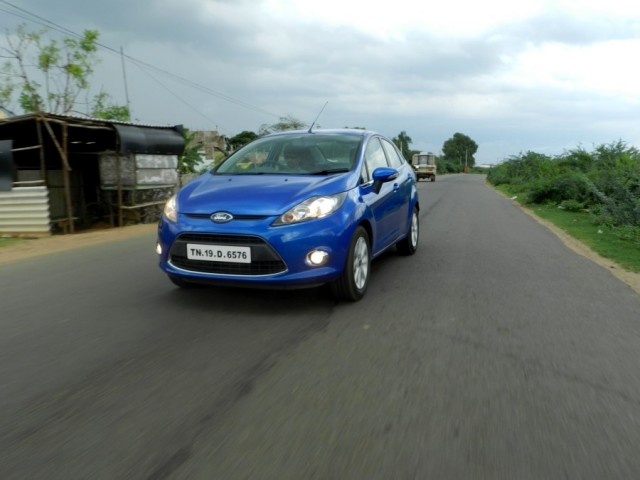
Ford India has introduces an all-new variant : ‘Ambiente’ that will be the most affordable all new Fiesta. The Ambiente retains equipment including the Electric Power Assisted Steering (EPAS), driver airbag, height adjustable driver seat, ABS, electric outside rear view mirrors with integrated turn indicators, tilt adjustable steering, guide me home headlamps, front seat belt height adjuster and adjustable rear headrests. The Ambiente variant will have only the 1.5 Ti-VCT Petrol engine with the manual transmission.
The simplified 2012 Ford Fiesta line-up now comprises two petrol, two diesel and two automatic trims.
1.5 TiVCT Petrol Ambiente : Rs. 723,000
1.5 TiVCT Petrol Titanium+ : Rs. 885,300
1.5 TiVCT Petrol Style AT : Rs. 885,300
1.5 TiVCT Petrol Titanium+ AT : Rs. 970,300
The Titanium+ version gets features that were previously standard like Cruise Control, Rear Park Assist, Bluetooth®voice control, auto power-fold mirrors, reverse parking sensor and chrome front grille, in addition to the six speaker audio system.
The Ambiente versions misses out on in car entertainment equipment while the Style AT and the Style diesel get the 6 speaker system with AUX only, whereas the top end Titanium+ variants in the lineup get the whole shebang.
It is a bit disheartening that a manufacturer who wanted to revolutionize the game by bringing best in class features as standard has been pushed to accommodate customers who would give up on equipment found in higher segment cars for a lower price. We do appreciate Ford for retaining safety features like driver airbags and ABS with EBD. ESP is still available only on the PowerShift AT variants
Read our comprehensive review of the Ford Fiesta here.
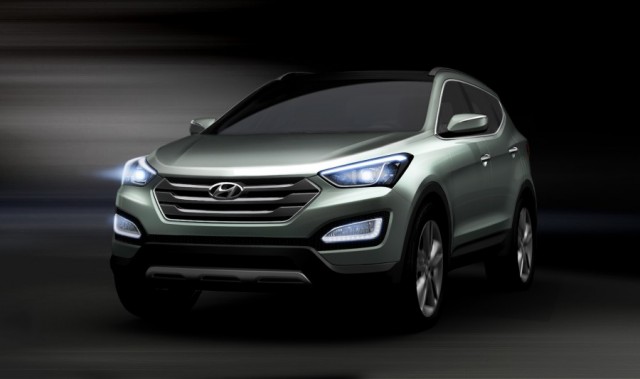
Codenamed DM, the Hyundai Santa Fe will premiere at the New York International Auto Show in early April. Hyundai has decided to whet our appetite with these first images showing fluidic direction the Santa Fe’s design has taken. The Santa Fe has been designed around three important traits : Refinement, Smartness and Practicality.
Hyundai will keep the name “Santa Fe” for the new vehicle, it would be foolish not to, considering the brand following the Santa Fe has in the USA as one of the SUVs with highest safety ratings and reliability. The all-new Santa Fe, which is entering its third generation, has reached worldwide cumulative sales of about 2.56 million units 2000 debut says Hyundai.
The Santa Fe design is based on a design concept ‘Storm Edge’, which is inspired by the strong and dynamic images during a storm. This design concept will of course, stay true to Hyundai’s ‘Fludic Sculpture’ philosophy.
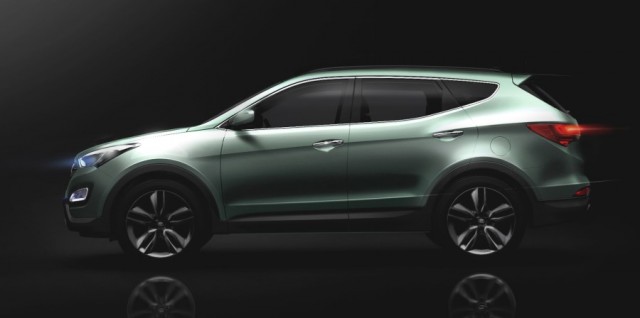
The third-generation Santa Fe features sophisticated and refined lines, which are in harmony with bold and voluminous surfaces, completing a more aggressive and classic look than its predecessor.
The design adopts the hexagonal grille – a key design cue of the Hyundai family look – a two-tone voluminous bottom car body and wider front and rear bumpers, creating a futuristic and urban-style SUV image.
Dynamic side character lines give a more aerodynamic feeling, while emotional details expressed on the exterior design deliver a premium image, suggesting a new design direction for Hyundai’s next-generation SUVs says Hyundai.
We will of course keep you posted when we get updates from the New York Auto Show.
Shown here is the Highline variant, not the Comfortline
Vento Diesel Variant has now introduced the Comfortline variant with the 1.6 litre Diesel powerplant. The Comfortline variant slots in between the Trendline and Highline trim levels.
The Vento Diesel Comfortline is on sale at all Volkswagen dealerships at Rs. 8.56 lakhs ex-showroom Maharashtra and Rs.8.74 lakhs at all other showrooms across India.
The Vento Diesel Comfortline has features like body coloured exterior door handles and mirrors, radio with CD, MP3 player music system, rear center arm rest, fog light front and rear, height adjustable driver seat, electrically adjustable outside rear mirror over and above all the features available in the Vento Trendline.
What you would be skimping on if you’re not getting the Highline model would be 15″ alloys, 185 section tyres, USB connectivity for the audio system and the one that bothers us the most, safety features like airbags and ABS.
Commenting on the introduction of the Vento Diesel Comfortline, Mr. Neeraj Garg, Member of Board & Director Volkswagen Passenger Cars said “Since the introduction of the Vento, we have received requests for the mid level trimline and it is our pleasure to be able to provide the customers with their desired car.”
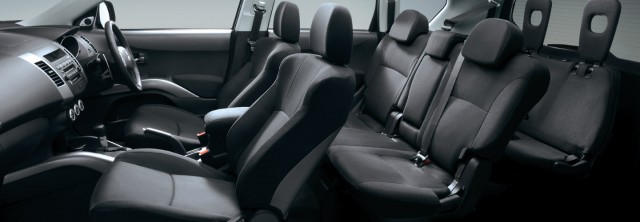
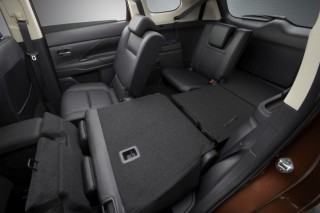
The Mitsubishi Outlander has been a proper five seater in India for a while now, with a fairly large boot. Mitsubishi has decided its time to bring in the dreadful third row jump seats. The 7 seater variant costs one lakh lesser than the 5 seater variant based on information provided by user sidindica from Team Bhp. The seven seater variant will supposedly be called the Outlander LX and priced at Rs. 19,95,000 ex showroom Delhi.
While there is no doubt it will sell in India, we wonder what Mitsubishi is doing with this move, when elsewhere the 2013 Mitsubishi Outlander will debut with the P-HEV powertrain and a proper 50:50 split third row seats.