Harley Davidson Fat Bob Launch India 01

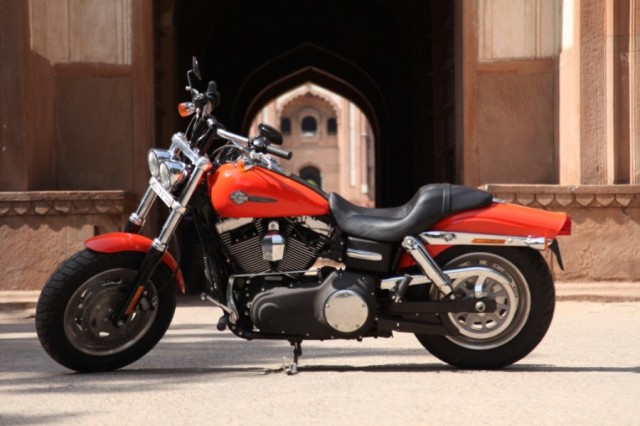
The newest addition to Harley Davidson’s Dyna family in India, the Fat Bob has been launched in India as a CKD ( completely knocked down ) unit. This is the sixth CKD from Harley Davidson India giving one additional box to tick for the Indian motorcycle enthusiast.

The Fat Bob is a Fat Bob thanks to the really wide front end with the 49mm tubes and 130mm section tyre, and the signature bobtail fender at the rear. The twin headlamps up front just beneath the triple clamp swathe this Dyna with more attitude than any other Harley in the Dyna family.

Harley Davidson has unfortunately decided to power the Fat Bob with last year’s Twin Cam 96 engine shared with the rest of the Dyna family in India while internationally the Fat Bob gets the newer Twin Cam 103. It makes perfect business sense considering the Twin Cam 103 engine would throw the benefits of CKD right out the window. It’s just as well, as more than one reviews have pointed out that one of the weaker points of an otherwise fantastic street brawler is the lack of feel at the front braking lever and lack of bite at the rear. ABS offered on the Fat Bob should make braking less terrifying. Just as many reviews have also pointed out that the relatively compact wheelbase makes changing direction and ultimately handling fantastic on the Fat Bob.

The air cooled Twin Cam 96 engine delivers max. torque of 126 Nm @ 3500 rpm of peak torque. The 1585 cc engine is mated to a six-Speed Cruise Drive transmission providing smooth, quiet shifting and reduced engine speed on the highway, so you get better road speed at lesser revs. Unlike the other models of the Dyna family, the Fat Bob gets the ‘Tommy Gun’ 2-1-2 exhaust which Harley Davidson says increases exhaust flow to provide heart stopping performance, signature Harley-Davidson rumble and big style.

Mr. Anoop Prakash, Managing Director, Harley-Davidson India said “Along with being an ideal motorcycle for India attitudes and roads, the introduction of the Fat Bob®, our newest addition to our lineup available through CKD, is further proof of our ability to move ahead of the marketplace by listening to our customers. The launch of the Fat Bob® as CKD will allow more customers to experience our Dyna range at an attractive price point. At Harley-Davidson India, we will continue to adopt and invest in strategies that make our products and ownership experience accessible to more enthusiasts and customers in India.”

Now we sit and twiddle ours thumbs waiting for Polaris India to bring home the Victory Judge, which seems to have had the Fat Bob in its sights right from the get go, maybe right from the moment the Victory’s designers first laid pencil on paper!

Harley Davidson Fat Bob Launch India 02

The daytime running lamps seem to have become more sinewy with lots of texture. The shape retains the new age E-Class design language. Expect full LED lighting as an option at least. The new Mercedes Benz E-Class is also expect to get a new front face, although little indicates any changes to the interior.

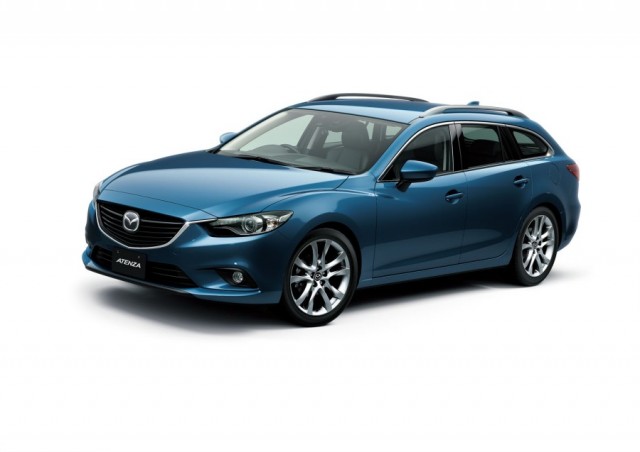
Mazda Atenza/Mazda6 : Sedan & Wagon 01

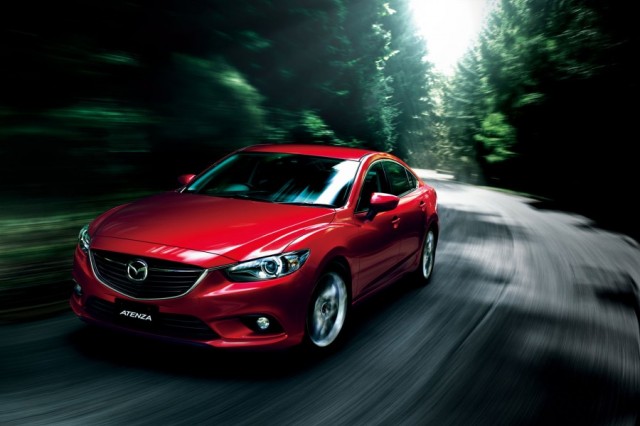
Mazda did almost give it away with the Mazda Takeri Concept Car previewed at the Tokyo Motor Show. The Mazda6 stays true to a great extent with the concept but has subtle differences. The company’s new design language is ‘KODO-Soul of Motion’ seen on the Shinari Concept.

Mazda Atenza/Mazda6 : Sedan & Wagon 02Mazda Atenza/Mazda6 : Sedan & Wagon 03

Mazda’s SKYACTIV TECHNOLOGY takes its place in all variants. The engine line-up includes the SKYACTIV-D 2.2, a highly-efficient and powerful new-generation clean diesel engine and the gasoline SKYACTIV-G 2.0 and SKYACTIV-G 2.5 All models are equipped with i-stop, Mazda’s take on the stop start tech, and i-ELOOP, a new brake energy regeneration system. Both the sedan and the wagon featuring the clean diesel engine achieve the best fuel economy ratings (22.2km/L with the manual transmission )in their class, with the exception of hybrids.

Mazda Atenza/Mazda6 : Sedan & Wagon SKYACTIV G 2.5Mazda Atenza/Mazda6 : Sedan & Wagon SKYACTIVE D 2.2

SKYACTIVE-G 2.5 and the SKYACTIVE-D 2.2

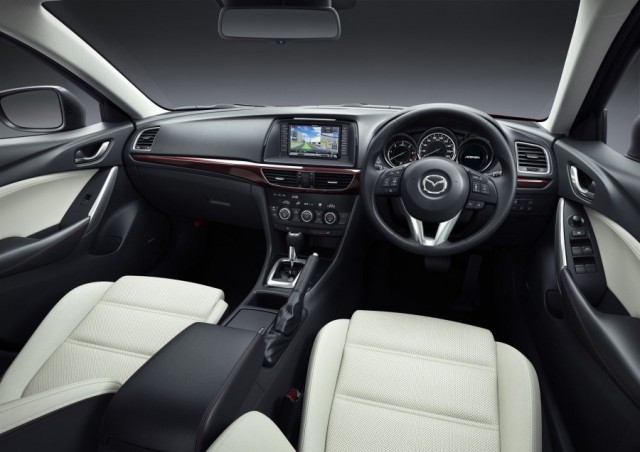
The all-new Atenza also incorporates i-ACTIVSENSE, a series of advanced safety technologies designed to support safe driving. i-ACTIVSENSE uses cameras and millimeter-wave radars to detect obstacles and apply brakes to avoid collision, alert the driver when the car drifts out of lane and also stops the car from launching if the driver mistakenly steps on the accelerator instead of the brake. Mazda says the driver’s field of vision has been widened by moving the A-pillar rearward and positioning the tire house farther forward has allowed a natural pedal layout with no offset.

Mazda Atenza/Mazda6 : Sedan & Wagon
Mazda Atenza/Mazda6 : Sedan & Wagon Black
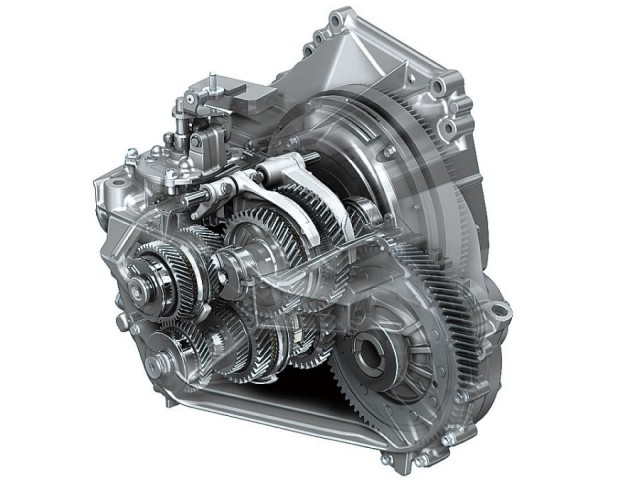
Mazda Atenza/Mazda6 : Sedan & Wagon Manual Transmission
Mazda Atenza/Mazda6 : Sedan & Wagon Interiors 06
Mazda Atenza/Mazda6 : Sedan & Wagon Interiors 05
Mazda Atenza/Mazda6 : Sedan & Wagon 04

Mazda has priced the new Mazda6 between 2500000 and 3400000 Yen (around 30,000 to 42,000 USD) and expects to sell 1000 units a month, in Japan.

BMW Group DesignworksUSA ePatrol Interior

After the brute of an SUV we saw from Mercedes-Benz for the 2012 L.A. Design Challenge, BMW has now unveiled its concept. BMW subsidiary DesignworksUSA calls it’s design solution the ePatrol.

BMW says their designers looked into how current patrols function, especially drawing inspiration from the relationship between a patrol officer and a cop canine.

BMW Group DesignworksUSA ePatrol 03

The are two important elements to the design of the ePatrol. One, a modular structure and two, drone technology. The idea is to enhance both teamwork and accessibility. The main structure of the ePatrol can deploy three drones of which one is capable of flight (FPU – Flying Pursuit Unit) and the other two (APU – Advanced Pursuit Unit) are land based. The top drone above the main structure is the flying drone, while the other two are one wheel vehicles attached to the rear. The patrol officer in the car can deploy either of the drones to track the suspect in pursuit situations where heavy traffic holds back the patrol vehicle. The APU drones have bulletproof covers that are capable of using the heat from the highway to provide power to the APU engine. BMW calls this tech of the future Skin Energy Recovery System. The other body panels on the ePatrol use the same tech to power the patrol vehicle of the year 2025. BMW stresses that even when all three drones are activated, the main structure can continue to function normally. If you have played the Need for Speed franchise of games, you know a patrol vehicle isn’t complete without EMP. All drones can send an electromagnetic pulse to another vehicle to disable it. As you would expect, the design team worked to create powerful stance with an aerodynamic aesthetic and flowing lines.

BMW Group DesignworksUSA ePatrol 04
BMW says the interior design was inspired by a woven structure made of aluminum wire inside carbon fibre and polymer resin. The seats form a significant connection between driver and the vehicle architecture. As you would expect from a vehicle of the future all interfaces are touch based. There are no windows on this car to ensure the greatest levels of protection for the occupants. A large screen takes the place of a windshield. On the exterior the space normally taken up by a windshield is used to display critical information such as accidents or route information to the public.

BMW Group DesignworksUSA ePatrol 02

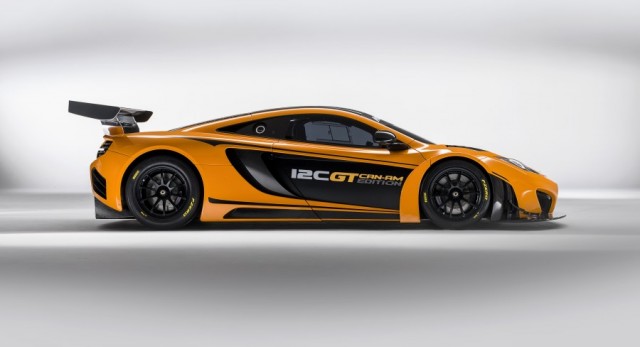
McLaren 12C GT Can-Am Edition

McLaren GT has confirmed plans for a limited production run of the track-focused 12C GT Can-Am Edition after its successful premiere at the Pebble Beach Concours d’Elegance.The limited edition track-special pays tribute to Bruce McLaren and Denny Hulme who successfully raced a series of McLaren models in the Can-Am series winning championships for Bruce McLaren Racing.

The production run will be limited to 30 numbers. While you may be able to spot similarities with the 12C GT3 racer, the Can-Am edition is not subject to the racing regulations that the 12C GT3 has to abide by. The 12C GT Can-Am Edition will be powered by McLaren’s 3.8-litre twin-turbo V8 engine with a unique engine calibration, and optimised cooling system to increase the power output to 630hp, making the 12C GT Can-Am Edition the most powerful 12C produced to date.

McLaren 12C GT Can-Am EditionMcLaren 12C GT Can-Am Edition

A large carbon fibre rear wing demandsyour undivided attention. The wing offers an increase in downforce by 30 per cent. Carbon fibre door mirror mounts and covers, engine cover vents, side radiator intake vanes, sill covers and badges distinguish it from the 12C GT3.

The 12C GT Can-Am Edition sits on black satin-finished forged lightweight racing alloy wheels, and Pirelli racing tyres.

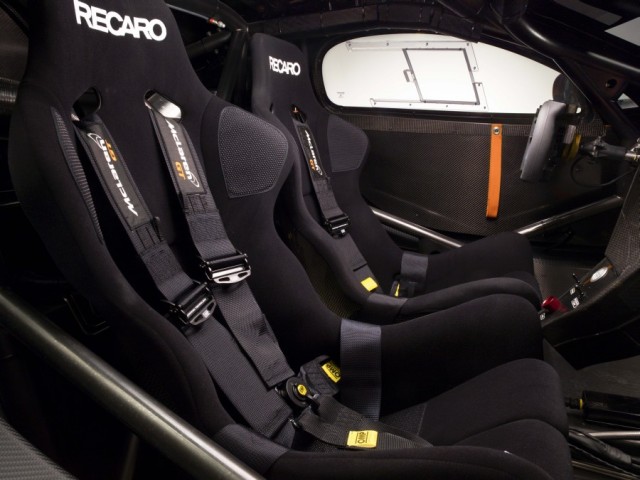
The shape and grip of the steering wheel is derived from the McLaren MP4-24 Formula 1 car. An integrated motorsport air conditioning system is incorporated into the bespoke lightweight carbon fibre dashboard adding a touch of racer comfort.

Andrew Kirkaldy, Managing Director of McLaren GT explained: “The 12C Can-Am Edition concept shown at Pebble Beach earlier this year was purely that, a one-off design study. However, the reaction and response following the unveil was remarkable. It is a real testament to the performance and results of the McLaren GT customer teams this year, still only in the debut competitive season, that there is such a strong demand for this type of track-day special.”

Kirkaldy continued: “The Can-Am name holds significant historical provenance for the McLaren brand, and those early racing cars of Bruce McLaren and Denny Hulme were truly incredible machines. To be able to produce this unshackled limited edition version of the 12C, I think is a fantastic way to resurrect a glorious chapter in the company’s past.”

McLaren 12C GT Can-Am Edition

12C GT Can-Am Edition :  McLaren MP4-24 Formula 1 style wheel
Production begins from March 2013 and each 12C GT Can-Am Edition will cost £375,000.

Mercedes-Benz Ener-G-Force 01

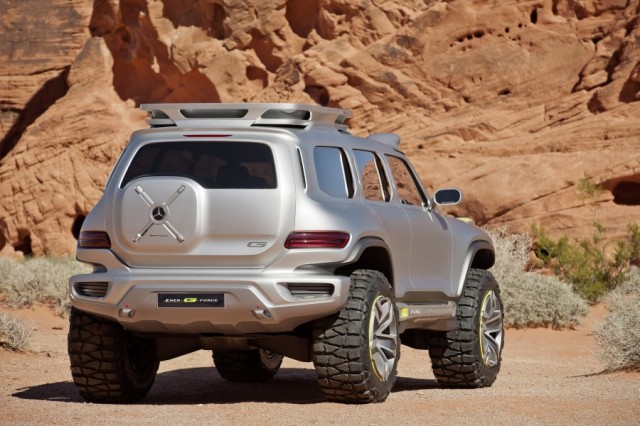
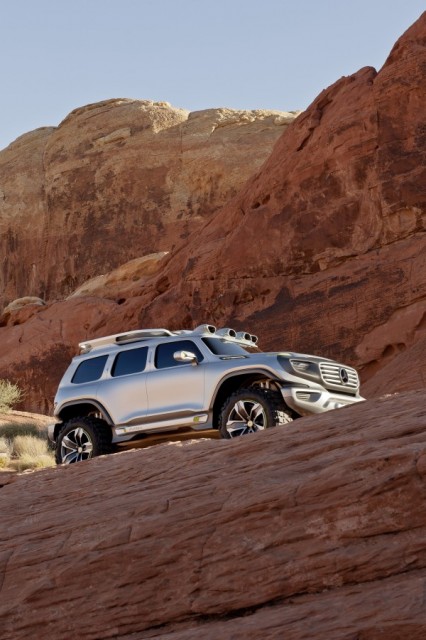
“The gigantic wheels guarantee the right of way even where no way exists.” That sounds like the perfect recipe for a proper police vehicle of the future. Modeled after the G-Class, the Ener-G-Force for the Los Angeles Design Challenge is nothing more than a concept, at this moment of time. The blokes at the design studios of Mercedes-Benz in Carlsbad, California thought it a hoot to be designing tomorrow’s off-roader, that they went all out and built a civilian 1:1 scale model for your drooling pleasure.

The gigantic wheels guarantee the right of way even where no way exists

Mercedes-Benz Ener-G-Force 03

Gorden Wagener, Director of Design at Mercedes-Benz Cars: “The Ener-G-Force is the vision of an off-roader that, while reflecting tomorrow’s adventures, also invokes the genes of the Mercedes-Benz off-road icon, the G model. Modern and cool, it could also be a clue about a new beginning for the off-road design idiom of Mercedes-Benz”.

There are essentially two versions of this Teutonic masterpiece. The “Highway Patrol Vehicle 2025” is the entry that Mercedes-Benz will be showing at the Los Angeles Design Challenge, and the other the civilian version shown here, which is just as formidable. The styling features of these models are a radical reinterpretation of the design features of the classic that is the G-Class.

Ener-G-Force Designer Hubert Lee says “Of course we wanted to take a clear step forward, but we also wanted the G’s characteristic features”.

Mercedes-Benz Ener-G-Force 04

The Ener-G-Force has a similar profile, however with a high shoulder line and scaled-down glass areas. Every surface on the Ener-G-Force is designed to express intensity and tension, just the right recipe for a police vehicle that instills confidence in civilians and fear in the hearts of offenders. The Ener-G-Force has an expressive radiator grille that incorporates the headlamps. LEDs in the headlamps are positioned to form the shape of a G. The front indicators and position lights are mounted on top of the fenders, again a nod to the modern day G-Class.

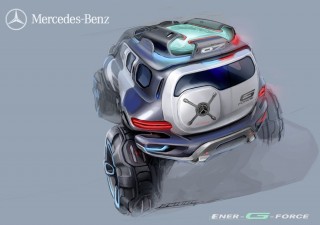
The mounted roof, another signature G Class feature, as is the three part glass area are carried over to the Ener-G-Force. The 20-inch rims give the Ener-G-Force a powerful and towering stance. Notice the rear of the Ener-G-Force where there’s a slight bump on the rear door? This is a pull out compartment, which is a symbolic interpretation of the spare wheel carrier of the classic G-Class. This pull-out tool box can hold a wide variety of equipment items that can be retrieved easily without having to open the whole liftgate.

Mercedes-Benz Ener-G-Force "Highway Patrol 2025" Front 3/4
Mercedes-Benz Ener-G-Force "Highway Patrol 2025" Rear 3/4
Mercedes-Benz Ener-G-Force 05
Mercedes-Benz Ener-G-Force 08
Mercedes-Benz Ener-G-Force 07
Mercedes-Benz Ener-G-Force 09

Not just form, function too

Hubert Lee and the Mercedes-Benz Ener-G-Force

The Ener-G-Force is powered by fuel cells in turn powered by hydrogen. Recycled water stored in tanks on the roof is converted to hydrogen by the “hydro-tech converter”. The batteries, or whatever they are called in 2025 are housed in the side skirts. Changes in the colour of the illumination of the side skirts indicate the operating and charge status of the energy packs. The Ener-G-Force is designed to nothing but water and have an operating range of about 800 kilometres. Propulsion is via four motors mounted in the hubs. As we’ve seen in the electric cars of today, output for each individual wheel can be adjusted to suit the terrain to be traversed. A ‘Terra-Scan’ 360-degree topography scanner on the roof permanently scans the surroundings and uses the results to adjust the spring and damping rates as well as other suspension parameters for maximum traction! A roof carrier and additional lamps are integrated into the roof almost looking like they were carved from a single piece.

Fret not petrol heads, while the future may definitely be green, nobody said the vehicles have to look as tame and comforting as fresh laundry.

Mercedes-Benz Ener-G-Force "Highway Patrol 2025"

Audi Q7 Aurangabad Production 02

“The overall market scenario is challenging. The rise in input cost, depreciating rupee as well as continuous increase in fuel prices have made us re-evaluate our pricing strategy in India and increase the prices of the entire range. However, we are offering the customers customized and innovative finance options from Audi Finance which will make their purchase more attractive.”, said Michael Perschke, Head, Audi India.

“In spite of the challenges, Audi is the growth driver of the luxury market in India. Our company is also growing from strength to strength with 23 dealerships – the most recent one being Audi Raipur. Keeping our performance in mind, we are confident of surpassing the 2012 sales target of 8000 units even before the year comes to an end”, added Mr. Perschke.

The price increase will become effective from 1st January 2013.

KTM 390 Duke 01

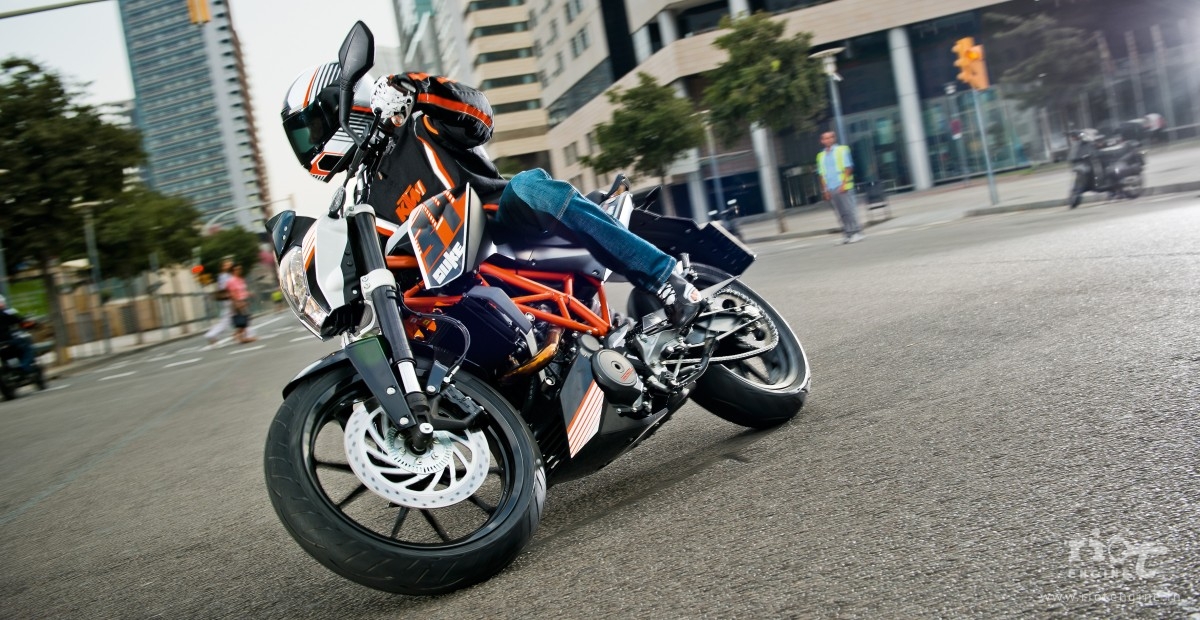
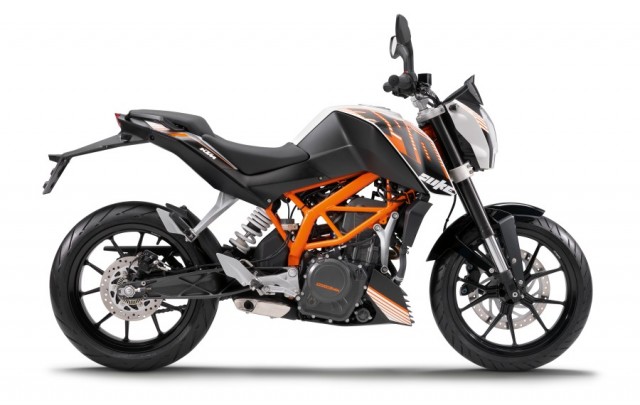
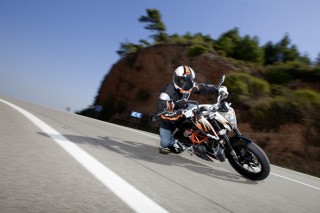
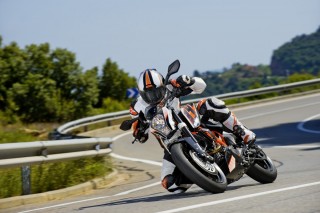
At work here is again a compact, single cylinder lightweight engine. The 373.2 cc mill weighs just 36 kilograms. Double overhead camshafts, four valves, a forged piston and a Nikasil-coated cylinder work to deliver 44 hp/32kW. Force feed lubrication with crank case evacuation lowers the crank drive’s rolling resistance, contributing to the powerful torque says KTM. The KTM 390 Duke retains the ultra-light trellis frame and cast aluminium swingarm shared with the Duke 200. The trellis frame of course had to enhanced to handle the increased power from the 390’s engine. As with all other katooms, suspension components by WP Suspension are top notch. Disc brakes have been developed by Brembo and the disengageable 9MB ABS by Bosch are standard.

The new 390 Duke weighs in at less than 150 kilograms fully fuelled, leaving you straddling a very competent handling package which we estimate might be priced at around 2 Lakhs. As we’ve seen before expect the engine bottom to be shared with a new Pulsar, expected to be launched in both naked and fully faired versions.

Details are limited now, do check back when we have more information. Meanwhile, feast on these images!

KTM 390 Duke Studio 02KTM 390 Duke Studio 03

Technical Specifications

Engine
Design Single-cylinder, 4-stroke, spark-ignition engine, liquid-cooled
Displacement 373.2 cm³
Bore 89 mm
Stroke 60 mm
Performance 32 kW (44 hp)
Starting aid Electric starter
Transmission 6-speed, claw shifted
Engine lubrication Forced oil lubrication with 1 rotor pump
Primary gear ratio 30:80
Secondary gear ratio 14:45
Cooling system Liquid cooling system, continuous circulation of cooling liquid with water pump
Clutch Clutch in oil bath / mechanically operated
Ignition system Contactless, controlled, fully electronic ignition system with digital ignition timing adjustment
Chassis
Frame Tubular space frame made from chrome molybdenum steel, powder-coated
Fork WP Suspension Up Side Down
Shock absorber WP Suspension Monoshock
Suspension travel Front 150 mm
Suspension travel Rear 150 mm
Brake system Front Disc brake with four-pot brake caliper
Brake system Rear Disc brake with one-pot brake caliper, floating brake discs
Brake discs – diameter front 300 mm
Brake discs – diameter rear 230 mm
Chain 5/8 x 1/4” (520) X-Ring
Steering head angle 65°
Wheel base 1,367±15 mm
Ground clearance (unloaded) 170 mm
Seat height (unloaded) 800 mm
Total fuel tank capacity approx. 11 l
Unleaded premium fuel (95 RON)
Weight without fuel approx. 139 kg
KTM 390 Duke 10
KTM 390 Duke 08
KTM 390 Duke 07
KTM 390 Duke 02
KTM 390 Duke 06
KTM 390 Duke 05

KTM 390 Duke Studio 01

When will this 293 hp per tonne lithe monster come to India? Expect sometime in the second half of 2013. We should have more information soon. When the CBR500R, the Ninja 300 and the 390 Duke hits the streets of India, expect nothing less than complete mayhem. Our advice to you, make sure you’re part of the mayhem!

Do you have your cheque books out yet?

KTM 390 Duke 101

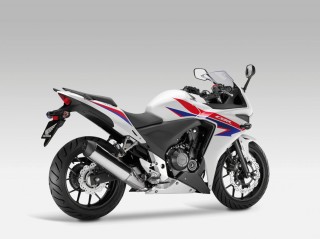
Honda CBR500R : Front 3/4

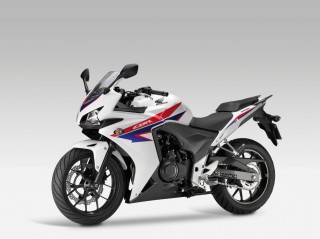
The new middleweights from Honda have arrived. The CBR500R is the fully faired variant and as Honda puts it ‘offers excitement, practicality and low ownership and running costs’. The design is inspired by the CBR1000RR. The 47bhp/35kW engine makes its plainly obvious that the target audience are beginners looking to upgrade to the Category A2 license in Europe. European legislation is such that you can either take the test if you have experience riding with a Category A1 license (small motorcycles up to 11kw – 125cc) or if you’re 19 and hold a valid CBT certificate. The three colour options available on the CBR500R are : Pearl Himalayas White, Graphite Black and Candy Ruby Red.
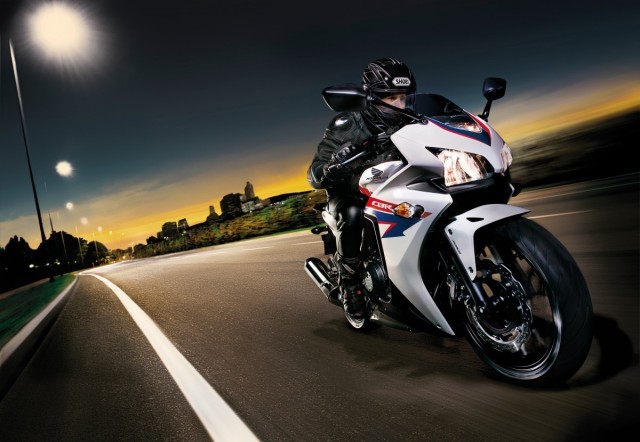
Honda CBR500R

Honda’s first parallel twin cylinder was the engine in the 1957 247cc Dream C70. Honda says the CBR500R carries the CB badge inspired by the DOHC CB450 twin of the 1960s that often outperformed larger capacity rivals.

The CBR500R uses a 35mm diameter steel diamond tube frame. Mass centralisation, as is the norm these days is they keyword. The engine is mounted very close to the swingarm pivot point that results is agile handling. Optimum front/rear weight distribution ensures stability. With a kerb weight of 194kg the CBR500R shouldn’t be too heavy to handle and with a seat height of 790mm stamps its authority as the definitive beginners bike that does not rob you of the fun factor. Honda says the handle bar position is relatively high making it more a Kawasaki Ninja 650 alternative.

The fuel tank has a capacity of 15.7 litres, including reserve. With a specified fuel economy of 27kpl, Honda says this should give the motorcycle a range of 420km.

Lightweight, 17-inch cast aluminium wheels employ hollow cross-section Y-shaped spokes. When it is launched in India, it will do well to cater to the needs of the I-need-a-really-wide-tyre enthusiasts in our country. The front tyre is a 120 section and the rear a 160 section. A single front 320mm wavy disc and two-piston brake caliper takes care of braking up front and a 240mm rear disc and single-piston caliper. ABS is fitted as standard but we wouldn’t be surprised if two variants are offered in India with ABS being optional.

The comprehensive dash features a digital speedometer, digital bar graph tachometer, odometer, dual trip meters, clock, plus digital fuel level gauge and fuel consumption. HISS (Honda Intelligent Security System) is built in to the ignition, and the headlights feature two 55W H7 Halogen bulbs and multi-reflectors.

Honda CBR500R Honda CBR500R
Honda CBR500R

Honda Cbr500r 08 Black

Honda CBR500R Red

Engine

The engine has our curiosity piqued. What did Honda do? Did they take two CBR250R powerplants and mash them together? Or was it a bigger capacity engine that was chopped down? While it was initially rumoured that it was actually two 250 engine powerplants combined, it would now seem that this engine shares more with the CBR600RR engine.

The bore x stroke of the CBR500R is 67 mm x 66.8 mm. The bore size of 67mm is identical to that of the CBR600RR. The ‘triangle’ proportion of crankshaft, main shaft and countershaft is very similar to that of Honda’s four-cylinder RR engines and this is what makes the CBR500R engine a very compact unit. The six-speed gearbox also draws more from the bigger RR cousins that allows for a short engine and uses the same gear change arm structure and link mechanism.

The DOHC, 8-valve liquid-cooled parallel twin layout was chosen because of its light weight, all-round ability and flexible usability. The crankshaft pins are phased at 180° and obviously results in a 180° phased firing order. A primary couple-balancer sits behind the cylinders, close to the bike’s CG. The primary and balancer gears use scissor gears to reduce reducing noise says Honda. The crank counterweight is specifically shaped for couple-balance and its reduced weight allows the engine to spin freely, with reduced inertia.

The shape of the piston was based on those used in the CBR1000RR. Honda says this would help reduce piston noise since the peak rpm was going to relatively high. Friction is reduced by the addition of striations on the piston skirt. These striations increase surface area by introducing gaps in which oil can flow for better lubrication. As with the CBR600RR and CBR1000RR, an AB 1 salt bath process, used after isonite nitriding, forms a protective oxidisation membrane.

The crankcase uses centrifugally-cast thin-walled sleeves, and with the same bore interval as the CBR600RR helps them be as compact and light as possible.The internal design also works to reduce the pumping losses that can occur with a 180° phased firing order. Using the same internal relief structure as that of the CBR1000RR, the oil pump features improved aeration performance, with reduced friction and allows use of a simple oil pan.

The engine itself acts as a stressed member, reinforcing the frame’s rigidity with four frame hangers on the cylinder head. A secondary air injection (AI) system is built into the cylinder heads, while an 02 sensor and catalyser inside the 2-1 exhaust work to ensure the CBR500R’s emissions are extremely low.

Honda’s proprietary PGM-FI fuel injection provides good throttle response and the peak power of 35kW/47bhp arrives at 8,500rpm, with 43.1Nm torque delivered at 7,000rpm. The differences from the elder siblings start showing here. While the CBR600RR uses Dual Stage Fuel Injection (DSFI) and the CBR1000RR uses Programmed Dual Stage Fuel Injection (PGM-DSFI) but the CBR500R has to be content with the PGM-Fi mill we’ve grown accustomed to on the Hondas and Hero Hondas in India. The compression ratio on the CBR600RR is around 12.2:1 and 12.3:1 on the CBR1000RR while the CBR500R and CBR250R share a compression ratio of 10.7:1

If anybody is interested, the crankcase and cylinder are finished in what Honda calls Matt Axis Grey Metallic finish.The colour Honda says, adds depth, complementing the CBR500R’s taut overall styling.

The CBR500R will also be the motorcycle of choice for the European Junior Cup. Young riders from 14-19 years, based in countries from Europe to Asia as well as the USA and Australia, will be racing to win a ride throughout 2014 for a Honda team in the UEM Superstock 600 European Championship.

Price

In the US the CBR250R ABS retails for around $4699, an equivalent of INR 2.6 Lakhs before taxes, while in India it is much cheaper thanks to localization. The CBR500R is priced at 5,999$ an equivalent of INR 3.3 Lakhs. This should, in an idealistic world, mean a slight premium over the 250R even in the Indian market. However, we doubt if HMSI will adopt the same strategy for the CBR500R which is bound to be looked upon as a niche product with much less volumes. We disagree. We think the CBR500R could be sold at a price point anywhere between 2.5 to 3.0 Lakhs and still garner enough volumes justifying an assembly line, considering it has the badge value – of being a 500cc motorcycle. Of course, this is the Indian market we are talking about, we might end up being entirely off the target.

Technical Specifications

ENGINE

ENGINE
Engine Type 500cc liquid-cooled parallel-twin
Bore And Stroke 67.0mm x 66.8mm
Induction PGM-FI with 34mm throttle bodies
Ignition Computer-controlled digital transistorized with electronic advance
Compression Ratio 10.7:1
Valve Train DOHC; four valves per cylinder

DRIVE TRAIN

DRIVE TRAIN
Transmission Six-speed
Final Drive O-ring-sealed chain

CHASSIS / SUSPENSION / BRAKES

CHASSIS / SUSPENSION / BRAKES
Front Suspension 41mm fork; 4.8 inches travel
Rear Suspension Pro-Link single shock with nine-position spring preload adjustability; 4.1 inches travel
Front Brake Twin-piston caliper with single 320mm wave disc
Rear Brake Single-caliper 240mm wave disc
Front Tire 120/70-17
Rear Tire 160/60-17

DIMENSIONS

DIMENSIONS
Rake 25.5 degrees
Trail 103mm (4.05 inches)
Wheelbase 55.5 inches
Seat Height 30.9 inches
Curb Weight 425 pounds (Includes all standard equipment, required fluids and full tank of fuel?ready to ride)
Fuel Capacity 4.1 gallons including 0.7-gallon reserve
Miles Per Gallon TBD*

apollo enraged : front 3/4

It was in late August this year that Gumpert declared insolvency and joined the sad ranks of Artega and Melkus. Insolvency proceedings began on 16th October. Pardon us if we get this wrong, but our understand of the concept of insolvency is that, here the local court appoints an ‘Insolvency Administrator’ who evaluates the firm and more often than not, a financial and organisational restructuring takes place to ensure the recovery of the business. In Gumpert’s case Mr. Görge Scheid who was appointed as the Insolvency administrator after factory inspection and talks with all 30 employees stated that ‘the business’ chances of recovery as extremely beneficial’.

Only a few days after the provisional insolvency began, a sale was made much to the delight of the 25 odd employees at Gumpert. Mr. Scheid has said that the first negotiations with investors will take place. He also poitned out that despite a downturn in the automotive industry, the strong demand for the sports car apollo shows that there is still a place in the market for an independent sports car manufacturer.

“Compared to other small series producers, which face insolvency (Melkus, Artega), the apollo comes with self-contained technical developments on the highest level. The super sports car has a small and exclusive fan base in Germany. As all cars are handmade, every masterpiece is unique and built to specific customer needs.” he added.

Managing director Roland Gumpert informed: “Next quarter we expect to sell four to five cars”. The world wide dealer network has been reactivated, so that also orders from Japan, China, Turkey and the Middle East are expected.

“We strongly assume that we will find an investor and save all 25 jobs in Altenburg”, announced insolvency administrator Mr. Scheid.

Read about the Gumpert Tornante, Gumpert apollo r, apollo enraged

Gumpert Tornante by Touring