In Tokyo today, BMW Group and Toyota Motor Corporation (TMC) announce that they today signed a memorandum of understanding (MOU) concerning a mid-to-long-term collaboration on next-generation environment-friendly technologies.
Under the MOU, the two companies have agreed on collaborative research in the field of next-generation lithium-ion battery technology. Also, they intend to identify and discuss other possible collaborative projects.
In addition, Toyota Motor Europe (TME), TMC’s European subsidiary, and BMW Group have entered into a contract under which BMW Group is to supply 1.6 liter and 2.0 litre diesel engines to TME starting in 2014. The engines will be installed in certain Toyota-produced vehicles planned for sale in the European market. Through this agreement, Toyota plans to expand its European lineup and sales of fuel-efficient, low CO2-emission diesel-powered vehicles.
Norbert Reithofer, Chairman of the Board of Management of BMW AG, said: “Toyota is the leading provider of environment-friendly series technology in the volume segment and the BMW Group is the most innovative and sustainable manufacturer of premium automobiles. We are now joining forces to further develop environment-friendly technologies and to expand our innovation leadership in each of our segments. Supplying Toyota with our fuel efficient and dynamic diesel engines represents another important step in the planned expansion of our sales activities for engines and powertrain systems.”
Akio Toyoda, President, Toyota Motor Corporation said: “It is a great joy and a thrill to enter into this mid-to-long-term collaborative relationship with BMW, a company with its own culture and history from its many years of car manufacturing in Europe, and a company that makes cars that are fun to drive. In the spirit of contributing to furthering the development of the auto industry and society, both companies will bring their wide-ranging knowledge – starting with that concerning environmental technologies – to the table and make ever-better cars.”
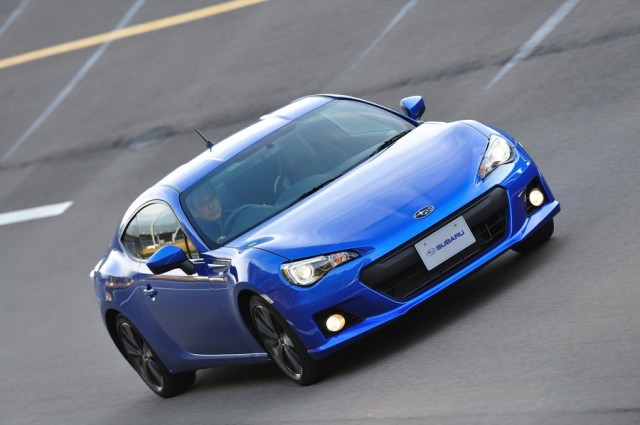
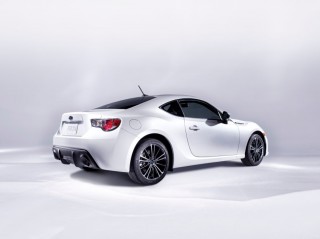
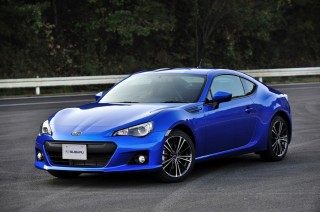
Subaru unveiled its compact 2+2 sports car the Subaru BRZ at the 42nd Tokyo Motor Show 2011. The BRZ has been developed with Toyota , which will be selling it as the Toyota GT 86. Subaru recently unveiled the Subaru BRZ Concept – STI, which took the concept a step closer to production.
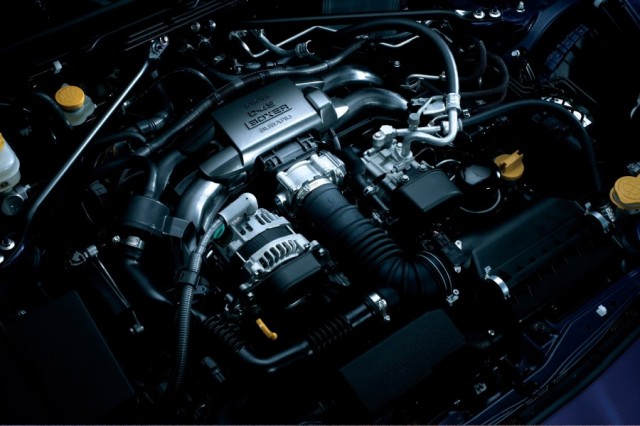
The BRZ is a rear-wheel drive sports car featuring the Horizontally-Opposed Boxer engine, mounted up front. It was developed as a joint-project between Subaru and Toyota Motor Corporation, to build a sports car with superior steering response and driving pleasure. The Subaru Boxer engine in the BRZ was positioned even lower than other Subaru models so that the BRZ has one of the lowest possible centers of gravity on the market today. Subaru says this low center of gravity produces astonishing handling character and combined with a light-weight chassis BRZ realizes Subaru’s aim for “Pure Handling Delight” the driving experience taken to a new level.
The BRZ has a low-mounted Boxer engine on a specially designed sub-frame that forms an “ultra-low center of gravity package”. Seats designed with the intent of having lowered seating for the driver and passenger further helps the cause. With this arrangement, BRZ achieved a low driving position typical of a sports car.
Subaru aimed for a sports car design that instinctively conveys the car’s fun-to-drive character. In addition, it was detailed to be instantly recognizable as a Subaru. The “ultra-low center of gravity package” also allowed a low hood design. This low hood and bulging front fenders raise expectations for the BRZ’s drivability says Subaru. In line with Subaru design lanauge, Subaru six-star ornament badge is placed up front, the distinctive headlights and hexagon lower grille follow the Subaru design motif common across new Subaru models.
The flared fenders add to the vehicles sporty looks. Subaru points out that the aesthetic beauty is combined with functional beauty that advances aerodynamics through such areas as the C-pillar shape, rear glass inclination, trunk lid layout. The front and rear overhangs were shortened to make the car look sportier.
The steering wheel was made smaller to achieve sports car maneuverability, as on GT 86. A tachometer with digitally displayed speedometer is placed in the center of the gauges so that the driver can instantly see information without diverting attention from the road.
The 2.0 litre Boxer engine has square bore and stroke of 86 X 86 mm. Toyota’s direct injection and port injection technology “D-4S” was incorporated in the BRZ’s power unit. To achieve the “ultra-low center of gravity package”, the engine as a whole has been made more compact by such means as adopting the shorter intake manifold and the shallower oil pan.
The 6-speed MT employs a short stroke shift lever. Subaru says the lever was optimized in rigidity, shift quality and weight application in its pursuit of a superb shift feel. The 6-speed AT has “S mode” for better shifting response and “M mode” for optional shifting.
Low center of gravity and low driving position were achieved by the perimeter type body frame layout. Subaru says the rigidity of the frame is optimized for high drivability and appropriate durability is maintained for collision safety. High tensile steel used in the upper structure of the BRZ contributes to its low center of gravity.
The front hood employs aluminum for lightness. The structure was fine-tuned for a low styling that also improves pedestrian protection performance. The chassis offers sharp response to steering and enhances driver’s connection to the car.
The front suspension employs struts for light-weight and high rigidity, while a double wishbone layout is adopted at the rear for better shock absorption. To gain a low front hood from the “ultra-low center of gravity package”, the front strut mount was lowered while maintaining the stroke. The tires are 215/45R17 combined with lightweight and highly rigid aluminum wheels. All models are equipped with electronic stability control.
Rubens Barrichello’s seat at Williams F1 is gone, that is what everyone seems to be believing despite Barrichello claiming that he can bring Five Million Euros in sponsorship money (there are some die hard Barrichello fans who believe he is safe at Williams). It looks as if the fight for his seat is between Adrian Sutil now with Sahara Force India and Valterri Bottas. Barrichello has been making repeated entreaties to the Williams F1 team through the media as to why he should be retained claiming that his rich experience of 19 uninterrupted seasons in F1 will be direly required by a team that has made sweeping changes on its technical side. The response from his team has only been silence and in a couple of weeks time everything should be clear. What is clear right now is that Kimi Raikonnen’s negotiations with the team have come to an end after the greedy Finn who has been out of F1 for two years has been demanding high wages, something that is usual with him.
Sahara Force India is in a very bad position, with both their existing drivers Adrian Sutil and Paul Di Resta doing quite well this year and ensuring that the team finished sixth in the championship, the first among privateer teams (McLaren is not a privateer team, they have works status with Mercedes Benz and not customer status). Their problem is that they also have Nico Hulkenberg, the talented German waiting in the wings for an opportunity to race. Force India’s problem stems from the fact that Di Resta is actually a Mercedes driver who has been placed with them since Mercedes are engine suppliers to the team and are waiting for Michael Schumacher to either shine or quit at the end of 2012. Nico Hulkenberg is someone who cannot be allowed to go since he represents the future. One can therefore understand Sahara Force India’s predicament.
Kimi Raikonnen has entered the fray for a seat in the Lotus team (presently Renault) which could well get rid of both its drivers, Vitaly Petrov and Bruno Senna. It will be a while before things could emerge clearly at Lotus but it does appear as if Robert Kubica’s position at the team is compromised, something that was evident in the fight between the team and Kubica’s manager in public about the fitness of Kubica and his ability to race in 2012. There is speculation now that Robert Kubica, who is a good friend of Fernando Alonso may well be preparing to sign up with Ferrari from 2013 when Felipe Massa’s contract runs out. There are rumours about Heikki Kovalainen who is contracted to Caterham F1 being contacted by Lotus, even though Caterham boss Tony Fernandes wants to retain him. So along with Scuderia Toro Rosso, Force India and Williams, the Lotus team has the cards for next year and these are the three teams that will drive the market for drivers.
Marussia F1 will soldier on with Timo Glock and has decided to drop Jerome D’Ambrosio and has signed on Frenchman Charles Pic to partner Glock. HRT has recently signed Pedro De La Rosa recently and Vitantonio Liuzzi has a contract for next year. However, his seat is not safe with Red Bull Racing keen to place Daniel Ricciardo or Jean Eric Vergne and could help HRT buy Liuzzi out of his contract to place its burgeoning pool of young drivers. The irascible Franz Tost at Scuderia Toro Rosso in conjunction with Helmut Marko are very clear that neither Jaime Alguersuari nor Sebastien Buemi need to believe that they are safe for next year. So as things stand what could happen at Toro Rosso is a mystery, though one should say that both their existing drivers have done enough to justify another season at the team.
It is sad that while there are so many talented youngsters desperately looking for seats, oldies such as Pedro De La Rosa are being signed by teams. There is no reason to believe that younger drivers do not have the abilities to develop a car, Michael Schumacher displayed that in his years at Benetton and Ferrari. He is yet another driver who has no business being on the grid, but unfortunately is sitting there thanks to business interests taking precedence over sporting interest. Many young drivers could do what Michael Schumacher is doing and more ( and this is without taking away any of the achievements of the great driver that he is) and perhaps Paul Di Resta should be in the Mercedes GP car straight away. In the same breath one can perhaps argue that Rubens Barrichello should retire gracefully rather than put himself in a position where he is unceremoniously forced out. And he should be forced out since at his age and given his ability (he is no Michael Schumacher, despite all his protestations to the contrary) there is no value that he is adding to F1.
In all this mercifully we hear the news that Jacques Villeneuve has given up his attempts at a comeback into F1. We don’t want F1 to be a sport of geriatrics do we, it is bad enough that the management is a gerontocracy. Anyway since Luca De Montezemolo is always talking about third cars, a series could be organized for all the have beens of F1. It could feature a grid of Michael Schumacher, Jacques Villeneuve, Rubens Barrichello, Nick Heidfeld, Pedro De La Rosa, Kimi Raikonnen, Narain Karthikeyan, Christian Klien, Jarno Trulli and Vitantonio Liuzzi. This could run as a support race before the main event. This is the ideal solution for all these drivers who want to drive and for Luca De Montezemolo who wants to have third cars. A ten car veterans grid to support the main grid.
We shall wait and hope that the places are filled with younger drivers and that old and overrated drivers like Rubens Barrichello and Kimi Raikonnen are kept out of F1 for good.
P.S: Caterham F1 for 2012 is this years Team Lotus which raced in green and yellow colours and will do so next year as well. Lotus for 2012 is this year’s Renault team that raced in black and gold and is likely to continue to race in those colours and Marussia F1 for 2012 is this year’s Virgin F1.
It must have been a huge relief for Mark Webber. He finally won the final race of the season at the Interlagos circuit in the Formula1 Grand Prix of Brazil. Mark Webber has struggled through out this season in qualifying and in the races while his teammate Sebastian Vettel in the same Red Bull Racing car broke records for pole positions and became the youngest two time F1 World Champion four races ago after dominating the season from the front of the grid. While it is true that Mark Webber finally did get his win for 2011 in the final race, there was also a stroke of good fortune involved with Sebastian Vettel’s car developing gearbox problems and forcing Vettel to surrender the lead that he had established over Webber. Vettel however managed to hold on to second position while a fighting Jenson Button in the McLaren out drove and out foxed Fernando Alonso in the Ferrari to take third position. Alonso finished fourth while his teammate Felipe Massa in the other Ferrari finished fifth. Sixth place went to Sahara Force India’s Adrian Sutil while his rookie teammate Paul Di Resta finished in eighth. The meat in the Force India sandwich was Nico Rosberg in the Mercedes and ninth and tenth were taken by Kamui Kobayashi in the Sauber and Vitaly Petrov in the Renault car. Petrov’s teammate Bruno Senna had a disappointing home race after he collided with Michael Schumacher in the Mercedes and both found their race compromised after that with Schumacher finishing in fifteenth position while Senna finished seventeenth. In what may have been his last F1 race (though he is not accepting it) Rubens Barrichello in the Williams finished in fourteenth place.
With this race the F1 2011 season comes to an end and all the teams head for a well deserved winter break before testing commences in February of 2012. For 2012 the present Team Lotus becomes Caterham F1 team and will continue to use Renault engines, while the present Renault team will become Lotus and will use Renault engines while Williams F1 will move from Cosworth to Renault engines to revive an iconic partnership. Renault will now be an engine supplier only and will no longer be a constructor. Red Bull Racing is the other constructor who will be using Renault engines for some more time after having won two world championships with them. The Virgin team will become Marussia F1 team with the Russian car maker taking control of the team. The Marussia F1 team and Team HRT will continue to use Cosworth engines while Sahara Force India and McLaren will use the Mercedes Benz engines as usual apart from Mercedes GP. Ferrari will continue to supply engines to Scuderia Toro Rosso and the Sauber F1 team.
The Renault Nissan alliance is very serious about India. It is interested in the volume segment of the market and is making its ambitions pretty clear. Renault has launched and commenced the sales of the Fluence Sedan and the Koleos softroader and has unveiled the Pulse with sales starting in January, 2012. In 2012, Renault is set to launch the Duster SUV along with another sedan, the details of which are not yet available. Speculation is that it will be based on the V platform that has spawned the Micra and Sunny for Nissan. The Pulse is a Micra with a different nose and it remains to be seen if the sedan will be Renault’s take on the Sunny. The Auto Expo in January will reveal if the Renault Nissan alliance will take up the small car produced by Bajaj Auto for marketing. If it does, the car will be somewhere near the Tata Nano in terms of pricing. But irrespective of what happens with the Bajaj made car, Renault Nissan will work on a small car that sits in the Eon and Alto segment. The car should be on the roads by 2013. Renault and Nissan are leaving no stone unturned in their effort to capture volumes in the Indian car bazaar.
BMW has entered the lucrative used car market with Premium Selection as its banner. BMW will deal in used BMW cars that are less than 5 years old and have run less than 1,20,000 kms. The cars sold by Premium Selection will come with a 2 year or 2,00,000 lakh kms (odometer reading) which ever is earlier warranty. Roadside assistance will also be made available. Premium selection is available in seven cities of India at Gurgaon, Ludhiana, Mumbai, Pune, Chennai, Bangalore and Hyderabad.
Garware Motors, the distributors of the Hyosung range of motorcycles in India has announced at discount of Rs. 60,000/- on the GT650N motorcycle. This means that the ex showroom Goa price of the motorcycle will dip below the Rs. 4 lakh rupee mark, with the price being Rs. 3.80 lakh. However, this offer is available only till the 30th of November, 2011. The Hyosung GT650N is an extremely capable motorcycle and with this discount it becomes a difficult to ignore proposition. Please check with the nearest Hyosung dealer, for our information is Goa specific and we are not sure if this is an all India offer.
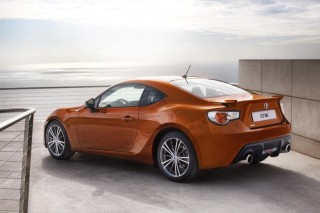
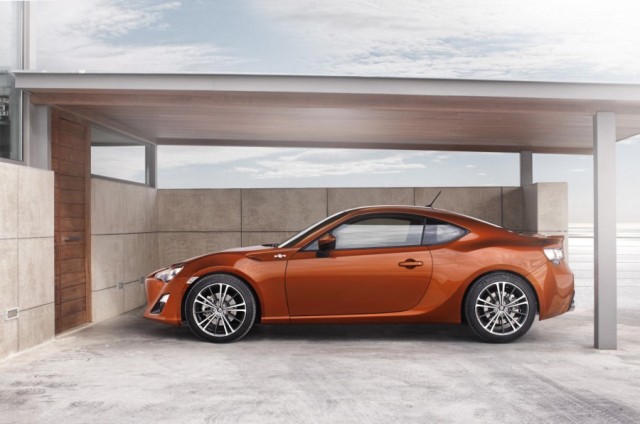
Remember the Subaru BRZ Concept we showcased? It’s Toyota sibling, previously known to us as the Toyota FT-86 II Concept, has now been unveiled by Toyota UK just ahead of its debut at the Tokyo Motor Show. Christened the Toyota GT 86, this rear wheel drive compact four seater will be powered by a 2.0 litre boxer engine with D4-S injection will put out 197 hp @ 7,000 rpm and 151 lb-ft (205 Nm) @6,600 rpm.
Toyota says the instead of installing a heavy engine with huge displacement, it has decided to go back to its sporting roots and built a lightweight, two litre boxer engine, front mounted and driving the rear wheels. The powertrain is placed in what Toyota says is the world’s most compact four-seat design to create a car that benefits from light weight, low inertia and a low centre of gravity to achieve the best possible power-to-weight ratio.
Toyota says the design is reminiscent of Toyota’s sports cars of yesteryear with the evocative, sweeping styling. The design has been executed within the technical constraints of achieving the most compact dimensions possible, a low centre of gravity and aerodynamic performance inspired (dictated?) by motorsport technology.
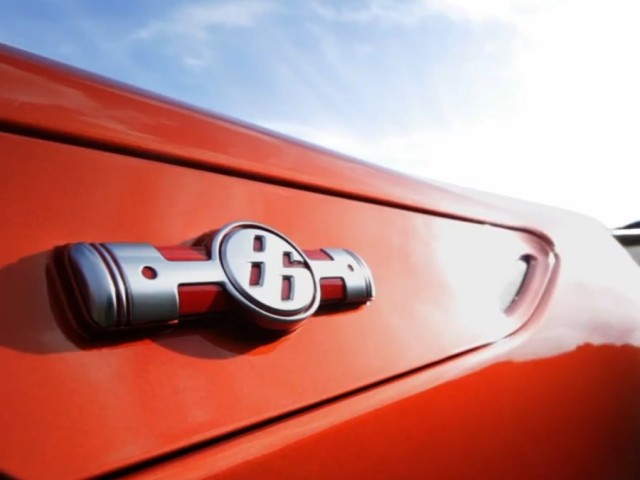
Toyota’s new design language aims to project a really low slung car, and hence the large lower grille. The lower grille’s “scorpion” look gives the GT 86 a powerful appearance. The 17-inch alloy wheels, rear spoiler, twin exhausts add to the sporty appeal of the car. The best part about the design, the “86” piston logo. It denotes the car’s special powertrain configuration. The 86 is an ode to the square boxer engine with a bore and stroke of 86mm. The boxer engine, denoted in the logo with two horizontally opposed pistons and the 86 in between in stylized font. Way to go Toyota!
Toyota has taken extra pains to deliver the best possible experience for the driver inside the car. The 365mm diameter steering wheel happens to be the smallest ever in a Toyota, and is wrapped in buckskin based on extensive feedback from test drivers, to offer optimum grip and best steering performance.
The three-meter instrument cluster is arranged around a large tachometer, with efforts made towards establishing the best positioning of the displays, markings and typeface. The result is the best possible visibility and readability says Toyota. The driver-focus of the cockpit is further reinforced by the carbon-effect trim, all-black roof lining, red stitching on the upholstery, aviation-style rocker switches and lightweight, aluminium pedals.
The GT 86 measures 4,240mm long, 1,285mm high and 2,570mm wide, dimensions which make it the most compact four-seater sports car available today.
The powertrain and the driving position have been set as low and as far back as possible to achieve a near-perfect 53:47 front-to-rear weight distribution. The flat-four engine format and the driver’s hip point together give the GT 86 an ultra-low centre of gravity, at just 475mm.
The GT 86 makes the most of a light kerb weight, making it easy for drivers to exploit its nimble handling and cornering poise. The suspension features MacPherson struts at the front and double wishbones at the rear. The car rides on 17-inch wheels and is fitted with ventilated disc brakes front and rear.
The D-4S 2.0L Boxer Engine
The GT 86’s engine is the result of a joint Toyota and Subaru development programme. Toyota has added its D-4S injection technology to Subaru’s new, horizontally opposed, naturally aspirated 1,998cc four-cylinder boxer engine. This system features separate twin injectors for both direct and port injection, and a high 12.5:1 compression ratio, increasing power and torque across a wide range of engine speeds without sacrificing fuel efficiency.
The flat-four engine has equal bore and stroke of 86 mm and drives through either a six-speed manual or six-speed automatic transmission. The manual offers quick, precise shifts using a tactile, short-throw lever; the automatic transmission can be controlled using paddle shifts mounted on the steering wheel.
Power is distributed to the rear wheels via a limited slip differential to give the best possible grip in all driving conditions. Toyota repeatedly stresses that to ensure pure driving bliss, electronic intervention will be minimal. The ABS and switchable vehicle stability control systems have been tuned specifically to deliver dynamic stability at the limit of the car’s performance envelope with minimal electronic intervention.
Toyota’s two-cylinder boxer-engined Sports 800, which the company began developing in 1962 is the world’s first sports car to feature a front-mounted, horizontally opposed engine and rear-wheel drive.
The inspiration for the GT 86, however, is the Corolla GT (or Levin) AE86, a car with an enduring reputation for delivering sheer excitement and capturing the fundamental joy of driving. Its front-engine, rear-wheel drive package, compact dimensions, light weight, impeccable balance and superior power-to-weight ratio made it a must-have choice for rallying and circuit driving throughout its production life, from 1983 to 1987.
Ford India is offering a mouth watering discount of Rs. 75,000 on its Fiesta Classic petrol version. This is due to the fall in the sale of petrol cars due to sky rocketing petrol prices. However, the new Fiesta which is not selling in the numbers that Ford wants it to is also available at a discounted price. That figure could also be the magical Rs. 75,000. Unconfirmed reports state that the diesel version of the new Fiesta also is being offered on discount by some dealers.
Tata Motors in a bid to boost the sales of the Manza is offering the petrol Manza (base version) with a price of Rs. 4.99 lakhs. There are discounts on the other versions as well and the offer will be up to the 30th November. Tata is calling this the November Offer.