Tag Archives: Power Stroke

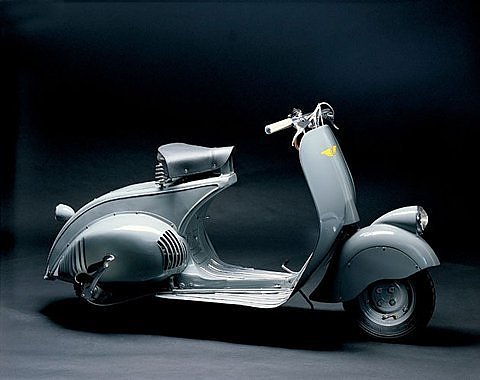
Vespa 1945 MP6 Prototype : Design by D'Ascanio

So, why’s a Vespa called a Vespa? D’Ascanio was given the task of designing an extremely simple and cheap to run two wheeler. D’Ascanio put the engine on the rear wheel, unlike in motorcycles. In September 1945, when Enrico Piaggio saw the first MP6 prototype he exclaimed “Sembra una vespa!” which translated means “It resembles a wasp!” and that is how the name Vespa came about.

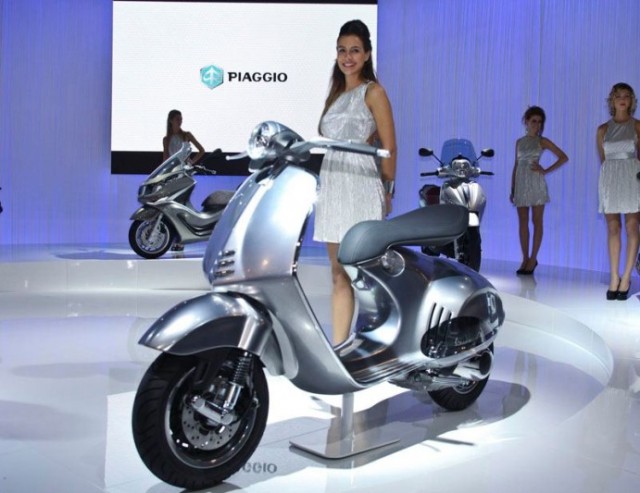
Vespa 946 Quarantasei at the 2011 EICMA, Milan

Vespa 946 Quarantasei 2011 EICMA Vespa 946 Quarantasei at the 2011 EICMA, Milan

At the 2011 EICMA Motor Show in Milan, Piaggio presented its tribute to the original MP6 prototype. The Vespa Quarantasei as it was presented initially ( 46 in Italian) is a design that is more ‘waspy’ than any other Vespa. The Quarantasei was then renamed as the 946 thanks to auto journalists who consider it a chore to twist their tongue even slightly.

By distilling the essence of a scooter that changed the style of individual mobility forever and enhancing the lines that secured its success, the Pontedera Style Centre has projected the Vespa into a possible future where references and projections, tradition and innovation, merge seamlessly says Vespa.

Here’s the scoop. In conversation with the management at Piaggio during the Vespa launch in India, we were informed that the 946 had an aluminium body and would be powered by a new 125 cc engine with lower emissions, less noise and higher fuel efficiency.

Vespa 946 Quarantasei 2011 EICMA

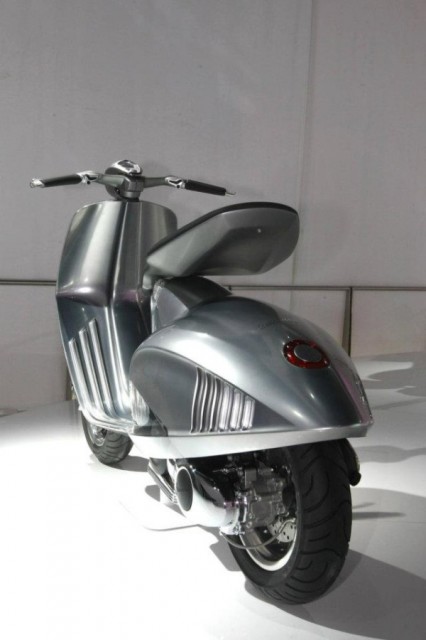
Stunning eh? The entire scooter is void of any excess, cables at all. The entire shape is as clean and streamlined as a scooter can be. The blinkers/indicators are on the bar ends, in the shape of an aerofoil!

Vespa 946 Quarantasei at the 2011 EICMA, MilanVespa 946 Quarantasei 2011 EICMA

Vespa 946 Quarantasei 2011 EICMA

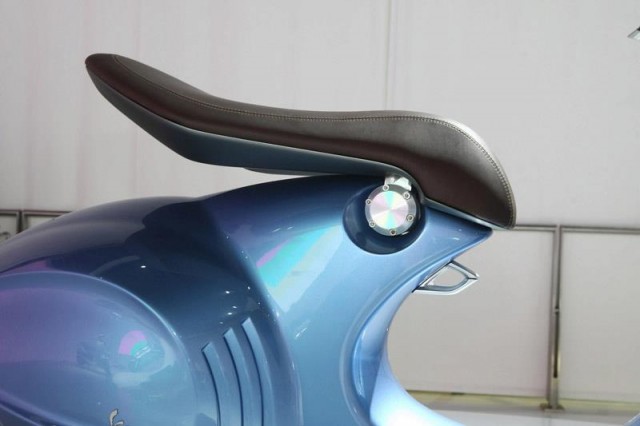
I wonder if anybody would disagree that this is definitely the most beautifully sculpted seat in the world.

Vespa 946 Quarantasei 2011 EICMA

That, would be the tail lamp.

Vespa 946 Quarantasei 2011 EICMA

Vespa 946 Quarantasei 2011 EICMA

Vespa 946 Quarantasei 2011 Eicma 11

When Piaggio Vehicle Pvt. Ltd., launched the Vespa in India, in addition to the display of the Vespa in four different heart achingly beautiful shades, and a really long entertainment show the best part of the evening for Riot Engine was our conversation with Mr. Scotti. Flying to Mumbai from Pontedera, the technical and creative headquarters of Piaggio, Mr. Scotti blew us away with his unbridled enthusiasm.

Davide Scotti, Executive Vice President Product Development and Strategies, Piaggio & C.s.p.a

Born in 1957, Davide Scotti holds a holds a degree in Mechanical Engineering and has been with Piaggio since January 2007. He has worked with Alfa Romeo and Fiat in various positions, and is no stranger to India, having acquired experience here during his stint at Fiat Auto Innovation and Product Design and Development areas. He was the Head of the Alfa Romeo Compact Car Development Centre before moving to Piaggio. Since joining the Piaggio Group in 2007 as Head of Commercial Vehicles Product Engineering & Development, he has coordinated the development of the Group’s new line of diesel engines for commercial vehicles, the renewal of the engine range (diesel, petrol, LPG, methane, electric), the restyling of Piaggio commercial vehicles for the European market and the planning of the new worldwide range of commercial vehicles, as well as the development of the NT3 compact.

He became Director of Product Development and Strategy in January 2010, with Group level responsibility on the product development activities.

Here are excerpts from the interview.

Riot Engine : Considering you are the Vespa as a ‘lifestyle product’ can you give us approximate volumes you expect the Vespa to generate?

Scotti: 150,000 initially, and we expect the sales to increase later in the future.

Now that we have the Vespa finally, when do you think you can give us other fantastic products from the Piaggo umbrella, like say the Gilera Runner ST125/200 and the Derbi GPR125/Cross City?

(Laughs) As you probably know, this is something that we will have to study, understand the markets and then make a decision. So, maybe in the future.

Vespa has experimented with hybrid technology on its range (the Vespa LX 50 HyS and the Piaggio X8 HyS ). Do you see the possibility of a production hybrid Vespa?

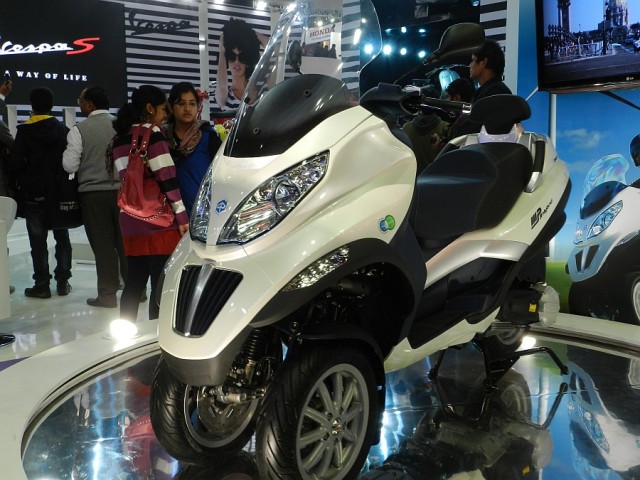
We had the MP3 Hybrid on display at the Delhi Auto Expo, and the response was tremendous. Hybrid technology is always a possibility.

Piaggio MP3 Hybrid

The Vespa 946 ( also known as the Quarantasei when it was unveiled at EICMA 2011) is something we would love to see in flesh. Do you think its a possibility at all?

The Vespa 946 is our most advanced product. Lots of aluminium, leather seats and various other features will inevitably make the 946 one of our most expensive products when bring it into production in 2013. So I cannot say at the moment if we will bring the 946 to India.

Maybe at the AutoExpo 2014?

Maybe (smiles).

So there gentlemen, you have a world first scoop. The Vespa 946 is slated for production early 2013, and more importantly will probably have an aluminium monocoque in favour of steel used for eons on Vespas now!

Need to find your local Vespa dealer? We suggest you finish reading this article and then head to Vespa India Store Locator.

Piaggio Vehicles Private Ltd., (PVPL) launched the iconic Vespa in India on the 26th of April 2012. While the model is clearly the LX 125, PVPL clearly prefers to call it ‘the Vespa’ probably a move to build upon the popularity of the brand in India.

Personnel from Piaggio &  C.s.p.a with Mr. Ravi Chopra, Chairman and Managing Director, PVPL at the launch of the Vespa in India

Mr. Ravi Chopra, Chairman and Managing Director, PVPL at the launch of the Vespa in India

Piaggio will not compete with existing players, but will tap the potential premium scooter market. To this effect the product Piaggio Vehicles Private Ltd., announced that the Vespa will be sold at a price of Rs.66,661/- ex showroom in Maharashtra.  You can expect pricing to be higher in other places due to the various taxes and octroi and dealer handling charges.  Clearly the product is being positioned as a premium life style scooter.

Vespa Launch India Details 24Vespa Launch India Details 03

Above : Mr. Ravi Chopra on the Giallo Lime (Lime Yellow) Vespa, Rosso Dragon (Dragon Red)

Mr. Ravi Chopra also announced that the Vespa in India will be powered by a new engine that is a single cylinder 125cc four stroke featuring a 3 valve head and putting out 10.06PS of power at 7500 RPM and torque output of 10.6 NM at 6000rpm. Power is transmitted to the rear wheel through a CVT transmission.  The primary motivation to develop a new engine for India has been the requirement of the Indian consumer for the best mileage. Piaggio claims a 60 kpl figure as per test conditions.

It will come in eight colours such as Monte Bianco (Mountain White), Nero Volcano (Volcano Black), Giallo Lime (Lime Yellow), Rosso Dragon (Dragon Red), Rosso Chianti (Tuscany Wine Red ) and Midnight Blue have been mentioned.

The scooter will also come with specially designed central stand, art leather seats with special stitch patterns and an optional auto return side stand.  It will use MRF’s Nylogrip tyres and its fuel efficiency has been claimed at 60kpl in standard test/riding conditions.  The scooter will be available with 50 dealers spread across 35 cities and PVPL aims to hit a peak production capability of 12500 vehicles per month by September. There are currently no plans to export Vespas from the Baramati plant. The new generation global engine will also be manufactured in various other Piaggio plants in Europe and Asia.

Details

Vespa steel monocoque body and the new generation global engineThis beautifully crafted steel monocoque is the basis for a Vespa’s longevity, balance, rigidity and stability says Vespa. While we have to wait until we ride the scooter to verify that fact, we cannot deny how beautiful the shell looks even unpainted.

Much has been discussed about the new generation global engine with three valves, but that shouldn’t stop us from elaborating more. Variable Spark Timing Management, Manifold Absolute Pressure Sensing (MAP) a compression ratio of 10.6:1 and a high efficiency media air-intake filter are the factors delivering the 10.06PS power with a claimed fuel efficiency of 60kpl.

Vespa New Generation EngineBeautifully crafted Monocoque of the Vespa in India

Instrument Console Vespa India3 Spoke Satin Finish Alloy Combination Wheels

I have to admit, I needed the help of a gentleman in one of the finest Italian suits to help me figure out how to open the glovebox up front. Seems you press the chunky key into the slot and the glove box lid pops open.

Vespa in India glove boxSpace in the Glovebox Vespa in India

Vespa Launch India Details 29

Vespa Launch India Details 30
Single sided trailing arm front suspension with antidive characteristics.

Vespa's specially designed central stand
Vespa’s specially designed central stand.

Signature Vespa Chrome GrillPiaggio badge on the Vespa
Signature Vespa Chrome Grill and the Piaggio Badge.

Vespa key on the art leather seats
Beautiful Vespa key on the art leather seats

Vespa Launch India Details 02

Handlebar Grips on the VespaSwitchgear Vespa
Handlebar Grips on the Vespa, the switchgear.

Vespa key slot to pop open the seatVespa under seat storage

A pop out hook for your luggage
Pop out hook for the luggage.

Vespa kick startVespa rear

The Vespa will have both the electric and kick start options.

Choke Knob on the Vespa in IndiaClear lens Vespa headlamp
Choke Knob on the Vespa in India, and the clear lens 35W halogen headlamp.

White Vespa in India

Vespa in Monte Bianco (Mountain White) colours.

Lamborghini Urus Suv Unveiled Beijing 01

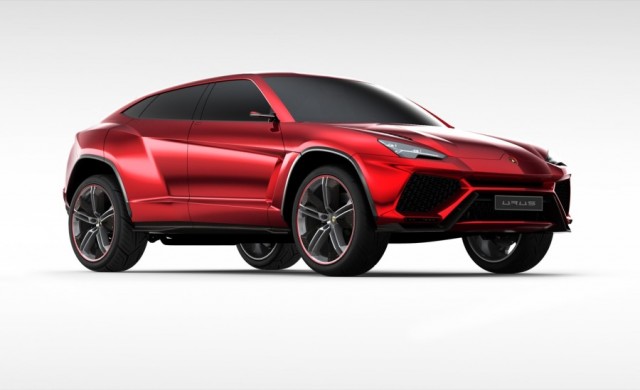
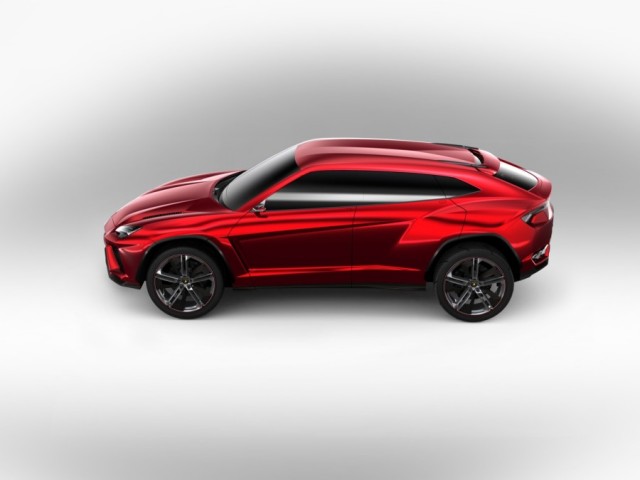
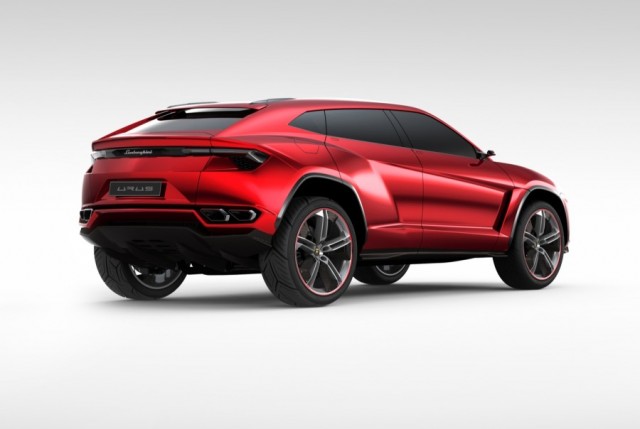
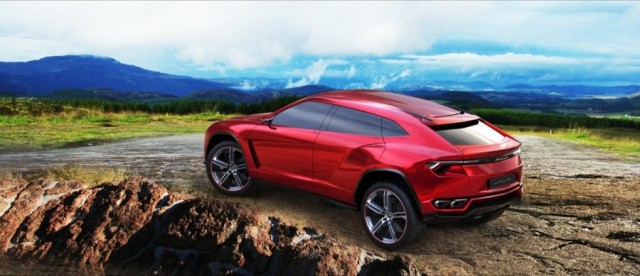
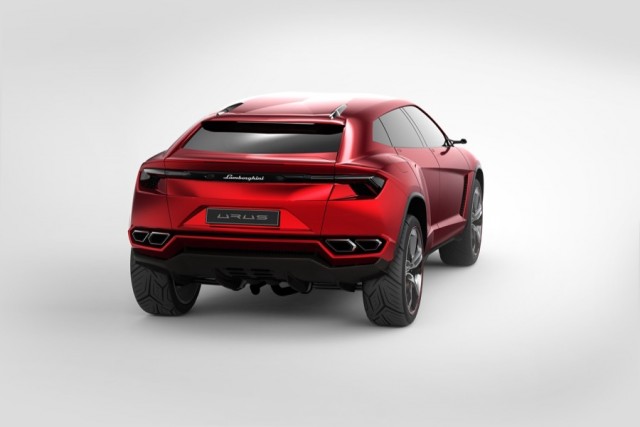
At the 2012 Beijing Motor Show, Automobili Lamborghini unveiled what it calls the ‘ultimate super athlete’ in the SUV segment. The Urus has a unique, utterly unmistakable appearance. It looks powerful, but not bulky. It is muscular and highly athletic, but also elegant says Lamborghini. At a length of 4.99 meters, it fits perfectly into the sporty SUV class. At a height of just 1.66 meters, however, it is considerably lower than all its competitors. Together with its width of 1.99 meters, the Lamborghini Urus boasts the perfect proportions for the super athlete in the segment.

Lamborghini Urus Suv Unveiled Beijing 10

With the Urus concept car, Lamborghini treads into waters unfamiliar since the LM002. When unveiled in 1986, the LM002 was an absolutely revolutionary vehicle. A twelve-cylinder engine good for 450 hp, powered the off road vehicle from Lamborghini to a top speed of more than 210 km/h. The Lamborghini LM002 remained in production until 1992 with barely more than 300 units ever built.

“The Urus is a very concrete idea for the future of Lamborghini – as a third model line and as the perfect complement to our super sports cars,” says Stephan Winkelmann, President and CEO of Automobili Lamborghini. “SUVs stand for freedom and emotion. SUVs make up one of the most successful market segments worldwide. The Urus is the most extreme interpretation of the SUV idea; it is the Lamborghini of the SUVs.”

URUS

As has long been the tradition at Lamborghini, its name is derived once more from the world of bulls – the Urus, also known as Aurochs, is one of the large, wild ancestors of domestic cattle, measuring upto 1.8 m at shoulder. Lamborghini takes the slightly divergent road since the Urus isn’t a Spanish fighting bull but says its appearance is close to that of a Spanish fighting bull.

Lamborghini Urus Suv Unveiled Beijing 08Lamborghini Urus Suv Unveiled Beijing 09

Design

Extremely tight, razor-sharp lines define a precision that is characteristically Lamborghini. Clean, taut, finely executed surfaces show the exceptional degree of competence and experience possessed by Lamborghini in design, construction and bodyshell
manufacturing. Large air intakes on the left and right ends of the vehicle and the Y shaped headlamps identify the revered Lamborghini face. The headlampstake on a horizontal, heptagonal form and feature full LED technology consisting of two arrays each with three high-performance LEDs. LED light guides lend the daytime running lights their characteristic Y-shape, while the LED fog lamps are positioned beneath the huge air intakes. There is an adaptive front spoiler ( better known as a splitter) bang in the centre of the lamps.

Lamborghini Urus Suv Unveiled Beijing 04

The glass area tapers sharply towards the rear and the wheel arches are wheel arches look good as they only can on a Lamborghini. 24-inch wheels with a double spoke design are forged from matte-finish aluminum. Five carbon fiber winglets optimize ventilation. The Urus is painted in a rich, lightly shimmering red that offers the ideal contrast for the many bodyshell parts made from carbon fiber reinforced polymer. A large part of the front spoiler, the complete side sills and the rear diffuser are all made of carbon fibre polymers. As we’ve seen in the Land Rover defender concepts, the Urus swaps conventional outside rear view mirrors for a camera and TFT screen combo. The screens are placed ergonomically, making the experience as hasslefree as the conventional mirrors.

Lamborghini Urus Suv Unveiled Beijing 02

The narrow rear lights featuring the Y signature are connected by a black strip that adds emphasis to the car’s breadth. The four hexagonal end pipes are carefully fitted into chrome surrounds.

Lamborghini Urus Suv Unveiled Beijing 071

Interior

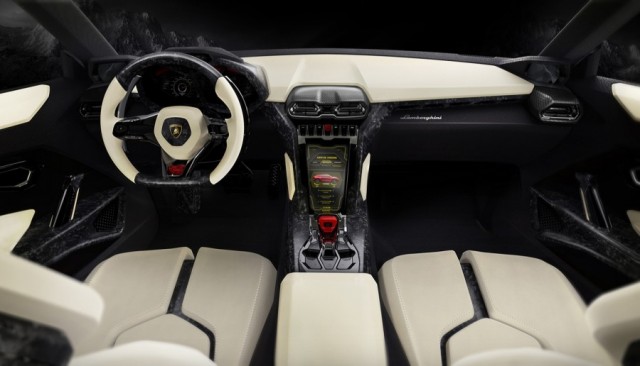
In perhaps the most definite statement of intent, the Urus dispenses with any alacantra in the interior, and instead is finished in carbon fiber reinforced polymer.

Lamborghini Urus Suv Unveiled Beijing 05

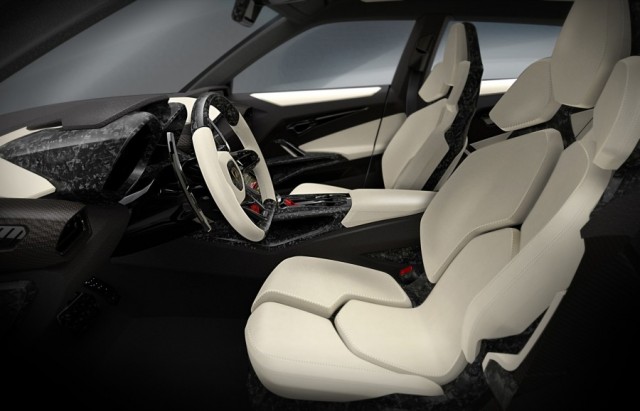
After the wonder that was CarboSkin was flaunted on the Aventador J, now Lamborghini wants to knock you senseless with the center tunnel – an open, skeletal carbon fiber structure made from Forged Composite. It carries through the entire interior and is only partially clad in leather-upholstered cushioning. Single cushions also clad the four bucket seats. The seating position is lower and flatter than in any other vehicle in the segment. Also all four bucket seats are made from Forged Composite.

Lamborghini Urus Suv Unveiled Beijing 06

Lamborghini has tried to keep the driving experience as undiluted as possible. Behind the steering wheel are only the shift paddles for the dual-clutch transmission. All other functions such as indicators, lights and windshield wipers are incorporated into either the multifunction steering wheel or the center console. The driver is delivered information via a freely programmable TFT screen behind the steering wheel. Secondary functions like navigation, entertainment and climate control are operated via a touchscreen on the center tunnel.Rear seat passengers also have a touch screen, probably for entertainment.

Technology

The deliverable targets include a 440 kW / 600 hp, permanent all wheel drive and traction control. Lamborghini also has set its sights on beating all competitors for CO2 emissions. The Urus will be considerably lighter than its competitors, sticking firmly to the Lamborghini lightweight design philosophy. Automobili Lamborghini possesses unique
know-how in carbon fiber technologies and will put it all to good use. An intelligent material mix for the structure and bodyshell and, for the first time, systematic lightweight design in the interior, too.

Lamborghini Urus Suv Unveiled Beijing 11

A low center of gravity and a highly variable bodyshell height will help Lamborghini set benchmarks for handling in this segment. The Lamborghini SUV also has some tricks up its sleeve in the aerodynamics department. In combination with the
variable bodyshell height, the height-adjustable front spoiler facilitates a good approach angle and excellent obstacle clearance. At its lowest setting, however, it aids stability at high speeds. The form is, of course, aerodynamically refined. At the upper edge of the rear windshield is a deflector that diverts the airflow along the rear windshield and onto the adjustable spoiler. In combination with the also adaptive rear spoiler, the aerodynamic balance of the Lamborghini Urus can even be adjusted to suit the prevailing driving conditions.

We wonder if this will require Lamborghini to upgrade its infotainment system with more settings that can be selected by the driver, or if the system will be intelligent enough to determine the settings depending on the driving conditions/terrain.

It is of course, needless to point out that the Lamborghini SUV is easily the best looking tough machine currently and we hope it makes it to production.

Lamborghini Urus Suv Unveiled Beijing 03

There is an old saying in some language that I don’t remember that goes “If you keep talking amongst the same community of people without interacting with the rest of the world, then your world will get defined by your language rather than your language being defined by the world”. This is so true of people following various professions.  All professions actually see the developing of groups around a certain kind of vocabulary and this vocabulary reinforces the vocabulary.  This is particularly true of the marketing world and the academic world.  I happen to know that most times in academics in order to gain acceptance to into the hallowed portals of great institutions and to be recognised by people with formidable reputations certain kinds of language need to be used.  Usually academic seminars are full of people who have puffed themselves up to unleash a certain kind of vocabulary on people who have come with similar vocabulary and thus the enchanted circle of academicians is created and perpetuated.  In most instances this kind of description of reality ends up being fatuous and devoid of any meaningful content.

I have the pleasure of not only knowing the academic world and its unfortunate trappings but also that of the marketing world.  It is a world in which homilies and platitudes are freely ad infinitum and ad absurdum without anyone realizing that this is getting them nowhere.  One of the most frequently used expression in the marketing and business world is “thinking out of the box”.  After having heard many people use this expression repeatedly I started asking them what this thing meant, how did it originate, what is the  box and how does one get out of it.  I was unpleasantly surprised to find that an overwhelming majority of them did not know the origins of the expression and simply thought that it was an expression to say do things differently.  Though this understanding is not wrong at all, the sadness of it is that people when asked to do things differently actually find themselves thinking in the box while deluding themselves that they are doing something different.  That is the reason why the market is always full of me too products and ad campaigns that mirror each other.

Since we are talking automotive here, let me recall the example of Bajaj Auto thinking out of the box.  The first motorcycle that Bajaj launched in India, the Kawasaki Bajaj KB 100 came with features that did not exist on any two wheeler before it.  It came with a tachometer, fuel gauge, a combined ignition and handlebar lock (and the handle bar could be locked in any direction), parking lights, a choke lever that could be used by the left thumb without having to take the hand off the handlebar and a helmet lock for people to securely lock up their helmets instead of having to carry them around.  The product did not do too well in its initial iterations but in its second iteration as the RTZ it did reasonably well.  Then Bajaj realized the folly of thinking in the box and decided to develop and four stroke motorcycle to rival the Hero Honda CD 100.  The result of the out of the box thinking was the creation of a motorcycle that was costlier than the KB100 RTZ but one that did not have parking lights, did not have a combined lock for ignition and handlebar and the handlebar lock went to the ungainly position near the top of the front forks, a choke lever near the carburettor which entailed bending down, no tachometer, no fuel gauge and no helmet lock.  The silencer looked exactly like the one on the Hero Honda CD100, the bike sounded like a CD100 and was devoid of all the cues of styling and design that the KB100 had and to top it all it was unimaginatively called the 4S, standing for 4 stroke.

This is the problem with MBA driven marketing culture which looks for ready made formulae to start producing things that will start making money from the first day.  The film world is a bit like that.  Stories of brothers or twins separated at birth but meeting later, six songs (of which at least four in some foreign location), 12 fights, evil mother in law, evil wife who is tamed like the proverbial shrew and the sundry baddies who are in some hundreds but are battered by the super man hero.  Now if you are wondering why I am saying all this read on and the answer will be obvious.  I am now going to launch into that intersection where me too marketing ideas meet me too film ideas and see the launch of products with film stars as brand ambassadors.  Of course, in India cricketers are Gods so some of them have become brand ambassadors as well.

I am going to avoid going into consumer durables because we are an auto magazine.  Let us look at how brand ambassadors have done in making successes out of products.  It would not be wrong on my part to say that the one advertising campaign that stands out in the automotive world is the one involving Shah Rukh Khan in the launch of the Hyundai Santro.  The advertising agency Saatchi and Saatchi came up with a campaign that was truly path breaking and perhaps the product itself needed validation from a brand ambassador.  The beauty of the campaign was the CEO or Hyundai Motors India chasing Shah Rukh Khan to get him to endorse the Santro and the actor asking if the car could do something or the other and the car doing all those things till finally Shah Rukh Khan asks for the keys of the car and agrees to endorse it.  Let me quote marketing and advertising guru Sunu Sen here.  He said celebrity endorsements work only if you show the celebrity doing what he is famous for, while endorsing a product or brand.  Sen in fact found flaw with the Pepsi ad campaign which showed cricketers playing football.

To come back to the point about Shah Rukh Khan and the Santro.  I said the car needed a brand ambassador at that time.  So let me explain. To most Indians Hyundai was then an unknown name and quantity and to complicate things the Santro was being launched along with the Daewoo Matiz (and Daewoo had made themselves known because they were already in the market for a couple of years before Hyundai came in) and the Tata Indica.  Not only was Hyundai an unknown entity, the Santro to complicate matters was not the greatest looking car, and that is putting things mildly.  On the other hand there was the cutesy Matiz that had vowed audiences all over the world and the Indica on which rested the hopes and aspirations of a nation since it was a car made for India by an Indian company and top it all it did have good looks.  So the Santro had all the qualities of a loser and to convert this loser into a winner a brand ambassador was required.  Shah Rukh Khan fit the bill, a young hero known for action and with a wild fan following that encompassed both men and women and Hyundai and Saatchi and Saatchi produced a campaign that will be etched in the memories of Indians who saw it, forever.

So am I saying that celebrity brand endorsements are good and that they work?  Au contraire my argument is that the Hyundai-Shah Rukh Khan campaign is the exception rather than the rule.  Automotive marketing truly began in India only in the 1990s with the liberalization of the Indian economy and with a flood of foreign brands some well known and some unknown coming into the country.  Hyundai did something novel, something that no one had done before in the automotive world and it worked.  But Hyundai were very prudent, they did not extend Shah Rukh Khan’s endorsements to the Accent, the Elantra and the Sonata despite the last two needing some big marketing push.  Shah Rukh Khan is reserved for pushing the Santro and later the i10.  If Hyundai tried to capitalise on Shah Rukh Khan’s image for other cars in their portfolio the Khan magic would be lost and so they could not possibly use him for the Santro and its replacements.

Now let us take the case of Fiat.  I have said enough about how much brand equity the company had and how it all got squandered thanks to their once partner PAL.  So Fiat also seeks a brand ambassador and they choose a God from the other magnificent obsession of us Indians, cricket.  And they chose no less a person than the great Sachin Tendulkar.  Tendulkar was used to sell both the Siena and the Palio and to make things look impressive, the ad campaign revolved around Tendulkar’s moods as reflected in his clothes and demeanour with the one constant being the Fiat car (it was mostly the Siena).  I am pretty confident that I am the only person in this country that actually remembers that marketing campaign.  Fiat made Tendulkar shake hands with the great Michael Schumacher and gave him a Ferrari (which he recently sold to buy himself a Nissan GT-R) and none of all this worked.  Fiat has so fallen below the sea level that their latest ad campaign even shows their cars underwater asking people how deep they are willing to dive to buy a Fiat.  That ad campaign gets cent percent for honesty.

Then there was Sachin Tendulkar who was supposed to endorse the TVS Victor when it was launched.  I don’t know what kind of arrangement TVS has with its ambassadors since there were perhaps two commercials that used Tendulkar while selling the Victor.  Most of the time it was shown as a motorcycle for the family man who was carting his wife and children on the Victor.  It sold well for sometime and the brand then got killed and we heard at the Auto Expo 2012 that by the end of this year the brand will be resurrected.  TVS used MS Dhoni to show the toughness of the Star City which was the successor to the Victor but again he was used very sparingly.  Now in the recent past TVS have yet again used Virat Kohli only fleetingly for their Sport motorcycle.  My guess is that TVS tried a few ads with the cricketers to see if they can sell and when they found that they could not they just dropped them.  If that is the case, sound thinking.

Now let us come to the mother of all celebrity endorsed marketing-advertising campaigns, the one used by Maruti Suzuki for its Versa.  It has both father and son Bachans and the car bombed like there was no tomorrow.  Finally it had to be despecced and sold as the Eeco for it to garner some sales numbers.  Now the Force One SUV from Force Motors uses Amitabh and it seems that they have not realized that he is now a spent force and therefore should not be used as a brand ambassador.

Then there is Mahindra that used Bipasha Basu and now Kareena Kapoor to sell their scooters and both the actresses have not managed to get the Rodeo or the Flyte selling in significant numbers.  They tried using Amir Khan for their Stallio and Mojo motorcycles.  The Mojo lost its mojo even before it hit the market and the Stallio has stalled apparently for good.  The Hero MotoCorp campaign for the Pleasure scooter using Priyanka Chopra did not succeed because of her but because of the brand equity that the company has built especially in the northern part of the country.  Most folks buying are men and so the concept of exclusive showrooms called 4her came to an end.

And now to return to the man who actually put Hyundai on its feet, Shah Rukh Khan.  His selling power after the success of the Santro was so over estimated that a company called LML hired him as brand ambassador to sell their Freedom range of motorcycles.  The motorcycles did not sell and if anything significant happened then that must be the denting of the value of the Khan of all seasons.  And now about to join the list of dubious brand ambassadors is the third Khan from Bollywood, Salman Khan.  Suzuki has roped in the bad boy of Bollywood to promote their soon to be launched mass market motorcycle the Hayate.  Intriguing choice indeed considering the fact that the man was dropped from being brand ambassador for Thums Up.  All the best Suzuki, please believe me you need it.

And then there is Yamaha, which is flogging a dead horse that goes by the name of John Abraham.  Yamaha at some point realized the pointlessness of using John Abraham and dropped him but picked him up again, for reasons best known to them alone.  While their arch rival Honda sells in big numbers of a couple of lakh units per month, Yamaha and Suzuki are struggling to sell even 25%  (combined) of Honda’s sales.  Bajaj in the past used R Madhavan to promote their Saphire scooter that refused to sell.  Kapil Dev tried selling the Kinetic Boss and failed.

And yet Suzuki signs up Salman Khan and Yamaha re-signs John Abraham.  The problem is that the marketing personnel are busy consulting their handbooks of “how to sell duds” and since they don’t interact with the outside world too much they are going round in circles trying to think out of the box – one that does not exist.  Film stars are people who have lost touch with their own people as are cricketers.  The very adulation that makes them starts drives them away from the people and by asking a celebrity to endorse a product or a brand the managers are risking antagonizing people who do not like these stars. The best way to sell a product is create one after listening to what people want and then they will pick the product up, hype or no hype.  But then in today’s world people do not listen just like they do not read.  A sure fire way of getting out of touch with reality, something that people who themselves are out of touch with reality cannot fix.

Riot Engine was invited by Ford to experience their ‘Driving Skills for Life’ (DSFL) program and we caught up with the trainers from the Advanced Driving Institute, South Africa, Derek Kirkby and Nick Osborne.

Ford Driving Skills For Life, Derek Kirkby, Nicholas at the Ford Plant, Chennai

Derek Kirkby

Derek Kirkby has over 19 years of experience teaching advanced driving skills and has also been part of a number of Ford’s TTT programmes. The TTT programmes, seek to train the trainers who conduct the DSFL programs.

Kirkby is extremely passionate about driving and cars. When he was taking us through the course material, trying to explain to the audience gathered on the finer points of driving, he steered into various other topics that enthusiasts like you and me would talk about over coffee. When a member from the audience mentioned about tyre punctures in tubeless tyres, Kirkby launched into an elaborate and informative discussion on tubeless tyres, run flats, and the slime that was used for some time in cars with tube tyres! He then shattered the myth about filling up when temperatures are lower, say early morning or late night. He pointed out that the fuel is stored in underground non metallic tanks, which are not influenced by ambient temperature to an extent where the density of the fuel changes.

Let’s be honest, the theory part of the driving skills course can tend to be boring. Derek makes sure the audience is on the edge of their seats by either throwing out statistics that could stun you, or playing a shocking video demonstrating the effects of ignoring safety measures available in cars. We managed to grab a few seconds of Kirkby on video.

Nick Osborne

Nick has been teaching advanced driving skills for over 10 years now. He is a HUGE McLaren fan and worships Ayrton Senna. We managed a brief interview with the man at the DSFL session in Chennai.

Can you tell us how you started out teaching driving skills, Nick?

Nick: My stepfather was in this profession and that’s how I started out teaching driving skills.

What is the most common problem participants of DSFL come up to you with?

N: Well, there isn’t a ‘problem’ specifically, but most participants of the DSFL join the program primarily to understand their own cars better.

There is a line of thought that the best drivers are the ones who start out early, what do you think?

N: There is the issue that older drivers have to unlearn the bad driving habits before learning the good ones, in that sense it is better when drivers start out learning young, but of course, in a controlled environment under proper guidance.

While not necessarily bad drivers, sometimes enthusiasts cannot resist flooring the pedal on empty stretches, what is your opinion on that?

We do see that often, and it might not go wrong everytime, but the truth is ‘Speed Kills’, it’s as simple as that. While the road may seem empty, the hazards of the street are not something you can always predict.

You must have seen the number of median opening on our highways, any suggestions?

It depends on the visibility. You can cruise through an open, well lit junction where you can be sure there’s no one waiting to cross, but in every other instance, it is best to slow down, watch and then cross.

If I was to buy a rear wheel drive car with lots of power and torque, do you think I’d be better off starting off with a less sporty car and then graduate to a more poweful one?

This is something we see a lot in South Africa. Youngsters get themselves really hot cars and are unable to handle them. I would always suggest starting out with a cars that’s less taxing, learn the basics properly and then move on to more powerful machines. Of course, if you do spend time in a controlled environment with a qualified driving instructor who will equip you with the advanced driving skills, then maybe you can start out with a powerful machine.

Ford Ecosport Production Version Coming To India 08

We have to start this significant article about a significant product, with a little conference room episode about Mr. Alan Mulally President and CEO, Ford Motor Company.

In one of his Thursday management meetings, where managers are supposed to show color-coded charts, red for serious problems, yellow for lesser issues, green for all OK, “all the charts were green and I know — we’re going to lose $17 billion. I stopped the meeting and I said, ‘Is there anything that isn’t going well? We’re losing $17 billion.’ Eye contact goes down to the ground.

Mulally: “The next week here comes Mark (Fields, now president of Ford’s North and South America operations) and the charts are all red. Everybody else’s were green. I started to clap, and I said ‘That’s great.’

“I looked around and said, ‘Is there anything we can do to help’” resolve problems Fields was having launching the Ford Edge.

A dam burst. Other managers started tossing out solutions to similar problems they’d had.
Source: USA Today

If anybody had any doubts about what a ‘manager’ from an aerospace company could do for an ailing automotive brand, Mulally made sure they got their answer. Ford before Mulally made over 90 vehicles, which Mulally brought down to about 20 to focus on a smaller set of cars. Mulally brought about the ‘One Ford’ concept, the mantra which drives the company today. Mulally also closed a deal which saw the company remortgaging its assets to borrow $23.6 billion saving the company from bankruptcy. One Ford has worked wonders for the company, and on the 22nd April 2012 they unveiled one of the most significant cars for the growth markets such as India, Brazil and China, the all new Ford EcoSport. EcoSport will be offered in nearly 100 markets globally.

Design

The all-new Ford EcoSport was created by a global Ford Product Development team lead by Chief designer Ehab Kaoud of Ford South America. The team is headquartered in Camaçari, Brazil, one of eight Ford Product Development centers worldwide.

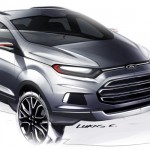
Ford Ecosport Production Version Coming To India Design Sketch 28Ford Ecosport Production Version Coming To India Design Sketch 30Ford Ecosport Production Version Coming To India Design Sketch 29Ford Ecosport Production Version Coming To India Design Sketch 26

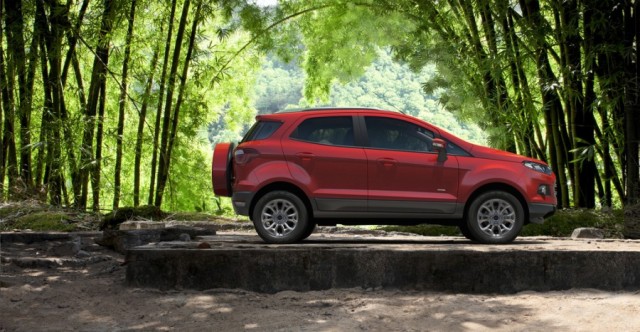
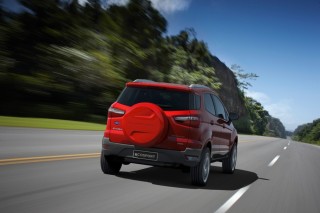
High ground clearance and lower body cladding give the all-new Ford EcoSport a rugged, confident SUV stance. The spare wheel mounted on the swing gate has been a signature EcoSport trait and hints at the adventurous spirit of the EcoSport.
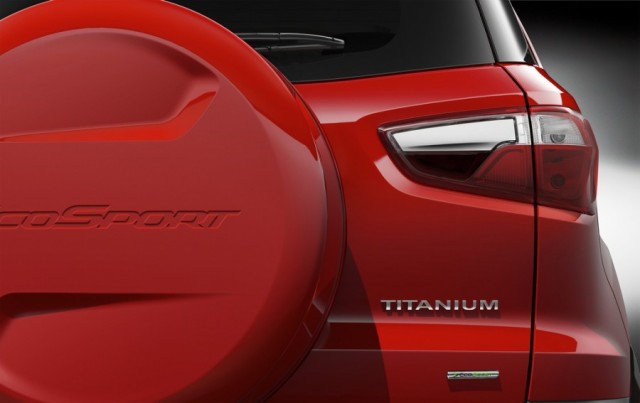
Ford Ecosport Production Version Coming To India : Tail/Swing gate door handle integrated in the tail lamps

The swing gate facilitates access to the cargo space. Its door handle, uniquely integrated in the right-side tail lamp, is one of the innovative highlights of the vehicle and creates a seamless look at the rear. The EcoSport is the embodiment of the rapidly evolving Kinetic Design language. The windshield is steeply raked, and blacked out B-pillars project a unified image of the side glass conveying a clean, modern profile, complementing a shape honed in the wind tunnel for efficiency.

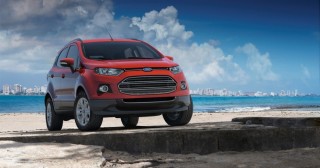
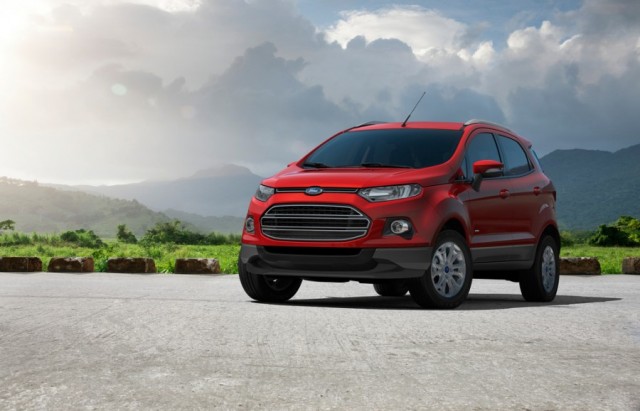
Modern, oblique headlamps frame a high-mounted trapezoidal grille which is the signature Ford face. The horizontal chrome bars on the grille are also an interpretation of the three horizontal bars on the last generation Ford EcoSport, another signature feature. The LEDs on the headlamps seen on the concept at the 2012 Delhi Auto Expo,have been replaced with conventional bulbs.

Ford Ecosport Production Version Coming To India Design Sketch 27
The new EcoSport was developed on Ford’s new global B-segment platform, which will be the basis for an array of new small-car products from Ford in the coming years. By mid-decade, the new Ford B-platform family of vehicles will represent more than 2 million units of annual production as compact cars continue to drive global growth.The platform features flexibility to create compelling new products that expand customer choice, especially in key growth markets around the world.

Ford Ecosport Production Version Coming To India 02Ford Ecosport Production Version Coming To India 17

The dimensions of the EcoSport are

Length………… 4,241 mm
Width…………. 2,057 mm
Height………… 1,696 mm
Wheelbase……… 2,521 mm

These figures should put to rest any residual doubts of the EcoSport exploiting the excise duty benefit for sub 4m cars. This was of course, made clear at the global unveiling at the Auto Expo where it was stressed that the EcoSport would be a premium product without any compromise on space or features.
Ford Ecosport Production Version Coming To India 15

Interior

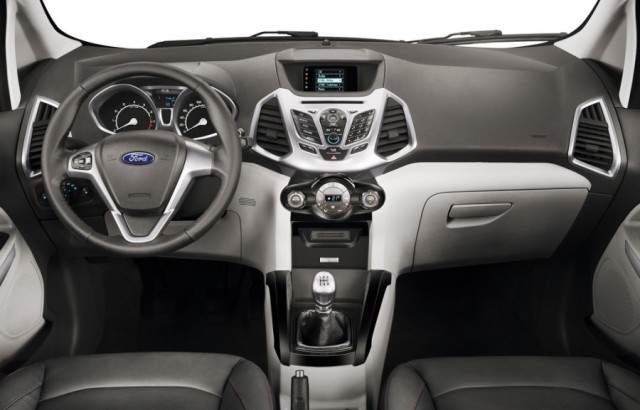
Ford Ecosport Production Version Coming To India : Interior

The instrument cluster is now lit in ‘Ice Blue’ and the cabin is a play of black, grey and silver. The plastics on the dashboard are said to be soft touch, with the airbag compartment looking seamless. As Fords always have been, the noise levels are expected to be low thanks to the sound insulation. The door trims are also soft to touch, taking the game up a notch. Seat contours are taken from the Ford global DNA design, meaning good lumbar support.
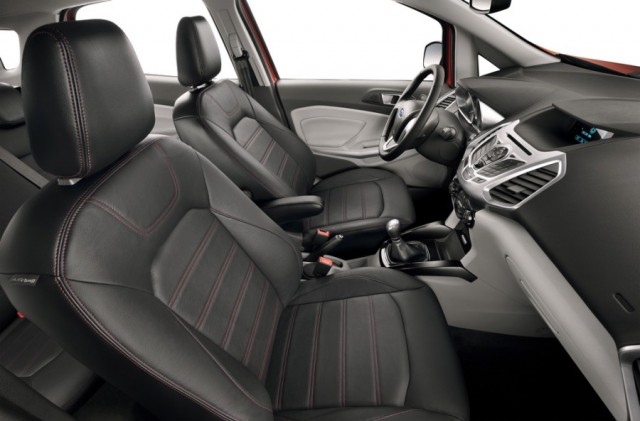
Ford Ecosport Production Version Coming To India : Interior Front seats

There’s a storage drawer underneath the seat, and a cooled bin in the glovebox for your drink.

Ford Ecosport Production Version Coming To India : Interior Closer, Ice Blue

Engineering

The all-new EcoSport was designed to meet the strictest safety standards in the markets in which it will be sold. Its body was developed with design tools and advanced software to reduce weight, combining programmed energy impact absorption zones with an extremely rigid protection cage to protect occupants.

Ford Ecosport Production Version Coming To India 21Ford Ecosport Production Version Coming To India 22

The chassis’ stability and robustly built body with high torsional rigidness for occupant protection, 20% better than the previous model sold in South America, are part of the features which give the EcoSport the confidence of a true SUV.

The vehicle offers a comprehensive package of safety features including standard dual front airbags (for driver and passenger) and optional side curtain airbags to protect rear-seat passengers in rollover-type accidents. The pelvis bolster provides pelvic protection while the energy-absorbing side door trim provides thoracic and abdominal protection during side impact accidents. Whew.

The EcoSport is also equipped with advanced active safety technologies such as Anti-Lock Brake System, Electronic Stability Program, and Hill Launch Assist.

Ford Ecosport Production Version Coming To India 15

Engine & Transmission

Engines options include the 1.0-liter EcoBoost I-3, the 1.5-liter I-4 Ti-VCT in the all new Fiesta, 1.5-liter Duratorq diesel TDCI I-4 and probably only for the global markets, the 1.6-liter I-4 Flex, 2.0-liter I-4.

In addition to the IB5 five-speed manual, there will also be the MMT6 six-speed manual AWD and the fuel efficient DPS6 PowerShift
automatic.
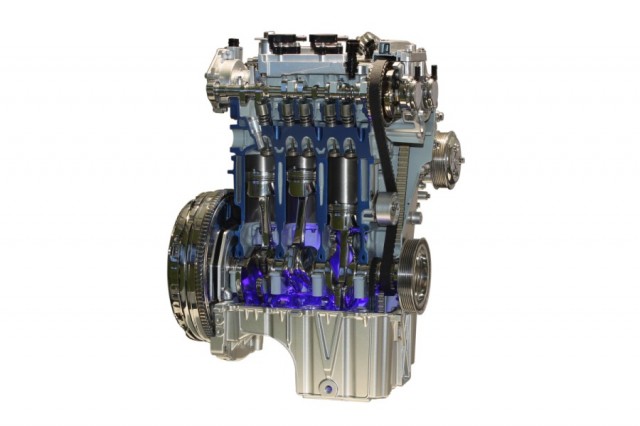
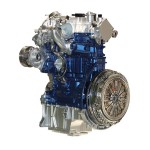
Ford EcoBoost Engine

The all-new 1.0 liter EcoBoost engine will debut in China in the all-new Ford EcoSport – offering the performance of a conventional 1.6-litre engine with less than 140g/km CO2 emissions. The 1.0-litre EcoBoost uses turbocharging and direct fuel injection to extract impressive levels of power and fuel efficiency from its three-cylinder engine block, which is so small that it can fit on a sheet of A4 paper.

Developed at Ford’s Dunton Technical Centre in the U.K., the 1.0-litre EcoBoost engine features a new compact, high performance turbocharger design. The extremely fast response of the turbocharger and its ability to reach nearly 250,000 rpm results in virtually no turbo lag and peak torque of 170 Nm from 1,300-4,500 rpm. This high torque supports a fuel-efficient driving style and delivers a good performance feel and diesel-like torque experience.

Ford Ecosport Production Version Coming To India 1 Litre Ecoboost 01Ford Ecosport Production Version Coming To India 1 Litre Ecoboost 02Ford Ecosport Production Version Coming To India 1 Litre Ecoboost 03Ford Ecosport Production Version Coming To India 1 Litre Ecoboost 04

The all-new EcoBoost engine also features an exhaust manifold cast into the cylinder head, which lowers the temperature of the exhaust gases and in turn enables the engine to run with the optimum fuel-to-air ratio across a wider rev band.

An advanced “split cooling” system reduces fuel consumption by warming the engine more quickly and – unique to the 1.0 engine –cast iron has been selected for the block, reducing the amount of energy needed for warm-up by up to 50 per cent compared with aluminium.

Intelligent ancillaries such as a variable air-conditioning compressor and oil pump also reduce demand on the engine – improving economy and emissions – while special coatings for engine components and intricate development of engine geometry result in minimal frictional losses.
Ford Ecosport Production Version Coming To India 20Ford Ecosport Production Version Coming To India 05

Like its larger-capacity siblings, the 1.0-litre EcoBoost engine will use twin independent variable camshaft timing (Ti-VCT) to further improve performance and economy. Ford has also employed an all-new camshaft actuator to speed up response times without sacrificing durability.

“The 1.0-litre EcoBoost delivers great low-speed responsiveness, power, torque and smoothness,” said Kumar Galhotra, vice president, Product Development, Ford Asia Pacific and Africa. “To produce an engine with such impressive performance and fuel economy clearly reflects our commitment to be class-leading in fuel economy around the world.”

An innovative design that immerses the two main engine drive belts in oil – resulting in quieter and more efficient running but with the durability of a chain.

A three cylinder engine brings with it the usual tendency for higher vibrations. Rather than employ the traditional method of adding energy-draining balancer shafts, Ford engineers have deliberately “unbalanced” the flywheel and pulley to offset the engine configuration. Ford believes these innovations combined with optimised engine mounts will deliver a truly refined performance feel perfected during 720,000 kilometres of tests – including 360,000 kilometres of durability trials and 10,000 kilometres of environmental testing.

Ford Ecosport Production Version Coming To India 07

Ford Ecosport Production Version Coming To India 09

Ford Ecosport Production Version Coming To India 03

Ford Ecosport Production Version Coming To India 19

Ford Ecosport Production Version Coming To India 04Ford Ecosport Production Version Coming To India 16

Ford Ecosport Production Version Coming To India 18Ford Ecosport Production Version Coming To India 01Ford Ecosport Production Version Coming To India 14Ford Ecosport Production Version Coming To India 10

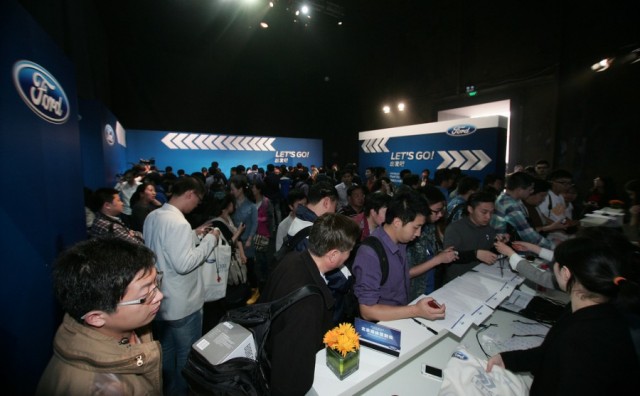
Kumar Galhotra, vice president, Product Development, Ford Asia Pacific and Africa, Dave Schoch, chairman and CEO, Ford Motor China, Joe Hinrichs, president, Ford Asia Pacific and Africa, Marin Burela, president, Changan Ford Mazda Automobile, and Luo Minggang, executive vice president, Changan Ford Mazda Automobile, pose for photographers after the unveiling of four SUVs for the China market.

“The Ford EcoSport reflects our commitment to serve our Ford customers in China and around the world with the cars, utilities and trucks they want and value,” said Joe Hinrichs, President, Ford Asia Pacific and Africa. “EcoSport delivers outstanding quality, great fuel efficiency with the 1.0-litre EcoBoost engine, superior safety and really smart design with SYNC.”

After the global preview in January at the Delhi Auto Expo, which we brought to you live, Ford has now revealed the production version of the EcoSport in China and simultaneously in Brazil, where Ford EcoSport was developed by a global Ford development team. In addition to production in Chongqing, the EcoSport will be manufactured in Camaçari, Brazil, Rayong, Thailand, and Chennai, India, and will be offered in nearly 100 markets globally.

EcoSport joins Ford’s family of small global vehicles, which will reach an annual production capacity of 2 million units by 2015.

“The all-new EcoSport is designed and engineered specifically for customers in global growth markets using Ford’s global SUV engineering expertise and reflecting our commitments for quality, leading fuel economy, safety and smart technology,” said Raj Nair, group vice president, Global Product Development. “We’re delivering innovative products like this to drive our global growth.”

EcoSport Titanium

Joe Hinrichs, president, Ford Asia Pacific and Africa, with the all-new EcoSport, a compact and fuel-efficient urban SUV.
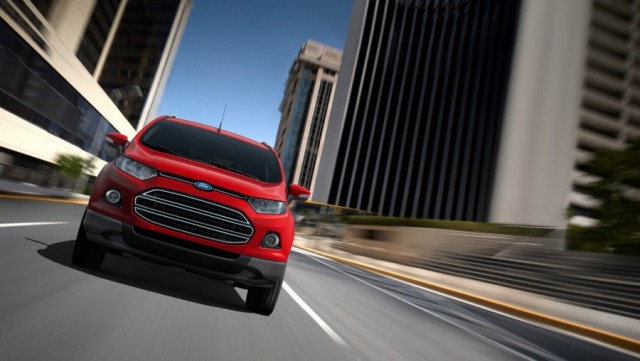
Ford is showcasing its top-of-the-line model, the EcoSport Titanium, on stage in Beijing, painted in distinctive Mars Red. A similar model is being revealed today in Salvador, Brazil, as EcoSport’s global launch momentum builds.

EcoSport Titanium has 16-inch aluminium alloy wheels and a chrome grille.

Inside, EcoSport offers a stylish, modern and well-equipped interior delivering new standards of craftsmanship and quality says Ford. The cabin – spacious for five people and their gear – has been engineered to deliver outstanding levels of comfort and should be ‘Ford’ quiet inside.

Kumar Galhotra, vice president, Product Development, Ford Asia Pacific and Africa, describes the design of the all-new EcoSport, which offers a confident stance, a high driving position, and a robust character.

While the Indian version may not get Ford SYNC with voice control as sold in the US and other markets, we definitely should get the voice activated controls. Smart Keyless Entry, Ford Power Start, and a cooled bin in the glovebox are other features.

EcoSport offers advanced safety items, such as dual front airbags and side curtain airbags, as well as Anti-Lock Brake System (ABS) and Electronic Stability Program.

To take the stress out of driving, the EcoSport comes with an array of driver-assist features including Hill Launch Assist and rear parking sensors.

Its agile, manoeuvrable chassis features electric power-assisted steering (EPAS) for outstanding steering response and improved fuel efficiency.

“The new EcoSport is full of personality,” said J Mays, group vice president, Design, and chief creative officer, Ford Motor Company. “Customers around the world immediately recognise its capability and SUV robustness that is achieved with aggressiveness. It is friendly and it’s a vehicle that really makes you smile.”

The all-new 1.0 L EcoBoost engine will debut in China in the all-new Ford EcoSport – offering the performance of a conventional 1.6-litre engine with less than 140g/km CO2 emissions. May we also remind you, the 1.0L EcoBoost has a footprint equal to an A4 sized sheet of paper! The 1.0-litre EcoBoost uses turbocharging and direct fuel injection to extract impressive levels of power and fuel efficiency from its three-cylinder engine block. In addition to this engine, we should also probably have the 1.5L Diesel mill on offer.

Ah, exciting times these! Do check out our Power Stroke section for the most comprehensive coverage of the EcoSport, well the best we can do without actually being there in Beijing!

Ford also introduced to the Chinese market the all new Kuga, the Edge and the Explorer.

Ford Ecosport Production Version Unveiling 2012 Auto China Beijing 04

There is a company in India which is called FIAL and it stands for Fiat India Automobiles Limited.  The location of this company’s plant is Ranjangaon near Pune in Maharashtra.  Though the company is called Fiat India it is actually a joint venture with Tata Motors Ltd, India’s third biggest maker of cars.  Automobile enthusiasts in general and Fiat fans in particular are acutely aware of the mess that Fiat is in India.  Mess could be an understatement, it is more like a morass in which it is firmly, very firmly stuck and unable to extricate itself from.

Let us rewind a bit here to understand what could have gone wrong with Fiat in India, while elsewhere in the world the company is going great guns; so great that it has taken control of the smallest of the big three American car makers, Chrysler.  Most know the story but to contextualize things let me refresh memories a bit.  Just a few years ago, Fiat was in the red, globally.  There was talk of the company selling of its other brands such as Ferrari and Maserati to keep afloat.  Fiat then brought in Sergio Marcchione who did a Carlos Ghosn for Fiat.  Fiat revived and strongly at that without having to sell its prized jewels.  The turn around had to do with two cars the Linea and the Punto, also called the Grande Punto.  The cars came to India too, they are still around but they failed to do to Fiat in India, what they did in other parts of the world.  Initially the sales of the Linea were encouraging as were those of the Punto but slowly they began to decline to alarming levels and again it is only now that they are just about reaching some basic level of respectability. So what went wrong with Fiat in India?  Good question which requires a long answer but can be summed up with one phrase Premier Automobiles Ltd.

Premier_padmini_deluxe_bw_1982

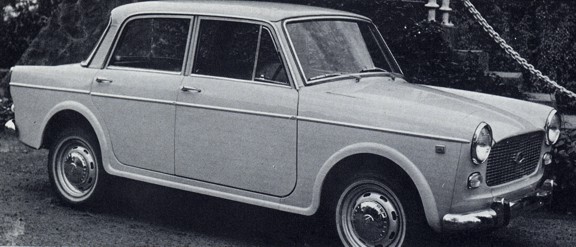
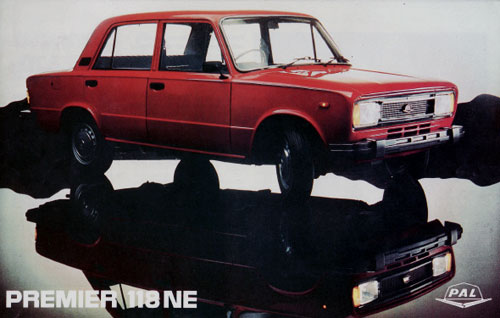
In the days of the licence Raj when there were only three players making automobiles (two making cars and one making Jeeps) Premier Automobiles Ltd. or PAL was selling the antiquated Fiat 1100d (the d standing for delight) after having procured licence for manufacturing and selling it here For many years it sold as the Premier Padmini after having been called Premier President very briefly after it could shed the Fiat name tag. In the 1980s PAL also started making the 118NE which was essentially a Fiat 124 with a Nissan engine (NE) of 1180 cc.

17 Premier 118 NE 1986

In the mid 1990s when the Indian Government decided to open up the automobile sector various Indian companies went in for collaborations.  PAL zeroed in on Peugeot of France to make the versatile Peugeot 309.  PAL-Peugeot cars were made from the Kalyan factory of PAL and when the French were proving to be a bit of a nuisance, PAL renewed its links with FIAT for the making of the Uno from its old factory in Kurla.   The nature of the agreement between PAL and Fiat was again a technology transfer agreement.  PAL ran into labour troubles and Peugeot left the country in a hurry, but the the Fiat brand name was so strong that the Uno garnered 2.94 lakh bookings.

Fiat Uno 6

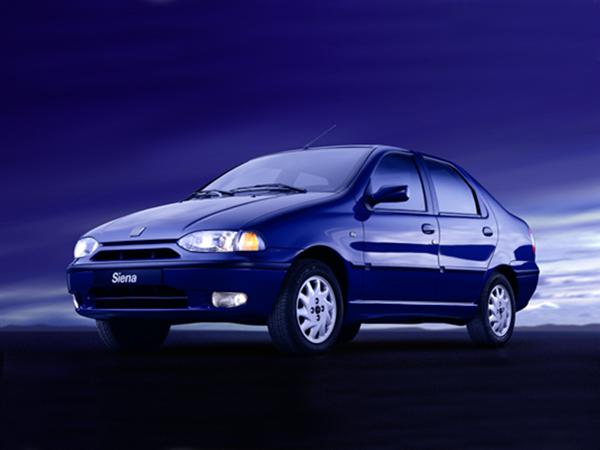
This was unprecedented even for Maruti and everyone waited with bated breath to see the Uno take over the Indian market.  Unfortunately PAL got quagmired in labour troubles and could not deliver too many Uno cars and also could not return booking amounts to those who had booked the Uno.  Thus started Fiat’s problems in India and as a brand it got tarnished since people that it was Fiat that was not delivering cars or refunding booking monies.  Fiat bought out PAL, took over the Kurla facility and started honouring the bookings and delivering the Uno but already that was too late.  People thought that things would change with the launch of the A178 platform cars and Fiat started off the three box Siena which looked solid but did not sell as much as Fiat wanted it to.  Fiat made the mistake of not launching the Palio hatchback first and when it finally came, it looked very much like the Tata Indica, both cars having been designed by the Italian design house IDeA.


Hire_tata_indica1Palio

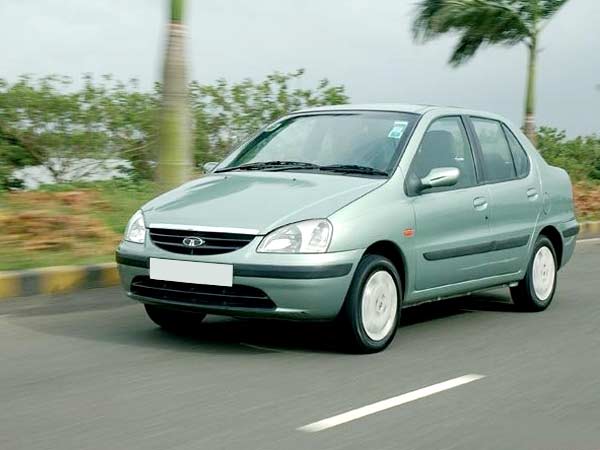
Apart from this the dealer network of Fiat was not interested in keeping customer’s happy and therefore, even Sachin Tendulkar could not sell Fiat cars as their brand ambassador. So finally Fiat and Tata joined forces by sharing dealerships which sold and serviced both Tata and Fiat cars.  Here in lay another problem.  Both car makers had very similar cars in the Indica and the Indigo and the Palio and the Petra (as the Siena later came to be called) and when Fiat brought in the Linea and the Punto on the opposite side of the showroom were the Vista and the Manza.  Interestingly enough the Vista and the Punto shared engines from Fiat while the Linea shared its engines with the Manza.  Now comes the clincher.  The Tata cars were more spacious and cost significantly less than the Linea and the Punto, making the Fiat’s look like not value for money cars.

2005 Fiat Siena Pic 24469Tata Indigo Sx

So without much ado let me get to the point.  Sharing showroom floors by Tata and Fiat is never going to work for Fiat since they will look like unnecessarily expensive and impractical cars. It works for Tata but Tata cars have a reputation, that they are not well built and that their chassis and handling leave a lot wanting.  Into the scenario let us bring in FIAL, the joint venture company.  It already makes the Manza at Ranjangaon.  Tata is always considered to be quality wise no match even for Maruti, which is really not saying much or saying a lot; that you choose, since Maruti is not known for great quality either.

Fiat Punto


Tata_Indica_Vista_1


So for both the companies to take the collaboration to the next level is probably the ideal solution.  Which means they jointly develop cars and platforms, sell them as Tata-Fiat or Fiat-Tata depending upon whose ego is bigger and forge synergies wherein they can deploy different cars in different price bands without there being an overlap.  Then the question of competitive selling between both the brands on the same floor space will also disappear.  Tata will get the strength of quality and Fiat will get numbers.  This kind of collaboration is also good for Jaguar/Land Rover and Chrysler.  Even today J/LR gets engines from Ford and Chrysler cars have the handling characteristic of beached ships.  Fiat makes very good engines and J/LR make pretty good chassis.  Now if mutual strengths are swapped, then we are looking at synergies extending to the other brands as well.  Needless to say those will not be jointly branded but they can take advantage of mutual strengths.

Fiat Linea Exterior 120Tata Manza

To me all this seems crystal clear.  Then the question is why are Fiat and Tata not seeing it.  I have an explanation which says that I am a megalomaniac who thinks he knows everything.  Another explanation could be that both brands want to build on their own strengths and so do not want to club themselves with another name.  That could be a valid reason, I don’t know, since I belong to the laity.  But sometimes laity and commonsense can see things better because they are not clouded by positions or by marketing theories.  Who was it that said “The sad thing about commonsense is that it is so uncommon”?

Last year, I had written a piece titled “The peculiar case of Michael Schumacher and of Valentino Rossi.  The piece was basically questioning the rationale of Schumacher returning to Formula1 racing after a three year hiatus and Valentino Rossi not gracefully retiring from MotoGP and pursuing some other form of racing such as rallying.  My point was that both of them proved sufficiently that they were greats and legends even while they were racing and the only thing that they could prove (one by returning to racing and the other by continuing to race and that too on a career destroying motorcycle) with their actions was that they were no legends but simply ordinary mortals.
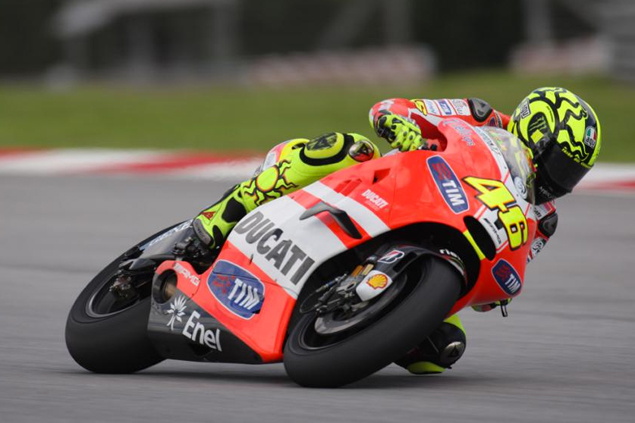
In this piece I shall leave Michael Schumacher out (I will write another piece on him soon) and only concentrate on Valentino Rossi.  By signing with Ducati and that too immediately after Casey Stoner vacated the seat there, Rossi shot himself in his feet, hands and whatever else you can think of.  Rossi has been in the MotoGP paddock since he was sixteen and at thirty two he had spent exactly half of his life in MotoGP (in its various categories such as 125cc, 250cc, 500cc, 990cc four stroke, 800cc four stroke) and in the process killed the reputations of Max Biaggi, Sete Gibernau and had he quit at the end of 2010 even Casey Stoner.  But Rossi decided to rub Casey Stoner’s nose into the ground along with that of Jorge Lorenzo’s before saying an imperious bye bye to MotoGP.  The Emperor leaving with his laurel wreath firmly on his head.  Unfortunately for Rossi fate had another script, one that would see the hero of 16 years turned into rubbish in one year and more.  In the process Rossi also destroyed the very formidable reputation of Jeremy Burgess, the man who trained under the watchful eye of legendary engine man Erv Kanemoto and then went onto produce great champions like Wayne Gardner, Mick Doohan and finally Valentino Rossi himself.

Rossi’s leaving of Honda and going to Yamaha was in itself an audacious move.  By making this move Rossi became only the second rider after Eddie Lawson to change manufacturers and still win World Championships.  He did one better than fast Eddie though, he won two consecutive races on two different motorcycles (even now the only one to do it) and two back to back world championships with two different manufacturers.  Yamaha that was reduced to an also ran for years when Biaggi and Carlos Checa rode for them, returned to glory days that it saw with King Kenny Roberts and the legendary Wayne Rainey.  In 2007 when rules were changed to bring 800cc engines in the place of 990cc engines, Ducati and the new signing Casey Stoner took risks that the Japanese factories did not take and therefore produced a new world champion in Stoner and also in Ducati.  There was then the issue of tyres.  Bridgestone were competing with Michelin and they favoured Ducati since all the big manufacturers such as Honda and Yamaha were firmly with Michelin.  The Ducati-Stoner-Bridgestone combination took risks and managed to become an unstoppable juggernaut that steam rolled all competition into submission.

Casey Stoner Ducati Team

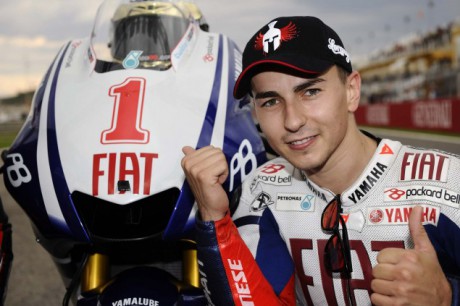
Then Rossi started kicking and crying and asked for Bridgestone tyres so that he could fight Stoner on equal tyres and though contractual obligations should have prevented this from happening, promoters Dorna ensured that Rossi had his way simply because Rossi brought more colour and popularity to the MotoGP paddock than did the rest of the paddock and all the previous generations put together.  After getting the Bridgestone tyres and issuing an ultimatum to Yamaha and Masao Furusawa and getting Yamaha to do his bidding, Rossi took the title right back from Casey Stoner and convincingly at that.  But worryingly for him his new teammate Jorge Lorenzo was proving to be a pain in the posterior just like Alex Criville proved to be for Mick Doohan.  The global economic recession and the control tyre that was introduced by Dorna, the promoters kept bringing the Spanish matador closer and closer to Rossi’s heels.  So the year 2010 was another occasion for Valentino Rossi to issue another ultimatum to Yamaha.  “Me or Him” choose.  Yamaha chose and wisely as time has proved.  Lorenzo is a gritty rider who refuses to give up, the Jim Courier of MotoGP so to speak.  He is nearly ten years younger than Rossi and for Yamaha it made sense to invest in the future rather than in the past.

Jorge Lorenzo Yamaha 460x306

Yamaha had called Rossi’s bluff and left him stranded.  Sense should have told him to quit MotoGP but the red mist descended and clouded Rossi’s judgement.  Stoner complaining of improper treatment at Ducati had already signed for Honda, a deal facilitated by his mentor at Ducati, Livio Suppo who himself moved to Honda in a managerial capacity one year earlier.  With Suzuki deciding to run only one motorcycle for 2011 and Kawasaki having runaway from MotoGP with its tail tucked firmly between its legs and with its head held low, there was only one possibility left, other than retirement and that was Ducati.  The antics of Rossi at Ducati are too well known for me to repeat them here.  But we shall touch upon some salient points which are necessary for this story.  What most people do not know and even those who know have forgotten is that Rossi’s crew chief Jeremy Burgess and the rest of the crew who are Australians did not commit to moving to Ducati with Rossi.  In fact, Burgess and co who were the team that Rossi inherited from Mick Doohan, were very reluctant to switch to Ducati.

Adesivi Valentino Rossi DottoreThe Doctor seems to have become the patient

Jeremy Burgess made all kinds of vague noises and some of those noises included a possibility of retirement.  At the same time Valentino Rossi also made noises and one heard clearly his saying that he would want to have Jerry Burgess and the crew to join him at Ducati but if necessary he would go it alone.  Stoner in turn took the Ducati crew chief Christian Gabbarini and his team to Honda.  At the end of the 2010 season, Stoner got off the Ducati and got on a Honda and went like a bullet, topping the timing sheets, one day after the season was over.  Rossi got off the Yamaha and onto the Stoner’s Ducati and went like a slug.  He finished fifteenth in a field of fifteen.  Casey Stoner had won three races towards the end of the 2010 season on the same motorcycle.  And thus began Rossi’s travails.

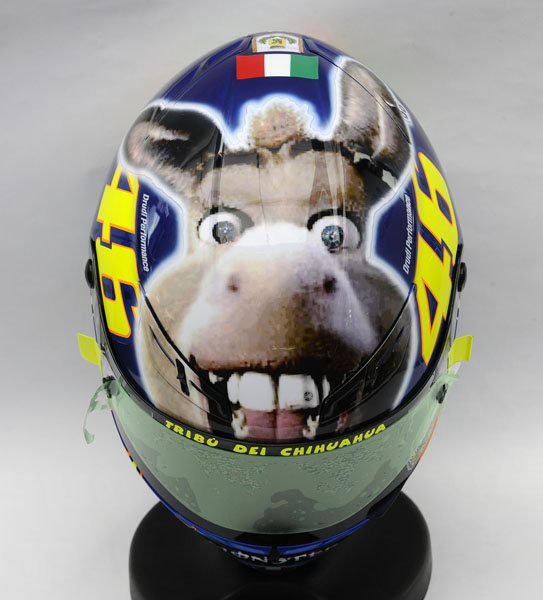
Rossi Donkey

Ahem, the picture says it all, doesn’t it?


He complained about the lack of front end feel on the Ducati.  He said the lack of a chassis and the use of the engine as a stressed member was depriving him of front and feel.  He also said that the swing arm of the Ducati was not to his liking leading to rear end chatter. So he tested the for 2012 Ducati with a revised swing arm and immediately pronounced that this bike was “his” and that the 2011 bike suffered from total lack of development under Stoner.  The complexity of the situation was that since Ducati’s 2012 bike was of 1000cc and since its mounting points for the rear swing arm were different, the engine had to be destroked to 800cc aided by the 81mm air intake restriction.  But it also meant that Rossi was using new engines and with a cap on the number of engines in a season this was a problem for Ducati.

ValentinoRossi Ducati3

But Ducati obliged and Rossi still went like a slug.  Then the experiments with a front aluminium end and then a full fledged aluminium twin spar delta box frame.  The 2012 season has been underway and after Rossi still complained about lack of front end feel.  For Rossi Ducati rotated the engine head backwards to move the weight to the front.  At the tests at Sepang and Jerez and also in the season opener at Qatar Rossi tiptoed like a maiden in high heels on a slushy ground.  In most practice sessions even Hector Barbera and Karel Abraham on the customer Ducati GP Zero were going faster than Rossi, and that is not to talk of Nicky Hayden who sat out most of the preseason testing due to injury but once on the bike went consistently faster than Rossi.  After the race was over, Rossi said he cannot ride the Ducati and placed the blame at Filippo Preziosi’s door saying that I do not get what I ask for.

Vrbike1

Er, should Rossi return to this?

Through all this Casey Stoner has been laughing inside his helmet and even when he does not have it on.  He has been pushing one insult after another at both Rossi and Burgess saying that he Stoner won a championship and races on the Ducati when it was operating at a quarter of a budget.  Rossi and Ducati have run out of excuses.  What remains now is a question.  How much more humiliation will Rossi take before he finally hangs up his helmet, in shame, I may add.

Valentino+Rossi+Middle+Finger Uh oh Valentino have you checked your own posterior?  You know what Casey has been doing to you right?