We normally desist from speculating but since the web is full of this idea that Nissan has decided to bring in the Datsun brand to developing markets such as India, Russia, Indonesia and Brazil by 2014, we thought we will write our opinion on this. This speculation has been around for sometime with the first round claiming that Nissan will bring in some of their old platforms on which they will build inexpensive cars but now some are claiming that this is the V platform with cheaper parts and different looking cars. The question one has to ask is why does Nissan need to resurrect the Datsun badge that it retired nearly 30 years ago? Some say that Nissan has premium image and does not want to dilute that image. Our perception is Nissan has no brand recall in India, premium or otherwise. If at all the Datsun brand is coming it will be for the reasons originally cited, old platforms and inexpensive cars. But even that is a risky proposition for Nissan, since over a period of time the connection between the two will be made. So in our opinion the Datsun brand will continue to rest in its grave. Simply because Nissan does not need it.

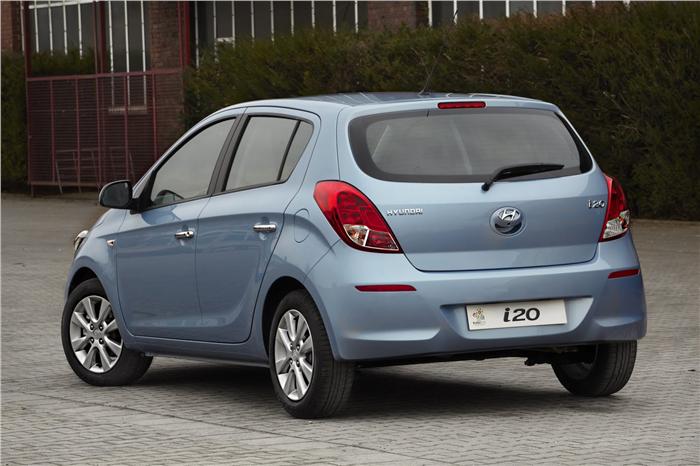
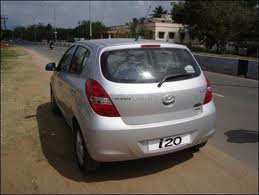
This is the facelifted i20 from Hyundai that will be displayed at the Geneva Motor Show and will then be launched in all markets including India. In our article reviewing the displays of various manufacturers we had written that the i20 was the first car that actually had the DNA of what Hyundai later started calling fluidic architecture when it launched the Verna. The picture above and the one below will show you how little Hyundai have had to tamper with the existing i20 to make it look fluidic. Despite giving the same kind of treatment to the i10 and Eon, they do not look like the entire architecture of the car is fluidic.
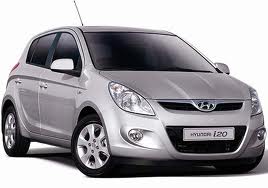
Here are the pics of the old i20
The last few days have seen the news that Tata is upgrading the Nano to a three cylinder engine potentially putting out anywhere between 70PS to 80PS of power. The story broke cover on the website of a very reputed magazine which has quoted Ratan Tata himself as having said this. Usually when rumours and gossip start circulating, auto webzines and regular magazines cite “our inside sources”, so when this news’ source is Ratan Tata himself it feels a bit strange. Adding to the mystique of this whole thing is that while Ratan Tata’s name has been used liberally, even the reputed automobile publication that started all failed to specify a context and that is what makes the whole thing intriguing. And poor little websites like us who have no contacts with anyone anywhere will faithfully reproduce the story, hoping that there would be more hits on the website and improve the rankings of the website. We resisted the urge to carry that story and waited for a few days to see if any clarifications would emerge about the context in which Ratan Tata supposedly said whatever he said.
Some of the automotive webzines have even carried their own analysis of what prompted the move to a three cylinder 80PS engine. Some of the analysts have cited the failure of the car being a result of the poor man’s car image that it carried and therefore people have stayed away from it. Now, Tata has learnt its lessons and is positioning the car as an upmarket offering to correct the mistake it made. Like all urban legends most of the analyses are based in projection of individual beliefs as universal beliefs. When the “follow the herd mentality” mentality kicks in more and more people will spread this theory that has germinated in the corner of some individual’s mind and thus urban legends are created. My take on this is that the Nano three cylinder 80PS petrol engine is very much an urban legend. I can feel some of you bristling with anger at this holier than thou attitude that I seem to be taking. I would like to clarify that there is no holier than thou attitude here. I shall present you with facts about the Nano which will clearly demonstrate to you as to why this whole thing is just an urban legend.
There is nothing like beginning at the beginning so just to ensure that we are all standing on the same ground let me narrate the famous story that apparently made Ratan Tata brief his engineers for the creation of the Rs. One Lakh car. The story is that in Mumbai while Ratan Tata was travelling in the rain he saw a couple of families consisting of husband, wife and two kids travelling on two wheelers in absolutely treacherous conditions and then he thought about how a four wheeler with a roof over the head would be so much more safer. Ratan Tata later clarified that the One Lakh was not to be taken literally, and that it was only a figure that he suggested so that his engineers would work on an inexpensive car that could be afforded by more people. It was the automobile press that gave publicity to the Rs. One Lakh figure and in fact the same publication that has broken this news had an editorial in which it called the car the TATA ONE. But a number of times Ratan Tata has said that he was looking at a car that would be more spacious, convenient and cheaper than the Maruti 800.
We all know that all kinds of ideas, including the use of plastics, no doors, just a tarpaulin roof were all considered and rejected since the man who gave the brief and the marketing team at Tata Motors insisted that this car will have to be a proper car. The only thing that they were willing to compromise was on luggage space since the car would be driven within the city. That was also the reason why a two cylinder 624cc engine sitting at the rear and driving the rear wheels was chosen. The same reason went into the creation of a petrol tank that is smaller than some of the petrol tanks on motorcycles. But apart from all that, the car was to be a proper car, not some half -hearted or completely botched up four wheeler.
A lot of thought went into the creation of a proper but inexpensive car. For example when you see the wheels on the Nano you will see that they are secured by three nuts and bolts instead of the use of four. You will also see that despite the high ground clearance the tyres are small. The dash board is very spartan and originally came in a shade of gray alone (though for the 2012 model things are a little more colourful). But the top end Nano not only came with a full HVAC system, it also came with mechanical central locking, anti-glare mirror, fog lamps, body coloured bumpers and front power windows. Yet the cost of this high end LX model was lower than the base Alto’s price on the road. As the owner of a Nano, I can assure that its air-conditioning is best in the class. But that is not the point that I am making. The point is that the Nano though a proper car was built to a price and this has extended into its mechanical components and the monocoque body shell. The Nano’s engine originally liberated 35 horses and the 2012 model has a re-calibrated ECU that allows the engine to put out a further three horses. This engine in a light weight car (which is what the Nano is) with a driver alone or just one passenger along with the driver can reach speeds in excess of 120 km/h. Yet the car’s top speed is electronically limited by the ECU to 105 km/h only.
The question then is what is the reason for this limitation? Let me introduce you to a couple of terms which are significant in the context of automobile engineering (my apologies to those who are already familiar with these). The first term that is necessary is friction, the second is torsional rigidity, the third is strength of material and the fourth is tolerance. The Nano has wheels that have only three wheel nuts. Increase the speed of the Nano beyond the top speed of 105 km/h and the wheel nuts and bolts will start melting due to the excessive heat generated by friction. The Nano has a corrugated roof, and that is to bolster the torsional rigidity of the monocoque which is subjected to lateral and vertical forces when it is in motion. In order to keep the weight of the car light, the monocoque’s rigidity has been limited to accepting different forces acting on it only to a certain extent, and if the forces increase beyond that the car’s monocoque does not have the strength or the tolerance to absorb them and that would mean that the car will start to fall apart.
While unquestionably the Nano is a proper car, it is that in the context of certain limitations. If those limitations are not respected or adhered to the car will no longer be proper and needless to say, it will cease to be safe. So to tell this story in one line, the Nano as it has been conceived and exists today cannot take an engine that puts out 70 or 80PS of power. Given how tightly the existing engine itself is put in place it is difficult to believe that an engine with an additional cylinder can be shoe horned into the rear. In fact the reason why Tata is not introducing a diesel version though a twin cylinder diesel is available on the Tata Ace could have something to do with this. The diesel engine is two cylindered but it is bulkier, heavier and occupies more space. The breaking story also talked about how the new Nano will have bigger wheels and even bigger tyres. Please look at the wheel wells, take a peek inside them and see if that is possible. It will also become to put the spare wheel in the front or in the bonnet where it exists today because a bigger size will not have the space to fit in there.
Now to the part that the car is not selling because of the perception that the car is cheap. As a Nano owner I have been part of many surveys that have been conducted by Tata to seek feedback about the car. I have been told by the dealers and the personnel who call from Tata Motors that the LX variant is the highest selling followed by the CX which has an air conditioner only. The base variant is the one that sells the least. What can be surmised from this is that people have sufficient money to buy the variant with all the bells and a few whistles as well. Tata Motors has therefore shifted focus on to selling the LX and CX models, given more colours to choose from, differently coloured interiors and the all important ORVM on the left side. The mistake that Tata made was in underestimating the buying potential of the target audience. The chappie riding a two wheeler with wife, kids, mother in law and luggage can pay up to Rs.2.5 lakhs (on road price) and therefore will go for something that looks upmarket. The Nano is also a second car for many and is a favourite with women who not only find it cho chweet but also find it a breeze to drive. So it is not as if the rich are shying away from buying a car that is considered to be cheap. They are the ones who are actually buying it.
Lets face it, the Nano cannot take an 80PS engine. It will mean complete re-engineering to make it compatible with that kind of power. So either Ratan Tata has been misquoted (he maybe referring to a European specification that needs this or is talking about a car that fits in between the Nano and the Indica and a car called Dolphin is supposedly under development to sit in that space) or has been simply misunderstood, unless for some strange reason Ratan Tata was just talking nonsense. Whatever it is, this whole thing is a huge urban legend in the making or it is that for some inconceivable reason Ratan Tata has given up on a great idea and its execution, both of which have won his company approbation all across the world and made even the mighty Carlos Ghosn invent the term frugal engineering.
After the conclusion of testing at Sepang in Malaysia, as expected it was Casey Stoner who topped the timing sheets. But on the second day of the three day test an intriguing development took place in the Honda camp. A Honda engine blew up in testing and this engine was immediately flown to Japan to investigate the causes behind its failure. Honda did not test further on the second day claiming that they were not interested in testing in the rain and the dampness of the track. This gave Ben Spies the chance to go fastest in one of the sessions of the second day on his Yamaha. Jorge Lorenzo too went well on the other Yamaha. The third day however saw the Honda’s back on track and Casey Stoner at the top of the timing sheets. The Yamahas were in striking distance and Andrea Dovizioso riding for the Monster Yamaha Tech3 outfit made the most improvement.
The Ducati GP12 closed the gap to the leaders to just a little over a second, but worryingly for Rossi now apart from the factory Hondas and Yamahas, the satellite Yamahas also were ahead of the factory Ducati. This could mean that once again Valentino Rossi is in a situation where he will be dicing for the position number 6 or 7. Nicky Hayden too complained about the motorcycle but was categorical that the problems that he was experiencing were not similar to what Rossi was experiencing. However Ducati chief Filippo Preziosi has expressed satisfaction with the progress made by the Ducati team and believes that there are still things that can be done to improve the motorcycle. Ominously though Casey Stoner has been complaining about the Honda and the rear end chatter that it was generating and believes that once that is sorted out, he can go much faster. That must give Rossi and Ducati huge nightmares and sleepless nights.
One positive development was that the CRT motorcycles have been showing improvement. Colin Edwards riding the Suter-BMW closed the gap to Stoner to just about 3 seconds and already Suter Racing has provided the NGM Forward Racing team with a third iteration of its new chassis. The Avintia Racing Team (BQR Racing) using the FTR-Kawasaki combination was able to iron out reliability problems that they had suffered previously and also made up adequate time. Yonny Hernandez surprised everyone with his speed which brought him 4 seconds adrift of the leaders but Ivan Silva was more than 7 seconds adrift on the other Avintia motorcycle. But all these are good portends because the CRT category is new, and on shoe string budgets they have been able to show more improvements than the factory and satellite teams.
In the last few years Audi has revolutionized endurance racing, specifically the Le Mans 24 hours, by racing with cars featuring a diesel engine. Though this is not the first time a diesel engine was used for motor racing (that credit goes to a now forgotten team in Indycar racing during the late 1960s), it was definitely was the first time that it was being used in endurance racing and more importantly it was the first time that diesel power became all conquering, beating back challenges from the more well known petrol engines. Peugeot took the battle to Audi with its own diesel challenger but unfortunately due to the financial mess that it finds itself in, Peugeot has announced its withdrawal from the World Endurance Racing series.
The absence of Peugeot has been compensated by Toyota who is entering the World Endurance Championship with a hybrid car featuring an IC engine and electric motors. Audi not to be outdone has picked up the gauntlet thrown by Toyota. Audi is also racing with a hybrid, a diesel and electric hybrid at that, but it also bringing back newer and advanced version of its once all conquering quattro technology.
Audi’s press release
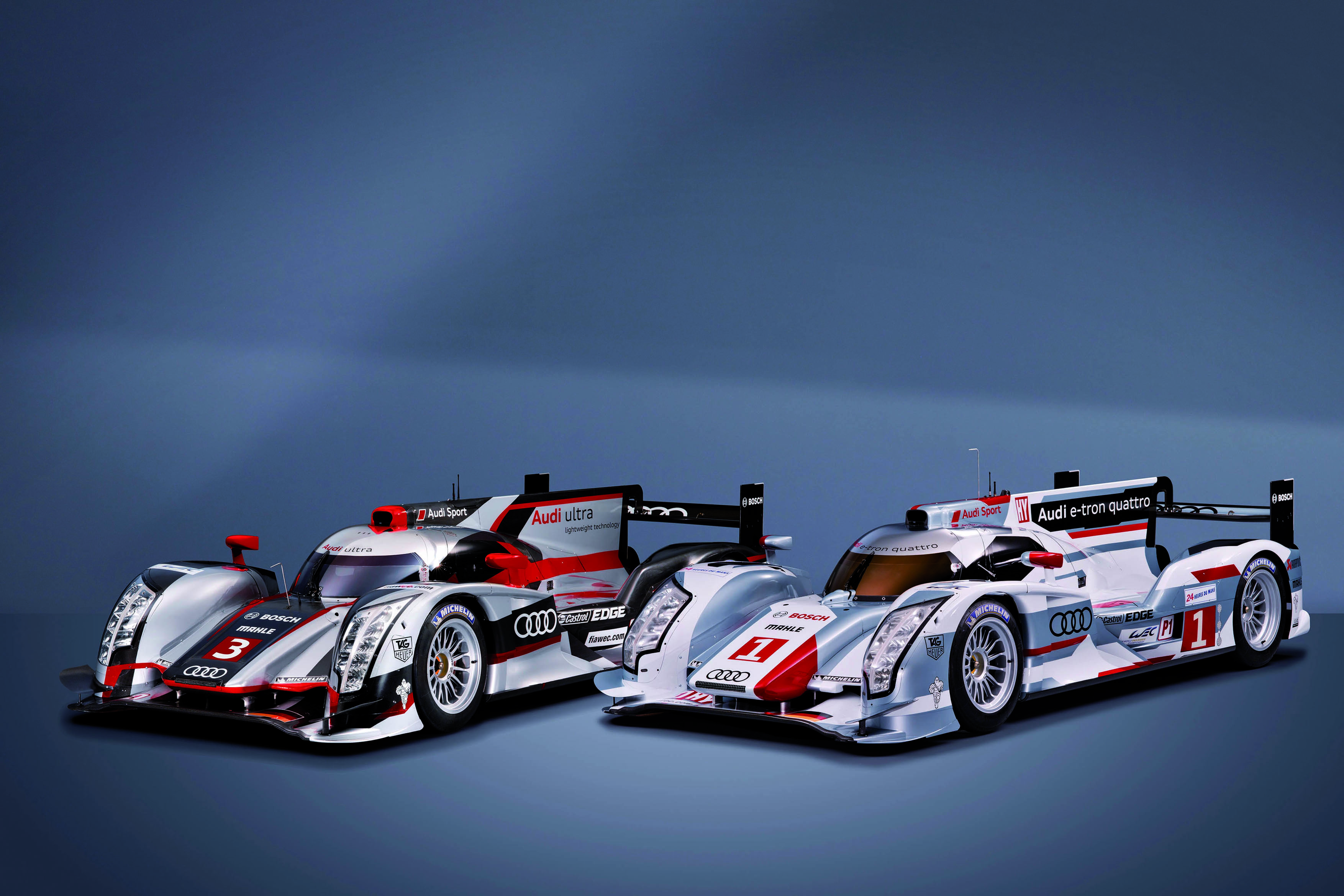
Motor sport is used yet again by AUDI AG to pioneer new technology: the brand with the four ring’s new Le Mans race car is the world’s first LMP1 car to combine a highly-efficient TDI with a hybrid system. quattro drive also celebrates its comeback to the race track with the prototype – in a entirely new form.
Audi R18 e-tron quattro is the name of the new Le Mans prototype that makes its race debut on May 5 in the 6-hour race at Spa-Francorchamps (Belgium) and fights for overall victory at the famous 24 Hours of Le Mans (France) on June 16/17. Audi unites two technologies in a fascinating way to create a new type of drive, which is also already being tested for future use in production cars: e-tron quattro. Hiding behind this description is the next generation four-wheel drive with which Audi combines the advantages of the proven quattro drive with the potential of electromobility. To this end one vehicle axle is powered conventionally, the second by electric motors.
“Audi has always consciously selected championships and categories in racing that have a close relationship to production and therefore have technical relevance for the Audi customers,” explains Head of Audi Motorsport Dr. Wolfgang Ullrich, who personally drove the new Audi R18 e-tron quattro onto the stage on Wednesday evening during its world premiere in the Audi Training Center at Munich airport – electrically and almost silent. “quattro, TFSI and TDI are three excellent examples of how motorsport has stimulated production development. A similar tendency is apparent with the e-tron quattro: we test a completely new technology on the race track before it’s introduced to the Audi production line.”
On the Audi R18 e-tron quattro kinetic energy is recovered on the front axle during the braking phase. It is fed as electric into a flywheel accumulator before being retrieved under acceleration again above a speed of 120 km/h. During this procedure only the front axle is integrated. The V6 TDI power plant producing 375 kW (510 hp) continues to transmit its power to the rear wheels. Both systems complement each other to create the new drive principle e-tron quattro.
Project began in February 2010
The project e-tron quattro for motorsport started in February 2010. Only 18 months passed from the initial conceptual ideas to the first test. “This is a relatively short cycle for a technology that has never been tested in motorsport and which still doesn’t even exist in production,” stresses Dr. Martin Mühlmeier, Head of Technology at Audi Sport. “The challenge is correspondingly big.”
Audi Sport developed the Audi R18 ultra in parallel to the Audi R18 e-tron quattro – because Audi takes a two-pronged approach this year in the 24 Hours of Le Mans and in the newly created FIA World Endurance Championship (WEC) – the 2012 model year Audi R18 is built with and without hybrid drive. The trick: the base of both cars is completely identical, which is why the additional logistical effort is kept limited for Audi Sport and the race team.
“The TDI engine invented by Audi is still the most efficient drive in the world,” says Dr. Wolfgang Ullrich. “We are convinced that the TDI has even more potential. This is why Audi not only supports the hybrid in motorsport as it does in production, but in parallel also the further development of the conventional drive.”
Innovation in transmission area
The R18 e-tron quattro’s twin brother more than lives up to its model name ‘R18 ultra’: it is the lightest Le Mans prototype that Audi Sport has ever built. To compensate for the additional weight of the hybrid system the subject of lightweight design and construction was the focus throughout development of the 2011 Le Mans race winning R18 TDI. In addition to the many detail optimizations there is also a genuine innovation in the transmission area: a new gearbox with a carbon-fiber composite housing was developed for the R18 – a premiere for endurance racing.
“The new R18 ultra is a distinct evolution of last year’s Le Mans race winning car,” summarizes Head of Audi Motorsport Dr. Wolfgang Ullrich. “Our drivers’ impressions were very positive from the first moment. Without the weight optimized R18 ultra we would have not been capable of realizing the R18 e-tron quattro which is absolutely identical with the exception of the hybrid system.”
Le Mans 2012: two R18 e-tron quattro and two R18 ultra Audi Sport Team Joest will field two R18 e-tron quattro and two R18 ultra prototypes in the Le Mans 24 Hours on June 16/17. The two hybrid cars are driven by last year’s winning trio Marcel Fässler (CH), André Lotterer (D) and Benoît Tréluyer (F) as well as Dindo Capello (I), Tom Kristensen (DK) and Allan McNish (GB) who boast a total of 13 Le Mans wins between them. New signing Loïc Duval (F) starts together with Timo Bernhard (D) and Romain Dumas (F) in an R18 ultra as do Marco Bonanomi (I), Oliver Jarvis (GB) and Mike Rockenfeller (D). Audi Sport Team Joest also contests the World Championship round at Spa-Francorchamps (Belgium) on May 5 in the same formation. At the same time the race doubles as a dress rehearsal for the 24 Hours of Le Mans. Only Mike Rockenfeller will miss this race due to a clashing date with the DTM. After the 24 Hours of Le Mans, Audi plans to enter an R18 e-tron quattro and an R18 ultra in the FIA World Endurance Championship (WEC). André Lotterer and Allan McNish have been nominated as the drivers so far.
At the World Championship opener at Sebring (USA) on March 17, Audi Sport Team Joest relies on the proven R18 TDI from last year, which are driven by Marcel Fässler/André Lotterer/Benoît Tréluyer, Dindo Capello/Tom Kristensen/Allan McNish as well as Timo Bernhard/Romain Dumas/Loïc Duval.
Audi, one of the car manufacturing companies in the Volkswagen group, has seen spectacular growth in the year 2011. Not only has it become one of the fastest growing luxury brands whose growth rate has exceeded the growth rate of the segment, it also has become the most profitable. This growth is worldwide and the brand is now a very serious threat to Mercedes Benz and BMW. It has already left other luxury brands behind in the growth process and now has its fellow German brands to battle it out with. Even in India, Audi’s growth has been nothing short of spectacular and despite having a smaller dealer network than Mercedes Benz and BMW it has still been selling in numbers that must be a concern to the other two German brands.
Here is the press release from Ingolstadt in Germany where Audi is headquartered
The Audi Group once again set records for deliveries, revenue and key earnings data in the fiscal year 2011. The brand with the four rings sold more than 1.3 million cars in the past year, at the same time increasing revenue to €44.1 billion. Operating profit for the Audi Group rose to over €5.3 billion in the past fiscal year. The operating return on sales climbed from 9.4 to 12.1 percent.
Rupert Stadler, Chairman of the Board of Management of AUDI AG: “Never before have we had such a large increase in deliveries in a single year. 2011 was the most successful year in the history of our company. We want to continue on this path in 2012 and grow more strongly than the market as a whole.” Experts expect the overall car market worldwide to grow by around 4 percent this year. 2011 was a record year for Audi with regard to all key performance indicators. For example, the number of Audi vehicles delivered increased by 19.2 percent or approximately 210,000 to 1,302,659 (2010: 1,092,411). Company revenue increased at a much higher rate than sales, by 24.4 percent to €44.1 (35.4) billion.
The Audi Group improved its operating profit by a little over 60 percent to more than €5.3 (3.3) billion. Operating return on sales rose from 9.4 percent in 2010 to 12.1 percent in 2011. Axel Strotbek, Member of the Board of Management of AUDI AG for Finance and Organization, confirms the qualitative growth strategy: “With this rate of return ratios, the Audi Group is one of the most profitable companies in the automotive industry.” In addition to the increase in volume, the higher-quality model mix also had a very positive impact on revenue and profit development. For example, the share of revenue generated by the A6, A7, A8 and Q7 model series, also known as the C- and D-segments (full-size and luxury segments), rose from 25 to 38 percent between 2009 and 2011. At the same time, Audi has successfully continued expanding its model range in the lower segments since last year with the A1.
Cost of sales, distribution costs and administration expenses rose at a lower rate than revenue development in the past fiscal year thanks to ongoing process and cost optimizations. In addition to higher revenue quality, the significant increase in operating profit is attributable in particular to overall improvement in cost structures. As the result of an increase in the financial result to €692 (2010: 293) million, the Audi Group’s profit before tax reached a new record level of over €6.0 (3.6) billion – an increase of 66 percent. Return on sales before tax climbed to 13.7 percent following 10.3 percent in the prior year. The Audi Group improved the return on investment – in other words, the return on the average capital invested – to 35.4 (24.7) percent.
The Board of Management expresses its thanks to all employees for their passion and commitment. The Company’s financial success pays off for Audi employees as well. The Audi profit sharing agreement yields an average of €8,251 for each employee in Germany. Assuming that there are no major changes in the underlying economic situation, the Company plans to generate an operating profit for 2012 in line with the level attained in the record-breaking year 2011. In particular, the attractive, young product range will have a positive impact on earnings performance here.
“We have been following a strategy of sustainable and qualitative growth for several years, and this is reflected once again in the key financial indicators for the 2011 fiscal year,” says CFO Strotbek. The brand with the four rings wants to continue on this path with successfully launched new models such as the Audi Q3 and A6. In addition, the Company is introducing 18 models on the market this year, ranging from the A1 Sportback to the latest generation of the high-volume model Audi A3.
The Company plans on investing some €13 billion between 2012 and 2016. For example, Audi is expanding the site in Győr (Hungary) into a full-scale car plant which will build a new member of the A3 family from 2013. Audi is also investing heavily in Germany, planning to spend just under €8 billion at the Ingolstadt and Neckarsulm sites in the coming five years. The investment program is focusing in particular on new products and technical innovations. Audi is also expanding its production capacity in China within the framework of the joint venture FAW-Volkswagen Automotive Company, Ltd. In addition to the site in Changchun in northern China, the Company is currently building a new facility in the south of the country. Production at the plant in Foshan is scheduled to begin in 2013.The Company will also be hiring new employees in Germany in 2012: An additional 1,200 experts will join the team, in particular in the future-oriented fields of lightweight construction and electric mobility.
India Yamaha Motors has registered a growth of 23% in sales for the month of February, 2012. Since the launch of the Yamaha R15, followed by the FZ series and the Fazer, Yamaha has seen its fortunes take a turn for the better in India. India is also the base for a significant number of exports. The launch of scooters in this calender year should help Yamaha increase its sales exponentially.
Here is their press release.
India Yamaha Motor continued to show an upward trend in the sales for the month of February 2012 by registering a growth of 23% in its overall sales as compared to February 2011. In the domestic market, the company clocked sales of 27,050 units in February 2012 vs. 23,384 units in the same month last year, registering a 15.7% growth. The export figures stood at 13,605 units in February 2012 while 9,662 motorcycles were exported in February 2011. The overall sales recorded were 40,655 units in February 2012 vs. 33,046 units in February 2011.
Speaking on the results, Mr. Roy Kurian, National Business Head, India Yamaha Motor Pvt. Ltd., said, “We are very pleased with the sales growth that we’ve witnessed in the past month on account of our strong product portfolio and high customer confidence in us. Our accolade models such as the YZF-R15, FZ series and SZ series have been very well accepted. We are also planning to implement our Best 3S (Sales, Service & Spares) set up in tier-2 & tier-3 cities and increase sub-dealers in the rural areas as well to further boost our sales.”
Yamaha recently received two prestigious awards – the “Variant of the Year – Bike” for the YZF-R15 by Car India & Bike India Awards 2012 and the “Two-Wheeler Manufacturer of the Year” by NDTV Car & Bike Awards 2012.
Yamaha continues to reinforce its relationship with the customers and has launched the ‘YES!YAMAHA’ campaign that endeavors to provide the Best 3S Experience so that the customer always appreciates Yamaha and accepts the brand like the word “YES”. The company is making steadfast efforts by conducting consumer-centric marketing initiatives such as Yamaha R15 One Make Race, Yamaha Safe Riding Science (YSRS) for college students & kids, Yamaha Service Camps to name a few.
About India Yamaha Motor Pvt. Ltd.
Yamaha made its initial foray into India in 1985. In August 2001, Yamaha India became a 100% subsidiary of Yamaha Motor Co., Ltd, Japan (YMC). In 2008, Mitsui & Co., Ltd. entered into an agreement with YMC to become a joint-investor in the motorcycle manufacturing company “India Yamaha Motor Private Limited (IYM)”.
IYM operates from its state-of-the-art manufacturing units at Surajpur in Uttar Pradesh & Faridabad in Haryana and produces motorcycles both for domestic & export markets. With a strong workforce of more than 2,000 employees, IYM is highly customer-driven and has a countrywide network of over 400 dealers. Presently, its product portfolio includes VMAX (1,679cc), MT01 (1,670cc), YZF-R1 (998cc), FZ1 (998cc), Fazer (153cc), FZ-S (153cc), FZ (153cc), SZ, SZ-X & SZ-R (153cc), YZF-R15 Ver 2.0(150cc), SS125 (123cc), YBR 125 (123cc), YBR 110 (106cc) and Crux (106cc).

Daimler India Commercial Vehicles unveiled the first light to heavy duty BharatBenz trucks weighing 9 to 49 tonnes GVW. The first of these trucks will be launched in the third quarter of this year, and the entire range will be launched by 2014.
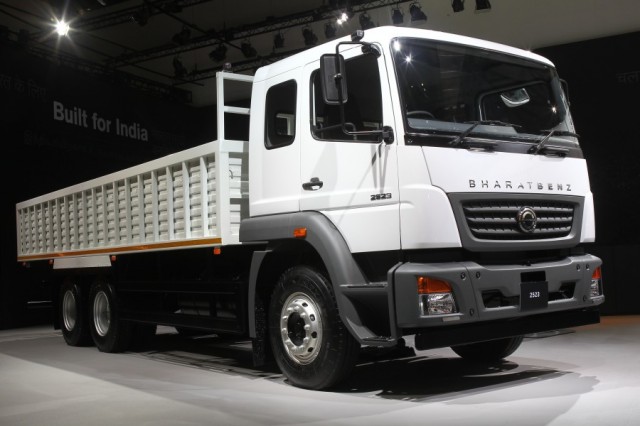
The BharatBenz 2523 haulage is a six-cylinder inline, 230 HP product in 6×2 configuration with 6.4 litre engine capacity. This 25,000 kg GVW truck comes with six forward and one reverse gear-box with overdrive.


The BharatBenz product range includes light, medium and heavy-duty commercial vehicles. The BharatBenz heavy-duty truck is built on the Mercedes-Benz Axor platform, while the light and medium duty trucks are based on the Fuso Canter series. The light, medium and heavy-duty range of BharatBenz commercial vehicles will be manufactured at the new plant in Oragadam near Chennai. The 160-hectare facility will be put into operation in a few weeks, and production trials of engines and transmissions have already begun. Although the plant’s production capacity will initially be 36,000 units per year, it can be ramped up to 70,000 units, says Daimler. DICV is currently working together with more than 450 supplier companies, and future BharatBenz trucks will have a localization rate of 85 percent.
The retail network which will include 70 locations by the end of this year will be expanded to more than 100 dealerships by 2014.
The complete range of 17 commercial vehicles by the new Daimler brand will be available by 2014.
Commenting on the product premiere, Andreas Renschler, the Daimler Board of Management Member responsible for Daimler Trucks and Daimler Buses, underscores the importance of the modern domestic segment in India. “India’s volume segment promises considerable growth accompanied by a rise in customer expectations,” Renschler said. “Our Global Excellence Strategy is bearing fruit here. Using existing truck platforms as a basis, we developed new products specifically for the Indian market, which are also manufactured and sold here in India. Like all Daimler commercial vehicles, BharatBenz trucks will fulfill customers’ expectations with regard to quality, reliability, and efficiency.”
Marc Llistosella, CEO and Managing Director of Daimler India Commercial Vehicles, emphasized the following at the product presentation: “Today’s presentation of BharatBenz products is a significant moment for us. Following a long development phase and over 4.5 million kilometers of testing at our Oragadam proving grounds, we are more than ready to conquer the Indian market. The fact that Daimler is offering a brand for the Indian market shows how important this region is for us. We are investing 44 billion rupees (around €700 million) into highly modern development and production facilities, thus demonstrating our commitment to this fascinating country.”
MINI is nothing if not ‘iconic’. We cannot resist but mention the impact the Classic Mini had on the 1969 cult flick ‘The Italian Job’ and then again in the 2003 version of the movie, which was again a fantastic watch, thanks to the cast which included the MINI Coopers. Starting out its life on a napkin, the first Mini was envisioned by Alec Issigonis as a compact car that made the most efficient utilization of space. The engine was mounted sideways to make more space for the occupants. Since its debut on 26 August 1959 with the classic Mini, the brand has come a long way and over the course of the journey has evolved with the times, but retained a number of distinct design elements, that are signature MINI.
Front end

The face of MINI is defined by the elliptical headlights set into its bonnet. The contemporary interpretation of the classic hexagonal radiator grille and a pair of “beauty spots” in the form of circular foglamps, complete the MINI identity.
Wedge shape
A shoulderline rising from front to rear and windows tapering towards the rear produce the hallmark MINI dynamic wedge shape.
Jewellery icons
An array of chrome highlights and beautifully worked details are integrated like gems into the design of the car.

Roof resting on top
The DLO ( Day Light Opening) or the greenhouse, the glazed section of the passenger compartment, creates the impression of a band of glass wrapped around the car. The high-gloss black A, B and C-pillars are integrated into the glass surfaces. The contrast between the colour of the greenhouse and roof creates the impression of a floating roof resting on top of the greenhouse.


Side scuttle
This design cue can trace its roots back to the very beginning; it follows the line of the welding seam sloping down the front side panel of the classic Mini.
Chromed door handles
The chromed door handles of the classic Mini have since been revisited repeatedly, ensuring iconic status. MIN says that the opening the door of a MINI represents the initial physical introduction between the car and its driver, not unlike a handshake.

Stance on the wheels
The go-kart handling for which MINI is famed is the product of having its wheels mounted at the extreme corners of the car – similarly to a go-kart. This is essentially thanks to the very little front and rear overhang. The mass-increasing “cascading” effect of the body as it heads down towards the wheels gives the car its essential roadholding, says MINI.
Vertically stacked rear lights
The unmistakable, vertically stacked rear lights represent another nostalgic nod to the classic Mini. They are bordered by an elegant chrome surround sealed against the body without any direct connection to joins and seams.

Circular elements
Elliptical forms carry over the style defined in the circular exterior elements to the interiors.
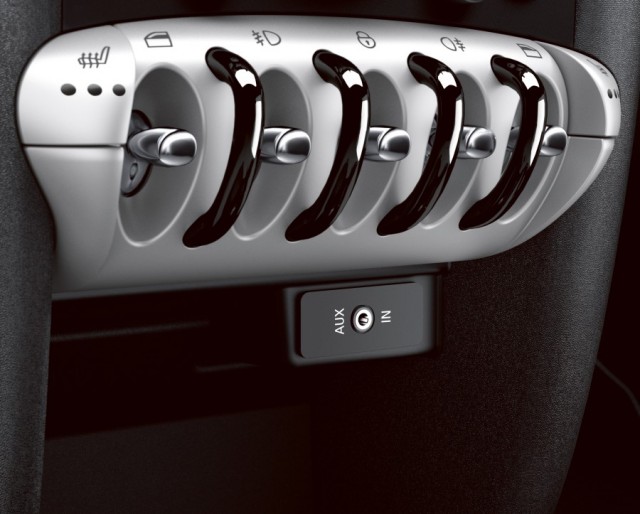
Toggle switches
Controls like the distinctive toggle switches add an extra flourish to the centre stack and even the roof liner.

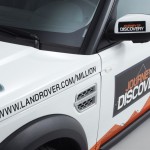
The 1,000,000th Land Rover Discovery has been built at Jaguar Land Rover’s Solihull Manufacturing Plant near Birmingham in theUK. To celebrate this milestone , Land Rover sent the 1,000,000th vehicle on a ‘Journey of Discovery’ from its birthplace in Birmingham to Beijing in China, yesterday the February 29th, 2012.
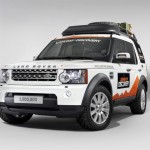
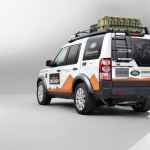
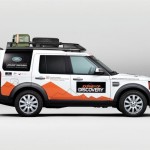
Land Rover says this will be another opportunity to demonstrate the Discovery’s class defining versatility and all-round capability.
The 50-day, 8,000 mile adventure will be undertaken by three Land Rover Discovery 4’s and a team of 12 men travelling through more than a dozen countries across Europe and Central Asia, culminating at the Beijing motor show on 23 April.

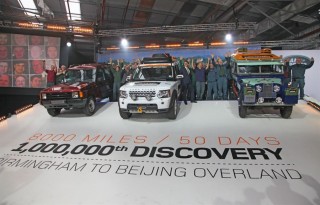
The expedition also presents Land Rover with the opportunity to raise £1million (GBP) for the company’s Global Humanitarian Partner, the International Federation of Red Cross and Red Crescent Societies (IFRC). The money will be used to support a much needed water sanitation project in Uganda says Land Rover.


The Journey of Discovery launched with help from a number of renowned experienced explorers who have all used the Land Rover Discovery in their adventures – including Bear Grylls, Sir Ranulph Fiennes, Ray Mears, Monty Halls and Polar explorer Ben Saunders
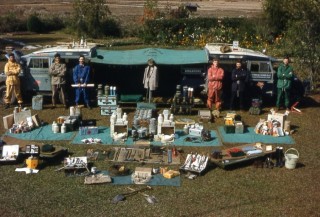
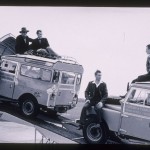
The inspiration for the 2012 Journey of Discovery comes from the ‘The First Overland Expedition’ of 1955, in which a team in Series 1 Land Rovers set out from Birmingham to Beijing.
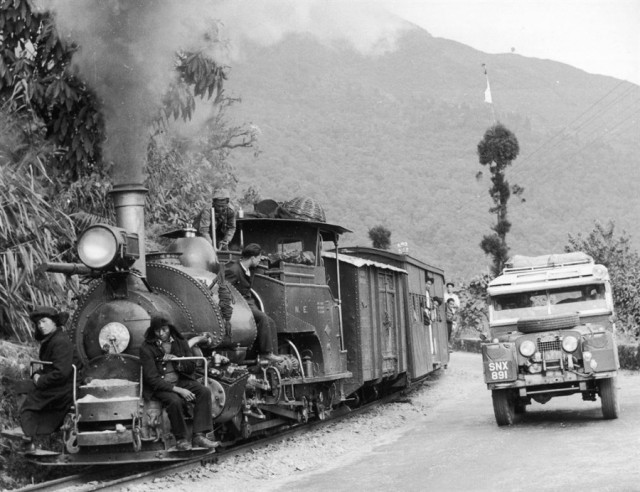
1955 First Overland Expedition : Series 1 Land Rover with Darjeeling Railways

1955 First Overland Expedition : Series 1 Land Rover in the Mesai River

1955 First Overland Expedition : Series 1 Land Rover in the Brahmaputra Jetty