Ford Driving Skills For Life Chennai Program Figo 01

Celebrations at Ford India continue through the festive season with Ganesh Chaturthi in Maharashtra this September. In its attempt to ‘Go Further’ and reach out to its customers, Ford is offering its customers in Maharashtra a special ‘Festival Funday’ offer.

During the ‘Festival Funday’ offer, Ford customers in Maharashtra can avail of special discounts and savings of upto Rs. 28,000 on the Ford Figo 1.2 Duratec and upto Rs. 25,000 on the Ford Figo 1.4 TDCi Duratorq. The award winning Ford Figo, which holds a place in the prestigious Limca Book of Records as India’s most awarded car, has already found over 200,000 proud customers across India and Ford India’s overseas markets.

“At Ford, we believe in the Indian ethos of celebrations and festivities. The Festival Funday offer in Maharashtra, this Ganesh Chaturthi, is our way of trying to make the consumers’ celebrations a little bit more special. For us, the festive season got off to a great start with our Onam celebrations in Kerala and we hope this spirit of celebrations at Ford continues through the rest of the festive season in other parts of India,” said Vinay Piparsania, Executive Director, Marketing, Sales and Service, Ford India.

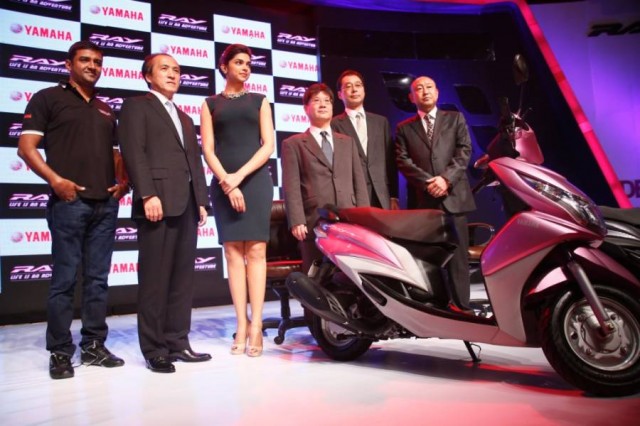
Yamaha Ray Launch India 01

There’s a reason Yamaha chose Hyderabad to launch the Ray. Andhra Pradesh, Kerala and Tamil Nadu seem to be the states most open to alternatives to the Honda Activa. Travel down South and the chance that you’ll spot a Duro, Rodeo or a Wego is much higher than elsewhere. Mahindra 2 Wheelers understands this and had a separate launch for the Duro DZ in Hyderabad and one in Chennai for the Rodeo RZ.

While targeting an extremely specific segment of the market seems to be a risky move, the new Ray, which Yamaha says has been designed and engineered to be compact, easy to use and stylish might make a strong dent in the market without getting lost in the crowd. Yamaha builds its case by pointing out that in India’s scooter market, most scooters are larger and heavier targeting male users and intended to be shared by members of the whole family. The Ray might just catch the fancy of the ladies with its sole aim of pleasing the fairer sex.

Yamaha RAY Scooter Prototype

The Ray is powered by a 113cc engine with power to the wheels through a CVT. Yamaha claims the engine achieves good fuel economy in the practical-use speed range, a power output characterized by smooth start-up acceleration and quick ‘passing acceleration’. Riders should also be able to reach the ground easily with the specially designed seats. The side and center stands are also said to be easy to operate.

At the launch, Mr. Hiroyuki Yanagi, President and CEO of Yamaha Motor Co. Ltd., said “For the global Yamaha Motor group, India Yamaha Motor holds great importance as a strategic production and sales base. By 2018, our total production capacity in India will reach 2.8 million units. At that point, India will play an extremely important role among Yamaha group, not just in supplying to the Indian domestic market but also in exporting to other markets around the world. We will be working aggressively to transfer our latest technologies to India in the hope of making every contribution we can to the development of India’s two-wheeler industry”

Speaking on the occasion, Mr. Hiroyuki Suzuki, CEO & MD, India Yamaha Motor Pvt. Ltd. said, “I am positive that we can get a strong presence soon in the Indian scooter market. Our dealers in India are dedicated to improving their facilities and services for the scooter sales. We have expanded our dealer network and specially improved customer care quality for female customers by appointing more female staffs at customer contact points and introducing female customer care programs. Secondly, we made an announcement to build a new factory in Chennai. We are planning to start this new factory from 2014 January. With this production capacity expansion, we are targeting to achieve 1 million units sales in 2014. We will expand our total production capacity further in the long term. We are planning to expand our sales to 2 million units in 2016 and 2.8 million units in 2018”, he added.

Yamaha India Ray Concept Front

The company has started a new assembly line for scooters which is run entirely by women employees. This is the first time in India that a company has developed scooters for women assembled by women. The company has also developed a riding training program for female customers. The riding training program is named as Yamaha Female Riding Training program and will be implemented across India.

This model will be manufactured and marketed by Yamaha Motor group company India Yamaha Motor Pvt. Ltd. (IYM) and will be available in Plush Pink, Purple Pastel, Shining Blue, Burgundy Bliss, Grey Grandeur and Black Star colors. It will be priced at 46,000/- (Ex-showroom Delhi).

Yamaha India Ray Concept

Volvo V40 R-Design 08

Clothed in Rebel Blue, the Volvo V40 R-Design edition wants you to scream ‘Polestar!’. The V40 R-Design looks just as stunning as the S60 Polestar that left us speechless a few weeks back.

“The V40 R-Design is designed around the performance-minded individual with a passion for those things that add extra spice to life. The meticulous attention to detail covers the expressive design as well as the agile, precise performance,” says Lex Kerssemakers, Senior Vice President Product Strategy & Vehicle Line Management at Volvo Car Corporation.

Volvo V40 R-Design 06Volvo V40 R-Design 05

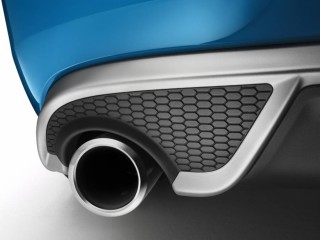
On the exterior the V40 gets a unique R-Design front featuring a silk-metal framed high-gloss grille. An ironstone diffuser, silk-metal finished details and twin exhaust tailpipes complement the V40. The five-spoke diamond-cut wheels (17″ or 18″) are special to the V40 R-Design. In addition to the Revel Blue in these pictures, the V40 R-Design can also be ordered in six other exterior colours.

Volvo has said the design is inspired in part by the Volvo P1800, the “rear hook” shown here being one of the most distinguishing design features on the V40, which is retained in the V40 R-Design.

Volvo V40 R-Design

Volvo V40 R-Design 09Volvo V40 R-Design 10

Interior

Volvo V40 R-Design Interior 01

The interior continues to be dominated by the dashboard that lets you configurei ts layout based on the three modes – Elegance, Eco and Performance. The seats have a blend of black Nubuck textile and perforated leather and the embroidered R-design logo takes prominence.

Volvo V40 R-Design 12A specially designed steering wheel, gear shifter, handbrake and sport pedals take their place in the V40. New aluminium inlays with a perforated look, black leather, matching stitching and a black headliner distinguish the R-Design V40 from the standard variant.

While the standard V40 gets its performance fix from the T4 Volvo engine that makes 180 hp, the V40 R-Design takes performance up a couple notches with the T5 engine which is good for 254 hp!

To handle the extra power the chassis has been tweaked in cooperation with Swedish racing driver Robert Dahlgren in the Volvo Polestar Black R team. The optional Sport chassis is lowered 10 mm compared with the Dynamic chassis. Springs and shock absorbers have a firmer setting.

The front McPherson struts have 25 mm piston rods. The stiffness enables the structure to absorb lateral loads better.At the rear the V40 has monotube dampers, with compression and return damping via the same valve. This gives shorter, faster fluid flow, which in turn means that the damper responds more quickly. Anti-roll bars with increased diameter aid handling.

Volvo V40 R-Design 01Volvo V40 R-Design 03

“The V40 R-Design is agile, responsive and fun to drive. Both chassis offer the enthusiastic driver a feeling of total control. You get both that connected response that makes a winding country road so much fun as well as the precise, nimble moves it takes to stay on top of busy urban traffic,” says Peter Mertens, Senior Vice President Research & Development at Volvo Car Corporation.

The V40 was unveiled at the Geneva Motor Show to compete in a market that has been the domain of the A3, B-Class and 1 Series.

Porsche Cayenne S Diesel 01

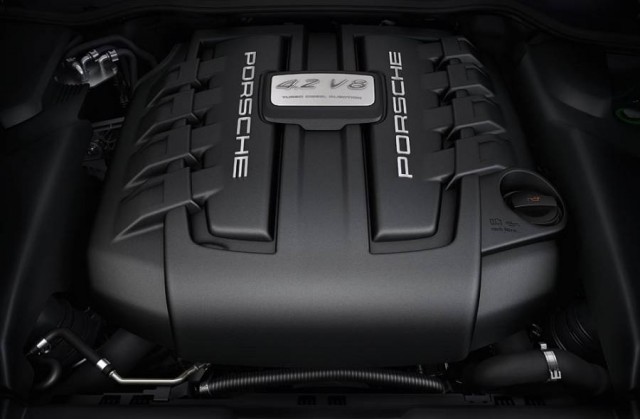
A 4.2-litre eight-cylinder engine with biturbo charging making 382 hp and a maximum torque of 850 Nm will propel this Cayenne S from 0-100 in 5.7 seconds and all the way to a top speed of 252 kph. Start/stop, a first on a any V8 diesel SUV allows the Cayenne S to deliver a fuel efficiency of close to 12 kpl, translating to a 1200 km journey on the optional 100 L tank.

The Cayenne S Diesel gets PTM active all-wheel drive, Porsche’s tech that makes the Cayenne S feel like a rear wheel driven vehicle. There’s also the Porsche Torque Vectoring Plus (PTV Plus) available as an option.

Porsche Cayenne S Diesel 03

The Cayenne S Diesel has a maximum towing capacity of 3.5 metric tonnes. The brakes have been worked on, to handle the increased power output and the Cayenne S Diesel flaunts the difference with silver brake callipers. The black fins at the front end and the diesel badges at the front end of the wings complete the ensemble.

The Cayenne S Diesel will launch in the market in January 2013 and will start at $ 83,757. Autoblog reports the Cayenne S Diesel won’t be heading to the USA though.

Porsche Cayenne S Diesel 02

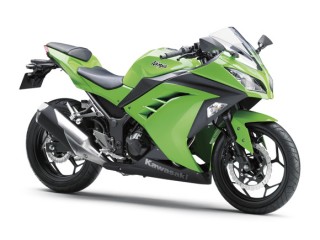
Kawasaki Ninja 300

The good folks at MCN are having a field day with Kawasaki’s surprise left hook, the Ninja 300. Kawasaki’s strategy seems to be to lure customers away from other 250s with the promise that a 300 will offer that little extra something. Adam Child, MCN says “It feels much more like a big bike than the previous model, not just in terms of the size, but the build quality, which is far better than the 250.” The 250 in the previous statement is probably in reference to the outgoing model.

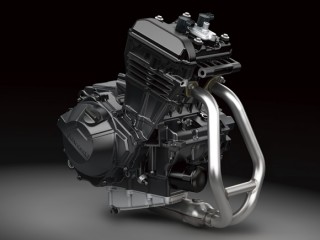
The current Ninja 250R sold in India has staked claim to top speeds varying anywhere between a genuine 152kph to an indicated 170kph+ elsewhere. The Ninja 300 with its 296cc engine, dual throttle valves making 29.0 kW (39 PS) at 11,000 rpm and a maximum torque of 27.0 Nm at 10,000 rpm seems to have the potential to hit an indicated 190kph.

“It’s very much like the rest of the family and emulates the ZX-6R and ZX-10R to such an extent that everybody will want to know how fast it goes. The answer is that it indicated 112mph on an unrestricted German autobahn but it felt like there’s potential for more – possibly 120mph?” adds MCN.

Kawasaki Ninja 300 : Assist Slipper Clutch

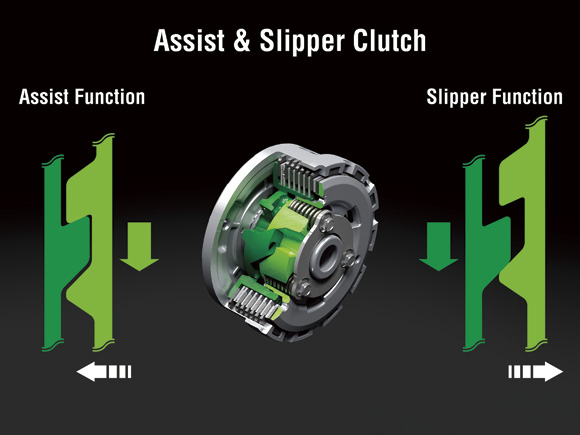
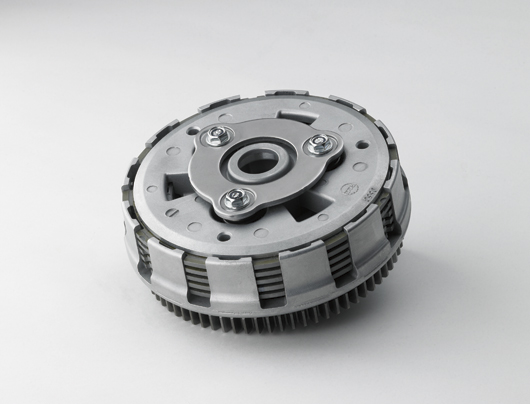
The Ninja 300 usurps its younger siblings with an Assist and Slipper Clutch that performs dual functions of helping reduce effort required to operate the clutch and prevent wheel hop, loss of traction that occurs when downshifting rapidly. “The clutch is one-finger-light round town and the gear box is smooth.” says Adam.

When the Ninja 300 was unveiled in Europe, some automotive magazines were quick to rush to the conclusion that the images of the baby Kawasaki that surfaced recently are that of the Ninja 300 and not the new 250R. Well, not entirely true. Considering both motorcycles look almost identical but for the subtle differences in the engine bay, one could be forgiven for mistaking the 300 to be a 250R! Kawasaki recently launched the new Ninja 250R styled to look more like its elder brother the ZX-10R, in Indonesia. TMCBlog has a first ride of the new 250R up already.

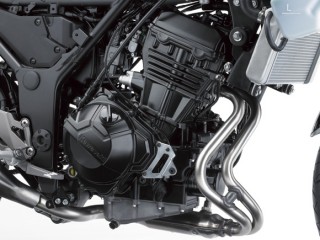
Europe had a pleasant surprise in store when Kawasaki unveiled the Ninja, looking not very different from the Indonesian 250R, but with a 296cc mill making 29.0 kW (39 PS) at 11,000 rpm and a maximum torque of 27.0 Nm at 10,000 rpm. Compare this to the 249cc mill that makes 23.5 kW (32 PS at 11,000 RPM and a maximum torque of 21.0 Nm at 10,000 RPM.

We can’t help but point fingers at the new regulations that will come to force in the European Union from January 19th 2013. In a nutshell the new regulations bring to fore a new driving license category ‘Category A2’ that lets any rider at least 19 years of age to ride a motorcycle that makes no more than 35kW, 10 kW more compared to the current regulations which permit only 25kW (around 33.5 bhp) motorcycles for learners. This might have been one reason why Kawasaki decided to take the plunge and face the Honda CBR 250R with more ammunition.

Sibling Differences

In addition to the bump in performance, the Ninja 300 also gets a new ‘Assist & Slipper’ clutch serving up dual benefits. The new setup uses two types of cams in tandem.

Kawasaki Ninja 300 : Assist Slipper Clutch

The assist cam acts as a self-servo mechanism, pulling the clutch plates together and enables lighter clutch springs to be used, requiring lesser effort at the lever.

The slipper cam as with other slipper clutches comes into play when engine braking is so high during rapid downshifts that the rear wheel might lose traction. The race-style back-torque limiting function helps prevent wheel-hop when downshifting says Kawasaki.

Kawasaki Ninja 300 : Assist Slipper Clutch

Kawasaki Ninja 300

Kawasaki Ninja 250R

Kawasaki Ninja 300Kawasaki Ninja 250
Kawasaki Ninja 300 Engine 01Kawasaki Ninja 250 Engine 01
Kawasaki Ninja 300 Engine 02Kawasaki Ninja 250 Engine 02
Kawasaki Ninja 300 Engine 03Kawasaki Ninja 250 Engine 03

Europe gets the Lime Green and Ebony Black colour options, we’ll have to wait and watch if the special edition colours are launched there.

Kawasaki Ninja 300/250 : Dual Throttle ValvesKawasaki Ninja 300/250: Heat Management

Both the 250 and the 300 get a second set of ECU-controlled throttle valves to precisely regulate intake airflow for natural, linear response, improved combustion efficiency and increased power. Kawasaki uses this technology in the bigger siblings the ZX-6R and the ZX-10R. Kawasaki also says the body work is designed to promote airflow to help dissipate heat effectively. The large openings and fin design of the fairings are said to be inspired by those of the Ninja ZX-14R. Kawasaki also says the have an ‘innovative’ piece of tech : the radiator fan cover that directs hot engine air down and away from the rider.

Now we wonder, why was there a need for a 250 at all? Restrictions for learners in the USA vary state to state and Kawasaki Japan still seems to be selling the older 250s. Which markets does Kawasaki think it can sell the new 250 in?

India, should in probability get the 300. To do otherwise in a nation where enthusiasts are left stranded with too few options would be far too cruel. It should be delightful to watch Bajaj try to price the 300 without treading on the new Kawasaki 650’s territory which has been one of the better priced offerings in the country.

Some reports claim that the 250 will be sold alongside the 300, why Kawasaki would do something like that is beyond our limited understanding of the market.

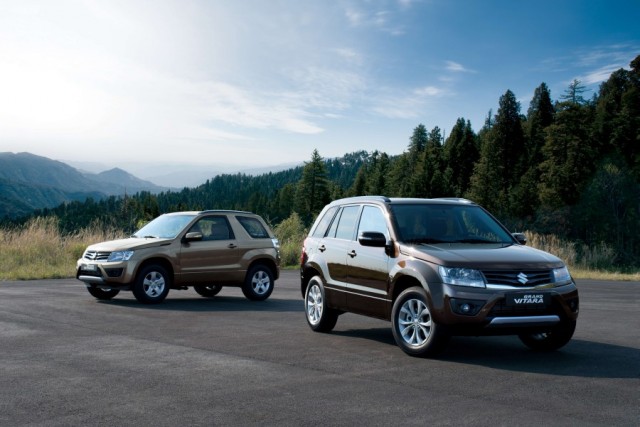
Suzuki Grand Vitara 3 5 Door 03

Having recently unveiled the face lift in Japan, where it is known as the Escudo, Suzuki has now unveiled the face lift in Europe.

The updated Grand Vitara has a newly developed more powerful and sporty look thanks to a new grille with two boldly shaped fins, a thick, sturdy-looking front bumper, and chrome side moldings. It is fitted with eight-spoke, 17″ aluminium-alloy wheels – or alternatively with 10-spoke, 18 aluminium-alloy wheels. The front under garnish is made from the newly developed SSPP (Suzuki Super Polypropylene) a resin material which has the environmental advantage of being 10% lighter than current polypropylene and is coloured that it does not need to be painted. The nine body colours available include the new Bison Brown Pearl Metallic 2 (ZUF) and Gaia Bronze Pearl Metallic (ZUG).

Suzuki Grand Vitara 3 5 Door 04

The five- and three-door versions of the Grand Vitara each have a new seat fabric. The new fabric for the five-door version adds refinement to the sporty interior design. It features diagonal and vertical stripes which emphasize quality, lines which give a sense of thickness and ruggedness, and distinctive details. The new fabric for the three-door version has a close-knit pattern which highlights sportiness.

The Grand Vitara debuted in Japan in 1988 as the Escudo – the world’s first compact sport utility vehicle – and has remained the flagbearer for Suzuki’s four-wheel-drive (4WD) lineup. With near-50:50 weight distribution (benefiting from a powertrain based on a longitudinally mounted front engine and rear-wheel drive), a centre differential equipped 4WD system, all-round independent suspension, and a body which combines lightweight unibody design with a sturdy ladder frame, it embodies Suzuki’s concept of an ‘off-road athlete’. In addition to providing outstanding off-road capability, the Grand Vitara delivers on-road stability and comfort. Its styling conveys both refinement and strength, and its performance on diverse surfaces exceeds conventional expectations of a compact SUV.

Suzuki Grand Vitara 3 5 Door 02

Suzuki Grand Vitara Interiors

BMW Zagato Roadster 02

Encouraged by the positive reaction to the Coupé, Adrian van Hooydonk, Senior Vice President BMW Group Design, and Andrea Zagato soon agreed to take their partnership a step further right after the unveiling of the coupe.

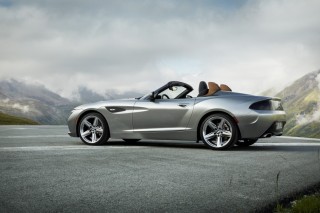
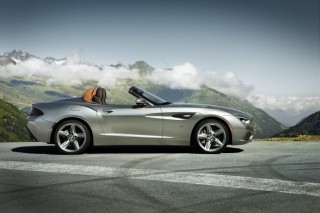
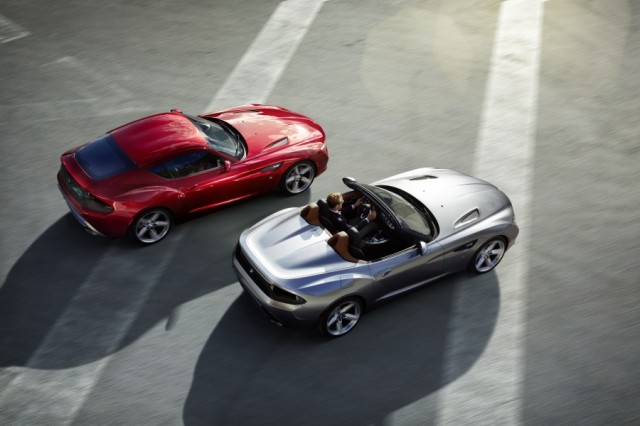
The exclusive exterior paint finish, a brilliant grey with impressive depth, appears to wrap the car’s body in a cloak of liquid metal. Depending on how the light hits the body, the colour spectrum ranges from dark grey to a light silver, bringing the surfaces and forms of the BMW Zagato Roadster to life.

BMW Zagato Roadster 08

BMW Zagato Roadster’s rear lights are arranged behind black tinted glass like in the Coupe, but the glass area extends in a shallow black band around the whole of the rear end. The shallow depth underlines the horizontal geometry and coupled with the dark diffuser beneath it, the rear of the BMW Zagato Roadster has a squat, powerful stance.

BMW Zagato Roadster Profile

The profile of the roadster while staying true to the spirit of coupe, establishes its distinct identity with the blackened out A-pillar, and Zagato rollbars. “The low, dynamic roll-bars, inspired by an airplane wing, are an eye-catcher that make the BMW Zagato Roadster recognisable from a distance” says Norihiko Harada. Their brown colour gives the roll- bars an even more prominent profile. The tail end as a whole places a greater emphasis on elegance than that of the Coupé, which shows a sharper sporting edge. The Roadster’s lines are smoother here and the rear is lower-slung. Plus, a fine additional line forges a visual connection between the sill and the rear apron to round off the rear end design in style. The flanks of the BMW Zagato Roadster reflect the extrovert character of its Coupé sibling. The black colouring of the A-pillars allows them to fade into the background and set off the sculpturing of the car’s body even more effectively.

BMW Zagato Roadster 09BMW Zagato Roadster 10

A strip of brown leather wraps around the interior like a rail to create a visual connection between the inside of the car and its exterior. The brown leather extends from the instrument panel over the door sill and around behind the seats, and even incorporates the roll-over bars. Embracing the driver and passenger like a large protective arm, this leather adornment provides an attractive transition into the otherwise predominantly black interior. The warm shade of brown reappears in various areas of the interior, including the contrast stitching of the seats, the steering wheel and doors, and the centre console. The interplay of colours and composition of details bathe the interior of the BMW Zagato Roadster in a sumptuous ambience, while the brown “z” embroidered into the seats is a further nod to its origins.

BMW Zagato Roadster 03

BMW Zagato Roadster 04BMW Zagato Roadster 01

BMW Zagato Roadster 06BMW Zagato Roadster 07

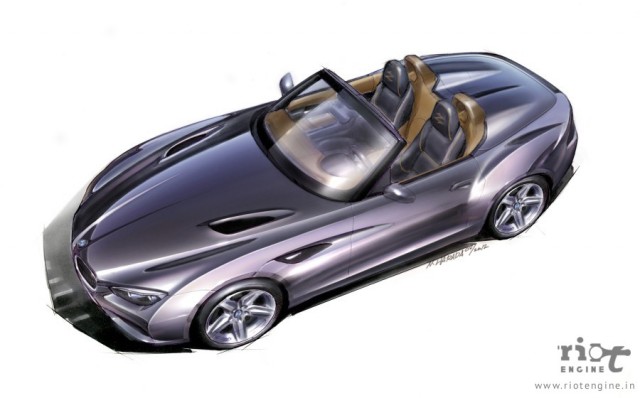
BMW Zagato Roadster Design Sketches

BMW Zagato Roadster Design Sketches

Pebble Beach. Barely three months after the sensational premiere of the BMW Zagato Coupé, BMW and Zagato are turning heads again at the 2012 Pebble Beach Concours d’Elegance with the fruits of their latest collaboration. Created in just six weeks’ worth of lavish handcraftsmanship, the BMW Zagato Roadster represents another masterful example of the traditional coachbuilder’s art and an elegant take on the sporty, masculine marker laid down by the BMW Zagato Coupé.

At the Pebble Beach Concours d’Elegance, this one-of-a-kind automobile finds itself in the best possible company. Every year connoisseurs and exponents of coachbuilt classics come together on California’s Pacific coastline to gorge on, mull over and be amazed by an array of automotive exotica. Indeed, you’d be hard pressed to find a more appropriate venue for the premiere of the BMW Zagato Roadster.

The next stage of a successful collaboration.
The decision to launch another collaboration between BMW and Italian coachbuilder Zagato was made only a short time after the BMW Zagato Coupé took its first bow. Encouraged by the positive reaction to the Coupé, Adrian van Hooydonk, Senior Vice President BMW Group Design, and Andrea Zagato soon agreed to take their partnership a step further. On the menu this time would be a Roadster model. “We set ourselves the challenge of preparing the car in time for the renowned Pebble Beach Concours” explains van Hooydonk. The BMW Zagato Roadster was duly conjured up in record haste, with only six weeks separating the first design idea from the finished model. “It was only with the expertise of both companies in the manufacture of high-end one-off cars and another display of outstanding teamwork that we were able to finish the car on schedule,” adds the BMW design supremo.

Andrea Zagato picks up on the theme: “Our success in finishing the car in such a short space of time shows what is possible when two successful companies pool their resources” says Zagato. “BMW is a high-achieving carmaker boasting a vast well of knowledge and technical capability in this area. When you combine that with our expertise in the creation of micro-series cars and our streamlined production processes, everything is in place to produce a beautiful model like the BMW Zagato Roadster in double-quick time”.

The design – Italian finesse meets Bavarian roadster tradition.
It quickly became clear that the partnership’s next jointly developed model would be a roadster. Indeed, no other concept embodies the pure fascination of motoring quite like this breed of car. With the roof down, two seats and exceptional performance, it allows the driver to experience dynamic thrills and driving pleasure with all the senses. To this heady blend the BMW Zagato Roadster adds the fineries of the Italian “dolce vita”, its designers succeeding in lending the car its own distinct character without blurring its family ties.

BMW and Zagato can both look back on a long and successful tradition of building roadsters, and the BMW Zagato Roadster sees their respective design DNAs melting into one. There is, of course, more to designing a roadster than slicing the roof off a coupé. “This car is not designed only as an elegant convertible, but also as a masculine and extremely dynamic sports car which evokes a powerful driving experience,” says Zagato chief designer Norihiko Harada, describing the design philosophy behind the BMW Zagato Roadster. Like the BMW Zagato Coupé, the Roadster is ready to drive – and intended to be driven at high speeds.

The car’s proportions make no secret of the special driving experience that awaits the driver. The sweeping hood and long wheelbase pin the driver back close to the driven rear wheels. There, he sits low down in an ultra-sporty position inside the cockpit. The taut, hallmark BMW surface treatment and Zagato’s clearly defined distribution of visual mass lend the BMW Zagato Roadster an athletic appearance – poised and eager, demanding to be driven.

Distinctive front-end design.
A low-set kidney grille, complete with intricate z-design grating, as well as focused twin circular headlights and a three-dimensional front apron shape the expressive face of the BMW Zagato Roadster, as they do the front end of the Coupé. It is this area of the car that provides the stylistic link between the two models, giving them a clear identity, reflecting their family ties and, at the same time, making them easily recognisable.

Overall, the BMW Zagato Roadster’s front end is very three-dimensional, wide and powerfully formed. The nose surges forward dynamically, dipping down close to the road, and allows the BMW Zagato Roadster to cut an agile figure, crouching as if about to pounce. The contoured hood extends this aura of dynamism with its sweeping lines and taut surfaces, while a pair of air intakes carved into the hood supply the engine compartment with extra air and hint at the brawny powerplant inside. The focused headlights accentuate the car’s driver-oriented character and high-speed concept; the “razorlight” – a precise LED light strip set into the matt surface above the headlights – finishes these elements off with an extra touch of class.
Sitting low between the headlights is Zagato’s take on the BMW kidney grille, featuring matt kidney surrounds. A stand-out detail here – and one shared with the BMW Zagato Coupé – is the use of a large number of small matt-sheen Zagato “z” letters to make up the kidney grating. This arrangement injects added depth into the grating and lays on a high-quality accent for the front end.

Dynamic side view.
The flanks of the BMW Zagato Roadster reflect the extrovert character of its Coupé sibling. Here, the clearly defined distribution of visual mass and eye-catching tail of a Zagato blend with the hallmark surface treatment and use of forms familiar from BMW models. Together, they imbue the BMW Zagato Roadster with a distinctive and athletic allure. The black colouring of the A-pillars allows them to fade into the background and set off the sculpturing of the car’s body even more effectively.

The BMW Zagato Roadster’s silhouette outlines a poised and alert presence, the car’s sweeping hood, long wheelbase, short overhangs and low rear end merging into a taut, sporty whole. The basic choreography of lines and surfaces is similar to that of the BMW Zagato Coupé, but subtle differences are noticeable at the rear. The tail end as a whole places a greater emphasis on elegance than that of the Coupé, which shows a sharper sporting edge. The Roadster’s lines are smoother here and the rear is lower-slung. Plus, a fine additional line forges a visual connection between the sill and the rear apron to round off the rear end design in style.

Another noteworthy detail of the BMW Zagato Roadster are its roll-bars – an important design element of many roadsters and commonly an identifying feature. The roll-bars of the BMW Zagato Roadster are quintessentially Zagato. The designers took their inspiration for these technical components from an aircraft wing and experimented with their mass before settling on a dynamic forward-leaning focus and powerful structure. “The low, dynamic roll-bars, inspired by an airplane wing, are an eye-catcher that make the BMW Zagato Roadster recognisable from a distance” says Norihiko Harada. Their brown colour gives the roll- bars an even more prominent profile. Allow the eye to wander further back, and the car’s rump provides a harmonious conclusion to its overall silhouette. Other striking details include the air outlets adorning the Roadster’s flanks, which mirror the form of the hood vents and reproduce their dynamic theme. The silver “z” positioned below the flank vents references the BMW/Zagato collaboration.

A bird’s-eye view of the car highlights the BMW Zagato Roadster’s interpretation of the hallmark Zagato double-bubble roof in the soft-top cover. The cover uses this double-bubble element to extend the lines of the hood all the way to the rear, where it accentuates the muscular proportions of the rear-wheel-drive Roadster. These two roof domes – the “doppia gobba” in local parlance – are a signature feature of Zagato design and can be found on almost every Zagato car.

Sporty yet elegant rear-end design.
The sharply chiselled tail of the BMW Zagato Roadster provides a fine advertisement for the exquisite talents of the Zagato body specialists. The rear end displays a seamless perfection, giving it a feel of quality – like a sculpture cast from a single mould. Here, the high degree of handcraftsmanship within the walls of the Zagato design studio and the company’s vast well of experience in working with surfaces and forms come resplendently to light.

Taken as a whole, the rear of the BMW Zagato Roadster has a very broad, low-slung appearance, giving the car a wide stance and planted muscularity on the road. Like those of its Coupé counterpart, the BMW Zagato Roadster’s rear lights are arranged behind black tinted glass. The glass area extends in a shallow black band around the whole of the rear end, underlining its horizontal geometry. Beneath it, the dark diffuser gives the BMW Zagato Roadster a squat, powerful stance. Exhaust tailpipes positioned towards the outer edges of the rear add further emphasis, their matt finish contributing another flourish of quality. The body-coloured surfaces between the tailpipes draw the final lines in the distinctive, low-to-the-road and broad-set looks of the rear end.

Highlights and details.
The unique character of the BMW Zagato Roadster is reflected in even smaller details. The 19-inch light-alloy wheels in classically sporty five-spoke design have a hint of propeller about them, offering a subtle nod to the origins of the two companies: both BMW and Zagato founder Ugo Zagato took an airborne route into automotive construction. The discreetly attractive matt finish of the wheels lends the car extra allure from the side.

A very special highlight of the BMW Zagato Roadster is its paintwork. The exclusive exterior paint finish, a brilliant grey with impressive depth, appears to wrap the car’s body in a cloak of liquid metal. Depending on how the light hits the body, the colour spectrum ranges from dark grey to a light silver, bringing the surfaces and forms of the BMW Zagato Roadster to life.

The interplay of exterior and interior.
The open-top nature of a roadster means it is often the interior that catches the eye first. Only later does your attention move on to the exterior and the interplay between the exterior and interior. The BMW Zagato Roadster zeroes in on this peculiarity and consciously allows the boundaries between inside and outside to blur.

To this end, the colours and materials marking the transition from interior to exterior exude a special exclusiveness. A strip of brown leather wraps around the interior like a rail to create a visual connection between the inside of the car and its exterior. The brown leather extends from the instrument panel over the door sill and around behind the seats, and even incorporates the roll-over bars. Embracing the driver and passenger like a large protective arm, this leather adornment provides an attractive transition into the otherwise predominantly black interior. The warm shade of brown reappears in various areas of the interior, including the contrast stitching of the seats, the steering wheel and doors, and the centre console. The interplay of colours and composition of details bathe the interior of the BMW Zagato Roadster in a sumptuous ambience, while the brown “z” embroidered into the seats is a further nod to its origins.

The interior itself boasts the clear structuring you would expect from BMW and invites the driver to give the machine around him a thorough workout. Details such as the sweeping horizontal lines along the inside of the doors and the full-length centre console lend a rarefied sense of exclusivity to the sporty promptings and driver focus of the interior.

Zagato – a coachbuilder with a lo ng tradition.
Founded by Ugo Zagato in 1919, today Zagato is the only automotive body manufacturer still in independent ownership. From its earliest days, Zagato has taken a minimalist and pared-down approach to its creations, very much in keeping with the Milanese tradition of design. Form takes precedence over details, thanks in part to technical considerations. Body designer Ugo Zagato learned his trade in – among other industries – aviation, where aerodynamics and lightweight construction play a central role. Zagato duly applied these principles rigorously in the construction of cars and soon celebrated a rash of race victories as a body construction partner to Alfa Romeo. The “necessary beauty” of aerodynamics and lightweight construction came to represent a maxim of design, one that has defined the form of every Zagato since.
Today, with Andrea Zagato and Marella Rivolta-Zagato, becoming the third generation of his family to take his seat at the helm, the company describes itself as a design studio combining the emotion and handcraftsmanship of body construction with the precision of state-of-the-art technology. Zagato follows coachbuilding tradition in developing only the shell of the car and leaving the mechanics of the machine untouched. More than 200 Vmax concepts, special editions and micro-series have been created in this way down the years and find appreciation among connoisseurs and collectors the world over. Indeed, all Zagatos are coveted collector’s items today and worth many times what their original owners paid for them.

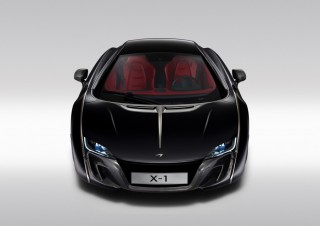
McLaren X-1 Concept 02

How does a McLaren enthusiast who owns a McLaren F1, a Mercedes-Benz SLR McLaren and a 12C get his McLaren fix? McLaren Special Operations (MSO) presented the X-1 Concept at Pebble Beach, an answer to our question.The X-1 is a one off piece designed for this McLaren client who will stay anonymous.

McLaren X-1 Concept 04McLaren X-1 Concept 05

The client wanted a ‘timeless and classical elegance’ that was to be designed by designers from within McLaren’s studios as well as external designers in a competition. The design by McLaren’s Korean-born RCA graduate Hong Yeo was chosen, and completed under the direction of McLaren Design Director Frank Stephenson.

McLaren X-1 Concept 06McLaren X-1 Concept 07

One of the biggest design challenges faced by Yeo was that most cars that embody classic elegance and timeless values have front engines and rear-wheel drive proportions. This is the exact opposite of a mid-engined supercar. So a new visual language for the car had to be found which led to months of sketching and modelling to find that perfect visual balance.

McLaren X-1 Concept 08

All body panels of the X-1 are made from carbon, and are finished in a rich piano black, as specified by the owner. Body sides are lacquered visual carbon fibre. Stephenson adds that the black paint has no metallic or colour tints and is one of the most challenging colours to paint. The enclosed rear wheels are a result of the owners desire to have a timeless design, and the rear wheels can be accessed by carbon panels that slide up. While the X-1 Concept is based on the MP4-12C, it is only the glasshouse that is carried over from the 12C. Every panel on the exterior has been custom made.

McLaren Special Operations (MSO), the division of McLaren Automotive responsible for the delivery of bespoke projects, will present a breathtaking one-off supercar at The Quail, an exclusive event on August 17, 2012 that is a highlight of the Pebble Beach weekend in Monterey, USA.

Called the McLaren X-1 and based structurally on the company’s groundbreaking carbon MonoCell but with a totally unique body, it has been created for an anonymous car enthusiast.

‘One of our clients who already owned a McLaren F1, a Mercedes-Benz SLR McLaren and now a 12C, wanted a unique car,’ says MSO Programme Director, Paul MacKenzie. ‘The conversation began with our Executive Chairman Ron Dennis almost three years ago − before the 12C was even launched. The client wanted a machine that had all the capability of the 12C but wrapped in a unique body that reflected his needs and personality.’

In a subsequent meeting, Paul Mackenzie and Design Director Frank Stephenson went to see him to start to explore the sort of car he wanted.

Says Frank Stephenson: ‘The key qualities the client desired were “timeless and classical elegance”. Which was some challenge.’

That meeting with Mackenzie and Stephenson lasted for almost three hours. From the pages of notes that were gathered, the design team brought together hundreds of images from the world of automotive, architecture, fashion, design and even film. These were then presented to the customer, and were then narrowed down to a mood book, full of inspiring images from which the design spirit of this unique car would be derived.

Inspirational cars included a 1961 Facel Vega, a 1953 Chrysler D’Elegance Ghia, a 1959 Buick Electra, a 1939 Mercedes-Benz 540K and a 1971 Citroën SM. There were various examples of architecture – including the Guggenheim museums in New York and Bilbao – plus a Jaeger LeCoultre art deco clock, an Airstream trailer, a Thomas Mann Montblanc pen, a grand piano – and an eggplant. ‘The client liked the shiny texture of the finish,’ notes Stephenson. There was also a black-and-white photo of Audrey Hepburn.

‘The client wanted a competition between external designers – some outside the automotive world – and McLaren’s own designers,’ notes Stephenson. In the end, a design by McLaren’s Korean-born RCA graduate Hong Yeo was chosen, and completed under the direction of Stephenson.

One of the biggest design challenges faced by Yeo was that most cars that embody classic elegance and timeless values have front engines and rear-wheel drive proportions. This is the exact opposite of a mid-engined supercar. So a new visual language for the car had to be found which led to months of sketching and modelling to find that perfect visual balance.

Stephenson recalls: ‘From this design, we then produced a 30 per cent scale model, then a full-size hard foam model. Initially, we planned to do it all digitally but the client insisted on seeing “real” models.

‘The client was very clear in his own mind what he wanted. But the only styling feature prescribed were metal brightwork rails running from the nose, over the shoulderline and hips, to the rear of the greenhouse.’

In the words of Hong Yeo: ‘X-1 embodies the McLaren value that every part has to have a purpose. No details are simply visual cues, every one has a purpose. Although I like to think the wide body combined with pontoon style rear fenders will ensure the car glides when it’s moving just like a superhero’s cape…’

The styling took 18 months to sign off but the result is a design that in a few decades time will be hard to pinpoint exactly when it was created … timeless, therefore, exactly as the client requested.

X-1: the creation

The X-1 is the most ambitious example yet of MSO’s expertise. It has a whole new body made of advanced materials. Everything is bespoke, even down to the lights and wheels, necessitating new testing and homologation meaning the car took two and a half years to build, a process that began before the styling was signed off.

The X-1 had its own development programme because crucially, this wasn’t to be a fragile concept car that would never see tarmac. It was to be a usable car, road legal and capable of travelling at supercar speeds. It also had to comfortably seat two adults so although the 12C was already as shrink-wrapped as it could be from a packaging perspective, the ingenious flexibility of the MonoCell allowed the creation of a completely different form while maintaining the engineering purity of a McLaren.

A full CFD (Computational Fluid Dynamics) aerodynamic testing schedule ensured high-speed stability, and the car also completed approximately 625 miles of testing including two intensive testing stints at the Idiada circuit in Spain with chief McLaren test driver, Chris Goodwin. After testing, the whole car was meticulously rebuilt, by hand to concours standard.

X-1: the detail

MSO Programme Director Paul Mackenzie explains: ‘The X-1 showcases the skills of McLaren Special Operations. More and more luxury customers want bespoke or individual features. The X-1 demonstrates that we can provide the ultimate personalisation service. It also shows that MSO is not just a technology led company. X-1 demonstrates a commitment to perfection and to the highest levels of quality.’

All body panels of the X-1 are made from carbon, and are finished in a rich piano black, as specified by the owner. Body sides are lacquered visual carbon fibre. ‘The black paint has no metallic or colour tints and is one of the most challenging colours to paint, but the finish is absolutely exquisite and befits the car perfectly’ adds Stephenson.

Components were tooled exclusively for the car. They even include unique head- and taillights, inspired by the McLaren Speed Marque logo. The brightwork is machined from solid aluminium, and a nickel finish is then applied. The McLaren logo in the nose is specially machined from solid aluminium then nickel plated. Wheels are also unique to the X-1, and are diamond turned with a tinted lacquer to complement the exterior nickel-plated brightwork.

The brightwork itself is all machined from solid aluminium, and then nickel finished to give the same hue throughout. Even the McLaren Speed Marque badge in the nose is machined from solid aluminium, then nickel plated.

The same brightwork is used for the over-the-shoulder rails (as specified by the owner), at the base of the windscreen and the back of the glasshouse, and for the ‘eyebrows’ over the bespoke headlights. The McLaren Airbrake rear wing is also machined from solid aluminium and nickel plated, to complement the rest of the brightwork.

Perhaps the most unusual styling feature is the enclosed rear wheels, an upshot of the owner’s desire to have a car reflecting ‘timeless elegance’. The wheels are accessed by carbon panels using, as Stephenson explains, ‘some of the most gorgeous hinges you’ve ever seen’. The styling, too, is in no way compromised by the opening rear wings.

He adds: ‘The attention to detail is astonishing. Neat styling touches feature throughout the design, such as the rear number plate illuminators finished in carbon, a gorgeous machined aluminium cap is used for the header tank, and carbon finishers line the engine bay.’

The doors have also been developed specifically for the X-1, although they retain the dihedral action and twin hinges, and the roof is also new. Externally, only the glasshouse is carried over from the 12C.

The unique body of the X-1 means most dimensions have changed. The X-1 is 4658mm long – 109mm longer than a 12C. Width is 2097mm (with mirrors) – an increase of 188 mm. Despite the revised roofline, the height remains the same, at 1199mm. Kerb weight is almost identical (about 1400kg), as the lighter carbon body panels compensate for the greater length and width. Light weight, as with all McLaren projects, was a priority.

While the basic architecture of the interior did not change, personalisation includes bespoke Harissa Red McLaren Nappa leather used for the seats, door and roof trim, and switchgear with machined nickel-coated, aluminium bezels. The carbon interior trim has a titanium weave, to give a magical 3D-like effect. Special Andesite tufted carpet covers the floor.

All these changes ensured the X-1 needed special homologation for road use. The car has been thoroughly engineered to be usable and road legal. The X-1 shares the same the major mechanical components as the 12C, including the twin-turbo 625PS engine, giving astonishing acceleration and top speed.

Stephenson explains: ‘The X-1 epitomises how we can not only create a truly unique product tailored to the client, but also enable the client to become a key member of the design team throughout the process. It has been a truly rewarding and unforgettable experience. And I think that we as a team have created a completely unforgettable car that is true to one man’s vision.’

Hong Yeo concludes: ‘We designers are often blinded by the sun and assume that whatever we see and understand is the only way forward: to see the stars, sometimes you need the absence of that blinding light … looking at a car from a different perspective is what X-1 stands for.’

After its debut, on the Monterey Peninsular, the X-1 will return to MSO headquarters in Woking and be carefully checked over before it takes a place in the owner’s collection.

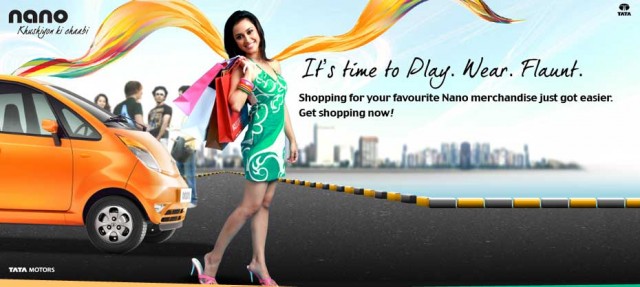
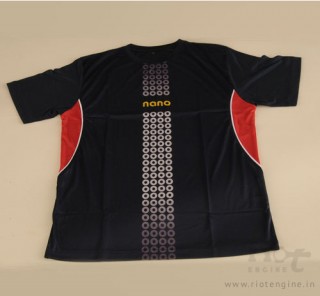
Tata Nano Merchandise 01

Tata Nano today launched the ‘Nano merchandise online store’ on Ebay. This is the first time that a car brand will be selling its merchandise through Ebay.in

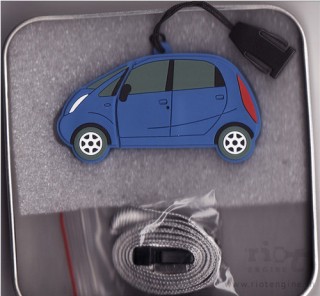
Tata Nano Merchandise 02Tata Nano Merchandise 03

Launching the online store, Ms. Delna Avari, Head- Nano Product Group, Tata Motors, said, “The DNA of Tata Nano is ‘never-thought-of-before’ and that will continue to reflect in our marketing initiatives as well. The Tata Nano brand is very active online. It was one of the first cars in India to be booked online, and today, the Tata Nano Facebook page has a fan base of over 1.6 million. With this launch, the Tata Nano takes its online marketing initiatives to the next level.
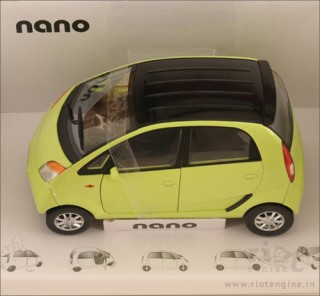
Tata Nano Merchandise 04Tata Nano Merchandise 05

The Tata Nano merchandise online store offers Nano branded Titan watches and dry-fit T-shirts for men and women, Nano shaped pen drives, mouse, scale models, caps, key-chains and so on. To ensure that the merchandise collection is refreshed regularly and new, popular merchandises are offered, Tata Nano will conduct an online poll, across all Tata Nano fans. A Tata Nano fan can vote for her favorite merchandise online and also stands a chance to win it too.

With the launch of Nano merchandise online store, Nano fans will now be able to buy a memorabilia of the Tata Nano, in just few clicks.

To view the Tata Nano merchandise online store, please visit: www.ebay.in/tatanano

“The Tata Nano is a personal mobility option, appealing to everyone, irrespective of age, gender, economic strata, and geography. Ebay has a good reach in metros, tier I and II cities and this collaboration will help us reach out to Nano fans, spread across the country.” added Ms.Avari.