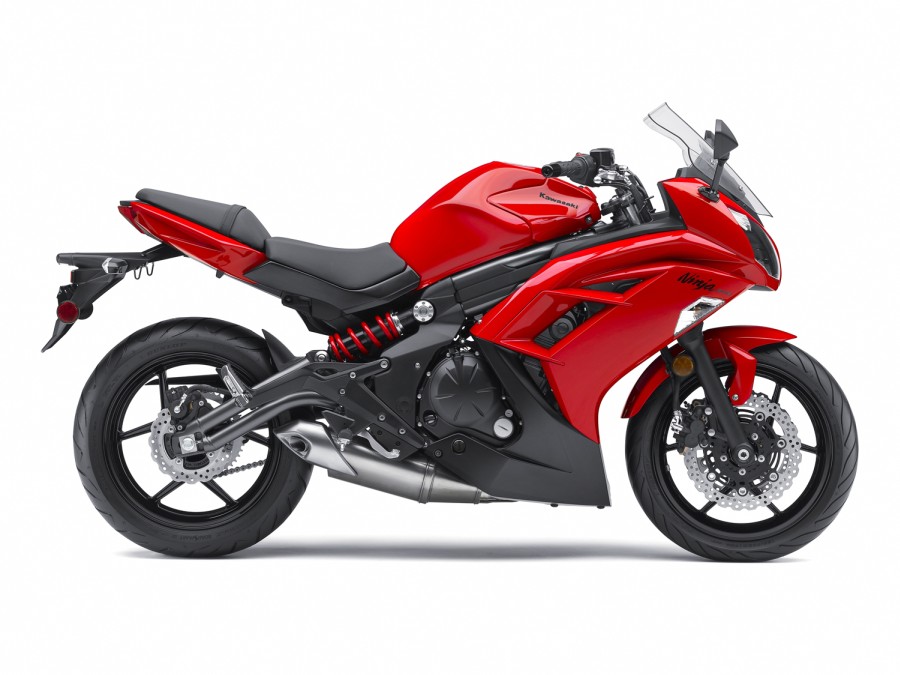
A couple of weeks ago, Kawasaki unveiled its for 2012 Ninja 650 with a few changes (a story that Riot Engine already brought to you).  Now it seems that Kawasaki will bring the model to India and sell it through Bajaj its long standing partner.  Expect a slight upward revision in price for the new model.  We are yet unsure of the colours in which the motorcycle will be sold, since at the present the Ninja 650 is available only in the traditional Kawasaki lime green.

2012 Kawasaki Ninja 650

2012 Porsche 911 Carrera

In addition to the US premiere of the recently unveiled 2012 Porsche 911 Carrera, Porsche has also announced the world premiere of a new model on November 16th 2011, at the Los Angeles Auto Show.

Dr. Ing. h.c. F. Porsche AG, Stuttgart, is despatching two new stars to the Los Angeles Auto Show 2011: the Porsche press conference in the Convention Centre on 16 November at 12:05 p.m. (PST) will put the spotlight fair and square on the debut of the new 911 Carrera on the American continent and on the world premiere of a model boasting impressive performance and dynamic looks, exuding unadulterated driving pleasure.

2012 Porsche 911 Cabriolet spy shot
Image Courtesy: Motorauthority.com

Motorauthority.com suggests the new model will probably be the 911 Cabriolet which has been caught testing, since Porsche has in the past launched the 911 Cabriolet around the same time as the hard top. Motorauthority also adds that the cabriolet will feature a new design where the main roof section is composed of a solid material and the section around the rear window is soft.

Love or hate his designs, there’s no denying the influence Bangle has had on the way cars look these days.

iFly Magazine did us all a neat favour by going all the way to Langhe area of Piedmont, Northern Italy and interviewing Chris Bangle.

2012 Peugeot 208

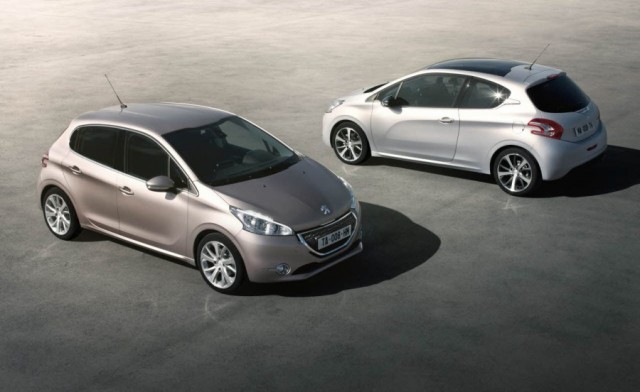
Codenamed the ‘A9’ Project the new Peugeot 208 has been in the works for the past two years. Sometime in 2012 Peugeot will launch its new model in the B segment, the Peugeot 208. Peugeot believes creating a vehicle capable of appealing to a wide variety of customers with ever changing expectations, a simple face-lift is no longer enough. ‘A9’ Project adopted the most ambitious overhaul ever undertaken by the Peugeot to create a vehicle which Peugeot says represents a true generation leap.

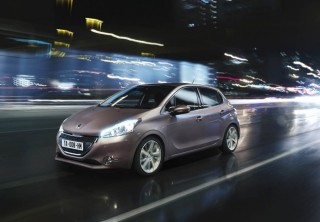
Peugeot 208 : Front 3/4Peugeot 208 : Rear 3/4

Peugeot’s new design language, highlights of which are the ‘floating’ grille, the ‘boomerang’ rear lamps are evident on the 208 and bring to our minds the Peugeot SxC Concept and the completely bonkers Peugeot HX-1. Peugeot says each detail is designed in complete coherence with the general volume, structured by a “spine” the impression of which is even visible on the roof. The 3 door and 5 door versions have slightly different quarter panels that are distinctive.

There’s more from Peugeot.

Sculpted, athletic, both pure and sophisticated, its style projects the Marque towards a renewed and attractive modernity, suggesting sensuousness and energy, smoothness and mischief. The two body types have been given an entirely different treatment, with a three-door version the quarter panel movement of which calls to mind one of its illustrious older siblings.

Peugeot 208 3-door and 5-door

Seemingly the trend these days, the Peugeot’s interiors are again designed around the drivers. The instruments and controls are positioned around a small steering wheel, a “head up instrument panel” and a large touch screen. Peugeot also promises a fantastic driving experience primarily owing to the small steering wheel and new ergonomics, an optimum balance between comfort and road holding and finally, the compactness and reduced weight of the vehicle.

Peugeot 208 Interiors

The Peugeot 208’s new platform also makes the car lighter by 110 kg than the 207 on an average. The exterior dimensions have gone down, while the interiors, especially the rear knee room has gone up by 5cm. The boot also is slightly larger now.

Its latest generation engine technology and the use of the e-HDi micro-hybridation system on virtually all versions add to the vehicle’s improvements in terms of weight and aerodynamics. The 208 introduces a new range of 3-cylinder petrol engines, 1.0 and 1.2 l VTi, which are particularly efficient, with a range starting at 99 g/km of CO2, delivering 23.2 kpl. The diesel engine is expected to have an efficiency of around 29.4 kpl.

Peugeot 208 'Boomerang' Tail lamps

25% of “green materials” (recycled or of natural origin) making up its mass of polymers it enters a new era in terms of eco-design. As a world first, the rear bumper and the fan assembly are made entirely using these materials. This type of bumper alone will permit a saving in manufacturing of 1600 tonnes of fuel a year.

Peugeot 208
Peugeot 208

After receiving a terrific response from the recently launched YZF-R15 Version 2.0 coupled with the seasonal festivities, India Yamaha Motor clocked a growth of 26.8% in motorcycle sales during October 2011 as compared to the corresponding period last year. It sold 47,240 units in October 2011 as against 37,251 units sold in October 2010. In domestic markets, the company sold 38,229 units in October 2011 as compared to 31,791 units sold in the same month last year, a growth of 20.3%. The export figures stood at 9,011 units in October 2011 while 5,460 motorcycles were exported in October 2010, a growth of 65%.

Commenting on the occasion, Mr. Jun Nakata, Director-Sales & Marketing, India Yamaha Motor said, “We have established a firm foothold within 150cc+ segment in the Indian motorcycle market with the R15 version 2.0, FZ series & SZ series gaining much traction and getting accolades from our esteemed customers. The new R15 has been very well received in the market with bookings superseding the supply. The festive season has also played a vital role in catapulting sales for Yamaha this month. We are confident that the momentum will sustain in the long run and help us in redefining our sales graph.”

Yamaha continues to reinforce its relationship with the customers and has launched the ‘YES!YAMAHA’ campaign that endeavors to provide the Best 3S Experience so that the customer always appreciates Yamaha and accepts the brand like the word “YES”. The company is making steadfast efforts by conducting consumer-centric marketing initiatives such as Yamaha R15 One Make Race, Yamaha Safe Riding Science (YSRS) for college students & kids, Yamaha Service Camps to name a few.

About India Yamaha Motor Pvt. Ltd.

Yamaha made its initial foray into India in 1985. In August 2001, Yamaha India became a 100% subsidiary of Yamaha Motor Co., Ltd, Japan (YMC). In 2008, Mitsui & Co., Ltd. entered into an agreement with YMC to become a joint-investor in the motorcycle manufacturing company “India Yamaha Motor Private Limited (IYM)”.

IYM operates from its state-of-the-art manufacturing units at Surajpur in Uttar Pradesh & Faridabad in Haryana and produces motorcycles both for domestic & export markets. With a strong workforce of more than 2,000 employees, IYM is highly customer-driven and has a countrywide network of over 400 dealers. Presently, its product portfolio includes VMAX (1,679cc), MT01 (1,670cc), YZF-R1 (998cc), FZ1 (998cc), Fazer (153cc), FZ-S (153cc), FZ (153cc), SZ, SZ-X & SZ-R (153cc), YZF-R15 (150cc), SS125 (123cc), YBR 125 (123cc), YBR 110 (106cc) and Crux (106cc).

Bajaj Pulsar 135 LS

Sharp angles and chiseling everywhere

The Bajaj Pulsar has easily been one of the most defining bikes ever launched in this country. For its sheer trend setting abilities, it falls right in the category of milestone bikes, which have been few and far between in India. When Bajaj made numerous iterations and engine modifications of the Pulsar series of bikes, they decided to leave a certain factor relatively untouched. The design of the bikes, though had slight modifications, largely remained similar. Which was understandable because a major factor for the success of the Pulsar was its look which was meant to be brute and macho.

If you are wondering what am I trying to imply talking about the Pulsar lineage, even though the success story is known to almost anyone who has been following the Indian bike industry for the past few years, let me introduce you to the reason for this short description of mine – the latest entrant to the Pulsar series, the Pulsar 135 LS.

Yes, it has to be agreed that it is not exactly latest. It’s been around for quite some time now. But when I did get my hands on a new specimen recently and had the pleasure of spending some time with it, I wanted to write about it. Not just a review of it but on a certain special aspect of it which I hope to convey to you by the time this piece of writing ends.

The Pulsar brand is celebrating its tenth anniversary this year. And enough has been written about each bike’s handling, characteristics, speed, design etc. But realising that a review is not what it is without me touching upon at least some of these points let me get on with it. Before we start please allow me to use the word ‘Pulsar-ish’ which I would want to refer to anything Pulsar like. I am taking this liberty assuming that almost all of us would have experienced the Pulsar at some point of time. Hence the term Pulsar-ish. Please consider it as gibberish the moment you are done reading this. Now, let’s get started.

Bajaj Pulsar 135 LS

It looks puny from here. But then it is supposed to be smaller than the bigger ones.

The bike I got the chance of riding was a very new one. Three days old, in fact. The finish on it was very Pulsar-ish. It all looks very promising and striking. But you don’t know how long they will look the same and last. The analogue tacho dial and the digital display had an air of inexpensiveness. The build seemed pretty consistent and you can be assured that things are bolted on fine.

The first time I fired her up, the Pulsar-ish engine note was evident. But this time it was more refined. A bit freer flowing perhaps. The twitch of the accelerator using the right thumb and index finger sounded smooth and relaxed. I wondered if the 4 valve configuration which is a non Pulsar-ish characteristic had anything to do with this new refinement.

Engaging the first gear was a smooth experience. The refinement is still not there and I doubt if Bajaj will ever get to the levels achieved by the Japs but the improvement is definitely commendable. I still remember the first time I rode my friend’s Pulsar 150 and the knocking sound and jerk that used to come every time a gear was engaged. It felt crude and mechanical. Fortunately or unfortunately, this characteristic of the Pulsar had beefed up its masculine image. I have found it very strange that when glitches in other bike models were prominently lambasted among potential new bike buyers, issues like this in the Pulsars were easily side-stepped or accepted that it could be lived with. The image of the Pulsar made up for its shortcomings.

Bajaj Pulsar 135 LS : 4 Valve

Even the ‘4’ has been given some chiseling!

Talking about the image, a lot of the fan following that the bike had was due to its road presence, the rider posture enhancing the macho look and feel. The same has been kept unadulterated in the younger 135 too. The clip on handle bars are wide enough for the typical Pulsar-ish ride posture.

And it is not the posture alone that is macho, the bike in spite of its comparatively quieter engine does have the zip that you normally associate with the Pulsars. If the elder Pulsars have the sound and the go to go with the sound, this younger one is slightly deceiving with more go for the corresponding sound. The 135 generates 13.5 PS of power. That is almost the same as generated by the 150 cc Honda Unicorn. And at 122 KG it is much lighter than the Unicorn. The zip then is very much understandable and gives the bike its younger, quicker feel.

But give this bike the beans a little more and you can feel the decibel level increasing exponentially. When I say feel, I literally mean that you can ‘feel’ it. The vibes and the sound increase linearly but it is nowhere close to what I would say uncomfortable. In fact the vibrations add to the overall quickening feel and change this bike’s character from being deceiving to butch. But I would like to reiterate here that these vibrations are in no way bone jittery or joints loosening. The vibrations like the gearbox quoted earlier have always been a part of the Pulsar experience.

So there I was, tearing down in a new Pulsar 135 feeling very much macho and sporty. That brings my attention to the complete name of this bike – Pulsar 135 LS. The LS incidentally means ‘Light Sport’. I would definitely say that is true. This bike is light and it is sporty. But being light does not mean that it was unstable at high speeds. Admirably, it maintained decent decorum at speeds around 80 kmph. I didn’t want to push it any further as it was my friend’s new bike.

Bajaj Pulsar 135 LS : Engine

I didn’t get too much time with this bike but wherever I got the chance to ride it, it handled pretty well. Corner craving is not exactly my cup of tea but whatever cornering angles I tried on this bike, it was able to pull it off without losing its composure. The lightness meant that it was much more agile and flickable which would mean that much easier city riding.

I did not get enough time to measure the fuel efficiency of this bike over a range of riding conditions but from my calculations, I feel it would definitely be in the high fifties. It might even touch sixty if you are sane with it. But Pulsars are not bought for being sane, are they?

Apart from the fit and finish, there were minor glitches here and there like the positioning of the foot peg and the side-stand. While trying to push the side stand back after sitting on the bike, there is a high possibility that you might feel the hindrance of the foot peg. Take a look at the picture and you might understand what I am trying to say here. But then this is one of those things that you can definitely live with.

Bajaj Pulsar 135 LS

The foot peg might be a hindrance while pushing back the side stand.

If you are wondering why I still haven’t touched upon the biggest difference this bike has over its elder brothers, it is because I wanted to keep the most important part towards the end. So, let’s look at it now, the design of the Pulsar 135. Keeping in mind how the 150, 180, 200 and the 220 looked, it was only obvious for people to imagine how the 135 would look.

But this was where Bajaj threw in a big surprise. This looks like a Pulsar like no other. If they had given it an entirely different name, it would have been easier for people to digest. The headlights were angular and looked thinner. The bike had a lot more chiselled edges which made it look leaner and fitter than any other Pulsar. So, what was the reason for Bajaj to overhaul the design of the new Pulsar? Or should I ask, what was the reason for Bajaj to design a new bike and call it with an existing name.

Thinking in these lines leads us to one main possibility. Bajaj wanted to overhaul its Pulsar brand and it used the new 135 segment as testing waters to determine how people would react to a new design philosophy for its iconic brand. We are getting reports that Bajaj would be releasing their next gen Pulsars by the end of this year at their tenth anniversary. It wouldn’t be very surprising if the elder overhauled Pulsars followed the younger one’s styling cues.

Bajaj Pulsar 135 LS

All in all it looks like an attempt to sharpen a few blunt edges of the Pulsar, literally and figuritatively. A leaner, meaner and fitter Pulsar might be more in sync with today’s physique conscious generation and I wouldn’t blame them for thinking on these lines. After all, the design of the bikes and cars in a country reflect the tastes and preferences of the people who populate the country.

This does not mean that the 135 was an experiment. It was meant to be an all new motorbike and a full fledged one at that. And it definitely is. It is a very able bike which does things exactly the way its brothers does but with a bit more finesse. But when the necessity comes to show off its pedigree it does that with aplomb reminding us that there is still a bit of the beast deep inside. If the bigger Pulsars were like the heavily set, bellowing, gut wrenching action heroes of our movies, this new younger one is also an action hero. But just that it is of the latest type – Younger, sleeker, slimmer and more into martial arts finesse than into door barging and over the wall walloping.
“I think it was around Monaco Grand Prix time, Sebastian Vettel and I were looking at some cars,” Webber said. “I’m not big on my road cars, to be honest, but when we started talking about this one it was a no-brainer.”

Webber loved the Porsche so much that he walked into the a UK Porsche Dealer and paid the retail price to bring the baby home.

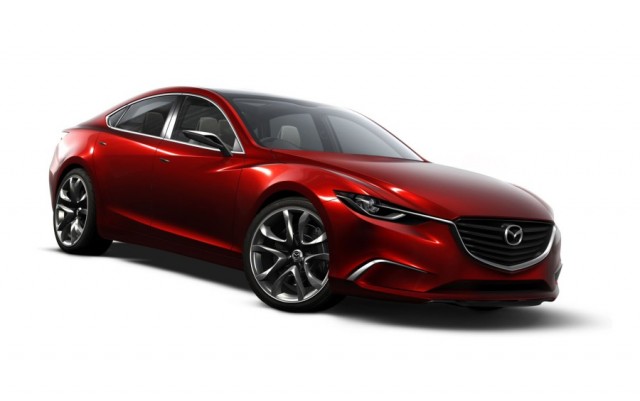
Mazda TAKERI at the Tokyo Motor Show

After the world premiere of the Mazda CX-5 compact crossover SUV at the 2011 Frankfurt Motor Show, Mazda will now unveil the ‘Takeri’ at the Tokyo Motor Show. The 2011 Tokyo Motor Show will run from December 3 through 11, 2011, at the Tokyo Big Sight (Tokyo International Exhibition Center).

Fans of the Mazda Furai will recognize the Takeri is nothing like the Furai. The ‘Nagare’ design language, developed under Laurens van den Acker which was more about surface treatment suggesting fluid flow over the surfaces has given way to ‘KODO – Soul of Motion’. KODO first featured on the SHINARI concept unveiled in 2010.

Ikuo Maeda, the head of Mazda’s Design Division, explains the new design theme in this way: “In our work to further evolve the expression of motion, Mazda Design has focused on the strength, beauty and tension found in the instantaneous movement seen in animals. This motion that is so full of vitality that it stirs the emotions of those who see it. We have named it ‘KODO – Soul of Motion’, and our aim is to express movement with forceful vitality and speed as the design theme for Mazda’s upcoming models.”

Mazda TAKERI at the Tokyo Motor Show

Mazda says the Takeri is designed to express ‘an intuitive sedan identity’ and ‘an overwhelming emotional beauty’.The Takeri is also to be the latest platform for Mazda’s breakthrough SKYACTIV TECHNOLOGY. SKYACTIV is a blanket term for Mazda’s innovative next-generation technologies that are being developed under the company’s long-term vision for technology development, Sustainable Zoom-Zoom. The SKYACTIV name is intended to reflect Mazda’s desire to provide driving pleasure as well as outstanding environmental and safety performance in its vehicles. To achieve this goal, Mazda has implemented an internal Building Block Strategy to be completed by 2015. This ambitious strategy involves the comprehensive optimization of Mazda’s base technologies, which determine the core performance of its vehicles, and the progressive introduction of electric devices such as regenerative braking and a hybrid system.

Mazda TAKERI at the Tokyo Motor ShowMazda TAKERI at the Tokyo Motor ShowMazda TAKERI at the Tokyo Motor ShowMazda TAKERI at the Tokyo Motor Show

After renewing existing technologies, such as engines and bodies, Step One of the Building Block Strategy is idling stop technology (i-stop), Step Two is regenerative braking technology, and Step Three is electric drive technology. All the technologies that are developed based on the Building Block Strategy will fall under the SKYACTIV umbrella.

Mazda TAKERI

The SKYACTIV technologies essentially include SKYACTIV-G gasoline engine, SKYACTIV-D diesel engine, SKYACTIV-DRIVE automatic transmission, SKYACTIV-MT manual transmission, SKYACTIV-BODY and SKYACTIV-CHASSIS all of which will feature on the Takeri.

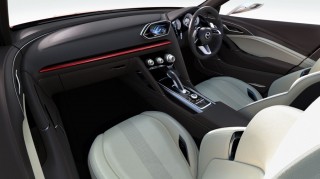
Mazda Takeri Interiors

Mazda defines the KODO language with three words: speed, tension and allure. The interiors are all that and more. Information on the interiors are sparse, we will keep you posted as we get updates. The display at the center, we believe should be the HMI (Human Machine Interface) and should be a more futuristic version of that HMI seen on the Mazda SHINARI. Mazda, lauded for the quality of materials used in the SHINARI’s interiors, seems to want the TAKERI to feel just as good and from what we can see, the interiors are top notch again.

Mazda TAKERI InteriorsMazda TAKERI Interiors

Mazda claims the TAKERI will provide a supremely comfortable ride feel, thanks to the satisfying power of SKYACTIV-D, Mazda’s diesel engine and new lightweight and aerodynamic technologies. It also features the i-stop idling stop system and Mazda’s first regenerative braking system. The regenerative braking system efficiently converts kinetic energy to electricity during deceleration, stores it in capacitors and then uses it to power the vehicle’s electric equipment, thereby reducing load on the engine and saving fuel.

Mazda TAKERI

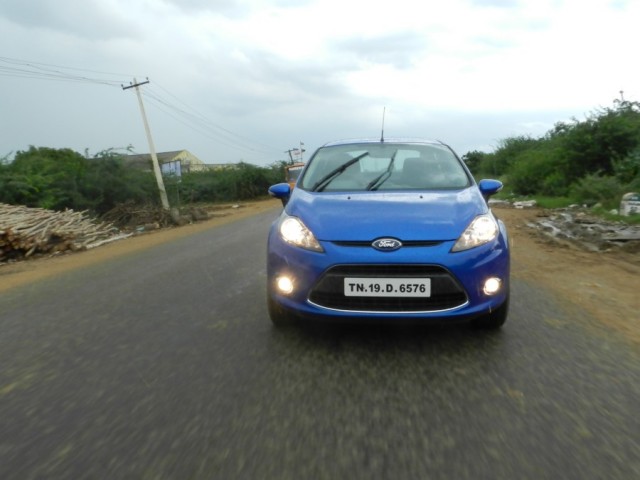
All New Ford Fiesta

Ford India recently announced it had sold more than 100,000 wholesales units so far this year, and that sales were up 31 percent.

Ford India sold 101,439 wholesale and export vehicles from January to October, compared to 77,324 units sold during the same period last year – a 31 percent increase compared to the same time in 2010.

Ford Figo continues to see a surge in demand as Ford India exported 2,815 cars last month. The Figo is exported to 27 markets.


“The festivities at Ford India are continuing past Diwali,” said Michael Boneham, president and managing director, Ford India. “We are so proud that more than 100,000 customers in India have chosen to drive a high quality, fuel efficient Ford vehicle. More customers in the first ten months of this year have chosen Ford than the entire 12 months of 2010. Having crossed last year’s sales figures already, we are upbeat about closing the year with a new high,” he added.

“Exports are a strong part of our growth strategy. And it’s wonderful to see the Chennai-made Figo winning hearts of customers in overseas markets too,” Boneham said.


Ford India opened its 200th sales and service outlet and is set to expand its sales and service network to more than 220 outlets in 120 cities by the end of this year, with new dealerships coming up at 13 new locations such as Solapur, Gulbarga and Tirupur.

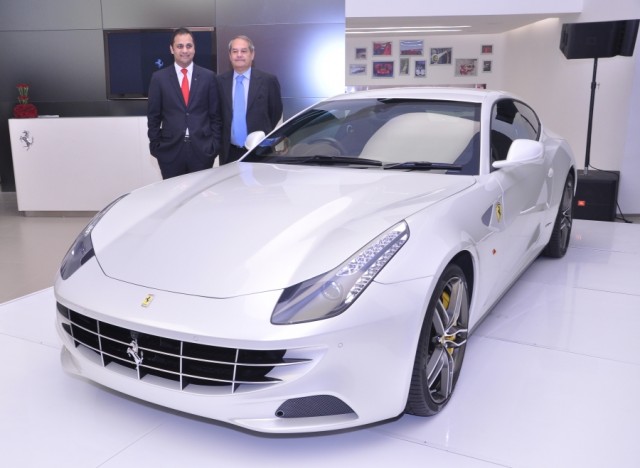
Ferrari launched the FF in India today. The model also happens to be Ferrari’s first four wheel drive vehicle and it’s most practical offering with four seats, and is essentially a ‘shooting brake’.

Ferrari FF launched in India

Amedio Felisa, CEO, Ferrari SpA and Ashish Chordia, Chairman, Shreyans Group unveiled the FF to the press in New Delhi today.

Ashish Chordia said : The high performance FF is the most practical and luxurious model in the history of the Ferrari brand. We have had a strong pre-launch demand for the car and post today, we expect it to grow even more.

The FF is priced upwards of Rs. 3.42 Crores and that doesn’t include local taxes and duties.