1954 BSA C11G
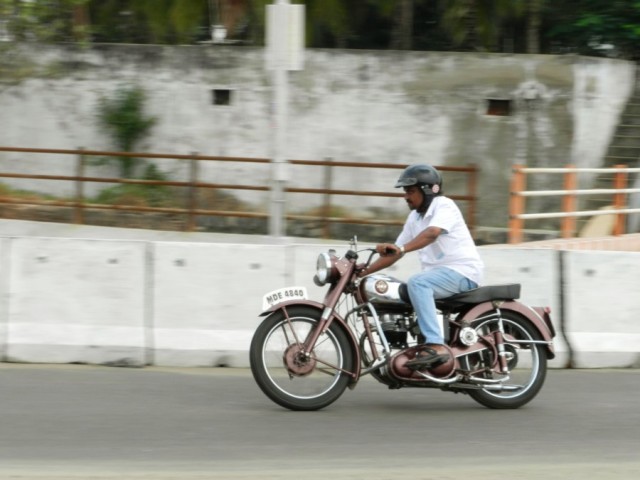
I really wanted to get this shot. Framed perfectly. I knew I would have to ask Muthukumar to take the turn again. Having already asked too much of the man when doing the Norton WD 16H photoshoot, I was slightly hesitant to ask him to do the run again. Ever the gracious host and easy going enthusiast that he is, the 1954 BSA C11G was graciously scorching, if you would forgive me for that phrase i just made up, the same patch of tarmac again, and again. I think it’s that custom paint job, ‘Rossa Mettana Effect’ he calls it. Everytime she passed me by I’d get caught up in her beauty and forget to do my job. So it was a while before I managed to get this shot.

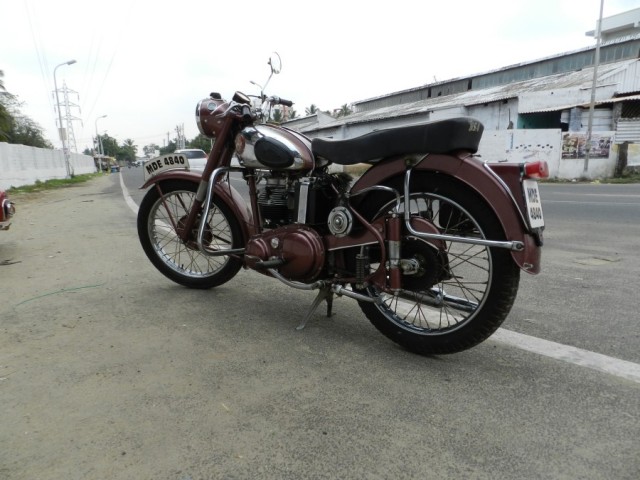
The most popular of the BSA singles are the M20, used extensively in WW2, and the 2 stroke Bantam. These models had the magneto and dynamo setup. Relatively less known is the C range, that has always had coil ignition and until 1954 a dynamo was used to charge the battery. It was sometime in 1954 when the C10 and C11 were replaced by the C10L and C11G with alternators. The C11G also had the options of plunger or rigid frame and three or four speed gearbox.

1954 BSA C11G

The BSA C11G is powered by a 249cc four stroke motor with a compression ratio of 6.5:1 and is an OHV unit. The C10 and C10L had the side valve engine, which were in production till 1958. The C11G was replaced by the C12 in 1956, which had the same engine, but mounted in a pivoted fork frame.

You’ve had the pleasure of acquainting yourselves with the motorcycles Muthukumar has painstakingly restored, we thought it’s time you also got to know the man himself.

It was not Motorcycles initially. It was cars, engines and motorsports involving cars ( TSD Rallys, Dirt races and track events).I still remember ( would have been 6 or 7 year kid) Formula 1 Champion Mr.Jackie Stewart came for an inaugural function of MMSC ( Madras Motor Sports Club) some 40 years back. I used to dream about becoming a NIKI Lauda. In those days even a wealthy Indian like Dr.Mallya could only dream.

I was advised that “Bikes are not safe machines for commuting”, and much more dangerous is bike racing! As far as watching races at Sholavaram was concerned, I preferred bikes ( particularly Open class) than cars.

In those days I used to lament our motorcycle tuners for their poor performance but now i understand, with the limited available facilities at that period they have done wonders. Even before doing my engineering ( Mechanical and Production) , I could understand engines and production machines a bit more than the average student who comes from a non-tech background.

My first two wheeler was a Suvega during the years ’80 or ’81. It was a gift from my Dad’s friend. Though my heart yearned for bikes,so much more than cars, consistent preaching by all and sundry made me stick to cars.

I was promised a bike though and would be allowed to participate in a TSD Rally in only a car, if I passed out with distinction in B.E. It happened and in the year 1987 my Dad bought me a Yezdi CL11 and on exactly the 8th day I crashed into a Lorry and added extra chilly to their safety advice.

1952 BSA C11G Plunger Suspension, Custom Saddlebag1954 BSA C11G Tyre Inflator

Notice the custom designed saddlebags and if you have the eye for it, the custom made badge on it. Muthukumar also has the skills to wield etching tools to get these badges done. The tyre inflator that was standard on most British bikes of that period.
1954 BSA C11G

Muthukumar about the Scissors Action Rally and his work for Enfield India:

I was back in action in 3 months, participating in the ‘Scissors Action Rally’ in a 1967 Premier Padmini FIAT (MDM 51), wearing competitor number 151. This being our (Santosh, myself and 2 other guys) first participation in a major event, we were placed 7th overall. I think that year there were nearly 60 entries including both two and four wheelers.Frad Bathena’s team won the Rally in 4 W category and Nanjappas in the 2 W ( TVS Supra SS). Mr.Karthikeyan appreciated our effort. It was a  great accomplishment to even finish a rally like that. After that, I din’t have a chance to participate, as we didn’t have funds to go on  in a professional way.

In those days, it was hard to find sponsors. Soon after that I moved to Madras, indulging in my toolroom activities, even at Madras I was not allowed to touch bikes, but it happened so. I was destined to work on tools for “Enfield India”, where some of the German Tools (DIEs) were modified or re-worked as per customer advice (based on Enfield India’s drawings). Though I was not riding bikes, I was atleast working on tools for motorcycle components.I remember working on the Fury’s timing case cover die, clutch side cover die, Explorer’s cover die etc. On several occasions I had chance of visiting all the units of Enfield, but I didn’t make any prolonged and informative visits. I do not know whether I was actually more interested in the cutting tools ( machines like the lathe, milling machines and the like) than the bikes OR if I was actually trying to heed my parents advice.

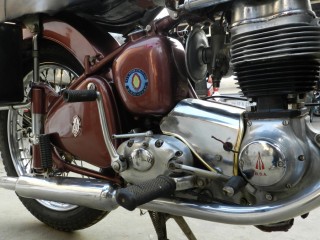
Late 1940s BSA C11 : Points housing angled into the timing case cover1954 BSA C11G : Points housed inside the timing case

Where the C11 had the points housing angled into the timing case, in 1954 the C10L and C11G adopted alternators and points were housed in the timing cover. The other difference that distinguishes the C11G from the C11 is the increased fin area which also meant that the head studs extending downward had to be longer so the fixing nut lay below the fins.

1954 BSA C11G : AMAL Carburettor

This 1954 BSA C11G has an Amal Monoblock Carburetter. Shown below are pictures of the carbs on the C11G and another BSA. You will notice the standard trumpet air filter that rams air into the carb, whereas the C11G here has a trumpet filter with a much larger surface area, but shorter length. The space available for the air filter in the C11G is much lesser and hence such a filter.
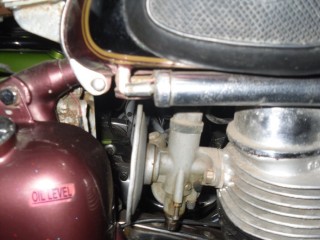
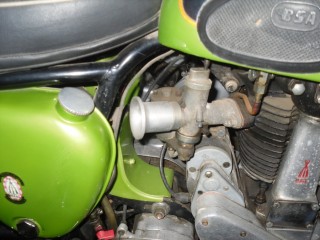
1954 BSA C11G : Trumpet Air FilterTrumpet Air Filter

The C11G, and all four stroke BSA singles have dry sump lubrication. The oil tank is on the right side of the bike and opening the oil tank cap and making sure that oil flowed through a hole inside was one of the pre-flight checks that had to be done before rolling the bike off the stand and moving on.

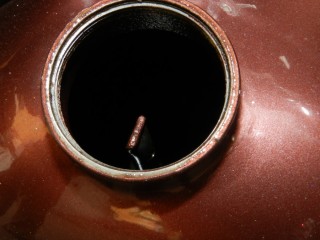
1954 BSA C11G Oil Tank1954 BSA C11G : Inside the Oil Tank

Muthukumar talks about his dreams and of his father, Mr.Kanakachalam:

After ’90 I migrated to Trichy , for some offshore engineering components manufacturing and then happened marriage . In ’92 returned to Coimby to set up my dream project, which didn’t happen till now and, I think it is too late now.

I wanted to indulge in a “Steel Casting Foundry ” ( not a cast iron foundry, which is common at Coimbatore). Project cost was beyond my capacity, so was dragging the idea along till ’95 , finally compromised and indulged in ‘Tool Room’ activities in a small way! Between ’92 and ’96, was helping out a lot in my father’s garage, and apart from the regular service work, he was always busy with vintage car restoration for serious enthusiasts!

At that time we used to have cars like the Standard 10, Land Master Woody and also big cars like Austin 12, Wolsely, Hillman, Prinz, Merc 210 SE etc, but not all at the same time period, but one after other.

My Dad ( late Mr.Kanakachalam ” aka ” Ganesh) had completely restored one motorbike in his life time…it was an Ariel Square FOUR, for Narain Karthikeyan’s Family. My dad’s Car tuning skills came to the limelight, when he joined CAI, Coimbatore Auto Industries. Though my father was not highly educated, he had this ability to learn in very short time periods, and had good common sense. Initially he tuned cars for the late Mr.G.Varadraj (Narain’s grandfather) for Sulur races during the early ’60s.

Morfia

He had also made a custom car which he called ” MORFIA” with his colleagues, for Mr.G.Varadaraj , in Indian Open category who eventually went on to finish first in both the races ( a 6 lap event & a grand prix (50 laps). The Morfia had its chassis from a Morris and engine from a Fiat, a 1100cc modified with Isky cams.

1954 BSA C11G

It is only when you sit down to talk to a true blue enthusiast like Muthukumar that you realize the number of misconceptions with regard to restoration of British singles. When rigid frames were replaced with plunger frames, it was every biker’s desire to have a single piece seat for two up riding, as seen on this C11G instead of individual sprung seats. The single piece seats were in demand for the simple reason that it was a much more comfortable proposition for the pillion who was otherwise relegated to the mudguard, or any other form of a temporary seat bolted onto the mudguard. Not to forget the benefit for just the rider himself who has much more space to move around, especially on long rides. As Muthukumar pointed out, it isn’t uncommon for bikers even today to fit their motorcycles with individual sprung seats in complete disregard of the fact that the motorcycle rides on gas filled shock-absorbers mounted on a swinging arm.

You will remember the attention to detail by Muthukumar, for the seat upholstery work from the Norton WD 16H article. It wasn’t any different with the BSA C11G. It was worked on repeatedly for a number of days with Muthu wanting to achieve the perfect shape as seen in pictures of the motorcycle as it was when it rolled out of the factory. Initially the seat was out of shape, with some WFM Rajdoot’s foam. Removing all the deteriorated foam stuff Muthukumar and his trusted assistant Giri discovered ‘Made in England’ punched in the base plate. A decision was made, dents in the plate removed, fractured bits welded, then the base plate was sand blasted & powder coated. Of course, Muthukumar concedes, powder coating was not the order those days, but to preserve this beauty for years he had to adopt modern methods. Good sturdy , non textured mat black rexin was selected from Mumbai. Finally the BSA logo at the seat’s rear as shown in the image above, attached as a screen printing sticker.

1954 BSA C11G : Rider's View

Continue Reading >>

For those whose motorcycling began in the first decade of the new millennium the only kind of motorcycles known are ones that have a four stroke engine.  Also all motorcycles are either Japanese or Indian.  Honda, Yamaha, Suzuki and Kawasaki are here.  The last mentioned is a very minute niche player while Yamaha and Suzuki are struggling to gain traction in the Indian market.  Honda is the one player who has made its presence felt, thanks mainly to the successful start it had with the Activa and later on the Unicorn but still as things stand it is only the fourth biggest player in the Indian market.  Its erstwhile partner who still depends on it for technology, Hero, is the numero uno but all their motorcycles are essentially Hondas.  Bajaj and TVS have carved good positions and reasonable reputations for themselves while Royal Enfield who is the oldest manufacturer of motorcycles in India is confined to selling motorcycles of the 1940s vintage to a market that is steeped in nostalgia.  That too is a small market.  But there was a time when Royal Enfield or we should actually say Enfield India had other ambitions as well, those that did not reach fruition.  In fact, this story is about one model of motorcycle which was to have catapulted Enfield into the main stream market, but sadly did not.  But that motorcycle has a pedigree which is pretty interesting to look at and one wonders what may have been had its story been scripted otherwise.  The said motorcycle goes by the name of Fury and is a legend in its own right albeit among a small bunch of people.  To understand this story it is necessary to rewind to the 1980s and that is what we shall do.

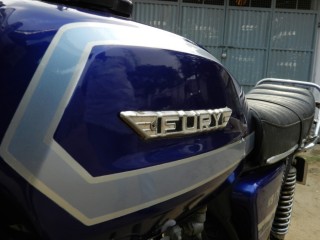
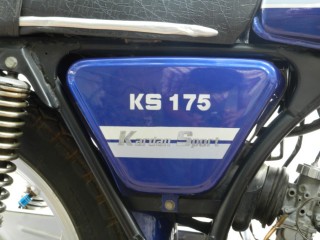
Enfield Zundapp Fury KS 175The 1980s are to Indian motorcycle buffs what the 1960s were to Europe in general.  In Europe the 1960s were all about revolution, change and great new society, a spirit well captured by Jean Luc Goddard in one of his films.  For the motorcycling enthusiasts and for the general commuters, the same was happening in India.  In Europe the societal revolution that everyone wanted never happened but fortunately in India in the 1980s a revolution swept across changing everything in its wake.  To understand the success of that revolution one has to understand what was happening in the economy of the country then.

Years of socialist rhetoric and dysfunctional industrial sector controlled by the Government had meant that the Indian economy was beginning to lose the ability to generate sufficient social wealth for the people to enjoy.  That was the time when the Prime Minister of India, Rajiv Gandhi decided to introduce a new regime that would do away with the licence Raj in some sectors and open them up for new players to emerge.  It was also the first dose of liberalization that opened up possibilities of new collaborations and allowing foreign manufacturers to have an investment as long as it did not cross a certain limit.  One of the sectors that was opened up was the two wheeler sector and initially there was a restriction on the engine capacity of the motorcycles that could be made with foreign collaboration – a restriction of 100cc.  The first player to avail of this opportunity was India Motorcycles Limited (later to become TVS Suzuki) which collaborated with society to form a company called Ind-Suzuki motorcycles and it launched the two stroke AX 100.  The next was this company called Hero Honda that made the all conquering four stroke 100cc called the CD 100 which later spawned the Splendor, the Passion and the various 100cc motorcycles that Hero still makes.  The third player was Escorts the maker of the venerable Rajdoot who tied up with Yamaha to make the Yamaha RX 100 yet another two stroke 100cc.  The story of Escorts is interesting because it first made the now famous and then infamous RD 350 under licence from Yamaha but owing to pathetic fuel efficiency the motorcycle died a very sad and premature death.  The fourth player in the market was Bajaj who brought the Kawasaki name into the market through a technical collaboration.

This meant that the old Indian bike manufacturers Enfield India and Ideal Jawa the makers of the Jawa (later changed to Yezdi) were left without any collaboration.  Of the two the position of Enfield was more precarious as the Bullet 350cc that it made was notoriously unreliable and complicated to maintain.  It was but natural that it was the first to feel insecure since the sales of the Bullet began to plunge.  Enfield then was under the control of the Viswanathan Group/family of Madras (now Chennai) and they decided to do something about it.

Enfield Zundapp Fury KS 175Enfield Zundapp Fury KS 175 Instrument Console

The Viswanathan family or the Enfield of then knew the weaknesses of its product-the Bullet.  They had therefore tried to innovate with another product which was a 200cc two stroke motorcycle which was called the Mini Bullet.  It sold in reasonable numbers but not enough to perturb any of the old players leave alone the new ones.  If you have been reading this story so far, you would have noticed that with the exception of Hero Honda nobody did anything with four stroke technology.  The reason being two strokes were more reliable and much more easier and economical to maintain since those engines had fewer moving parts. Also, a two stroke engine fires once every revolution of the crankshaft, whereas a four stroke fires every two revolutions. Also every alternate stroke in a two stroke is a power stroke unlike in the four stroke where for every four strokes you have a power stroke. This meant that two strokes were more powerful, delivered the power faster and in a heady sort of way.  The reputation of the Bullet did nothing for the cause of four strokes and therefore, wherever the Indian partner had the way, it was two stroke.  Only in the case of Hero Honda the story was different since Hero had no experience of motorcycles but more importantly were willing to listen to what Honda had to say and Honda has always favoured four strokes.

Enfield Zundapp Fury KS 175 : Instrument Console

But to come back to our story, Enfield India decided that it needed more two strokes to be able to withstand the new pressures brought by the new players.  By the time they decided to do something like that the Japanese manufacturers had been snapped up already and therefore they looked towards Europe.  In Europe, thanks to the Japanese, most motorcycle manufacturers had disappeared and that included England the original home of the Bullet. Italy had a few manufacturers left but they were teetering on the verge of collapse and they made only large capacity sports bikes.  Enfield somehow managed to locate the German manufacturer Zundapp that had shut shop and was willing to sell not only its technology and designs but also its production line itself.  And the Viswanathan group decided to acquire them all.

But in what can only be considered a “difficult to understand” strategy Enfield decided that it would take a bottom up approach and decided to start with 50cc machines, the step through Silver Plus and the motorcycle Explorer, then step up to 100cc with the Enterprise and finally to the 175cc Fury.  This was during the middle years of the decade that was the 1980s.  Amazingly for that time all the vehicles were to come with things such as alloy wheels and in the case of the Fury, even a disc brake. The company released advertisements that gave the launch scheme to the people.  Some of these models were also displayed at the first ever Auto Expo in the January of 1986 (there was a break of 6 years before the second edition of the Auto Expo happened).  Enfield had a bizarre strategy of “demonstrating” the capabilities of their motorcycles by using test riders.  But to Enfield’s credit it must be said at least people got to see the bikes turning their wheels while in the case of LML and Andhra Pradesh Scooter Ltd people only got to see pictures of their scooters before placing money for bookings (for the XE and the PL 170 respectively) and the other manufacturers of the new Ind0-Jap motorcycles only displayed their models while some generous dealers actually started the motorcycles.  The Silver Plus had a pretty good start in Southern India and it is not uncommon to see some of them on the road even today since they sold well into the 1990s. A lesser success but a success of sorts nevertheless was the Explorer and that too like the Silver Plus sold till the mid 1990s.

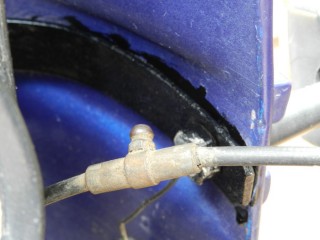
Enfield Zundapp Fury KS 175 : Grease Nipple for the Throttle Cable!Enfield Zundapp Fury KS 175 : Switchgear

Grease nipple for the throttle cable, Fury switchgear

However by the time the Silver Plus and Explorer established themselves, it was obvious that the 100cc space had become too congested thanks to the four Indo-Jap bikes, the AX 100 (TVS Suzuki), the CD 100 (Hero Honda), the RX 100 (Escorts Yamaha) and the KB100 (Kawasaki Bajaj) and in what can only be considered to be good thinking Enfield decided to postpone the launch of the 100cc Enterprise and advance the launch of the 175cc Fury.  When it entered the market the Fury was an extremely interesting motorcycle.  There were certain things that set it apart from others.  Its engine capacity was different (previously only the Rajdoot had an engine capacity of 175cc among motorcycles apart from the Lambretta Mac scooter which also had that capacity).  It was only much later that Ideal Jawa launched the 175cc single exhaust model with the Kawasaki Bajaj KB 100 parts bin providing the turn indicators and certain rubber bushes.  The Fury was also (with the exception of the Bullet 350cc) the most powerful motorcycle with a power out put of 14 PS.

The way its engine was mounted was also interesting.  It was in a traditional double cradle frame but rubber bushes were used in between the engine and the frame.  This was done apparently to minimize vibrations from being transmitted to the frame and the rider and what is interesting is that due to the rubber mounts the engine used to appear to sway a little bit during idling, something that would disappear once the engine picked up speed.  This led to some really wild stories about how the rubber bushes were not simply rubber bushes but that they also had a viscous fluid contained in them.  Another interesting feature of the Fury was the exposed frame that served as a design detail. The people’s response to the Fury was not exactly lukewarm.  It was after all the only second bike after the Explorer, its own stable mate, to sport a bikini fairing, a tachometer (the first was the Explorer but it was only optional, the KB 100 being the only motorcycle to come with a tachometer as standard), alloy wheels, and it was the first bike to sport a disc brake on the front wheel. It sold pretty well initially before traditional Enfield gremlins came to the fore.

Enfield Zundapp Fury KS 175 : Disc Brake

The biggest problem was the gear box and inconsistent build quality accounted for other problems such as front fairing rattles.  Perhaps the gear box of the Fury tells a story, one about why most European manufacturers disappeared once the real onslaught of the Japanese began in right earnest.  It was obvious that the Europeans just did not bother to strengthen their motorcycle engineering since after the World War II, the motorcycle was no longer seen as mode of transport.  It became a tool of recreation and the car took over as the mode of transport.  The electricals of the Fury (and those of the Explorer) were considered to be not as good as say those of the KB100.  The Fury though a reasonable handling motorcycle, could not capture the market due to its unreliability and expensive maintenance which were highlighted by its awful gear box.  Gear selection was more about providence rather than riding skill and this along with a dealer network that was not properly trained to handle the problems and also competition from other manufacturers meant that the numbers of the Fury began to dwindle quite alarmingly.

Enfield Zundapp Fury KS 175

What did not help was the unfortunate tinkering with the already troublesome gear box by Enfield.  Even in the case of the Explorer, Enfield reduced the number of gears from four to three (due to the preconceived notion that Indian riders of small capacity bikes did not like too many gears) and therefore reaching second and third gears was more due to prayer than due to intent.  Enfield’s tinkering with the Fury’s gearbox was also typically a case of the cure being worse than the disease.  When this tremendously negative feedback hit Enfield they went to IIT Madras (the mechanical engineering department there actually) for support.  The mechanical engineering department at the IIT Madras worked diligently for sometime on the gearbox but could not do something radically different and the problems did not entirely disappear (could we say that teaching is one thing and actually doing something is another?).  Enfield then decided to revamp the model and achieved another first.  They launched the motorcycle with a two tone colour scheme.

Enfield Zundapp Fury KS 175 : EngineEnfield Zundapp FuryKS 175

That motorcycle was called the Fury GP or Grand Prix.  The two tone colour scheme used two very contrasting colours such as black and silver or deep red and silver.  The other company that used such a scheme was TVS Suzuki on its Supra model.  Enfield also tried to take a leaf out of the Ind0-Jap motorcycles by offering a heel and toe shifting mechanism to shift gears, this to alleviate the problems of riders.  Sadly however, the gear box was not entirely cured even though the heel-toe mechanism offered greater convenience while locating the gears.  The people however had gotten used to the bullet proof reliability of the Indo-Jap motorcycles and anything lesser was increasingly becoming unacceptable.

Enfield Zundapp Fury KS 175 : Carburettor

Enfield for the first time in their history took to advertising very strongly.  They advertised the Fury as the machine with “Guts For Glory”.  Then they also asked people to choose from bike that would serve for years or pack up soon.  By doing this they were trying to build on a popular misconception that existed in the market then, that the Indo-Jap bikes were flimsy and would not last long.  Their advertising went “The quick pick up or the quick pack up” and asked the customer to choose.  Suddenly it also dawned on them that they had a disc brake on their motorcycle and decided to harp on that.  While the usual advertising in those days harped on the time taken to reach 60 km/h from zero, Enfield decided to advertise the stopping power by saying 60-0 in certain number of metres.  Try as they may, the Fury GP simply did not sell.  Examples of that are very rare, but those who have them like to keep them, since that means that they are keeping a certain piece of Indian Motorcycle history with them.  Some others which are shabby, if found, are rescued by the likes of Mr. Muthu Kumar Kanakachalam, who has done this glorious restoration of the Fury that you see in these pictures.  No matter what, the Fury is an important player in the chequered history of Enfield in India and also in the history of the Indian motorcycle market.  Its story tells us why the Indian motorcycle market went in the direction that it did.  For those fortunate people such as this author, the Fury is reminder of a rush of power and pretty good handling despite the troublesome gearbox.  If you ever find a Fury ask for a ride, it will be something different and something worth remembering.
ZundappEnfield Zundapp Fury KS 175
P.S: Now this bit is like the thing that you see in films when the credit are being shown.  What happened to the characters in the movie is also shown.  So imagine that you are seeing the credits, even though in this case the credits will show only the name of Mr. Muthu Kumar Kanakachalam.

In the 1990s the Viswanathan family sold Enfield to the Eicher Group.

Somebody in Enfield India realized that since the parent British Company, Royal Enfield Motors was dead, the rights to that name could be bought by Enfield India.

The Eicher group decided that there was no point in flogging the Zundapp range of motorcycles in the market.

The Enterprise was never launched and it was last seen in the second edition of the Auto Expo at New Delhi.

The Explorer was the second motorcycle, after the Fury, to breath its last.

The Silver Plus continued for a while before it too went to the grave silently and without ceremony.

Under Eicher, Royal Enfield Motors decided to become a niche player and cater only to those who loved the Bullet.

Consultancies such as AVL were used to make the Bullet a little more Bullet proof.

The 500cc was launched.

The Bullet spawned various versions such as the Electra and Machismo

Most recently Royal Enfield created a new Unit Construction Engine of 500cc and 350cc.

The Classic 500 and the Classic 350 were launched to resounding success (by Enfield standards).

If you want to know more, Mr. Muthu Kumar is the man for you.

The story is over, now what are you waiting for.

If you read this far, it means that you really love motorcycling history and failure means nothing to you.

And if you have read properly you will see that the article has not been proof read.

Nico Rosberg joined Mercedes GP Petronas for the 2010 season, after a four year stint at Williams. Nico has achieved three podiums and scored 217 point in his tenure with Mercedes.

Nico Rosberg said: “I am very excited to have extended my contract with the MERCEDES GP PETRONAS team. To win in a Silver Arrow will be one of the highlights of my life so far, and I greatly enjoy helping to lead our team in our quest to become the best in Formula One. I have every confidence that the team will provide me with a winning car, and that we will be able to contribute to the fantastic racing heritage of the Silver Arrows. I look forward to great times in the years ahead with the Mercedes-Benz family.”

Ross Brawn, Team Principal, MERCEDES GP PETRONAS commented: “We are delighted to have extended our contract with Nico as we know that he is a driver who can win races and championships. Nico has performed exceptionally well for our Silver Arrows team over the past two seasons, achieving results at the very limit of the technical capabilities of our current car. He has an excellent work ethic and, together with Michael, this gives us a driver pairing who consistently push the team to improve and progress. As we continue to strengthen our team for the future, we look forward to providing Nico with a car which will enable him to compete right at the front of the field and achieve his deserved first win in Formula One.”

Norbert Haug, Vice-President of Mercedes-Benz Motorsport said: “Nico and MERCEDES GP PETRONAS have the same targets, he loves to work with our team and we are fully committed to a long and successful future together. I very much appreciate Nico’s total dedication and his precision. He is certainly one of the quickest, most talented and most consistent drivers in the field, and his level of professionalism is second to none. We will work very hard to improve our technical package, in order to give our drivers the car to deliver the results they deserve. In Michael, Nico has the most successful racing driver in the history of the sport as his team-mate, which is a perfect combination for him as well as for our team. We all rate Nico very highly and we are looking forward to a long co-operation full of hard work, which will deliver great success for Nico and MERCEDES GP PETRONAS.”


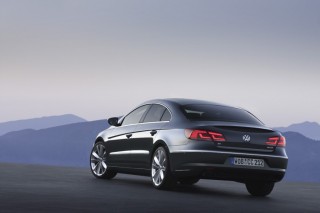
2012 New Vokswagen CC

Vokswagen has previewed the new Volkswagen CC before the world unveiling at the Las Vegas Auto Show. With a new front and rear styling, the new perfected Volkswagen CC is a step closer to the automotive luxury class, says Volkswagen. We have to point out though, the look of a luxury sedan has come at the cost of losing the aggressive, sporty face that we loved so much on the previous generation CC.

2012 Volkswagen CC

Standard features now include new bi-xenon headlights, static cornering lights and a new LED tail light design. Also standard are features like fatigue detection, RCD 310 radio-CD system, stainless steel door sill plates and safety head restraints with additional longitudinal adjustment for just the front seats.

2012 Volkswagen CC

Other new optional assistance systems include technologies such as Side Assist Plus with integrated Lane Assist, which warns the driver of vehicles in blind spots and also steps in to assist the driver to prevent a crash by steering intervention. Dynamic Light Assist (automatic main beam control) that is new in the Volkswagen CC and a camera-based traffic sign detection system are the other optional features. Comfort is optimised by what VW calls the ‘climate seat’ which has an integrated massage function.

The Volkswagen CC will be powered by petrol and diesel direct-injection engines. All the TDI engines are equipped with a Stop/Start system and battery regeneration mode as standard. All petrol engines also have battery regeneration functionality. The TDI engines output 103 kW / 140 PS and 125 kW /170 PS.

2012 Volkswagen CC : Interiors

The petrol engines of the European CC versions develop a sporty 118 kW / 160 PS, 155 kW / 210 PS and 220 kW / 300 PS of power. In the USA, the Volkswagen will once again launch with petrol engines that output 147 kW / 200 PS (TSI) and 206 kW / 280 PS (FSI). All engines go to work with excellent efficiency. A prime example is the 140 PS TDI. Together with a manual six-speed gearbox, its combined fuel consumption is just 4.7 l/100 km (equivalent to 125 g/km CO 2).

The new Volkswagen CC will be revealed to the public in a world premiere at the Los Angeles Auto Show (November 18 to 27). The market launch phase begins shortly thereafter. Volkswagen will first offer the new CC in Germany in February 2012, then in stages across Europe, America, Russia, China (local version starting in 2013) and all other sales regions relevant to this vehicle class.

2012 Volkswagen CC

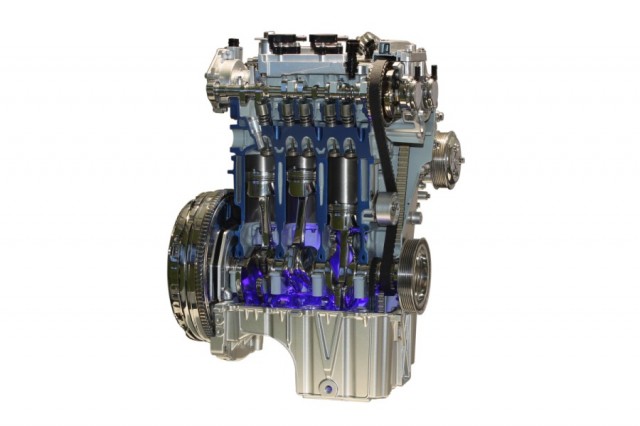
Ford President and CEO Alan Mulally today launched volume production of Ford’s smallest petrol engine – a 1.0-litre, turbocharged, direct injection EcoBoost engine that will debut in Europe in early 2012 and will be available worldwide soon.

The engine will debut in the European Ford Focus in early 2012, giving the Focus class-leading petrol CO2 emissions and fuel economy.  It will subsequently be offered on the Ford C-MAX and the new B-MAX in Europe, and other Ford vehicles around the world.

Ford EcoBoost Engine

New 1.0-litre EcoBoost is Ford’s smallest petrol engine. The turbocharged, direct injection engine delivers the combinations of 125PS with 114g/km CO2 and 100PS with 109g/km CO2 in the Ford Focus. This new EcoBoost engine delivers performance to rival a traditional 1.6-litre engine and with significantly improved fuel efficiency and lower CO2 emissions.

The 1.0-litre EcoBoost engine was developed by Ford experts across Europe, including engineers at Ford’s European Research and Advanced Engineering Centre in Aachen, Germany, and the Dunton Technical Centre, UK.

High-tech EcoBoost production

The advanced EcoBoost production facility at Ford’s Cologne Engine Plant was designed by Ford’s Manufacturing Engineering team, Dunton, UK, using Ford’s Virtual Manufacturing laboratory, to offer maximum flexibility and efficiency. Nearly 100 new machining units and a 580-metre purpose-built assembly line have been installed.

Fifty-five automated and 14 semi-automated processes are used, alongside 90 work stations for skilled employees, helping to ensure the highest standards of quality and consistency in production. The technology is capable of machining to an accuracy of 10 microns, 10 to 20 per cent the width of a human hair.

Ford has introduced new manufacturing techniques that reduce the volume of coolant required when machining aluminium engine parts to just four or five millilitres per component from a previous requirement of up to two litres, a reduction of more than 99 per cent that contributes to a reduced environmental footprint from manufacturing.

New “cold testing” technology allows completed engines to be tested without being started – reducing fuel usage and CO2 emissions from the process by 66 per cent – while 100 per cent of the remaining energy required to run the plant comes from renewable sources. Total electricity demands have been reduced by 66 per cent compared with production of Ford’s 4.0-litre V6 engine, which ends today at Cologne Engine Plant.


Audi, the German luxury car manufacturer, continued its remarkable performance in India. The company sold 4692 cars from January to October 2011, thus recording a growth of 85 percent (January – October 2010: 2535 cars). The luxury carmaker recorded sales of 482 cars in October 2011, a 35 percent growth over the same period last year (October 2010: 357 cars).

·         Vehicle sales in October 2011: 482 cars

·         Records outstanding sale of 4692 cars (Jan – Oct 2011)

·         Impressive YTD growth of 85 percent

“This year is shaping into, what we believe will be, Audi’s most successful year in India to date. We attribute this growth to our continued focus on introducing an energetic product line, qualitative network growth and strong brand pull. We launched six class-defining models this year and with the introduction of Audi Indore later this month, we are focused at strengthening our dealership network across India. This record performance reflects the appeal that the brand enjoys with our customers as well our business partners and confirms that we are on a sustainable and profitable growth path. With this exceptional performance, I am confident that we are well on our way to exceeding our sales targets of 5,000 cars this year.

“With our strengthened ‘A’ range of limousines with the Audi A6 specifically catching a lot of attention, having already received an overwhelming response beyond expectation. Our market leadership in the luxury SUV segment with our Q5 and Q7 and in the super sports car segment with the iconic R8, I am confident of a strong fourth quarter and an exceptional growth rate for the year as a whole.” said Michael Perschke, Head, Audi India

Globally, Audi is well set to first time become the No.2 premiere car brand. Audi is the No.1 premium car brand in Europe and in China and the fastest growing luxury car brand in USA and India. While China has overtaken Germany as the single biggest market for AUDI, the brand is in the process of deploying some proven strategies from China to the Indian market, on the product, network growth and brand building front. This year the company opened showrooms in Chennai, Delhi, Ludhiana and Surat with further developments planned in Indore, Coimbatore, Delhi West, Lucknow and Mumbai South.

The Audi model range in India includes Audi A4, Audi A6, Audi A7 Sportback, Audi A8L, Audi Q5, Audi Q7, Audi RS5 Coupé, the super sports car Audi R8 and the Audi R8 Spyder available across the country: in Ahmedabad, Bengaluru, Chandigarh, Chennai, Delhi, Gurgaon, Hyderabad, Jaipur, Kochi, Kolkata, Ludhiana, Mumbai West, Pune and Surat. Further developments include Coimbatore, Delhi West, Indore, Lucknow and Mumbai South.

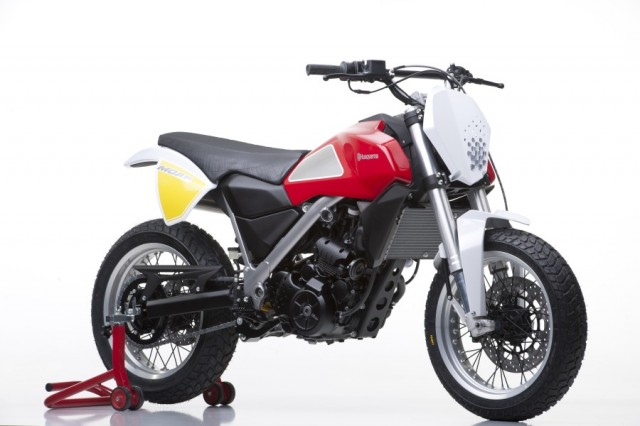
Husqvarna Concept MOAB

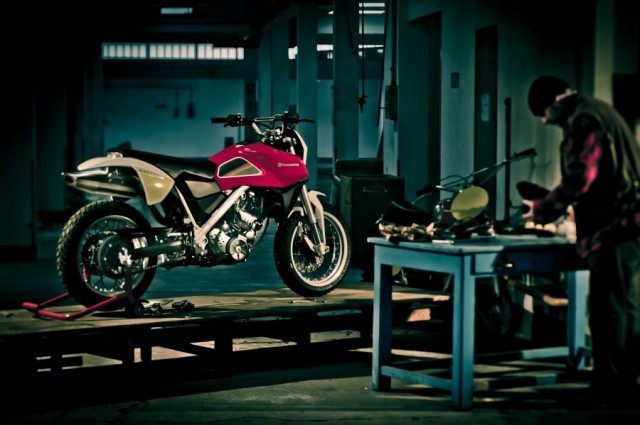
At EICMA 2011, the Husqvarna Concept MOAB was unveiled. Husqvarna says it is the modern re-interpretation of the scrambler, the bike that lies at the heart of the Husqvarna history and its unique style. The colour scheme, down to every last detail, both in bodywork and mechanics, is taken from Steve McQueen’s H400. It is believed Steve was seen on a H400 racing the bike at Lake Elsinore Grand Prix in the 1971 cult motorbike racing documentary On Any Sunday. We have below an image of Steve McQueen’s Husky, but we have doubts if it is the H400 mentioned above, but hey the colour schemes are a spot on match aren’t they?

Steve McQueen's Husqvarna 400 Cross

Image Courtesy: Husky Restorations

The MOAB can trace its origins to Husqvarna models from that period, legendary bikes that are milestones in the history of off-road biking, especially in the U.S. The MOAB, gets its name from a desert in Utah, where off-road bikers gather every year.

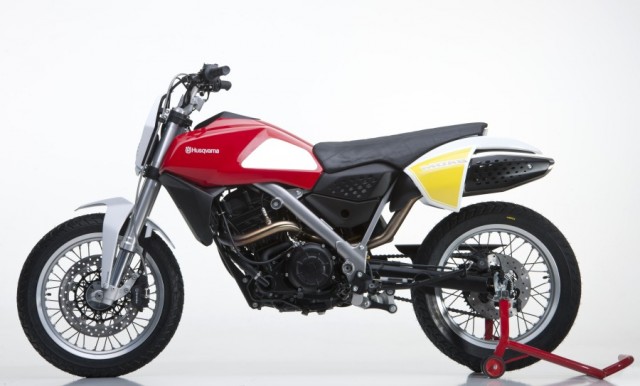
Husqvarna Concept MOAB

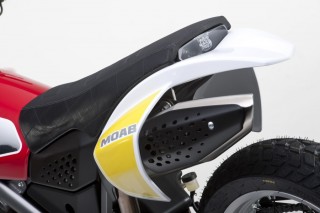
The red tank, the spacious seat, the yellow side panel number holders, the simple stripped-down frame all form the essence of the new incarnation of the Husqvarna spirit, as we’ve seen previously in the NUDA 900R.

The Husqvarna Concept MOAB has a 650cc engine on a perimeter frame and progressive linkage on the swingarm. The wheels are 17 inches and the tyres are semi-knobbly, and therefore suitable for off-road use.

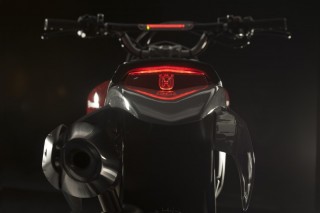
Husqvarna Concept MOAB : Front Numer Plate / Head lampHusqvarna Concept MOAB : Tail lamp

The design has visually distinct regions of the tank, the seat, the number holders painted white and yellow and the exhaust. The lines are fluid yet working together form visually strong shapes. The tank blends with the seat and the rear section creating a fluidity that is dsitinctly Husqvarna. As with the latest generation of Husqvarna models,  other design features include the concave shape of the front and rear mudguards. Also of note is the front number plate that lights up with LEDs serving as your head lamp. Ridiculously awesome eh?

Husqvarna Concept MOAB : Instrument PanelHusqvarna Concept MOAB

Husqvarna says tradition and high-tech innovation are successfully blended in the details of the new Concept MOAB. The digital instrument panel that is situated in the upper crossbar or the LEDs on the front number holder and the tail-light. The unique form and colours give the MOAB an exhilaratingly vintage look. We agree, Husqvarna.

Husqvarna MOAB Concept

Toni Elias who spent most of his time at the tail end of the grid racing a Honda which was winning in the hands of Casey Stoner and Dani Pedrosa regularly has been axed from the LCR Team. The team has thanked him for his services.  Who will take his place is yet unknown but the contenders seem to be Stefan Bradl and Randy De Puniet who is out of Pramac Ducati.  Pramac Ducati will only field one Ducati next year and has signed Hector Barbera who is out of team Aspar who will be fielding CRT machines with Aprilia engines in all probability.  Stefan Bradl it was announced mid season would remain in Moto2 but the death of Marco Simoncelli has left one factory Honda open.  Honda could give that to either LCR or Gresini and it has requested LCR to allow Bradl to test the Honda 800cc for the test at Valencia, raising rumours of his going to LCR.  Gresini is testing Andrea Iannone and remains to be seen what course of action it will take.  One rider without a ride now is Randy De Puniet.  The coming days should unravel a few things.

Due to unavoidable circumstances we have not been able to bring you immediate coverage of the final GP race of the MotoGP season at Valencia.  We sincerely apologize for not doing so and we will be soon bringing a comprehensive review of the entire season, so please bear with us until then.  Your patience and support are very much appreciated.

It sounds bizarre right?  But that is what Motorbeam.com is saying.  The talks between Yamaha and Mahindra 2 Wheelers are supposedly in the exploratory stage with some conjectures thrown in by Motorbeam.com about how such a thing may happen.  We are not discounting this rumour at all since a few months ago, Wheelsunplugged.com carried the news that Yamaha was scouting for a local player who could help with marketing.  Yamaha’s piece of the Indian motorcycle market pie is so minuscule that it has to be seen through a microscope.  Yamaha sells about 30,000 motorcycles per month at an average while Hero MotoCorp sells about 5 lakh units per month at an average.  Yamaha has plans to launch scooters starting next year.  Yamaha has the technological muscle which is absent in the Mahindra group, but they do have marketing ability.  But Mahindra has proved to be an unreliable partner for both Ford and Renault in cars.  Mahindra seems to want to be on its own legs and the fact that it has purchased specialist two wheeler technology has Engines Engineering is perhaps indication of its desire to go it alone.  Also after having taken over Kinetic Engineering, Mahindra has inherited the collaboration with SYM of Taiwan.  All these suggest that Mahindra may want to go it alone, but then the motorcycle market has proved to be difficult to crack with the Stallio collapsing the start line and the Mojo (does anyone still remember it) not even making it till there.  So never say never, you could be riding a Mahindra Yamaha soon.