With petrol prices reaching the outer expanses of our solar system, it has now become a necessity to have cars that either run on diesel or LPG or CNG. In the absence of a diesel engine the best alternative happens to be an LPG run car since the petrol engine hardly requires any modification and also because LPG is available in more filling stations than CNG. Maruti first offered factory fitted LPG kit on the Wagon R Duo and GM has also started offering the Chevrolet Beat with the option. Hyundai has decided that for the i10 to not lose out too much to the competition has decided to offer the car with an LPG option and is carrying the car i10 Blue Drive LPG. The advantage of LPG apart from better mileage is also cleaner emissions and Hyundai has taken a leaf out of Mercedes Benz’s book by taking recourse to “blue” as being the representation of “green” or environmental friendliness.
Tata Motors is determined about pushing the sales of the Nano to respectable figures. Despite the car having an extremely troubled start in the Indian market with difficulties pertaining to setting up factory at Singur, then literally fighting fires that engulfed a couple of cars and a lot of negative talk about the car, Tata Motors’ head Ratan Tata himself is adamant that the product and the technology are sound and that the car has a future in the Indian car bazaar. In order to prove the commitment to the car, Tata has upgraded the Nano with a raft of new features such as reprogrammed ECU that takes the power of the car to 37 PS, up 2 PS from the present 35 PS, a little more torque and better interiors. The top end LX version will come in beige interiors with a dash of silver on the central console, the CX will come in all black interiors and the base model with medium graphite shaded interiors. The LX model will also get an left hand side outside rear view mirror, something that is sorely needed. One hopes that this car which is fundamentally sound rakes in some more numbers to make it respectable in sales terms.

One of our correspondents in Chennai caught this LHD Kia Picanto being tested. Kia has been doing a feasibility study in India since late 2010. We’ve also heard reports of Kia shelving its plan for India somewhere through the middle of 2011. India is a market that no car manufacturer can ignore, it’s no surprise that Kia continues to conduct its feasibility studies.
The Picanto should share space in the market with the i20 if launched here. As this correspondent pointed out, a left hand drive Picanto simply means that Kia’s plans for India are nowhere near fruition in the near future.
It should be interesting to see how Kia intends to position its products along with it’s Hyundai siblings.
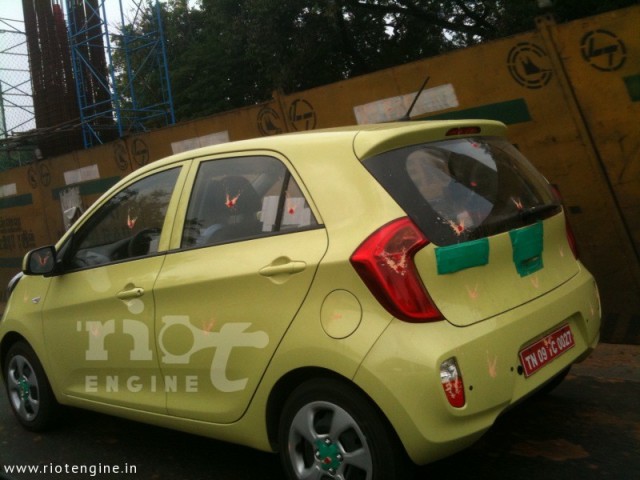
Kia, if we may make a suggestion, please do bring the fantastic looking Optima with you when you take a flight out of Seoul.


Now this is an interesting story, not because John Hopkins was not expected to go to World Superbikes with Crescent Suzuki but because of the number 21 that he will be using in the series. Let us update you with a bit of history. The number 21 has been used by World Superbikes most successful rider arguably, Troy Bayliss. When Troy Bayliss went to MotoGP as a full time rider with Honda, John Hopkins was already there riding for team WCM Yamaha and was using the number 21. He refused to give it up and that meant that Bayliss used the number 12 both on the Honda and later on the Ducati in MotoGP. John Hopkins kept the number 21 when he switched to the Suzuki and Kawasaki teams in MotoGP and was out of MotoGP due to Kawasaki pulling the plug without warning in 2008. Since then, Hopkins has been in the wilderness and has tried riding in various motorcycle racing series including the AMA. He has suffered injuries both physical and mental and only this year was he nurtured back to proper racing by Paul Denning the Manager of the now defunct Suzuki MotoGP team, in the British Superbike Series where Denning’s outfit Crescent represented Suzuki. Hopkins was hoping to get a ride with Suzuki again in MotoGP for 2012, after he was chosen to be a wild car rider for the Suzuki team in 3 GPs but could really ride only in one, being sidelined in the other two with injuries. Suzuki’s withdrawal from MotoGP has poured water on Hopkins’ hopes of a MotoGP ride and now his mentor Paul Denning who has moved to World Superbikes with his Crescent outfit as a privateer Suzuki team has signed John Hopkins to partner Leon Camier who lost his ride at the Aprilia factory team. Camier is an ex British Superbikes Champion while Hopkins almost clinched the title this year but could not due to injury. Hopkins will use the number 21 but Troy Bayliss is not too happy about it because of their history with that number in MotoGP. In a combative post, Bayliss has challenged the idea of Hopkins using the number 21, saying that it should have been retired as an honour to him (Troy Bayliss that is) just as the number 65 has been retired in MotoGP after the retirement of Loris Capirossi who used that number. Hopkins is undoubtedly a great talent but cursed with really wretched luck. Let us hope that something good happens to him from now on.
In what has to be the most sensational rumour in Formula1, some auto journalists say that Honda is likely to return to F1 not as a constructor but as an engine supplier to McLaren from 2014 onward. It is well known that from 2014 a new 1.6 litre turbo charged V6 engine formula comes into effect in Formula1 and that means that it will provide a level playing ground for all concerned. Honda had in the past been engine supplier to the Williams and McLaren teams and won world titles with them before calling it quits at the end of the 1992 season, leaving McLaren high and dry. By this time Williams had shifted to Renault engines. Honda came back to Formula1 first by testing waters with Mugen, the tuning firm run by Shoichiro Honda’s son and powered cars such as the Jordan and Ligier before making a full time return with Jordan and BAR. In the new Millennium Honda bought out BAR (which was the former Tyrell team) and had a horrible run in F1 until it pulled out of F1 at the end of 2008 citing the global economic turn down as the reason. It has however persisted in supplying engines to the entire Indycar grid till this year and will continue next year as well but with competition from Chevrolet and Lotus engines. Renault like Honda took over the Benetton F1 team and despite winning two world championships with Fernando Alonso decided to become an engine supplier only from 2012. It will supply engines to Lotus, Caterham and the iconic Williams team, the last being the team with whom it won an incredible number of World championships. Honda could follow the Renault model and comeback into F1 with old partner McLaren. McLaren is now a totally independent team from 2012 onward with Mercedes Benz (the company that owned 40% of McLaren till 2010) becoming an engine supplier (McLaren will have to pay for the engines) till 2016. McLaren’s relationship with Mercedes Benz soured due to the Spygate scandal and accusations of cheating. Honda and McLaren could indeed by an ideal partnership, but is this something which may happen or is it just wishful thinking?
That should be a bit of a shock to anyone who follows the rallying scene. Sebastien Loeb has been the dominant factor along with Citroen by clinching 8 World titles in the World Rally Championship, eclipsing the record of 7 world titles in Formula1 by Michael Schumacher. Mikko Hirvonen has led the Ford challenge against Citroen and Loeb in the WRC for sometime now with Jari Matti Latvala playing second fiddle. In a move that can only be called a surprise Citroen has announced that it has signed Hirvonen for 2012 and has left out the the other Sebastien, Sebastien Ogier. Ogier maybe signed by Ford or by Volkswagen which is rumoured to be interested in him. WRC is a two horse race, with Citroen and Ford being the only factory teams and Ford is yet to confirm its participation in 2012. There have been rumours that Ford and Mini, that recently joined WRC in some rounds could pull the plug on the rally programmes.
The Italians, what is with them and sensuous motorcycle and car designs? Whatever it is, it produces gorgeous vehicles that make men go weak kneed at the sight of them. Lamborghini, Ferrari, Alfa Romeo, Ducati, MV Augusta and Moto Guzzi. Here is Moto Guzzi’s latest interpretation and iteration of the good old Cafe Racer, called the Moto Guzzi V7 Racer. A delectable combination of the opposites elegant and butch, delicate and muscular, retro and modern. Only the Italians can achieve all that. This bike is meant for the eyes only, since it is never ever likely to come to India. Um, let us not say never ever, since Guzzi is owned by Piaggio and Piaggio is coming to India, with a vengeance we are told.

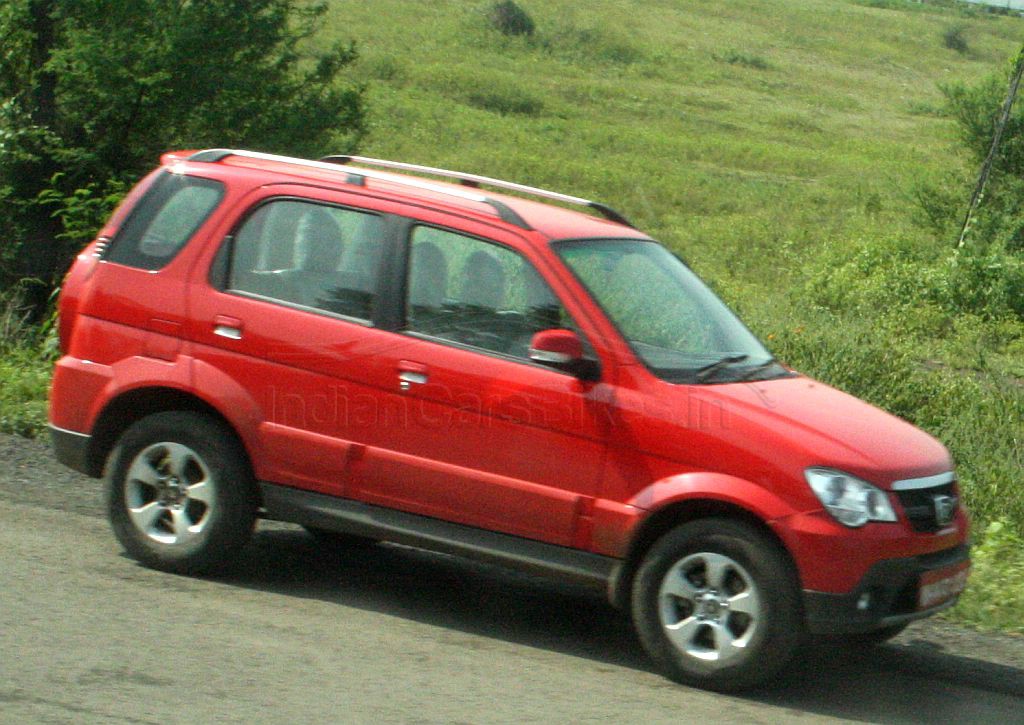
The Premier Rio, India’s first compact SUV, up till now comes with a dated Peugeot diesel engine and a petrol engine that meets BSIV norms. For sometime now there has been talk of the vehicle maker Premier Ltd, trying to buy the Fiat 1.3 litre Multijet diesel engine and plonk it into the Rio. For this to happen, Fiat needs permission from Tata Motors, its JV partner in FIAL or Fiat India Automobiles Ltd which is a 50:50 partnership between Fiat India and Tata Motors. Considering the fact that the Rio does not represent any threat to anyone as things stand, it is quite possible that Tata would have had no objection to Fiat selling the engines to Premier. Now there are unconfirmed reports (attributed to a tweet by Hormazd Sorabjee of Autocar India) that a deal has been finalized for the introduction of the ubiquitous 1.3 litre Multijet diesel engine from Fiat into the Rio. If this news is indeed true, that could be good for Premier since petrol engined vehicles are not selling well and the Peugeot mill is too ancient to meet the new emission norms, thereby depriving Premier of the urban market where such a vehicle could have some relevance and attraction.

In the recent past we have brought you reports of the making of the Ducati Monster 795, the inexpensive version of the Monster 796 for the Asian markets including Thailand and India. The Ducati 795 will be assembled in Thailand and will be brought to India due to the existence of the Free Trade Agreement between the two countries. The motorcycle has an 803cc heart that will pump out 85 PS of power and uses a 6 speed manual tranny. The motorcycle is expected to be priced around Rs. 5 lakhs and that would make it compete with the Kawasaki Ninja 650 R and the Garware Hyosung GT 650R. The only reason why the competition can rest easy for the time being is that Ducati does not have a proper sales and service network while Garware is slowly expanding its network and the Ninja rides on the extensive Bajaj Probiking network.

TVS Motor Company treats the Indonesian market with great respect. It has two Indonesia specific products called the Neo and the Rockz, both of which fall into the category of “Babecks” or ducks as the step through designs are called there. The Indonesians love their babecks and much of the success of the Honda Cub comes from Indonesia as well. TVS has been able to make successful inroads into the babeck market as also the regular motorcycle market in Indonesia. Now TVS has unveiled a fully faired version of the Apache motorcycle in Indonesia. We are not sure if this is market testing or a launch of the product. We do not also know if this a mod job on the Apache by some Indonesian firm at the behest of a dealer. The motorcycle looks very interesting since it has styling that is reminiscent of TVS’ erstwhile partner Suzuki’s GSX-R series bikes.
 \
\