McLaren_P1

The headlines: 0-100 KPH in 2.8 secs. 0-200kph in 6.8 secs. 0-300 kph in 16.5 secs. These scary numbers belong to the McLaren P1. McLaren, after extensive tests, have finally revealed the long-awaited performance figures for their new Hypercar, the P1.

The McLaren P1 has had just one goal since inception, and that was to be the best driver’s car on the road and on the track. These acceleration figures are just one of the few numbers which shows that the car is on the path to achieving just that! The P1 also has an electronically-limited top speed of 350 kph. These sort of performance figures are courtesy of the 3.8 liter twin turbo V8 and the light-weight electric motor, together making 916 PS. To put into perspective, The P1 can get to 300 km/h in 16.5 secs, which is 5.5 secs faster than the McLaren F1.

McLaren_p1_1

Even with such insane numbers, the McLaren P1 still returns 34.0 mpg (8.3 l/100km) on the EU combined cycle. CO2 emissions are pegged at 194 g/km. The electric motor on the P1 has a range of 11 km on full electric mode on the NEDC cycle, With zero emissions.

McLaren_p1_2

The McLaren P1 continues to impress with the braking figures too. The braking system for the P1 is provided by Akebono. The system is bespoke for the McLaren P1, with specially formulated carbon ceramic discs which are coated in silicon carbide. These discs bring the P1 to a grinding halt from 100 kph in a distance of just 30.2 meters. This is very impressive if you consider the recognized stopping distance is 102 meters, which is three times more than what the P1 can do.

Only 375 examples of the P1 will be made and the first one was delivered to a customer based in the UK, from their factory in Woking.

Some performance figures:

Acceleration:

0-100 km/h : 2.8 secs
0-200 km/h : 6.8 secs
0-300 km/h : 16.5 secs
Standing quarter mile : 9.8 secs at 245 km/h
Top Speed(V Max) : 350 km/h (electronically limited)

Braking:
100-0 km/h m (ft) [sec] : 30.2 (99) [2.9]
200-0 km/h m (ft) [sec] : 116 (380) [4.5]
300-0 km/h m (ft) [sec] : 246 (806) [6.2]



After halting the production of the Estilo, ET says Maruti will now phase out the A-Star in India. The fall in demand for these cars is said to be one of the reasons for phasing them out.

In addition to that, for the past five years Maruti has been manufacturing the A-Star in its Manesar plant for Nissan, which sells it rebadged as the Pixio. This contract is set to expire this month. ET also points out that while 7,171 A-Stars were manufactured in September more than 6,500 were exported. Sales for the A-Star in September stand at a meagre 399 units. Hover over the interactive chart above for the numbers, or in case you are on a touch enabled device, tap on the point.

Surprising though are the numbers of the Ertiga. Dangerously close to the to-be-nuked territory, but we doubt Maruti will end their ‘Luv’ child’s run so early.

Maruti Suzuki A-Star Aktiv Front 3/4

Source: ET

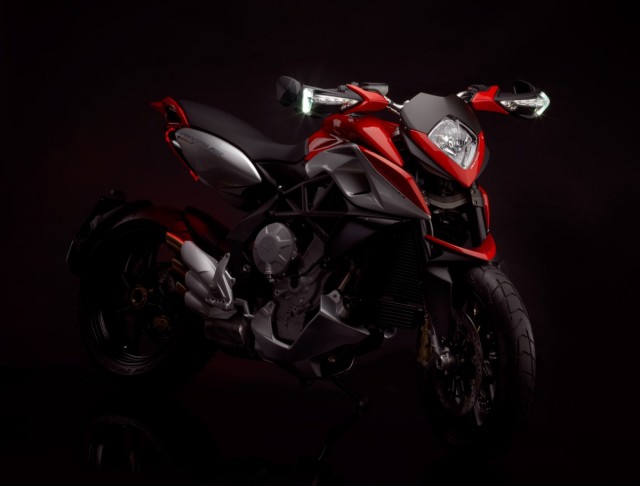
MV Augusta RIVALE 800 03

MV Agusta has sent out invites to the World Premiere of the Turismo Veloce 800. The unveiling is set for 4th November 2013 in Milan. The Turismo Veloce 800 is expected to be a tourer variant of the Rivale 800. The compact three-cylinder in-line engine in the Rivale 800 features a counter-rotating crankshaft that debuted on the F3 675. The crankshaft which rotates in a counter clockwise direction, opposite to the direction of rotation of wheels helps offset the rotational inertia of the wheels and quickens steering and thus improves handling.

Polaris Ambulance Ranger 6x6 800

At the Emergency Medical Services (EMS) event at the All India Institute of Medical Sciences in New Delhi, Polaris showcased an ambulance built on the Ranger 6×6 800. The ambulance module is developed by Bafna Healthcare Pvt. Limited. The Ranger 6×6 800 is powered by a 760cc engine with all wheel drive and is is perfect to manoeuvre on treacherous terrains to supply medical help and assistance to places that cannot be accessed by road.

Speaking on the occasion, Mr. Pankaj Dubey, MD, Polaris India said, “Polaris off-road ambulances are apt for supplying medical supervision in rural India and calamity stuck regions, as they are capable of clearing highways/roads, or handling fire in narrow streets. The event is an opportunity for us to showcase the range of Polaris ATVs & ORVs unmatched versatility and stability in demanding conditions. Polaris vehicles are designed with inherent off-road capabilities and are tested under extreme conditions.”

Polaris India recently donated 5 ATVs to Uttarakhand during the tragedy to help in the rescue and relief operations.

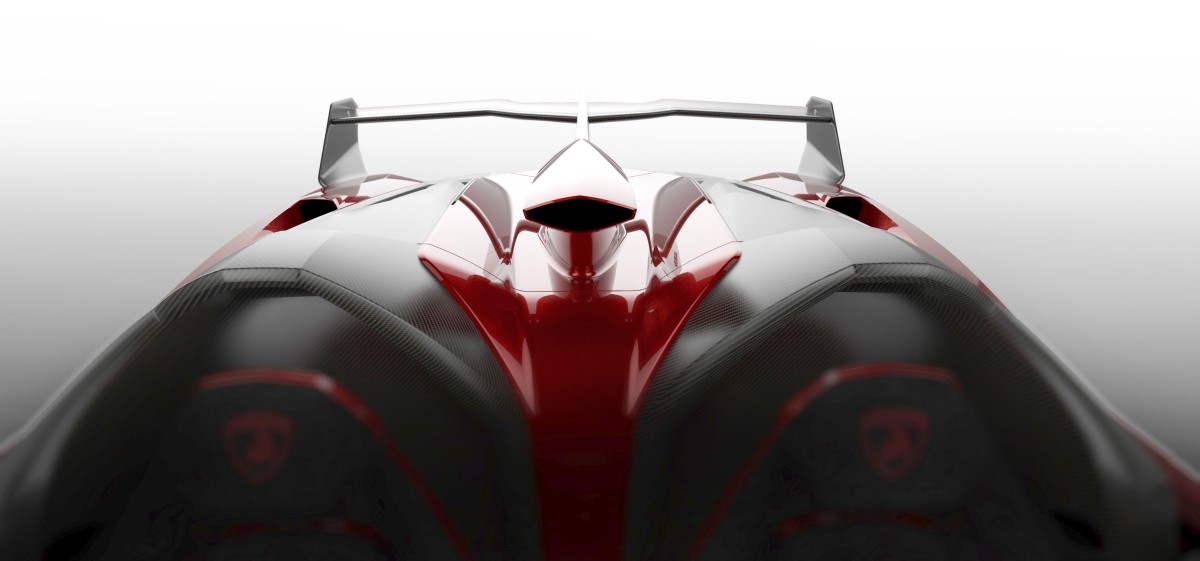
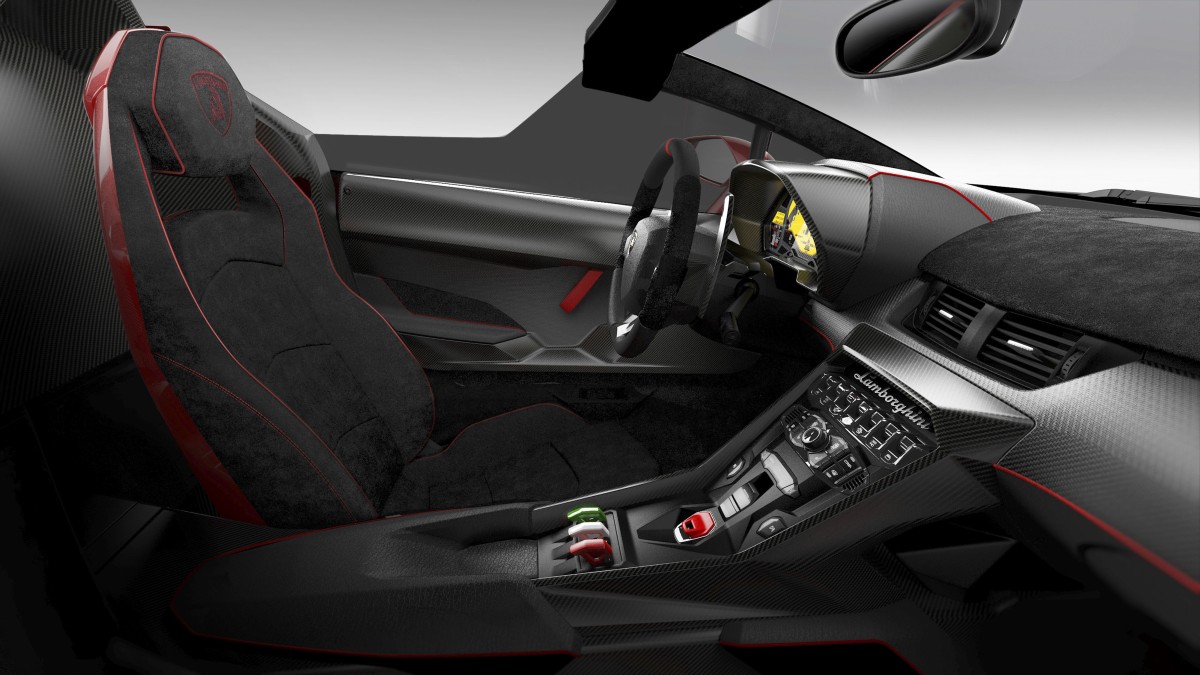
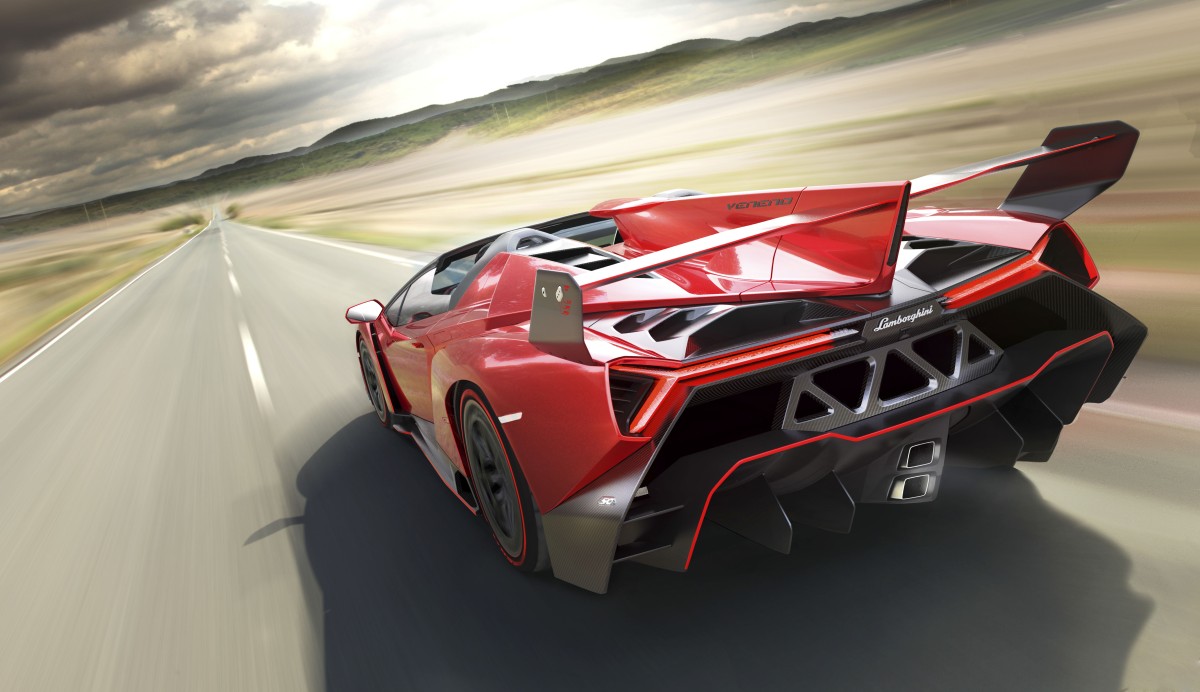
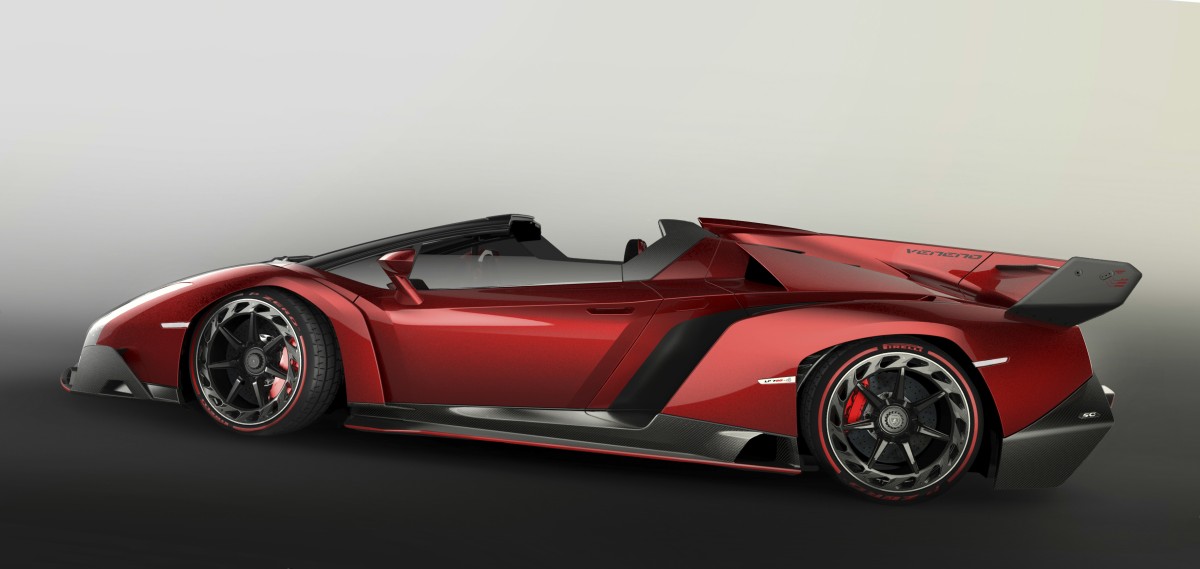
Lamborghini celebrating its 50th Anniversary is good for the world. Believe us. In addition to all the exhibitions and drives that have occurred celebrating the Anniversary, Lamborghini has also launched a roadster version of the Veneno. Although not as exclusive as the Coupe variant (only 4 masterpieces were made) no more than nine units of the Veneno Roadster will be built during the course of 2014 and sold at a price of 3.3 million Euros, excluding taxes of course.

The street legal roadster makes 552 kW / 750 hp, and accelerates from 0 to 100 km/h in just 2.9 seconds and can go all the way upto a top speed of 355 km/h. As with the coupe, the Lamborghini Veneno Roadster is driven by a 6.5L V12 through a fast-shifting ISR transmission with five modes and permanent all-wheel drive. A racing chassis (?) and the pushrod suspension with horizontal spring/damper units we’ve seen with all recent Lambos keep the car on tarmac.


Veneno Roadster : Rear

The Veneno Roaster is clothed in what Lamborghini calls the ‘Rosso Veneno’ a shade developed exclusively for the Veneno Roadster. Lamborghini assures us though, each customer will be able to tailor the Roadster to his/her taste. Carbon Fiber is used extensively, stating with the all carbon fibre monocoque we’ve seen in the Aventador and Lamborghini with its CF expertise takes it the whole way, with CarbonSkin, woven carbon fibre.

Lamborghini Veneno Roadster Gallery

Keith's V8 engine

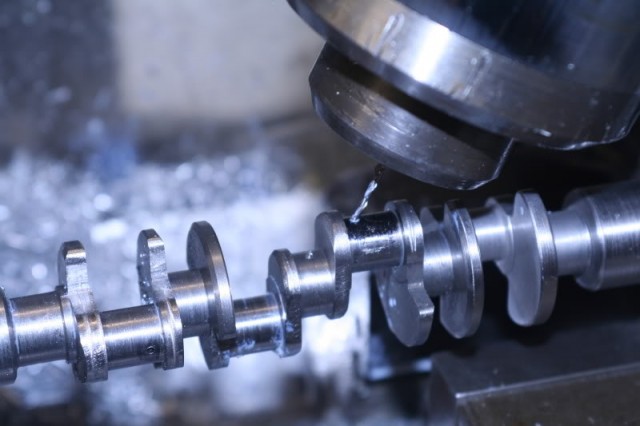
The petrol is in a jar placed on a table. The entire setup is outlandlish. Everything looks unreal. Yet, Keith has a video to show. This 0.48L with most components machined at home using manual lathes and mills, works. The tiny 0.48L engine has the usual lazy notes at idle of bigger V8s that we so love.

Keith's Home made V8 : Crankshaft

Keith has used a Megasquirt MS2 fuel injection and he ran into a roadblock when the Megasquirt ECU would lose communication with his laptop consistently. After having taken a break from the project, one day Keith used a different laptop and input a random ignition map and the V8 mill started burbling! Turns out the issue was with the laptop and not the ECU. He’s fine tuned the maps now. The alloy block, drilled crankshaft, tungsten-alloy flywheel are all works of art. Keith built a tube bender before he started on the pipes. The exhaust pipes were also polished and Keith admits he did that even though he knows the pipes will turn blue once the engine starts running!

Head on to Home Model Engine Machinist for a detailed read through. Keith has documented the progress of the project with great detail.

Not surprisingly, Keith has also begun work on a V10 while continuing to improvise on the V8!

Keith's Home made V8 : Manual Tube Bender

Keith's Home made V8 : Exhaust Pipes

Indian GP_2013_trophy

IndianGP_Trophy_1

The 2013 Indian Grand Prix takes place between the 25th and the 27th october, 2013, at the Buddh International Circuit, in Greater Noida. It is the third edition of the Grand Prix, since the inaugural round in 2011.

Bangalore-based designer, Michael Foley has designed this season’s winner’s trophy, and says it has been inspired by the Ashok Chakra. Much like the 24 spokes of the Ashok Chakra, the trophy is created with 24 metal slivers assembled around an axis. The material used to make the trophy is light-weight Aluminium, used in aircraft manufacture.

The colours of the national flag, saffron, green and while are embedded in the gaps between the slivers, and the final look of the trophy is completed by the mixture of metallic black, red and sliver of the aluminium, created by ion-plating and anodizing of the material.

Designer Michael Foley said, “The trophy is an interesting combination of sports, technology, glamour, entertainment and youth, and we wanted the trophy to reflect each of these elements. After a lot of design work, we finally arrived at a trophy that is a perfect blend of contemporary and traditional India.”

This trophy may well find a home in the cabinet of title leader Sebastian Vettel, although the fighting spirit of Lewis Hamilton and Alonso can never be dismissed.

Source: Indiatimes.

McLaren P1

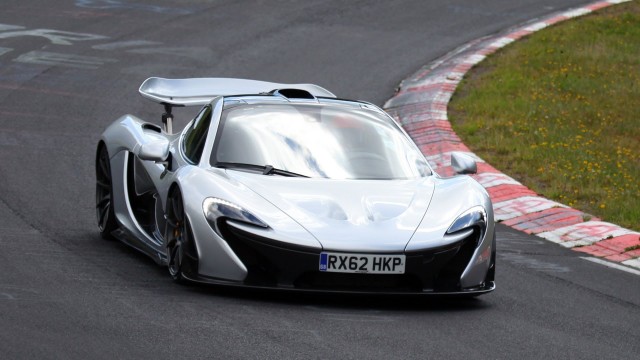
According to a report from CAR magazine, the McLaren P1 XP2R is having a second go at the Porsche 918 Spyder’s lap record at the Nurburgring. The rumours are saying that even with the McLaren’s best efforts, it could only do a lap time of 7:04, whereas the Porsche 918 Spyder managed a 6:57. Ron Dennis had previously said that the aim of the McLaren P1 is to set a lap time of under 7 minutes, and that is still their goal.

But McLaren still has not got it easy as Porsche seems to be readying to have another go as well. After they set their record of 6:57, Porsche felt that the car could go faster. So McLaren might not have it all easy, yet!

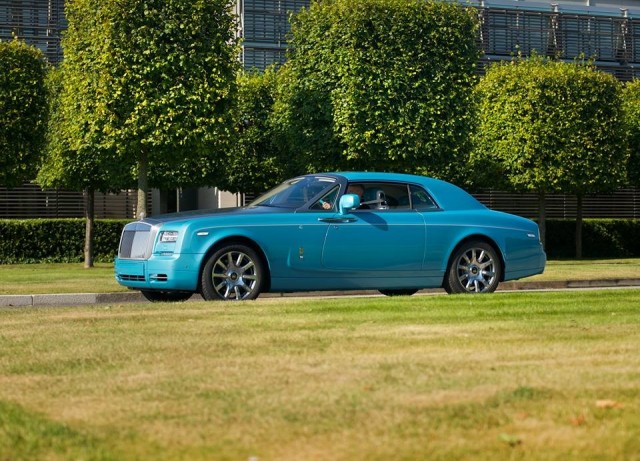
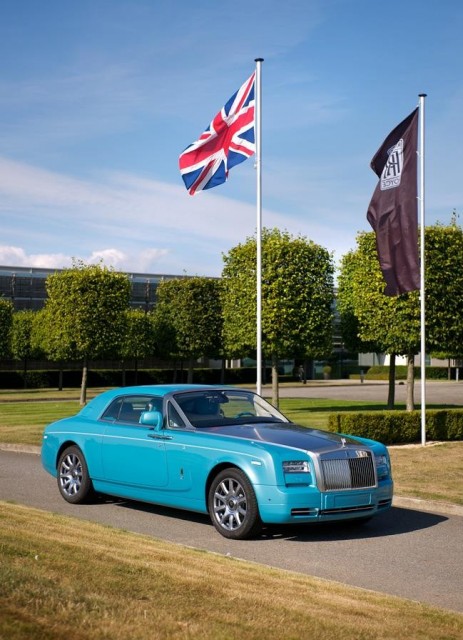
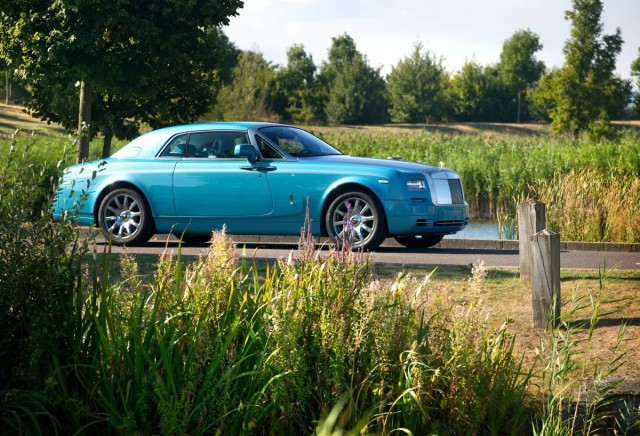
Do you like this bespoke Phantom Coupe? Rolls Royce says the limited edition was inspired by the Arabic word for ‘diver’. The Ghawwass Phantom Coupé celebrates the traditional method of collecting pearls from the Bahrain pearl banks.

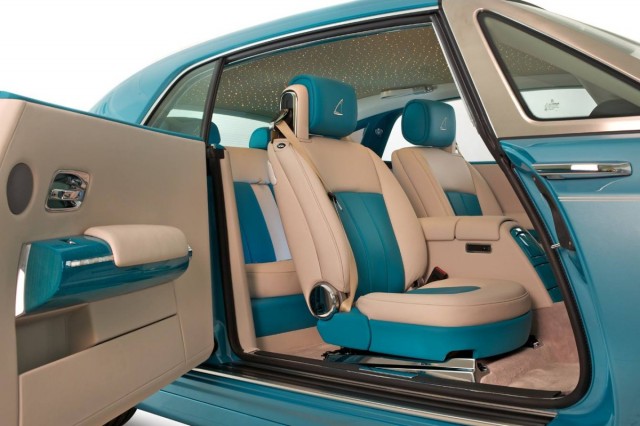
The shade that we are so ambiguous about is called ‘turchese’ and is a hint at the green-blue waters of the Arabian Gulf. In the interior, the pearl veneers, and the Dhow sailing boat motif, which features in the coachline, headrest embroidery, and as a unique raised chrome motif laid into the aluminium of the passenger panel complete the ‘collecting pearls’ theme.

The color in itself isn’t a bad choice and goes well with the theme, but we wonder if it is a tad too sporty for a Rolls Royce.

Skoda Octavia Magic Black 01

ŠKODA Auto India today opened the online bookings for the New ŠKODA Octavia. The new Octavia was launched this month starting at Rs. 1,395,000 for 1.4 TSI Active (ex-showroom New Delhi). Skoda says the online booking option will be available for all Octavia trim lines along with the entire SKODA car-line up across the country.

Customers can book their car at a nominal booking amount of INR 5,000 and in case you change your mind, you can get a full refund in case of a cancellation. The booking amount can be paid online through net banking, debit card or credit card. Customers can pay the remaining amount at a ŠKODA dealership.

Talking about ŠKODA’s online booking engine for the new Octavia, Mr. Pawel Szuflak, Director, Sales & Marketing, ŠKODA AUTO India said, “Online media is one of the most progressive mediums of communication attracting audience of all age groups. In fact, a large part of our prospective customers search for ŠKODA cars online and determine their choice. With an aim of providing utmost convenience to our customers, we are happy to commence the online booking engine for the new ŠKODA Octavia and for all our other brands. Octavia has been the heart of ŠKODA and will surely captivate the hearts and minds of people in India.”