Yearly Archives: 2012

In the final test before the commencement of the MotoGP season commences at the end of the first week of April, Casey Stoner of the Repsol Honda team riding the RC213V has yet again set the pace for everyone else to follow.  The official three day test that has commenced at Jerez yesterday and Casey Stoner was the clear leader while the Ducatis of Nicky Hayden and Valentino Rossi are still in the struggling phase.  However, Nicky Hayden went better than Rossi and finished Friday in 6th position overall while Valentino Rossi just scraped into the top ten in ninth position. Ducati’s woes were not confined to the factory team alone with their satellite spec motorcycles running slower than the ART – CRT bike of Randy De Puniet who is riding for the Aspar team this year.  Randy De Puniet finished in eleventh position just behind reigning Moto2 Champion and MotoGP debutant for this year Stefan Bradl who was riding the factory spec Honda RC213V for the LCR-Honda team.

Stoner’s teammate Dani Pedrosa went third fastest while the factory Yamaha M1’s of Jorge Lorenzo and Ben Spies went 2nd and 4th fastest respectively.  Cal Crutchlow riding the satellite Monster Tech3 Yamaha M1 went fifth fastest, a performance that was credit worthy.  His teammate riding the Yamaha M1 for the first time this year, Andrea Dovizioso who was a little unwell was able to set the eighth fastest time behind San Carlo Gresini Honda rider Alvaro Bautista who set the seventh fastest time of the day.

Ducati is working against the clock and many other odds to get the bike to be competitive enough to fight for podiums at least from race one itself.

Mercedes Amg Safety Car 01

Mercedes-Benz says the Malaysian Grand Prix holds the unique distinction of being the only Grand Prix circuit at which the Safety Car has not been officially deployed in the past ten years even though there have been instances of really bad weather.

How much was the Safety Car used in 2011?

Last season saw the Safety Car deployed for 4.9% of the season – a total of 12 deployments, over seven races, for 61 laps or 284.3 kilometres. This compares to 21 deployments in 12 races in 2010, for a total of 7.8% of the season over 452.3 kilometres. This reduction was in spite of a significant increase in on-track overtaking through the combination of the Pirelli tyres and DRS rear wing system. However, while there was an overall reduction in Safety Car deployments, the 2011 Canadian Grand Prix featured five Safety Car phases over 32 laps, or 139.6 kilometres: this represented 45.7% of the race distance, a record in Formula One.

Which races feature the highest and lowest probabilities of Safety Car deployment?

The races with the highest historical probability of Safety Car deployment are in Singapore and Korea: every race held at these venues has seen at least one deployment (four races in Singapore, two in Korea). Canada (14 deployments in last nine races) and Monaco (13 deployments in last ten races) also feature prominently. As for the lowest likelihood, aside from the Indian circuit which has only hosted a single race, this is in Malaysia (no official deployments in the past ten years), Bahrain (one deployment in seven races) and Hungary (two deployments in last ten races).

Mercedes Amg Safety Car 03

Wasn’t the Safety Car deployed during the 2009 Malaysian Grand Prix?

The Safety Car was indeed deployed on lap 32 of the race, before the event was red flagged on lap 33. However, the official race results only run to lap 31, so the Safety Car deployment is not considered for statistical purposes.

Which cars are used for the Official F1 Safety Car and Official F1 Medical Car?

The Official F1 Safety Car is the SLS AMG, with a 6.3-litre V8 engine developing a peak output of 420 kW (571 hp) at 6800 rpm and maximum torque of 650 Nm at 4750 rpm. The engine, power train, suspension and braking system of the Safety Car are the same as those found in the standard production SLS AMG. The Official F1 Medical Car is the C 63 AMG Estate, which produces 358 kW (487 hp) – an extra 30 hp compared to the standard model thanks to forged pistons, connecting rods and lightweight crankshaft from the SLS AMG. These components are three kilograms lighter than standard. The first Mercedes-AMG Safety and Medical Cars were the C 36 AMG, which was first used in 1996, although an AMG E-Class Coupe was occasionally used as the Medical Car as early as 1984.

Mercedes Amg Safety Car 02

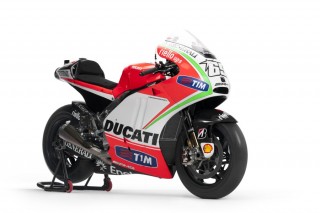
Ducati Desmosedici GP12 unveiled at Panigale

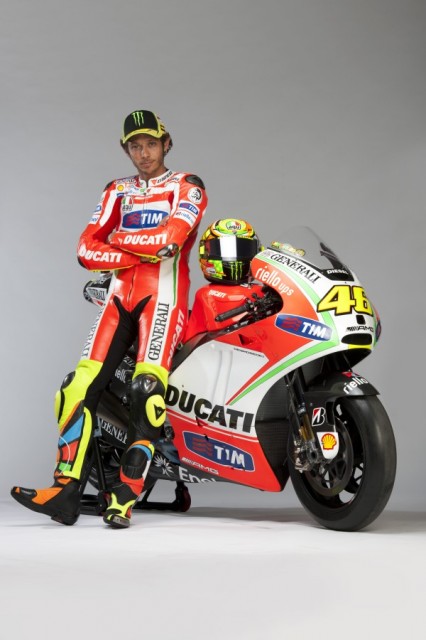
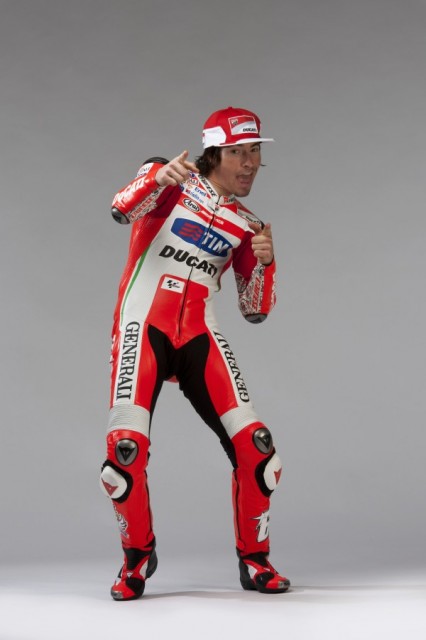
Valentino Rossi and Nicky Hayden on the Ducati Desmosedici GP12

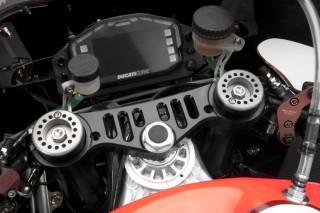
Ducati Desmosedici GP12 ConsoleDucati Desmosedici GP12 2x1 Underseat Exhaust

Ducati Desmosedici GP12 : Termignoni Exhaust, Bridgestone 16.5" rear

Nicky Hayden's #69 Ducati Desmosedici GP12Valentino Rossi's  #46 Ducati Desmosedici GP12

Valentino Rossi and the 46 Ducati Desmosedici GP12 ( Photo 2)Valentino Rossi and the 46 Ducati Desmosedici GP12 ( Photo 3)

Valentino Rossi and the 46 Ducati Desmosedici GP12

Valentino Rossi and the 46 Ducati Desmosedici GP12 ( Photo 5)Valentino Rossi and the 46 Ducati Desmosedici GP12 ( Photo 1)

#69 Ducati Desmosedici GP12 : Nicky Hayden#46 Ducati Desmosedici GP12 : Valentino Rossi

Valentino Rossi #46 Ducati Desmosedici GP12 ( Photo 1)Ducati Desmosedici GP12 Underseat Exhaust ( Photo 1)

Ducati Desmosedici GP12 Valentino Rossi Nicky Hayden for 2012 MotoGP

Ducati Desmosedici GP12 Underseat Exhaust ( Photo 2)Ducati Desmosedici GP12 Exhaust

Valentino Rossi and Nicky Hayden on the Ducati Desmosedici GP12 Photo 2

Nicky HaydenNicky Hayden and the #69 Ducati Desmosedici GP12 ( Photo 1 )

Nicky Hayden and the #69 Ducati Desmosedici GP12 ( Photo 2 )Nicky Hayden and the #69 Ducati Desmosedici GP12

Ducati Desmosedici GP12 #69 FrontDucati Desmosedici GP12 #46 Front

We promise you we are not making this up.  The root of the rumour is the boss of the World Superbike Championship franchise Paolo Flammini himself.  While talking to Superbike planet, Flammini has suggested that apart from the one motorcycle per rider rule a new innovation to come into World Superbike racing could be pit stops.  Flammini says that he is considering this for next year when the racing format of World Superbikes could change.  Flammini is feeling the pressure the distinguish superbike racing from MotoGP with both now beginning to look very similar (a point that we made in an article earlier).  Flammini believes that the present two race format is not involving enough for spectators both at the circuits and at home watching the races on TV and therefore has sought to replace the two races with a long single race which involves pit stops for tyres and fuel presumably.  This is nowhere near reality yet; not even by an extra long shot but there is great merit in the thought.  Not only will it distinguish World Superbikes from MotoGP but will also bring in the fun of unpredictability that usually comes with pit stops.  We hope Flammini delivers on this.  It could make bike racing a completely different game.

Autocar India.com has broken the news that the sedan which Renault intends to launch later in the year (after the launch of the Duster) is a rebadged version of the Nissan Sunny and that the car will be called the Scala.  This exercise will be similar to the one that Renault carried out on the Nissan Micra by changing the front of the car and calling it the Renault Pulse.  Therefore one can expect to see a slightly redesigned exterior and interior (likely to be more  premium than the Sunny) and the car will be positioned above the Sunny, in line with the strategy that the alliance is following in India.

Avintia Racing Team Bikes

Avintia Racing team has unveiled its contenders in all three classes of the MotoGP championship.   The team which was previously called Blusens BQR has now adopted the Avintia nomenclature and is sponsored by Blusens in all three categories with Repsol backing coming in for the Moto3 category.  That is the reason why Maverick Vinales’ Moto3 bike features orange wheel rims instead of the green that the MotoGP (CRT) and Moto2 motorcycles feature.

The MotoGP and the Moto2 motorcycles look almost identical with FTR being the chassis provider.  In Moto3 Avintia will run a Honda engine just as it will in Moto2 where the Honda engine is the only one available.  In the MotoGP category the team will use Kawasaki engines from the ZX10R Superbike.  This makes the team the only one using Kawasaki engines.  FTR is the chassis provider for all three classes.

Datsun Old Logo

Those who read my articles on Riot Engine rightly conclude that I am a bit of an idiot.  But believe me, even I do not believe that this letter is actually addressed to Carlos Ghosn, the wunderkind (if you can call a mature gent that) and that he will respond to what I have to say here.  I have been reading too many Man Booker Prize winning novels and Pullitzer prize winning articles and therefore have decided to become a little pretentious and write in a manner which is befitting of award winning authors.  You see despite my old age, I am still susceptible to puerile desires, but what the heck what are we if don’t indulge ourselves a bit, every once in a while.

The auto industry like most industries is vertically bifurcated.  On the side of the divide you have maverick designers (my personal favourite being Chris Bangle) and on the other side are those that the first side calls “the suits”.  The latter category comprises of people who do all kinds of market surveys, feasibility studies and customer profiling (and are usually way of the mark and that is why products bomb with aplomb on a regular basis) and form a tag team with the finance chappies (more suits in colours duller than gray) and dictate to the designers as to what will sell and what will not.  Their presence in a company is usually so overpowering that they can actually drive the likes of Chris Bangle away from automotive design for good.  Now if you are wondering what all this has to do with Carlos Ghosn and Datsun, it is time for me to explain.

We know the story of how Mr. Ghosn  turned Nissan from inefficiency to efficiency (though this process usually involves thousands of people losing their livelihoods on the one hand and “rationalizes” platforms on the other) so I will give that bit a miss.  I also do not need to tell you that Mr. Ghosn is a superstar in his own right, someone who is very ambitious and sets stiff sales target for the Renault-Nissan combine and usually ends up meeting them.  Carlos Ghosn gave to the world a phrase called “frugal engineering” after he saw how Indian companies like Tata and Bajaj were churning out products at incredibly low costs.  Carlos Ghosn wants to create a culture of frugal engineering in his empire, for after all who does not want to make inexpensive cars and sell them in large numbers?  The astute Mr. Ghosn knows that his key to unlocking the sales numbers that he desires lies in this whole thing called frugal engineering.  It is here that Ghosn also faces a problem of sorts.

Both Renault and Nissan are names that already stand for something and it would be disastrous to tamper with them.  Renault is a known innovator in Europe associated with small cars which are cutting edge technology driven and also is a name in diesel engine technology.  Nissan in Japan was at one time the second biggest car maker only behind the venerable Toyota before it lost its way and started a free fall and was saved by Ghosn and his team of suits.  All over the world Nissan also stands for certain values and those cannot be tampered with.  While most people tell Carlos Ghosn’s story they usually forget mentioning Dacia, the once beleaguered Romanian car manufacturer that Ghosn picked up for Renault.

Carlos Ghosn’s reasons for picking up Dacia were very clear.  Here was a brand from an erstwhile iron curtain country, one that had no reputation whatsoever.  Ghosn being the astute number cruncher that he is saw sense in introducing inexpensive cars that could be bought by the not so affluent.  And thus the Logan was born.  It was inexpensive alright, but that was by European standards.  I would like to remind you here that Europeans and Americans do not have a concept of thrift.  They are rather lavish in most things that they do and that is why the sub prime housing crisis and the Eurozone crisis have happened.  So there is the Logan which is dynamically alright, solid engineering wise, but hopeless in styling terms.  It worked in Europe however.  But Ghosn knew that he cannot get the numbers he wanted from the existing markets.  He had to expand to newer ones.

The last few years have shown that the drivers of the world economy are the BRICS countries meaning Brazil, India, Russia, China and South Africa.  You can also add Indonesia to this list of countries.  Therefore it was obvious for Carlos Ghosn to look at emerging markets such as the BRICS markets.  India has fascinated Ghosn tremendously.  He saw what Tata had done with the Indica (including the Vista) and the Nano.  He realized that frugal engineering does not have to sacrifice style which the Logan and its derivatives had done.  Frugal engineering was just a completely different mind set.  It has taken him a couple of years but now he seems to have come to terms with the mindset of frugal engineering.

Add to this understanding the fact that neither Nissan nor Renault have taken off in a big way in India and possibly in Russia and Indonesia as well.  It is therefore clear to Ghosn that some reinvention of things was necessary and out of this thinking emerges the Datsun brand resurrection.  For the time being it is being said that the brand will first make its appearance in India, Russia and Indonesia and the reasons for this are pretty straight forward.  Datsun is a brand that is well remembered in these countries.  In India, Datsun was well known due to many embassies and organizations such as ICRISAT having the Datsun Bluebird models in saloon and estate models.  These cars were purchased literally in thousands and after a couple of years disposed off through auctions as legitimate imports.  The Datsun Bluebird was pretty much a common sight at one time in Delhi (where the embassies are) and Hyderabad (where ICRISAT or International Crop Research Institute for Semi Arid Tropics is) and in other metros once the disposal through auctions started happening.  This was also the time when the red, blue and white stickers of Datsun were freely available in the market and I had put one on the stepny cover of my father’s scooter which was therefore referred to as the Datsun Vespa.
Datsun Logo

Ghosn and Co are now resurrecting the brand with newer values of inexpensive engineering or frugal engineering if you like.  This will most probably involve the use of old platforms which would have depreciated substantially from the Renault-Nissan stable.  Please remember that in countries like India and Indonesia people do not pay too much attention to the fact that something is built on an old platform.  The case of the original Indica is a case in point.  It still sells alongside the Vista in possibly equal numbers.  The Maruti 800 virtually unchanged from 1985 still sells a couple of thousand cars every month and the fall in numbers is mainly due to the fact that the car does not have a BSIV compliant engine and therefore cannot sell in many cities.  The present Alto itself dates back to the Wagon R platform of 1998 and sells in numbers that I do not have tell you about.  The marketing acumen of Carlos Ghosn has yet again come to the forefront.  The Datsuns of the future will be cars built on older platforms but customized to the specific tastes of countries like India, Russia and China.  Datsun will also spawn vehicles similar to the Tata Ace, the Mahindra Maxximo and the likes.  I have read some speculations that Datsun cars will also be branded as Renault.  I disagree.  If at all there is a necessity for another badge, Renault will use Dacia but that is not something that I foresee as happening.  Datsun will be country specific and deliver competent technologies at affordable prices, hopefully with a dash of style as well.  Let me know your thoughts as well.

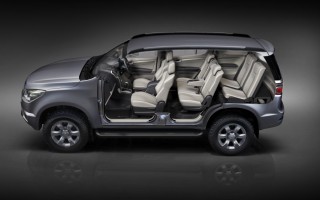
Chevrolet Trailblazer : Coming to India?

There is a pattern to how multinational auto companies function in the Indian market.  Thanks to an FTA agreement that exists between India and Thailand and also due to similarities in the two markets (they are both right hand drive for starters) products that are launched in Thailand find their way into India as well.  Another driver of this strategy is volumes that auto makers look at by clubbing markets together.  For some years now most products launched in Thailand have slowly found their way into India.  It actually started with Honda and the first generation City.  Other auto manufacturers were quite happy to follow Honda’s lead here.

Now that this pattern has been established all Indian automobile publications on the net and in print look at launches taking place in Thailand and predict new launches in India.  And it is that time again since GM has launched the Chevrolet Trailblazer SUV in Thailand.  The Trailblazer does not blaze any new technological trail.  In fact, it is a good old fashioned SUV built on a ladder chassis just like the Ford Endeavour and the Toyota Fortuner are.  What this means is that the said SUV is big and imposing, something that we Indians like.  The nouveau riche in the country usually use big SUVs to signal that they have arrived in society.  So one must assume logically that the Trailblazer is an automatic choice for the Indian market, right?  Not quite is what I would like to say.

Chevrolet Trailblazer India 01

Despite the fact that automakers, especially Honda would like us to believe that Thailand and India are similar markets, the similarity is confined only to the fact that both are right hand drive markets.  Not much else is similar.  The good people of Thailand for example prefer what Americans call trucks and what we Indians call pick ups.  Despite efforts by Tata and Mahindra to market the Xenon and the Scorpio Getaway as life style vehicles in India they met with almost zero success.  But SUVs are okay for us because they reflect like I have already said a status that says “I have arrived in life” and since they are also humongous they are very effective tools to bully your way on roads.  The good people of Thailand have more respect for road rules and other road users than most of us Indians do.  So the reasons why SUVs sell in Thailand are not necessarily the reasons why they sell in India.

Chevrolet Trailblazer Interior

Another thing that has to be kept in mind when it comes to the two markets is that Thailand like most South East Asian countries has similarities with the United States of America while we Indians have more in common with Europe.  Honda and Toyota will try to sell their American spec Accords and Camrys because in Thailand they work and to make economies of scale happen, they also force the same products in India and we know that these models do not sell in huge numbers.  So the question then is will the Chevrolet Trailblazer come to India?

That is not an easy question to answer, but as an auto journalist it is one that needs to be dealt with head on, since so many people are saying it will come to India.  My well considered and honest answer is that the Trailblazer will not come to India anytime soon.  In fact, if I was anyone in GM India I will make sure that the product is not brought here in a hurry.  Having said such controversial things now let me spell out my reasons.  GM already sells the Chevrolet Captiva in India.  The Captiva is a pretty butch looking vehicle that is getting butchier still (I can’t say butcher can I?) with the big two tier grille that is really in your face.  And the Captiva comes with a monocoque construction that makes it so much more easier to drive as a vehicle than a body on chassis vehicle would be to drive.  It also is getting an engine upgrade to a 2.2 litre direct injection common rail diesel engine that incorporates a variable geometry turbo charger that will make it more powerful than the present model which comes with a 2.0 litre engine.  So when Chevrolet is making so much of an investment in the Captiva why bring in the Trailblazer in a hurry?

Apart from the above mentioned factors there is yet another factor to consider.  I have said that SUVs are mainly for the nouveau riche who have to announce their arrival.  I would ask you to remember that this class of people also attach a huge significance to the badge that a vehicle carries, meaning the name of the manufacturer.  In India when it comes to badges nothing beats Toyota and to a certain extent Honda.  When I say this I am excluding Mercedes Benz and BMW which are not for the nouveau riche but for the traditional ultra rich who want snob value.  Now if we were to take into consideration the value of Chevrolet as a badge it is not difficult to see that it is not a badge that is desirable for the nouveau riche.  Let us go back a few years into the new millennium and we will see that GM changed from the Opel badge to Chevrolet to get into the mass market space.  So for some inexplicable reason for the Indian nouveau riche Toyota and Honda pass muster as premium brands despite Honda making sub Rs.50,000 scooters and motorcycles, the way in which Sony is considered premium in the electronics space.  Chevrolet would be more like Akai is in the electronics space.

Chevrolet Trailblazer India 04Chevrolet Trailblazer India 05

To me all this means that the Indian SUV buyer whom I have unashamedly and unabashedly profiled here is not going to be in a hurry to get himself a Chevrolet Trailblazer when the Toyota Fortuner and the Honda CR-V are available (yes the latter does not have a diesel engine but still people buy the CR-V but that could change with Honda going into diesel engine space after having eschewed them for years). In my opinion therefore, Chevrolet has nothing to gain by introducing the Trailblazer, for it will probably go the Ford Endeavour way (seriously how many people do you know own an Endeavour?).  It probably makes greater economic and business sense to concentrate on the Captiva which is a very capable vehicle and whose sales do not tell the true story of what it is.  If I were anyone in GM I would only look at the Captiva and not beyond since GM has a history of not being able to sell capable SUVs like the Forester (the wonderful SUV from Subaru that GM badged in India as a Chevrolet and could not sell at all).  GM’s focus to me seems as if it is looking at inexpensive cars and MPVs and that is a sound strategy.  SUVs are best left alone by GM, that is what I believe.

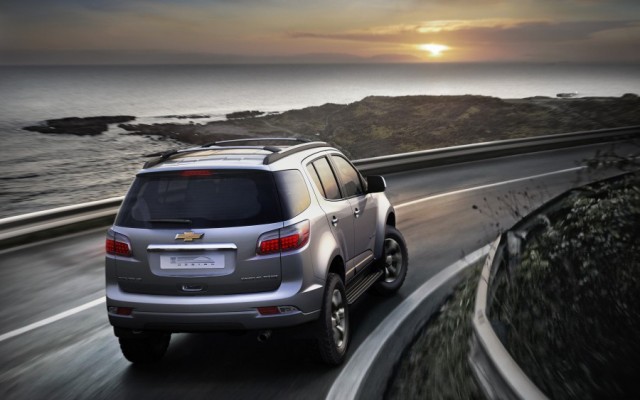
Chevrolet Trailblazer in India : Rear

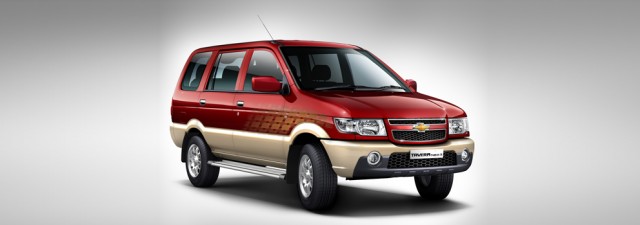
Having been deprived of an official launch when it was brought into the showrooms early February, the Tavera Neo 3 BSIV was launched yesterday officially.

Chevrolet Tavera Neo3

The highest variant of the Tavera features Chevrolet’s signature twin-port grille and a bigger Chevrolet bowtie in front and at the back. The newest member of the Tavera family is also distinguished by its dual-tone body color combination. Some exterior color finishes get the gold bumpers and body side graphics. Chrome garnished front grille and fog lamp housings boost the model’s premium appeal says Chevrolet. Chevrolet’s “advancing diamond” pattern on the side graphics seamlessly blends side surfaces with bumpers for a stunning visual appeal. Designers have also added a fresh new design for the wheel covers.

The Chevrolet Tavera Neo 3 interior has a premium look, with a beige and dark grey combination. The “advancing diamond” motif continues inside on the soft-feel cashmere upholstery with specially designed inserts. Premium perforated leather upholstery is available as on the Captain Seat variants.

Dark grey elements wrap around the occupants flowing from the top of the two-tone instrument panel to the top of the door trims, providing a perfect wrap-around effect. The smart instrument cluster has Ice Blue illumination. A dead pedal enhances driver comfort.

The engine is of course, the 2.0-litre TCDi direct injection diesel from the G-One series from ICML, which is BS IV compliant engine and also powers the Rhino MUV. Chevrolet says the engine is coupled with a new transmission to deliver an excellent low-end torque and launch feel making it ideal for India’s stop-and-go traffic conditions.

“The new Tavera demonstrates GM India’s commitment to listening to our customers and continuously upgrading the products,” said Paddock. “As a result of the feedback we received, the Chevrolet Tavera once again raises the bar in terms of features and personal amenities for its segment. It is a testament to GM’s resolve to continuously add value and excitement to our entire Chevrolet product lineup in India,” added Paddock.3

Chevrolet Tavera Neo-3 BS IV India Launch

Let me begin with an assurance.  I am under no illusion whatsoever that I am the first person to be writing about this subject in the recent past.  I am fully aware that people who have better credentials than I have, have spoken at length about this subject and that mine will be just another opinion on this issue.  Nevertheless, many people could be saying the same thing for different reasons and therefore I shall go ahead and say what  I have to say.

Before beginning my arguments the prudent thing to do would be set the context in which I am saying what I am saying.  In fact, it is not one context but two contexts that we should be looking at.  The first and for me this is the most important context is that there has been a huge melt down globally in the economy and there is no evidence that the world is going to be coming out of this anytime soon.  Please do not take me to be a doomsdayer who wants to show dark clouds around silver linings.  The world in the last four years has been moving from one economic crisis to another and most importantly these crises are happening in the developed part of the world; Europe and America.  This bit of information is of significance since motorsport as a category has been birthed, nurtured and evolved in the context of Europe and America.  Of course, there is Japan as well but then, on its own Japan also is not doing so excellently in economic terms.

Now to come to the second context which is that about Bridgepoint Capital being the owners of both MotoGP and World Superbike Racing since they have purchased Infront a company that has rights over World Superbikes among many other things.  Before I get to this part of the story let me acquaint you with an interesting piece of information.  MotoGP was originally owned by CVC Capital before good old Bernie Ecclestone decided to sell the rights of Formula1 to them.  The European Commission on monopolies then decided that it was not correct for CVC Capital to have rights over both F1 and MotoGP and as a result, CVC Capital sold the rights of MotoGP to Bridgepoint Capital.

Last year thanks to the global economic recession Infront was put up for sale and Bridgepoint that had the money bid for it and got control of it as well.  Interestingly enough the deal was passed by the European Monopolies Commission when it was told that there would be no merger of the series called World Superbikes with MotoGP.  Just word of mouth was good enough for one owner to have both series under its belt.  It is unprecedented but then so is the global recession which is now being touted as the bleakest after the recession of 1929.  Any objection at this time would mean that other series that are held by Infront such as Serie A football league would suffer.  So the deal went through with just oral assertions.
Now to take stock of health of the two series that go under the name of MotoGP and World Superbikes.  The former is older, has a richer history and is all about prototype racing that allows manufacturers to experiment with cutting edge technologies that would later find their way onto road going motorcycles.  The latter is all about road going motorcycles that can be raced on weekends and will not have any great cutting edge technology.  This was how things were supposed to be.  But we know that it is not very often that things are the way that they are supposed to be.  As competition between the two series hotted up World Superbikes stopped being a championship of pure road going motorcycles.  Let me give you an illustration.  In stock trim,  a Kawasaki ZX10R makes somewhat like 197 PS of power at the crank shaft.  But when it is going racing it makes about 215PS.  Same is the case with the BMW S1000RR.  In stock trim it makes about 193 PS but when it is raced it makes 220PS.  That kind of increase in power is due to the addition of parts that are  anything but stock.  So World Superbikes began encroaching on the prototype turf or  that of MotoGP.

The response of MotoGP was to make its technology even more cutting edge and out of the reach of World Superbikes and this has meant that they have not only experimented with newer technologies, metals and what have you but they also reduced all MotoGP racing to factory racing.  In the days of the two strokes there were privateer teams that bought engines mainly from Yamaha and chassis either from ROC or Harris.  Some used old engines and fit them in new chassis.  But with MotoGP going four stroke the strangle hold of the factories increased and there were only two types of teams, factory teams and leasing teams,  where the leasing teams could not even look at what went into the engine of their motorcycle.  The job of looking after the engine was left to representatives of the factory who had to be hired by the leasing teams, which are also called satellite teams.  This meant that the cost of running motorcycles in MotoGP went into millions of Euros and with the global economic recession monies from sponsorships to such operations have all but dried up.

So MotoGP can now only field 12 factory prototypes while smaller factories such as Aprilia, Kawasaki and Suzuki walked away from the series.  This forces the hand of Dorna who are a part of Bridgepoint Capital to introduce the CRT concept with a production engine and a prototype chassis.  So MotoGP starts going the World Superbike way, relying on production machinery.  What is important to note is that both series are unable to pack grids and with the exception of the new Moto3 class the engine capacities of Moto2 and World Supersports rely on 600cc engines and MotoGP and World Superbike have identical 1000cc engines.  Now comes the question.  When there are only something like 5 or 6 factories in both versions of motorcycle racing does it make sense to have to separate series?  What makes things even more difficult is that the lap times of GP and Superbikes are not separated by much.  More importantly unlike in cars where prototypes look very different from production models like F1 cars as against touring cars, production and prototype motorcycles look almost identical.

Instead of sponsor money being thinly spread over two series and with artificial attempts to keep them distinct, it makes less and less sense to keep the two going as separate entities.  It would be in the interest of motorcycle racing to therefore club the two together and that will also mean better TV viewership for both series since one can then do away with this two race format that Superbikes has and creates problems for most sports networks.  Also with Formula1 expanding to 20 weekends the exclusive availability of race weekends to both motorcycle racing series also is a problem.  All these can be overcome by all parties concerned sitting together and creating one series; a series that is financially and technologically strong and has the ability to satisfy the cravings of bike racing aficionados. Well that is what I think, what about you?  Do let us know.